Explore Cyprus with Our Interactive Map

Explore our top stories and discover ideas worth your time.

House of Eustolios In Cyprus Roman Villa Mosaics

House of Eustolios In Cyprus Roman Villa Mosaics

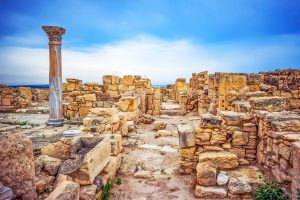
Perched on the southern cliffs of ancient Kourion near modern Limassol, the House of Eustolios stands as one of Cyprus's most fascinating archaeological sites. This late 4th-century complex blends Roman luxury with early Christian devotion, creating a unique window into a transformative period in Mediterranean history. Originally built as a private villa, the structure evolved into a public recreation center that served Kourion's citizens for over two centuries. Historical Background The House of Eustolios rose from the ruins of catastrophe. In 365 AD, a massive earthquake devastated the eastern Mediterranean, striking Kourion with particular force. The ancient city, which had thrived as one of Cyprus's major kingdoms since the 13th century BC, lay in rubble. Buildings collapsed, infrastructure crumbled, and the population struggled to survive among the wreckage. Twenty-five years after the disaster, Kourion remained in a dismal state. Into this scene returned Eustolios, a wealthy Christian citizen who had been away from his hometown. Shocked by the continued suffering of his fellow citizens, he made a remarkable decision. Rather than simply rebuild for himself, Eustolios constructed an elaborate complex on the ruins of an earlier Roman villa and donated the entire facility for public use. The timing proved significant. Emperor Theodosius I had just made Christianity the official religion of the Roman Empire in 380 AD. Eustolios embraced this…

Read more
Nicosia Central Prison

Nicosia Central Prison

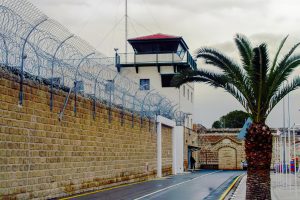
Nicosia Central Prison stands as a poignant symbol of Cyprus's colonial past and the island's struggle for independence, evolving from a British-built facility for maintaining order to a site of resistance and remembrance. Constructed in the late 19th century under British rule, this prison in the heart of Nicosia served as the primary detention center for criminals, dissidents, and political prisoners, reflecting the empire's efforts to control a strategically vital Mediterranean outpost. Later, during the mid-20th century Cyprus Emergency, it became synonymous with the anti-colonial fight led by EOKA fighters, who faced imprisonment, torture, and execution within its walls. As the only operational prison in the Republic of Cyprus today, parts of it have been preserved as a museum honoring those who resisted British authority, highlighting themes of repression, resilience, and national identity. This institution underscores Cyprus's complex history, where colonial architecture and punitive systems intersected with the rise of nationalism, shaping the island's path to sovereignty and continuing to evoke reflections on justice and memory in a divided nation. A Key Colonial Institution Nicosia Central Prison, nestled in the capital's urban fabric, emerged as a cornerstone of British colonial governance, designed to enforce law and order while suppressing dissent in a territory acquired from the Ottoman Empire in 1878. Spanning several hectares with fortified walls and watchtowers, the prison's…

Read more

Nea Paphos Ancient Capital of Roman Cyprus

Nea Paphos Ancient Capital of Roman Cyprus

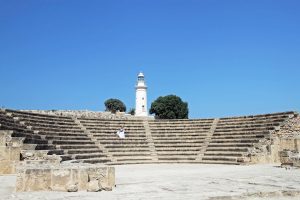
Nea Paphos occupies a coastal plain on the southwestern shore of Cyprus, adjacent to the modern city of Paphos. Founded in the 4th century BC by Nikokles, the last king of nearby Palaipaphos, Nea Pafos then went from strength to strength, particularly under the Ptolemaic kingdom from the 3rd century BC. The city was located on a peninsula surrounded by a natural bay and between the two small hills called Fanari and Fabrika. Nea Paphos was founded at the turn of the 4th and 3rd century BC as an important harbour located on the sea trade route from Rhodes to Alexandria. Thanks to its strategic location, from the 2nd century BC Nea Paphos became the capital of Cyprus and the seat of the strategos, general managing the island. The site preserves remains of villas, palaces, theaters, and tombs that span from the Hellenistic period through the Byzantine era, making it one of the Mediterranean's most significant archaeological areas. Historical Background Thanks to the extensive and modern port and access to cider wood from the nearby forests, Nea Paphos became a base of Ptolemaic navy and a military garrison made up of mercenaries was stationed here. The multicultural character of the city was probably complemented by many sailors and merchants, but also by pilgrims who, through the eastern city gate, set…

Read more