Explore Cyprus with Our Interactive Map

Explore our top stories and discover ideas worth your time.

Famagusta Martinengo Bastion

Famagusta Martinengo Bastion

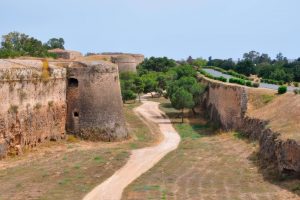
In the northwest corner of Famagusta's historic walled city stands one of the Mediterranean's most impressive examples of Renaissance military architecture. The Martinengo Bastion, also known as Tophane, represents a turning point in defensive technology and remains a testament to 16th-century engineering brilliance. When the Republic of Venice took control of Cyprus in 1489, military engineers quickly recognized a serious problem. The existing fortifications throughout the island were outdated and vulnerable to modern artillery. Medieval walls, built tall and thin to defend against siege towers and scaling ladders, could not withstand the devastating impact of cannon fire. Famagusta presented a particular challenge. As Cyprus's main port and commercial hub, the city required strong defenses. Yet its northwest corner remained especially weak, creating a dangerous gap in the defensive perimeter. The Venetians understood that this vulnerability could prove fatal if the Ottoman Empire decided to expand its territory into Cyprus. Giovanni Girolamo Sanmicheli Takes Command In 1550, the Venetians brought in Giovanni Girolamo Sanmicheli, nephew of the renowned fortification architect Michele Sanmicheli of Verona, to redesign Famagusta's defenses. The younger Sanmicheli arrived with experience in the latest military engineering techniques and an understanding of how warfare had evolved. Construction took approximately nine years. Sanmicheli died in Famagusta in 1559 before seeing his masterwork completed, but his vision resulted in a bastion…

Read more
Souvla in Cyprus

Souvla in Cyprus

Souvla is not simply a way of cooking meat in Cyprus. It is a social rhythm, a shared understanding that some meals are meant to take time. Built around large chunks of meat slowly rotating over charcoal, souvla turns cooking into an event and eating into a collective reward. To understand souvla is to understand how Cypriots value patience, hospitality, and togetherness. At its most basic level, souvla refers to large pieces of meat cooked on long metal skewers over charcoal. But the definition ends there, only technically. In practice, preparing souvla means committing several hours of the day to a shared experience that unfolds at its own pace. Unlike fast-grilled skewered meats found across the Mediterranean, souvla rejects speed. Once the fire is lit, the day slows down. Conversations begin, drinks are poured, and the cooking becomes the backdrop rather than the focus. The food will be ready when it is ready, and everyone involved understands that this is the point. Why Souvla Is Not Souvlaki The distinction between souvla and souvlaki is essential to Cypriot food culture, even though the two are often confused abroad. Souvlaki is small, quick, and practical, fitting easily into daily routines and street food culture. Souvla, by contrast, is large, slow, and intentional, reshaping the day around its preparation. Preparing souvla signals that…

Read more
Antikristos Ballos Cypriot Dances

Antikristos Ballos Cypriot Dances

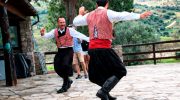
Along the Cypriotшнрлрло coast, some of the island’s most elegant traditions unfold not in grand halls but in village squares, wedding courtyards, and seaside promenades. Antikristos and Ballos are couple dances shaped by restraint rather than spectacle, where movement becomes a quiet dialogue between two people standing face to face. This article explores where these dances come from, how they are performed, why they developed along the coast, and how they continue to live on in modern Cyprus. Where Elegance Meets the Sea Cyprus has many folk dances, but coastal communities developed a style distinct from the energetic, high-leaping dances of the Troodos Mountains. In fishing towns and port cities, dance became more measured and composed, shaped by maritime trade, social etiquette, and exposure to outside influences. Antikristos and Ballos emerged in this environment. They are not group dances built around communal circles, but intimate pairings that reward control, posture, and timing. Rather than filling space, the dancers contain it. Dancing Face to Face The name Antikristos literally means “opposite” or “face to face,” describing the defining formation of the dance. Two dancers stand a few feet apart, mirroring and responding to each other without touching. Eye contact, balance, and rhythmic precision create the connection. In everyday language, many Cypriots also refer to the dance as Karsilamas, a broader Eastern…

Read more