Explore Cyprus with Our Interactive Map

Explore our top stories and discover ideas worth your time.

Tombs of the Kings

Tombs of the Kings

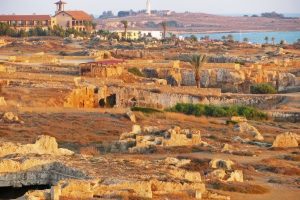
The Tombs of the Kings is a large necropolis that served the ancient city of Nea Paphos from the 3rd century BCE to the 3rd century CE. The site covers approximately 1.2 square kilometers in the northwestern part of the city, just outside the ancient fortifications. Eight major tomb complexes have been excavated, along with numerous smaller burial chambers. These monuments were built for Ptolemaic officials and aristocratic families who governed Cyprus during the Hellenistic period. The royal institution had been abolished in 312 BCE, so no actual kings were buried here. The name comes purely from the impressive scale and elaborate architecture of the tombs themselves. When early visitors saw these underground structures with their Doric columns and painted frescoes, they assumed only royalty could command such magnificent burial monuments. The tombs were carved from the natural limestone bedrock using tools and techniques developed in Alexandria, Egypt. The architecture imitates the houses of the living, following an Egyptian tradition that believed the dead should reside in spaces resembling their earthly homes. This created underground courtyards, burial chambers, and ritual spaces that remain remarkably preserved today. Historical Background Nea Paphos, meaning "New Paphos," was founded in the late 4th century BCE as the administrative capital of Cyprus under Ptolemaic rule. After Alexander the Great's death in 323 BCE, his empire…

Read more
Larnaca Synagogue Cyprus

Larnaca Synagogue Cyprus

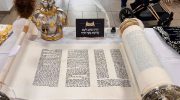
The Larnaca Synagogue represents the revival of Jewish religious life in Cyprus after centuries of minimal presence. Also known as the Great Synagogue of Cyprus or Cyprus Central Synagogue, the building was completed in 2005 and inaugurated on September 12, 2003. Located at Apollodorou 4 in Larnaca, this Orthodox Jewish congregation serves as the spiritual center for approximately 3,500 Jews currently living in Cyprus. The synagogue's establishment marked a historic moment, as Cyprus had been the only European Union nation without an active synagogue. The site serves multiple purposes beyond worship, housing a Jewish community center with educational facilities, kosher restaurants, and plans for a museum documenting Jewish history on the island. Historical Background The Jewish connection to Cyprus dates to the 3rd century BC during the Roman conquest of the island. Archaeological evidence indicates at least three ancient synagogues existed in Lapethos, Golgoi, and Constantia-Salamis. An inscribed column from the 4th century, now in the Cyprus Museum in Nicosia, records the renovation of a synagogue in the 3rd century, proving Jews had returned to the island after earlier expulsions. In 117 AD, Jews on Cyprus participated in the Kitos War, a massive revolt against Roman Emperor Trajan that spread across the eastern Mediterranean. Led by a Jewish commander named Artemion, the uprising on Cyprus resulted in the destruction of…

Read more

Cape Greco Sea Cliffs And Caves

Cape Greco Sea Cliffs And Caves

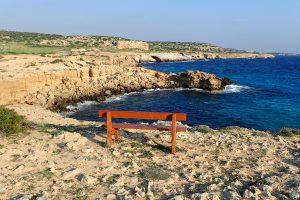
Cape Greco rises from the Mediterranean Sea at Cyprus's southeastern tip, where limestone cliffs drop sharply into turquoise waters, and erosion has carved spectacular sea caves that extend up to 80 metres into solid rock. Cape Greco, also known as Capo Greco or Kavo Greko, forms a rocky peninsula jutting into the Mediterranean between the resort towns of Ayia Napa and Protaras. The headland marks the easternmost point of both the Republic of Cyprus and the European Union, excluding outlying territories. The area covers 385 hectares protected as National Forest Park under the Cyprus Forestry Department since 1993, with additional recognition as part of the Natura 2000 network for its European ecological significance. Historical Background The limestone cliffs at Cape Greco formed from sediments deposited when shallow seas covered the region millions of years ago. Marine organisms including mollusks, corals, and microscopic creatures contributed calcium carbonate that accumulated on the seabed and eventually compressed into rock layers. Tectonic activity lifted these sediments above sea level, creating the elevated plateau that characterizes the cape today. Wave erosion shaped the detailed features that make Cape Greco distinctive. Constant pounding by Mediterranean storms exploits weaknesses in the limestone, gradually hollowing out caves, cutting through narrow points to form arches, and creating vertical channels where waves compress and release with explosive force. This process…

Read more