Explore Cyprus with Our Interactive Map

Explore our top stories and discover ideas worth your time.

Aphrodite Legends in Cyprus

Aphrodite Legends in Cyprus

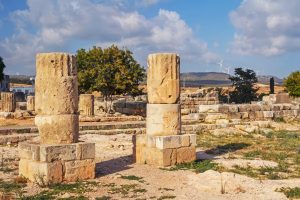
Cyprus holds a unique place in Greek mythology as the birthplace of Aphrodite, the goddess of love and beauty. According to ancient legend, she emerged from the sea foam near the southwestern coast of the island, arriving on the shores in a manner that captured the imagination of countless generations. This mythological connection transformed Cyprus into one of the most important religious centers in the ancient Mediterranean world. The island's association with Aphrodite went far beyond simple legend, shaping its culture, religion, and identity for thousands of years. Pilgrims traveled from across the ancient world to visit her sanctuaries, making Cyprus synonymous with the worship of love, beauty, and fertility. Historical Background The birth myth of Aphrodite contains dramatic elements that ancient Greeks found both shocking and meaningful. According to the poet Hesiod, the titan Cronus castrated his father Uranus, the sky god, and threw the severed parts into the sea. From the resulting foam, Aphrodite arose as a fully grown woman of extraordinary beauty. The name Aphrodite itself comes from the Greek word aphros, meaning foam. The waves initially carried her toward the Greek island of Kythera, but winds redirected her journey to Cyprus. She reached the shore at a location now called Petra tou Romiou, also known as Aphrodite's Rock. Local tradition claims that as she stepped onto…

Read more

Marriage and Birth Traditions of Cyprus

Marriage and Birth Traditions of Cyprus

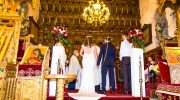
Marriage and birth stand as the most significant life transitions in traditional Cyprus society, each marked by elaborate rituals that involve entire communities. Wedding customs symbolize separation from childhood families and entry into adult society, while birth traditions welcome new members into both family and village. Orthodox Christianity frames these milestones through sacraments of marriage and baptism, but older customs dating to pre-Christian times persist beneath the religious overlay. The preservation and transmission of these customs falls mainly to new couples, their families, musicians who perform traditional songs, and folkloric groups that keep practices alive through demonstration and participation. Engagement and Marriage Preparations The engagement is usually arranged by the families of the bride and groom, who agree on the dowry, the wedding date, and other details. The groom's family visits the bride's family with gifts such as jewelry, clothes, and money. The bride and groom exchange rings and wear them on their right hands until the wedding day. In earlier times, marriages in Cyprus used to be arranged through the services of matchmakers known as proxenitra who facilitated negotiations between families. Upon engagement, the groom's family accepts the task of making traditional sesame-coated breads called glistarkes that the bride's family hands out as wedding invitations. These round breads carry symbolic meaning related to fertility and abundance. The ceremonial bread…

Read more
Troodos Monasteries and Chapels

Troodos Monasteries and Chapels

The Painted Churches in the Troodos Region represent a collection of ten Byzantine and post-Byzantine monuments dating from the 11th to the 16th centuries. These structures range from small rural chapels to monastery complexes, all sharing two defining characteristics. These are richly decorated interior frescoes and distinctive steep-pitched wooden roofs. Nine of the churches are located in the Nicosia District, while one, Timios Stavros in Pelendri, sits in the Limassol District. Together they provide an exceptional record of Byzantine and post-Byzantine painting in Cyprus, documenting artistic developments across five centuries of religious expression. Historical Background Cyprus became fully Byzantine in 965 AD when Emperor Nikephoros II Phokas sent General Niketas Chalkoutzes to reconquer the island. Before this, Cyprus had existed for nearly 300 years as a condominium jointly administered by the Byzantine Empire and the Arab Caliphate following agreements made in 688 AD under Emperor Justinian II and Caliph Abd al-Malik. This unusual arrangement, though frequently violated by both sides, kept the island relatively demilitarized and required Cypriots to pay taxes to both powers equally. After the Byzantine reconquest in 965, Cyprus became a theme (military province) and experienced a period of modest prosperity and peace. The island's Muslims either left or converted to Christianity. During the two centuries that followed, taxes remained high, but trade in silk and food…

Read more