Explore Cyprus with Our Interactive Map

Explore our top stories and discover ideas worth your time.

How Infrastructure Overcomes Cyprus’s Rugged Terrain

How Infrastructure Overcomes Cyprus’s Rugged Terrain

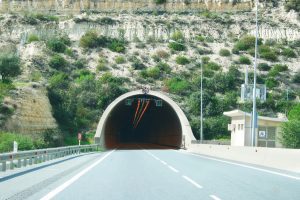
The Troodos Mountains cover roughly one-third of Cyprus, stretching across most of the western portion. Mount Olympus rises to 1,952 meters, making it the island's highest peak. These mountains formed through the collision of African and European tectonic plates, pushing ancient seabed rock formations skyward over millions of years. Climbfinder The landscape varies dramatically within short distances. Coastal areas sit at sea level while mountain villages perch at elevations exceeding 1,000 meters. Steep valleys cut through the terrain, with rivers carving gorges that modern roads must somehow cross. Wanderlog In 2011, heavy rainfall triggered 128 separate landslide incidents in Paphos, causing significant damage to roads and buildings. These geological realities force engineers to constantly assess slope stability when planning new infrastructure. The island's geology includes unstable clay-rich soils and fractured rock formations that shift during rainfall, creating ongoing maintenance demands. Building Motorways Through Mountains Cyprus developed its motorway network relatively recently compared to European neighbors. The A1, completed in October 1985, became the island's first motorway. Despite this late start, Cyprus now leads all European Union members with 36.8 kilometers of motorway per 100,000 inhabitants. The network totals approximately 7,206 kilometers of paved roads and 4,387 kilometers of unpaved routes. No toll roads exist anywhere on the island. The Public Works Department manages motorways and major roads, while municipalities handle…

Read more
Cyprus Carob Black Gold

Cyprus Carob Black Gold

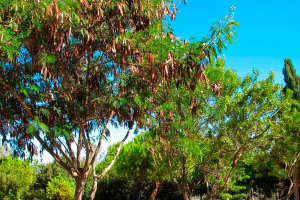
For centuries, the carob tree quietly underpinned life in Cyprus. Long before sugar, tourism, or modern industry reshaped the island, carob sustained rural families economically, nutritionally, and socially. Known locally as “black gold,” it was never glamorous, but it was dependable. In a land shaped by drought, invasion, and uncertainty, the carob tree endured, feeding people, funding villages, and anchoring tradition in the Cypriot landscape. A Tree Built for Hard Conditions The carob tree, Ceratonia siliqua, is perfectly adapted to Cyprus’s dry Mediterranean climate. Its deep roots draw moisture from far below the surface, allowing it to survive long summers without irrigation. Thick, leathery leaves reduce water loss, and slow growth produces a tree that can live for centuries. This resilience explains why carobs thrived where other crops failed. On rocky slopes and marginal land unsuitable for cereals, carob trees continued to produce reliable harvests. For rural communities, they were less a crop and more a form of insurance, offering stability in an unpredictable environment. Why It Was Called “Black Gold” The name "black gold" was not a poetic exaggeration. Ripe carob pods darken to a deep brown, almost black, and for generations, they ranked among Cyprus's most valuable exports. Even in years when wheat failed or rainfall was scarce, carob trees continued to bear fruit. For many families, a…

Read more

Saint Barnabas Gospels

Saint Barnabas Gospels

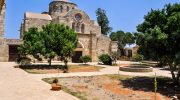
The “Saint Barnabas Gospels” refer to a tradition that helped secure the Church of Cyprus’s independence after a late fifth-century discovery near Salamis, where a Gospel of Matthew was said to rest on Saint Barnabas’s chest. Presented to Emperor Zeno, the manuscript functioned as proof of apostolic origin and was used to confirm Cyprus’s autocephaly in a jurisdictional dispute. This article explains the discovery story, why the original book matters even though it is lost, and how later Cypriot Gospel manuscripts carried the same claim through art, script, and ritual display. A Fifth-Century Power Dispute In the late fifth century, Cyprus stood at the centre of a quiet but serious dispute. Powerful church authorities on the mainland sought control over the island's Christian community, challenging its claim to independence. northcyprusinform-com According to tradition, Archbishop Anthemios was guided by a vision to the burial place of Saint Barnabas, near Salamis. When the tomb was opened, the saint’s remains were found holding a copy of the Gospel of Matthew. The discovery was not treated as symbolic. It was evidence.The manuscript was carried to Constantinople and presented to Emperor Zeno. By accepting it, the emperor confirmed that the Church of Cyprus had apostolic origins of its own and therefore did not answer to any external patriarch. From that moment on, Cyprus’s religious independence…

Read more