Explore Cyprus with Our Interactive Map

Explore our top stories and discover ideas worth your time.

Aphrodite Nature Trail

Aphrodite Nature Trail

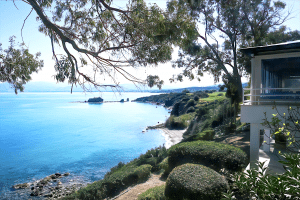
The Aphrodite Nature Trail cuts through the Akamas Peninsula, one of the last untouched wildernesses in Cyprus. This 7.5-kilometer circular route starts at the legendary Baths of Aphrodite and climbs to viewpoints where the entire northwest coast unfolds below. chooseyourcyprus-com The path combines mythology with genuine ecological significance, passing through an area that hosts 39 of Cyprus's 141 endemic plant species and serves as protected habitat for endangered sea turtles. The route reaches a maximum elevation of 370 meters at Moutti tis Sotiras, a rocky plateau that offers panoramic views across Chrysochou Bay to Cape Arnaoutis. Despite covering 7.5 kilometers, the trail maintains a moderate difficulty level, with most elevation gain concentrated in the middle section. Walking time ranges from 3 to 4 hours. The entire Akamas Peninsula covers 230 square kilometers and is designated as a NATURA 2000 protected area, recognized by the European Environment Agency as one of only 22 areas of endemism in Europe. The Goddess Who Rose from the Sea According to Greek mythology, Aphrodite emerged from sea foam off the coast of Cyprus. The Baths of Aphrodite, where the trail begins, is a natural grotto where the goddess supposedly bathed. Local legend claims this is where she met Adonis, her mortal lover, when he stopped to drink from the spring while hunting. The peninsula takes…

Read more
Church of the Transfiguration in Palaichori

Church of the Transfiguration in Palaichori

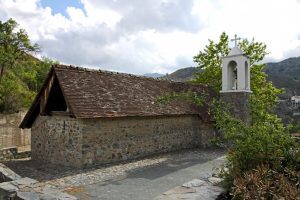
Church of the Transfiguration in Palaichori is a 16th-century Byzantine chapel in Cyprus's Troodos Mountains, renowned for its post-Byzantine frescoes that illustrate the persistence of Orthodox artistic traditions under foreign rule. Part of the UNESCO-listed Painted Churches, it preserves vivid paintings blending theological narratives with symbolic depth, reflecting medieval devotion in a rural setting. This site captures how faith endured and adapted, offering insights into Cyprus's cultural resilience amid external influences. sobory-ru A Testament to Enduring Faith in the Mountains The Church of the Transfiguration exemplifies the resilience of Byzantine religious architecture in Cyprus's highland regions, dedicated to Christ's Transfiguration - a pivotal event symbolizing divine glory and human potential for spiritual elevation. Situated in Palaichori village at an elevation of about 700 meters, amid orchards and pine-clad slopes, the chapel's modest stone form and interior art reflect the era's fusion of local Orthodoxy with subtle Western elements. Its construction and frescoes highlight the persistence of Byzantine traditions during Venetian (1489-1571) and early Ottoman (1571-1878) periods, when Catholic or Muslim influences challenged but did not erase island faith. As one of the ten Painted Churches inscribed on UNESCO's World Heritage List in 1985, it contributes to a group that collectively showcases Cyprus's medieval religious landscape, where rural isolation fostered artistic continuity amid political shifts. httpssobory-ru The chapel's location in the…

Read more
Astarte Cyprus Religion

Astarte Cyprus Religion

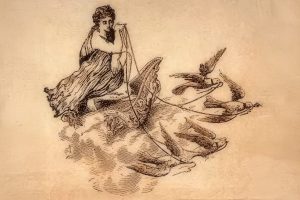
Origins and Divine Character Astarte was one of the most prominent goddesses of the ancient Near East, worshipped across regions such as Phoenicia, Syria, and Mesopotamia long before her influence reached the Mediterranean islands. She embodied a complex divine character, associated with fertility, sexuality, political power, and war. Unlike deities confined to a single sphere, Astarte represented a broad spectrum of life forces, from generative vitality to martial strength. Her worship reflected societies in which reproduction, protection, and sovereignty were inseparable concerns. Over time, her cult traveled westward through trade networks and cultural exchange, eventually reaching Cyprus, where it played a decisive role in shaping the island’s religious landscape. In Near Eastern tradition, Astarte was linked to celestial symbolism, often associated with the planet Venus and the cycles of the sky. This connection reinforced her dual nature as both a life-giving and powerful deity. Her attributes included protection of cities, legitimacy of rulers, and oversight of fertility in both human and agricultural contexts. These features made her cult adaptable to new cultural environments, allowing her identity to merge with local traditions while retaining core symbolic elements. Arrival and Establishment in Cyprus Cyprus’s position between the Levant and the Aegean made it a natural point of contact for eastern religious influences. Trade between Phoenician cities and Cypriot settlements facilitated not only…

Read more