Explore Cyprus with Our Interactive Map

Explore our top stories and discover ideas worth your time.

Cyprus Evening Life – Social Activities After Sunset

Cyprus Evening Life – Social Activities After Sunset

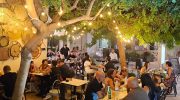
Cyprus after dark offers a distinctive social scene that differs greatly from typical European nightlife. Rather than rushing between clubs or bars, Cypriots embrace a slower, more communal approach to evening hours. The island's social life centers on conversation, connection, and shared experiences that stretch late into the night. gettyimages-com From traditional coffee shops filled with the click of tavli pieces to seaside promenades where families stroll until midnight, evening activities reflect values of hospitality and togetherness that define Cypriot culture. This relaxed approach to nighttime socializing creates an atmosphere where age, background, and status fade into the background. Historical Context The tradition of evening social activities in Cyprus traces back thousands of years. Ancient Greeks gathered in public spaces after sunset to discuss philosophy, politics, and daily events. The Romans continued this practice, adding thermal baths and forums as evening meeting places. During Byzantine times, the church became a central gathering point for evening services and community events. The Ottoman period introduced coffee culture to the island in 1571, transforming evening social patterns permanently. flickr-com These evening gatherings served practical purposes beyond entertainment. Before electricity, people needed communal spaces to extend productive hours through shared lamplight. Village squares became unofficial town halls where disputes were settled, business deals were struck, and news was exchanged. The kafeneio, or traditional coffee…

Read more
Lampadistis Monastery Cyprus

Lampadistis Monastery Cyprus

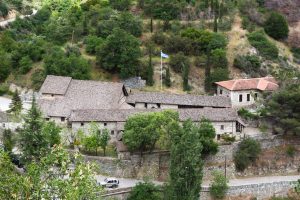
Ayios Ioannis Lampadistis in Kalopanayiotis is a rare monastery complex where three connected chapels preserve nearly a thousand years of Cypriot worship and wall painting within one enclosed interior. A single timber roof, built for the Troodos climate, protected multiple fresco phases and allowed Byzantine, local devotional, and Western-influenced imagery to survive side by side. This article explains how the complex grew, what each chapel contributes, and why Lampadistis remains one of Cyprus’s clearest records of faith evolving without erasing its past. sobory-ru Built by Layers, Not Plans The Lampadistis complex was never planned as a unified structure. Instead, it grew organically as needs changed, saints were venerated, and political realities shifted. The earliest building, the Church of Saint Herakleidios, dates to the 11th century and follows the classic Byzantine cross-in-square plan. In the 12th century, a second chapel was added to house the tomb of the local saint John Lampadistis, transforming the site into a place of pilgrimage. A third space, now known as the Latin Chapel, was built during Venetian rule in the late 15th century to accommodate Western Christian worship. commons-wikimedia-org What makes Lampadistis unusual is that these separate buildings were eventually unified beneath a single, oversized wooden roof. This practical solution protected the interiors from the harsh mountain climate, but it also created a rare architectural…

Read more

The Cyprus Golden Oak

The Cyprus Golden Oak

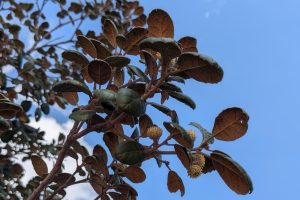
In the high, rocky landscapes of Cyprus's central mountains, one tree shines with a quiet golden glow. The Cyprus Golden Oak, an evergreen species found nowhere else on Earth, earns its name from the shimmering underside of its leaves. Walking through its groves offers a peaceful encounter with one of the island's most enduring natural wonders. Early history and naming The Cyprus Golden Oak, Quercus alnifolia, was first described in 1754 as a member of the genus Alnus (alders), hence the scientific epithet. Its local name, latzia (λατζιά), derives from Hylates — a title attributed by ancient Cypriots to the god Apollo. Hylates comes from the Greek word hyle (ὕλη), meaning forest. It’s an evergreen oak that grows only in Cyprus on basaltic and ultramafic rocks of Troodos ophiolite. Its most distinctive feature is the golden-coloured underside of its leaves, which gives the tree its common name. Notably, specimens cultivated outside their native habitat—such as those found in the Royal Botanic Gardens, Kew— fail to develop this characteristic golden coloration. Golden Oak ancestry and ecological role The Golden Oak branched off from its Turkish relatives to make a home on the volcanic rocks of the Troodos Mountains. It plays a crucial role on the mountain’s steep slopes, where its roots act as a natural anchor to stabilize the soil. Over…

Read more