Explore Cyprus with Our Interactive Map

Explore our top stories and discover ideas worth your time.

Cyprus Evening Life – Social Activities After Sunset

Cyprus Evening Life – Social Activities After Sunset

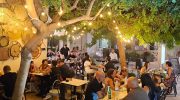
Cyprus after dark offers a distinctive social scene that differs greatly from typical European nightlife. Rather than rushing between clubs or bars, Cypriots embrace a slower, more communal approach to evening hours. The island's social life centers on conversation, connection, and shared experiences that stretch late into the night. gettyimages-com From traditional coffee shops filled with the click of tavli pieces to seaside promenades where families stroll until midnight, evening activities reflect values of hospitality and togetherness that define Cypriot culture. This relaxed approach to nighttime socializing creates an atmosphere where age, background, and status fade into the background. Historical Context The tradition of evening social activities in Cyprus traces back thousands of years. Ancient Greeks gathered in public spaces after sunset to discuss philosophy, politics, and daily events. The Romans continued this practice, adding thermal baths and forums as evening meeting places. During Byzantine times, the church became a central gathering point for evening services and community events. The Ottoman period introduced coffee culture to the island in 1571, transforming evening social patterns permanently. flickr-com These evening gatherings served practical purposes beyond entertainment. Before electricity, people needed communal spaces to extend productive hours through shared lamplight. Village squares became unofficial town halls where disputes were settled, business deals were struck, and news was exchanged. The kafeneio, or traditional coffee…

Read more

Understanding the Cyprus National Emblem

Understanding the Cyprus National Emblem

The coat of arms of the Republic of Cyprus depicts a dove carrying an olive branch, symbolizing peace, over 1960, the year of Cypriot independence from British rule. The background is a copper-yellow color, representing the large deposits of copper ore on Cyprus, chiefly in the form of chalcopyrite which is yellow in color. commons-wikimedia-org The two-part olive wreath surrounding the shield represents the two ethnic groups of Cyprus, Greeks and Turks. Adopted in 1960 following the Zurich and London Agreements that ended colonial administration, the emblem embodies aspirations for reconciliation between the Greek and Turkish Cypriot populations. The Designer Behind the Symbol Designed by Turkish Cypriot artist İsmet Güney, the emblem parallels the neutral motifs of the national flag to promote unity. The intentional incorporation of neutral motifs, a dove with an olive branch over the date of independence, symbolized peace without favoring Greek Orthodox crosses or Turkish crescents, aligning with the Zurich and London Agreements' stipulation for neutral state symbols chosen jointly by the Greek Cypriot president and Turkish Cypriot vice president. cyprustravellerguide-com Copper-infused elements, such as the yellowish shield tint evoking chalcopyrite ore, recur as a material nod to Cyprus's ancient metallurgical prominence, linking modern republican heraldry to the island's etymological roots in Latin aes Cyprium meaning "metal of Cyprus," derived from prehistoric bronze-age exports that named…

Read more
The Silvery Sentinels of Cyprus Slopes

The Silvery Sentinels of Cyprus Slopes

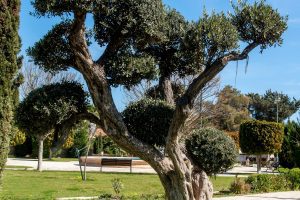
On rocky hillsides and gentle terraces across Cyprus, trees with shimmering silver-green leaves stand like wise elders, their twisted trunks telling stories of centuries under the Mediterranean sun. These are the olive trees, living treasures that have shaped the island’s landscape, diet and culture since the dawn of human settlement here. www.inaturalist.org A Classic Evergreen of the Olive Family Known to science as Olea europaea, the olive belongs to the family Oleaceae within the order Lamiales. In Cyprus it thrives both as the familiar cultivated form in orchards and as the wild oleaster (Olea europaea var. sylvestris), a tougher, smaller-fruited version that grows naturally in maquis and garigue vegetation alongside carob and wild pistachio. www.inaturalist.org Echoes from the Dawn of Cypriot Civilisation Olives have been part of Cyprus since at least the Bronze Age, with ancient pollen records and archaeological finds showing they were already valued for oil and fruit more than 4,000 years ago. Phoenician, Greek and Roman settlers expanded their cultivation, while the wild oleaster formed part of the original maquis shrublands described in 19th-century British forest reports. Over time, centuries of human care turned scattered wild trees into the productive groves that still cloak the island’s lower slopes today. Graceful Form and Enduring Strength The olive is an evergreen tree reaching 8–15 metres, with a short, often…

Read more