Explore Cyprus with Our Interactive Map

Explore our top stories and discover ideas worth your time.

Folk Traditions Shaping New Cypriot Identity

Folk Traditions Shaping New Cypriot Identity

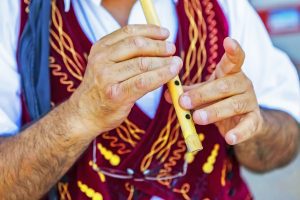
Cyprus's contemporary music scene is not driven by nostalgia, nor by imitation of global trends. Instead, it is shaped by a quiet but deliberate return to local sound. Over the past two decades, musicians across the island have begun reworking traditional Cypriot music into modern forms, blending ancient instruments, irregular rhythms, and modal melodies with rock, jazz, and electronic influences. The result is not a revival of folklore, but a living musical language that reflects modern Cypriot identity while remaining deeply rooted in place, memory, and shared experience. This evolving folk-fusion movement explains how Cyprus sounds today. It also reveals how music has become one of the island's most powerful tools for cultural continuity and dialogue. Not a Revival, but a Reconnection Unlike earlier attempts to modernize folk music, today's Cypriot fusion is not decorative. Traditional elements are not added for color. They shape the structure of the music itself. This shift became especially visible after Cyprus joined the European Union in 2004 and intensified following the financial crisis of 2013. As economic confidence declined, many artists began questioning imported cultural models and turned instead toward local traditions. Music became a way to explore identity without nostalgia, using inherited forms to speak about present realities. Importantly, this movement crosses political and cultural boundaries. Musicians from both sides of the island…

Read more
Salt Flats Coastal Wetlands

Salt Flats Coastal Wetlands

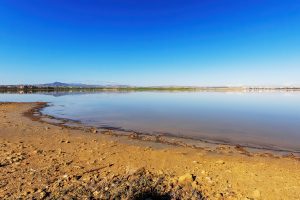
Salt Flats and Coastal Wetlands (Larnaca, Limassol, Akrotiri) are crucial ecosystems in Cyprus, serving as vital stopovers for migratory birds, habitats for flamingos, and homes to brine-adapted flora, holding international significance for biodiversity. These areas, including Larnaca Salt Lake, Limassol's Akrotiri Wetlands, and related sites, form interconnected zones where saltwater and freshwater mix, creating unique conditions that support thousands of species. They highlight the island's role as a Mediterranean biodiversity hotspot, where natural processes and human history intersect to foster life in challenging environments. birdlifecyprus-org A Vital Ecosystem in the Mediterranean Salt flats and coastal wetlands in Cyprus represent dynamic landscapes where land meets sea, characterized by shallow saline lakes, marshes, and mudflats that fluctuate with seasons. Larnaca Salt Lake, the largest inland wetland at 2.2 square kilometers, dries to a white crust in summer but fills with winter rains, hosting algae that tint waters pink. Limassol's Akrotiri Peninsula, covering 150 square kilometers, includes brackish lagoons and reed beds, while smaller sites like Oroklini add diversity. These zones support migratory birds numbering over 10,000 annually, flamingos that winter in flocks of 20,000, and brine-adapted plants like halophytes that thrive in salty soils. Their international significance stems from Ramsar Convention protection since 1997, recognizing them as wetlands of global importance for conservation and sustainable use. cyprusisland-net Formation Through Geology and Climate…

Read more

Lemba Lakkous Archaeological Site

Lemba Lakkous Archaeological Site

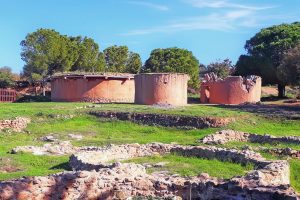
In the hills north of Paphos, a prehistoric village called Lemba-Lakkous offers a rare window into life 5,000 years ago. This Chalcolithic settlement produced some of Cyprus's most remarkable figurines and became the foundation for one of archaeology's most ambitious experiments: rebuilding an ancient village. cyprusmail-com Lemba-Lakkous sits just six miles north of Paphos in southwestern Cyprus, in a region known as the Ktima Lowlands. The settlement dates to the Late Chalcolithic period, from roughly 3500 to 2400 BC. This was a time when Cyprus saw remarkable cultural development, with around 100 villages spread across the island and communities mastering both stone tools and early copper metalwork. The site is part of a cluster of related settlements in the area, including Kissonerga-Mosphilia and Kissonerga-Mylouthkia. These villages likely held around 100 circular houses each, connected by shared traditions, pottery styles, and symbolic practices. How Archaeologists Uncovered the Site Modern excavations at Lemba-Lakkous began in 1976 under Professor Edgar Peltenburg of the University of Edinburgh. This marked the start of the Lemba Archaeological Project, which would transform our understanding of prehistoric Cyprus. The team worked at Lemba-Lakkous from 1976 to 1983, methodically uncovering layers of occupation that spanned centuries. paphoslife-com The excavations revealed seven structures, three of which preserved their stone foundations in excellent condition. The team established the Lemba Archaeological Research…

Read more