Explore Cyprus with Our Interactive Map

Explore our top stories and discover ideas worth your time.

Music and Identity in the Cyprus National Anthem

Music and Identity in the Cyprus National Anthem

Cyprus and Greece share the same national anthem, the Hymn to Liberty, making them the only two countries in the world to use the same musical composition for their national anthems. On November 16, 1966, it was unilaterally decided by the Greek members of government that the Greek anthem would be used by Cyprus as well. The Turkish members had already boycotted the government by this point. This decision reflected the cultural and historical ties between Greece and Cyprus, both of which share language, traditions, and a sense of common identity, though it also revealed the deep division between the island's two communities. The Revolutionary Poem Behind the Music Dionysios Solomos wrote Hymn to Liberty in 1823 in Zakynthos during the Greek War of Independence when Greeks fought to break free from nearly 400 years of Ottoman rule. He was only 25 years old at the time. The poem consists of 158 four-line stanzas, making it the longest national anthem text in the world. Inspired by the Greek War of Independence, Solomos wrote the hymn to honor the struggle of Greeks for independence after centuries of Ottoman rule. wikimedia-org The Hymn to Liberty recounts the misery of the Greeks under the Ottomans and their hope for freedom. He describes different events of the War, such as the execution of Patriarch…

Read more
Pelendri Cyprus Historic Village Vineyards Churches

Pelendri Cyprus Historic Village Vineyards Churches

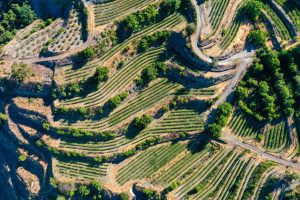
Pelendri is a mountain village in the Limassol district known for its UNESCO World Heritage church, traditional architecture, and established wine production. It’s located in the Pitsilia region at 880 meters altitude and 40 kilometers from Limassol. The village combines medieval history with contemporary viticulture in a setting of steep valleys and high peaks. mytroodos.com Despite being built on relatively barren slopes, the area benefits from approximately 750 millimeters of annual rainfall, which supports diverse cultivation and natural vegetation. Several tributaries cross through the area, providing water resources that sustain both agriculture and forest growth. The administrative boundaries of Pelendri include portions of the Troodos state forests and monastery forests. Natural vegetation includes pines, wild olives, plane trees, and various indigenous shrubs, with uncultivated areas maintaining rich plant diversity. Historical Background Historical records confirm Pelendri as an established settlement during the medieval period. Louis de Mas Latrie, documenting Cyprus during Lusignan rule, refers to the village as Pelendres or Pelondres. In 1353 it was a fief of John de Lusignan, Prince of Antioch and a member of the royal family of Cyprus. Medieval chronicler Georgios Boustronios mentioned the village twice in his writings. He recorded that around 1461, a wealthy merchant named Satin lived in Pelendri, indicating commercial activity in the settlement. Boustronios also documented two farmsteads in the Pelendri…

Read more
Roots from Afar

Roots from Afar

Picture yourself in a bustling Cypriot park on a warm afternoon, where a massive tree spreads its branches like a living umbrella, its twisting roots dangling mysteriously from above. This is the Chinese banyan, a grand fig tree that has found a second home on our island, offering shade and a touch of tropical wonder to everyday life. www.wikimedia.commons.org Meet the Mighty Fig The Chinese banyan is a type of fig tree from the vast Moraceae family, which includes over 800 species worldwide, from the sweet edible figs we enjoy to towering rainforest giants. In Cyprus, it's an evergreen tree cherished for its lush foliage and sturdy presence, blending seamlessly into our urban landscapes. Locally known as Ινδική δάφνη (Indikí dáphni), meaning "Indian laurel," a name that reflects its glossy leaves reminiscent of the laurel wreaths of ancient victors. An Asian Traveler's Tale This remarkable tree hails from the tropical forests of southern China, India, and Southeast Asia, where it has been revered for centuries in local cultures as a symbol of longevity and spiritual energy. Introduced to Cyprus during the British colonial era in the late 1800s, it was planted to provide quick-growing shade in towns and gardens, much like other exotic arrivals that helped green our sun-baked streets. Over time, it naturalized gently, adding its own chapter to…

Read more