Explore Cyprus with Our Interactive Map

Explore our top stories and discover ideas worth your time.

Agia Paraskevi Necropolis

Agia Paraskevi Necropolis

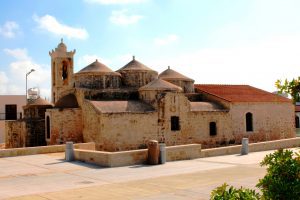
The Agia Paraskevi necropolis is an extensive Bronze Age burial ground located approximately half a mile north of the Church of Agia Paraskevi in the Nicosia district. The site occupies the edge of a plateau southwest of Cyprus's modern capital. It takes its name from the nearby Byzantine church. This cemetery was used continuously throughout the Early and Middle Bronze Age periods, roughly from 2400 BCE to 1100 BCE. The site contains hundreds of rock-cut chamber tombs where ancient communities buried their dead along with pottery, tools, jewelry, and other grave goods. These artifacts provide detailed information about how Cypriots lived, traded, and organized their societies during prehistoric times. The necropolis is particularly important because it represents the burial ground for ancient Ledra, one of the early kingdoms mentioned in Assyrian records. While the settlement itself lies buried beneath modern Nicosia, the cemetery on the plateau has survived and offers the most complete picture of life in central Cyprus during the Bronze Age. Historical Background The Agia Paraskevi necropolis came to archaeological attention in the late 19th century. In 1883 and 1884, German archaeologist Dr. Max Ohnefalsch-Richter conducted extensive excavations at the site. His work uncovered numerous tombs and established the cemetery's importance for understanding Cypriot prehistory. cyprusisland.net Ohnefalsch-Richter arrived in Cyprus in 1878 as a journalist but quickly shifted…

Read more
Cyprus Holy Site Pilgrimages

Cyprus Holy Site Pilgrimages

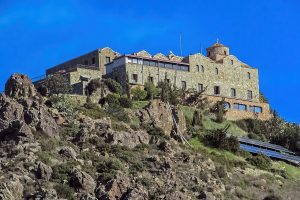
Cyprus has been a destination for religious pilgrims for over 1,700 years. The island holds a unique place in Christian history as one of the first regions to embrace Christianity and the first territory in the world to have a Christian ruler. Dozens of monasteries, churches, and holy sites dot the landscape from the coastal cities to the mountain peaks. kiprguru-com These locations preserve relics, icons, and traditions that connect believers to the earliest days of the faith. Pilgrims from around the Orthodox world, as well as from Catholic and other Christian communities, journey to Cyprus to experience these sacred places. Religious tourism in Cyprus combines spiritual devotion with remarkable natural beauty. Pilgrimage sites exist in diverse settings, from ancient coastal cities to remote mountain monasteries accessible only by winding roads. Visitors encounter Byzantine frescoes, miracle-working icons, holy relics, and architecture spanning centuries. The experience offers both worship and cultural education, as these sites preserve artistic and historical treasures alongside their religious significance. Whether visiting for personal faith, scholarly interest, or simple curiosity, travelers find that Cyprus's holy sites reveal much about the development of Eastern Christianity. Historical Background The tradition of Christian pilgrimage to Cyprus began with the island's conversion in the first century. Around 45 AD, the apostles Paul and Barnabas arrived at Salamis on the eastern coast.…

Read more

Why Cypriot Halloumi Holds Global Culinary Status

Why Cypriot Halloumi Holds Global Culinary Status

The global halloumi market is approximately 500 million dollars in sales per year, and the UK is the largest importer, with halloumi accounting for 13.4 percent of exports from the Republic of Cyprus. kibrisgenctv-com This semi-hard cheese has transformed from a rural Cypriot staple into a global culinary phenomenon, appearing on restaurant menus from London to Tokyo and dominating barbecue grills across continents. What began as a practical way for Mediterranean shepherds to preserve milk has become one of the world's most distinctive and sought-after cheeses. What Makes Halloumi Physically Unique The production process creates halloumi's distinctive characteristics. The most crucial step involves boiling the pressed curds in hot whey collected during pressing for at least 30 minutes, a process known as scalding. myguidecyprus-com The cooked pieces are then removed from the whey and salted, and fresh or dried mint leaves are added before the pieces are folded and stored in salted whey for one to three days. For mature halloumi, the cheese must remain in brine for at least 40 days at temperatures between 15 and 20 degrees Celsius. The cheese contains approximately 25 percent fat by wet weight and 17 percent protein. Its firm texture when cooked causes it to squeak on the teeth when chewed. Unlike most cheeses that use acid-producing bacteria, halloumi relies on rennet to…

Read more