Explore Cyprus with Our Interactive Map

Explore our top stories and discover ideas worth your time.

Panagia Angeloktisti Church Kiti

Panagia Angeloktisti Church Kiti

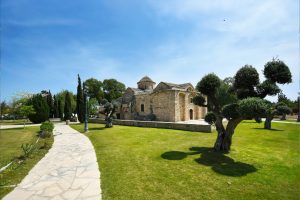
Panagia Angeloktisti Church stands in the village of Kiti, roughly 12 kilometers southwest of Larnaca. The church dates to the 11th century and was built over the ruins of a 5th century early Christian basilica. somewhereincyprus-com The name Angeloktisti translates to "Built by Angels" in Greek. The original apse of the basilica survived along with one of the finest pieces of Byzantine art on the island, a rare 6th century mosaic of the Virgin Mary and Child between the Archangels Michael and Gabriel. This stone church preserves multiple layers of Cyprus's religious history, from early Christian times through Byzantine and Frankish periods. The building serves as an active place of worship while housing artistic treasures that connect directly to the Byzantine Empire's golden age. Historical Background The residents of ancient Kition moved to Kiti to escape Arab invasions that plagued the coastal areas during the 7th and 8th centuries. Kition was an ancient Phoenician and Greek city-kingdom that served as a major port, exporting agricultural products across the eastern Mediterranean. As Arab raids intensified and the Byzantine Empire struggled to maintain control over Cyprus's periphery, inhabitants sought safer inland locations. Many Cypriot basilicas were destroyed around the 7th and 8th centuries, either from Arab raids or fires, since churches were wooden structures lit by oil lamps. The apse and mosaic…

Read more
Ancient Kourion in Cyprus

Ancient Kourion in Cyprus

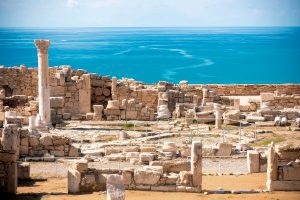
Ancient Kourion sits on a limestone cliff nearly 100 meters high along the southwestern coast of Cyprus, overlooking Episkopi Bay. The site was first inhabited during Neolithic times, with the earliest evidence dating back to 4,500 to 3,900 BC, but the town itself was founded in the 13th century BC by the Argives. orangecyprushome.com The city-kingdom was built on the hills of the area and overlooked and controlled the fertile valley of the river Kouris. Archaeological finds suggest that Kourion was associated with the Greek legend of Argos of Peloponnese, and its inhabitants believed they were descendants of Argean immigrants. The site stands as one of Cyprus's most impressive archaeological areas, preserving remains that span from the Bronze Age through the Byzantine period. The ruins tell stories of prosperity, political intrigue, natural disaster, and religious transformation. Historical Background According to Herodotus, Kourion was founded by Argives in the Late Bronze Age and was named for Koureus, the son of Cinyras, the first king of Cyprus. The Assyrian kings Sargon II and Esarhaddon mentioned Damasu, king of Kuri, in their records. During the Cypriot uprising against Persia in the 5th century BC, its king Stasanor betrayed his country, lending his support and troops to the Persians. However, Kourion later supported Alexander the Great's fight against the Persians in the 4th century…

Read more

Cyprus Metal Crafts Through Ages

Cyprus Metal Crafts Through Ages

Cyprus holds a unique position in metalworking history. The island gave its name to copper itself, with the Latin term "cuprum" deriving from "Cyprus." For over 6,000 years, Cypriot artisans have shaped metals into tools, weapons, jewelry, and decorative objects. The tradition spans from simple Chalcolithic copper tools around 4000 BCE to Byzantine gold treasures and modern handcrafted silver jewelry. This heritage connects ancient mining operations in the Troodos Mountains with contemporary workshops where craftspeople maintain techniques passed down through generations. myfirstticket.com Historical Background The metal story in Cyprus begins during the Chalcolithic period when early settlers discovered native copper deposits. By 3000 BCE, Cypriots were already working copper to create artifacts of high quality that circulated throughout the Mediterranean. Archaeological evidence shows that copper smelting started during the third millennium BCE, transforming the island into a major production center. www.ancientcyprus.com The Bronze Age brought massive expansion. Cyprus became the largest copper supplier around the Mediterranean, with the island's strategic location between three continents making it a vital trading hub. Ancient texts from Babylon, Mari, and Alalakh dating to the 19th through 17th centuries BCE mention copper from Alashiya, the Bronze Age name for Cyprus. The Ulu Burun shipwreck discovered off Turkey's southwestern coast carried over 10 tons of Cypriot copper ingots when it sank in the late 14th century…

Read more