Archaeology and Ancient Sites

Articles: Archaeology and Ancient Sites

Stories in this category and its subcategories.

​​Historic Cyprus Churches in Rural Landscapes

​​Historic Cyprus Churches in Rural Landscapes

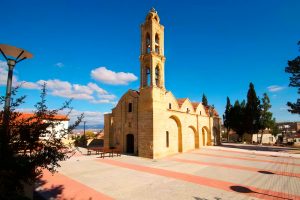
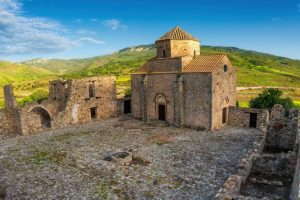
Historic churches scattered across Cyprus's Troodos Mountains preserve Byzantine and post-Byzantine frescoes within humble rural buildings, creating stark contrasts between simple exteriors and elaborate interior decorations. UNESCO recognized ten of these structures in 1985 and 2001 as the Painted Churches in the Troodos Region, acknowledging their outstanding testimony to Byzantine civilization and well-conserved examples of rural religious architecture. In-Cyprus They range from small churches whose rural architectural style is in stark contrast to their highly refined decoration, to monasteries such as that of St John Lampadistis. The churches date from the early 11th to early 16th centuries, spanning 500 years of artistic evolution influenced by Byzantine, Frankish, Venetian, and local Cypriot traditions. Steep wooden roofs with locally manufactured flat tiles…

Read more
Agios Nikolaos tis Stegis

Agios Nikolaos tis Stegis

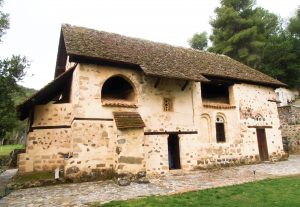
Agios Nikolaos tis Stegis, near Kakopetria in the Solea Valley, is one of Cyprus’s most important painted churches, preserving multiple phases of Byzantine frescoes inside a modest mountain building. Its steep timber roof, added for protection, helped these wall paintings survive centuries of harsh weather and shifting rule. This article explains how the church evolved, what the fresco layers show, and why the site remains a rare visual record of Byzantine life in Cyprus. Agios Nikolaos tis Stegis stands on the western bank of the Karkotis River, near the village of Kakopetria, at an elevation of roughly 700 meters. dreamstime-com This mountain setting explains one of the church’s most defining features. Unlike urban Byzantine churches, which display their domes openly,…

Read more
Ancient Amathus

Ancient Amathus

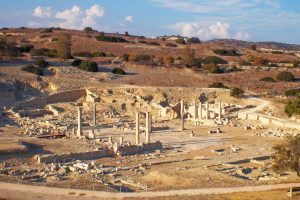
Amathus projected authority through stone: colossal vessels and carved reliefs that required skill, labour coordination, and long-term planning on a civic scale. wikimedia-org These monuments turned ritual spaces into political statements, using weight, repetition, and hybrid symbols to make royal legitimacy feel permanent and divinely protected. This article traces how vessels, reliefs, and funerary sculpture worked together to communicate power at Amathus without relying on lengthy inscriptions. Monumental Scale, Local Identity Located on Cyprus’s southern coast, Amathus developed as one of the island’s most distinctive city-kingdoms during the early first millennium BCE. Unlike other centres that aligned themselves quickly with Greek traditions, Amathus retained a strong indigenous identity, often described as Eteocypriot. This sense of cultural independence was not passive.…

Read more
Deneia Necropolis Cyprus Bronze Age Site

Deneia Necropolis Cyprus Bronze Age Site

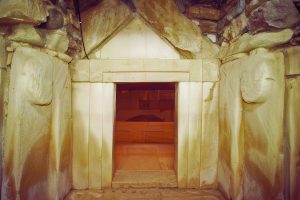
Just southeast of the modern village of Deneia in the Nicosia district lies one of Cyprus's most significant Bronze Age burial grounds. This ancient necropolis contains over 1,250 tombs that document nearly a thousand years of funerary practice, from approximately 2500 BCE through 1650 BCE, making it among the most extensively used cemeteries in prehistoric Cyprus. cyprusisland.net The Deneia necropolis represents an extraordinary concentration of chamber tombs carved into natural rock during the Early and Middle Bronze Age periods. Unlike many smaller cemeteries scattered across Cyprus that served individual villages, Deneia appears to have functioned as a regional burial ground that drew communities from a wider area. The tombs follow the standard Bronze Age design, with a dromos or entrance…

Read more
Temple of Aphrodite at Amathus

Temple of Aphrodite at Amathus

Located on the acropolis of Amathus, this sanctuary was a major rival to Paphos and featured two giant stone vases symbolizing the city's wealth. The Temple of Aphrodite at Amathus stands as an enduring symbol of Cyprus's ancient religious landscape, where devotion to the goddess of love and fertility rivaled the famed sanctuary at Paphos, drawing pilgrims from across the Mediterranean. Perched on the acropolis of the ancient city-kingdom of Amathus, near modern Limassol, this site blended indigenous Cypriot traditions with Phoenician, Greek, and Roman influences, reflecting the island's role as a cultural melting pot. Dedicated to Aphrodite, often syncretized with the earlier Astarte, the temple highlighted Amathus's prosperity through monumental features like two colossal stone vases, each weighing around…

Read more
Temple of Astarte-Aphrodite at Tamassos

Temple of Astarte-Aphrodite at Tamassos

The Temple of Astarte-Aphrodite at Tamassos was a sacred site where different religious traditions met and blended. It reflects the merging of the Phoenician goddess Astarte with the Cypriot form of Aphrodite, showing how Cyprus functioned as a crossroads of belief in the ancient Mediterranean. The sanctuary reveals how cultures interacted not only through trade and politics, but also through shared and evolving religious ideas. A Sanctuary in the Heart of Cyprus Tamassos lay inland, near rich copper resources and important trade routes. Though far from the coast, it was deeply connected to the wider Mediterranean world. The presence of a sanctuary dedicated to Astarte-Aphrodite reflects these connections and the movement of people, goods, and beliefs across the island. facebook-com…

Read more
Temple of Zeus Salaminios

Temple of Zeus Salaminios

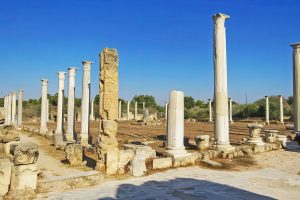
The Temple of Zeus Salaminios was one of the most important religious monuments of ancient Salamis. Dedicated to Zeus as the supreme god of the Olympian pantheon, it symbolised the city’s Greek identity, political authority, and connection to divine protection. dreamstime-com Through this temple, Salamis expressed its place within the wider Greek world while affirming its own power and prestige. A Temple at the Heart of Salamis The Temple of Zeus Salaminios stood within the great city of Salamis on the eastern coast of Cyprus. As one of the island’s largest and wealthiest cities, Salamis required a religious centre that matched its status. vici-org The choice of Zeus was deliberate. As ruler of gods and men, Zeus represented order, authority,…

Read more
Amathus Agora, Cyprus

Amathus Agora, Cyprus

The agora at Amathus stands as one of the most important marketplace ruins in Cyprus. This ancient public square served as the commercial and political heart of a city that thrived for over two thousand years. Located in the lower town of what was once a major Mediterranean trading hub, the agora reveals how Romans organized their public spaces and conducted daily business in this eastern corner of their empire. wikimedia-org Historical Background Amathus was founded around 1100 BC and grew into one of the ancient royal cities of Cyprus. The settlement sat on coastal cliffs about 11 kilometers east of modern Limassol, positioned where a natural harbor allowed ships to dock safely. This strategic location helped Amathus become a…

Read more
Stone Columns Above Cyprus Blue Waters

Stone Columns Above Cyprus Blue Waters

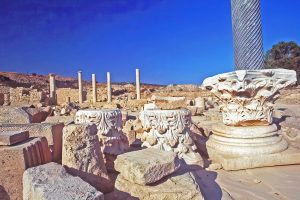
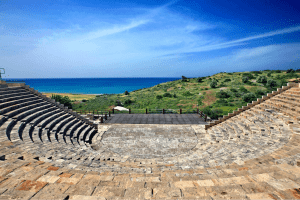
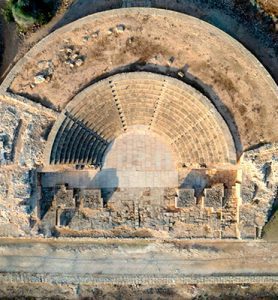
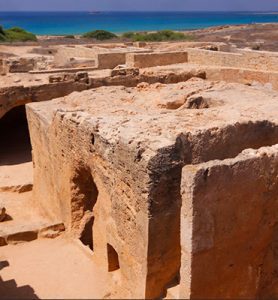
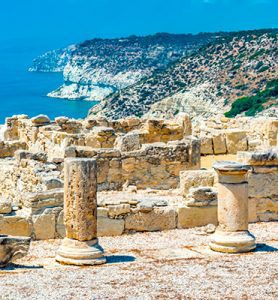
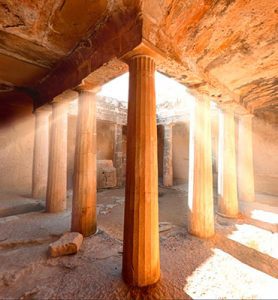
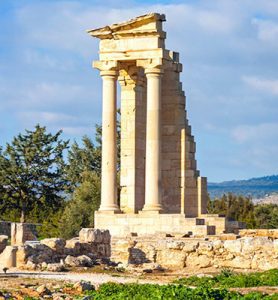
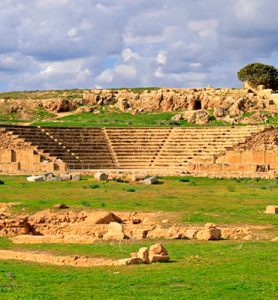
Cyprus coastal monuments showcase classical architecture where ancient stone columns rise against Mediterranean horizons, creating dramatic vistas that combine archaeological significance with natural beauty. The most impressive examples include the Greco-Roman theatre at Kourion perched on coastal cliffs 70 meters above sea level, the Sanctuary of Apollo Hylates with its partially restored temple columns, and the Tombs of the Kings in Paphos featuring underground burial chambers decorated with Doric pillars. Shutterstock-com These structures date primarily from Hellenistic and Roman periods between the 4th century BC and 4th century AD, when Cyprus prospered under successive empires. The architectural elements follow classical Greek orders with refinements from Roman building techniques, creating monuments that have withstood earthquakes, invasions, and two millennia of Mediterranean…

Read more