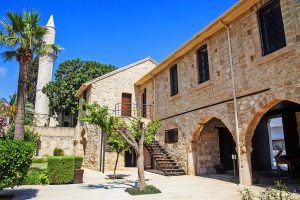
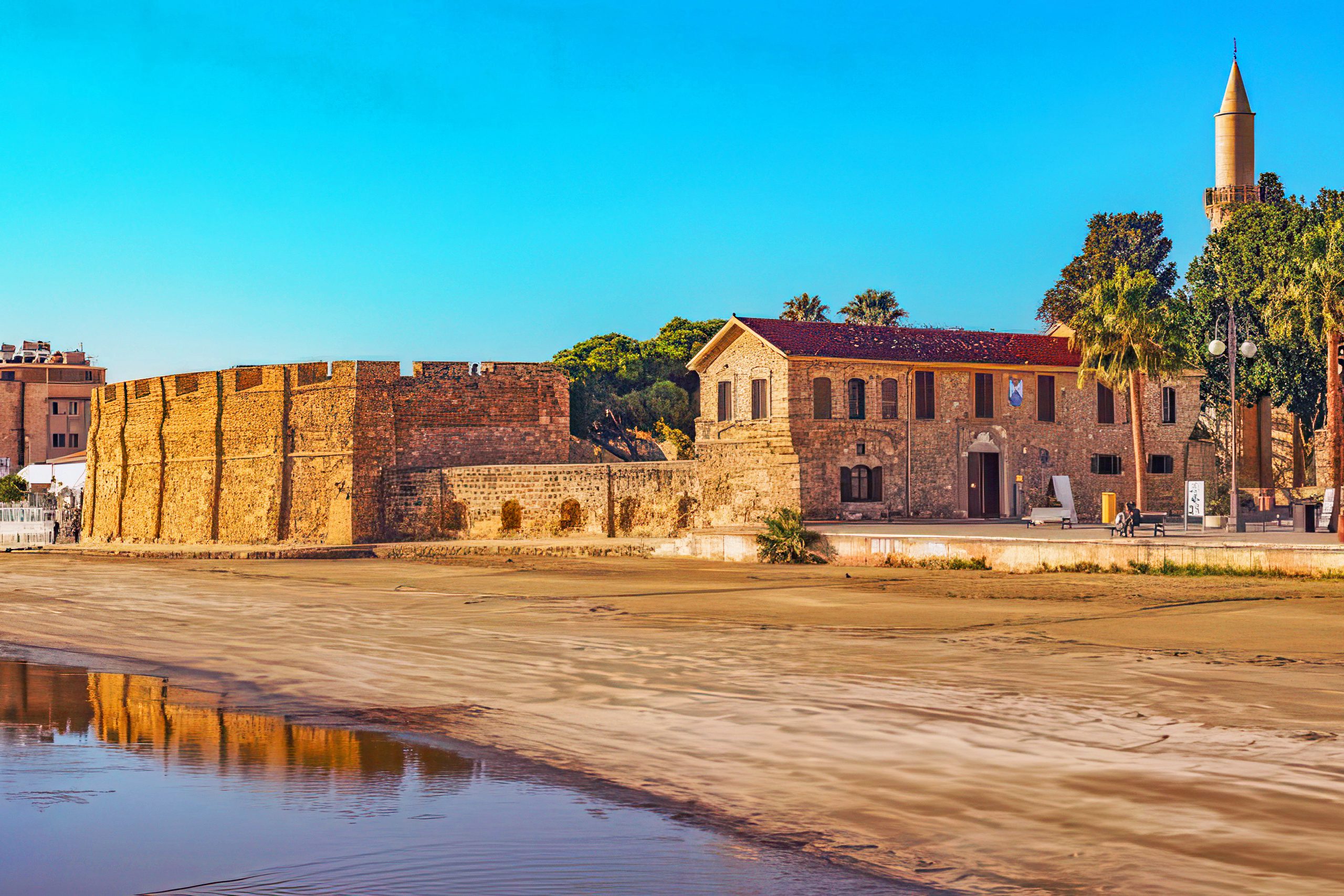
Larnaca Fort is a coastal defensive structure that started as a Byzantine fortification and took its current form during Ottoman rule in the 17th century. The fort sits directly on the waterfront at the western edge of one of Cyprus’s most popular seaside promenades. Despite its modest size compared to larger Cypriot castles like Kyrenia or Kolossi, the fort played an essential role in protecting Larnaca harbour and the southern coast from pirates and invaders. Today, it houses the Larnaca Medieval Museum and hosts cultural events in its courtyard.
Historical Background
Archaeological evidence suggests the Byzantines built a small fortification on this site in the late 12th century. Larnaca, known in ancient times as Kition, had been inhabited since the 14th century BC. The medieval fort became necessary when the Genoese captured Famagusta, Cyprus’s main port, in 1373. This forced the Lusignan Kingdom of Cyprus to develop Larnaca as an alternative major port.
According to medieval chronicler Florius Boustronius, King James I of Cyprus ordered the expansion of the Byzantine fortification into a more substantial castle between 1382 and 1398. The castle’s primary purpose was to defend the harbour and protect the increasingly important port town. During this period, Larnaca transformed from a minor coastal settlement into one of the kingdom’s principal trading centers, making coastal defenses critical for both military security and economic protection.
Ottoman Reconstruction and Purpose
When the Ottoman Empire conquered Cyprus in 1570, a Turkish garrison immediately occupied the fort. However, the structure we see today dates primarily from 1625, when the Ottomans completely rebuilt the fortification. This reconstruction has caused some historical confusion, with 18th-century sources claiming the Ottomans built the castle from scratch rather than rebuilding an existing structure.
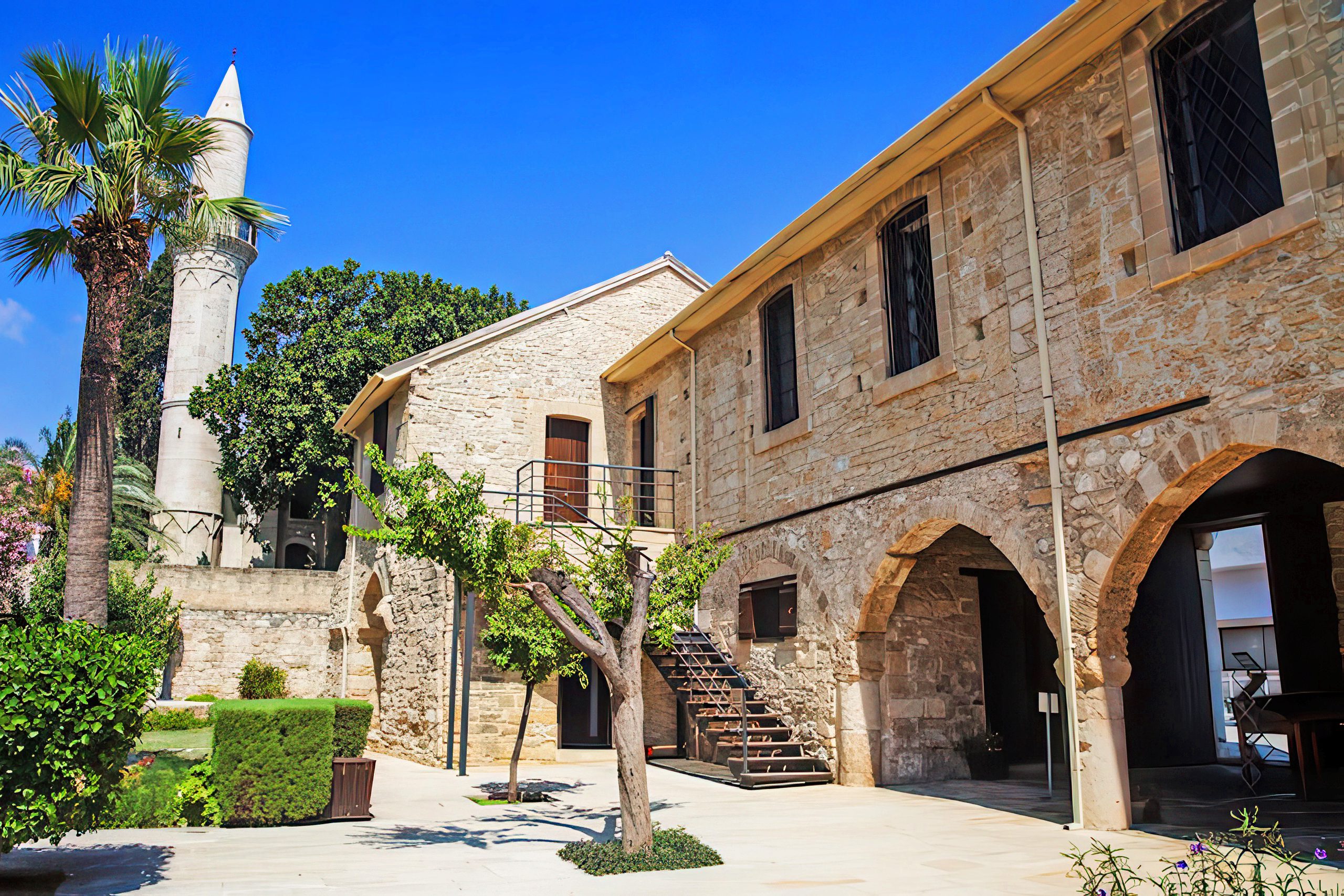
Italian explorer Abbot Giovanni Mariti visited the fort in the mid-18th century and found it in a semi-ruined state, though a small garrison still protected it. He theorized the castle was built by the Ottomans based on its Turkish architectural style and the Turkish inscription above the main entrance. The two-story building on the north side clearly shows Ottoman design elements and construction methods that differ from the earlier medieval sections.
The Ottomans used the fort primarily for harbor defense against pirates who regularly threatened Mediterranean shipping lanes. Pirates posed a constant danger to merchant vessels, and coastal fortifications like Larnaca Fort provided crucial protection for commercial activities. The fort was equipped with cannons, and a small unit of janissaries maintained a permanent presence. By the mid-18th century, however, the fort’s military importance had declined. Its main function became firing salute shots to passing ships, a ceremonial role rather than an active defensive one.
British Prison and Execution Site
When Britain took control of Cyprus in 1878, the fort’s role changed dramatically. The British converted the structure into a prison, transforming the defensive fortress into a place of confinement and punishment. The western chamber on the ground floor of the eastern wing became an execution room. The British installed gallows in this chamber, which remained in operation until 1948.
The last execution at Larnaca Fort took place in 1948, marking the end of a dark chapter in the building’s history. The gallows installations were discovered years later during conservation and restoration work. This grim period added a somber layer to the fort’s historical narrative, connecting it to British colonial justice practices across the empire.
Architecture and Structure
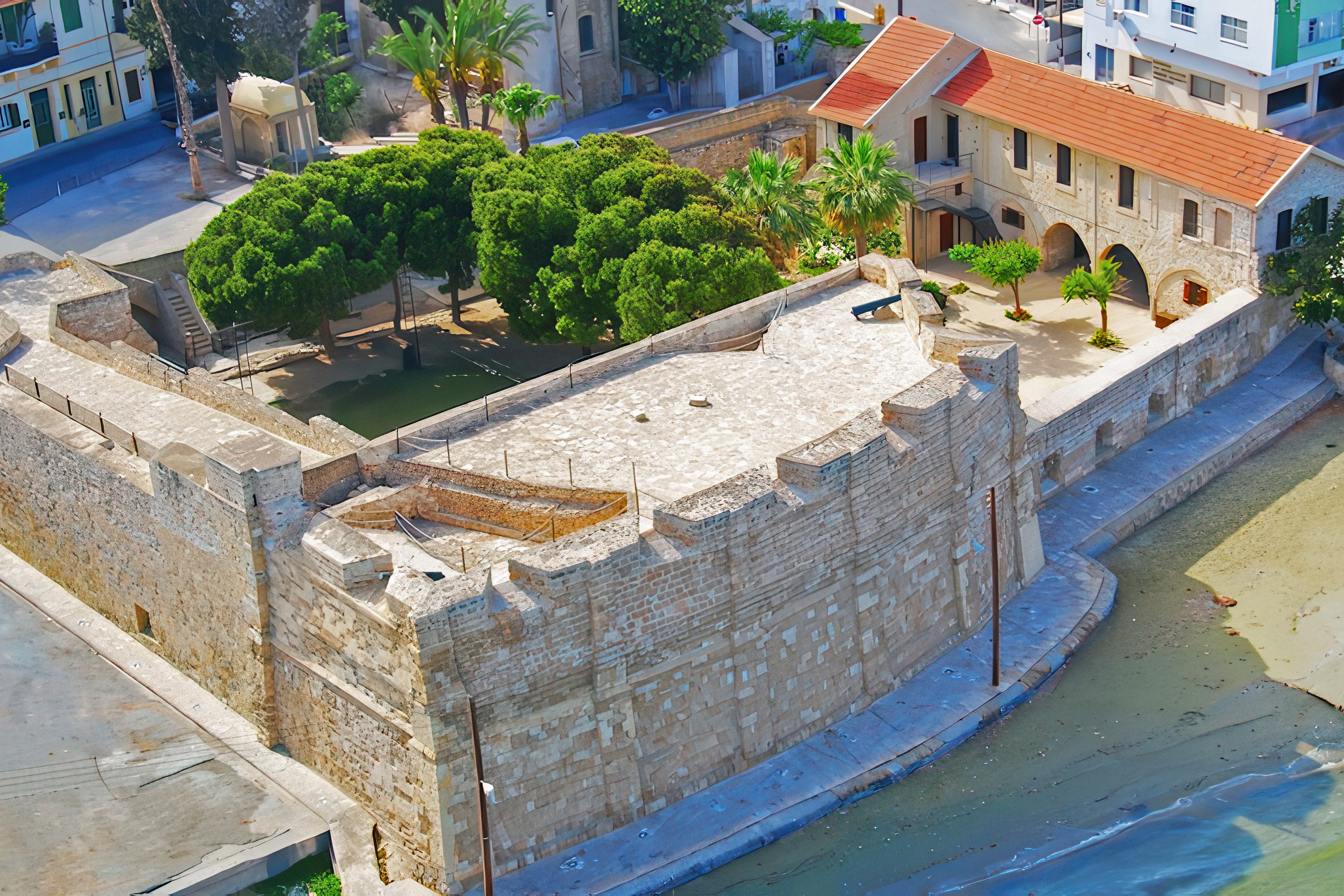
The fort’s architecture reflects its various periods of construction. The two-story building on the north side was built during the Ottoman period, evidenced by its distinctive architectural style and the Turkish inscription above the entrance. The eastern and southern wings belong to earlier construction phases from the medieval period.
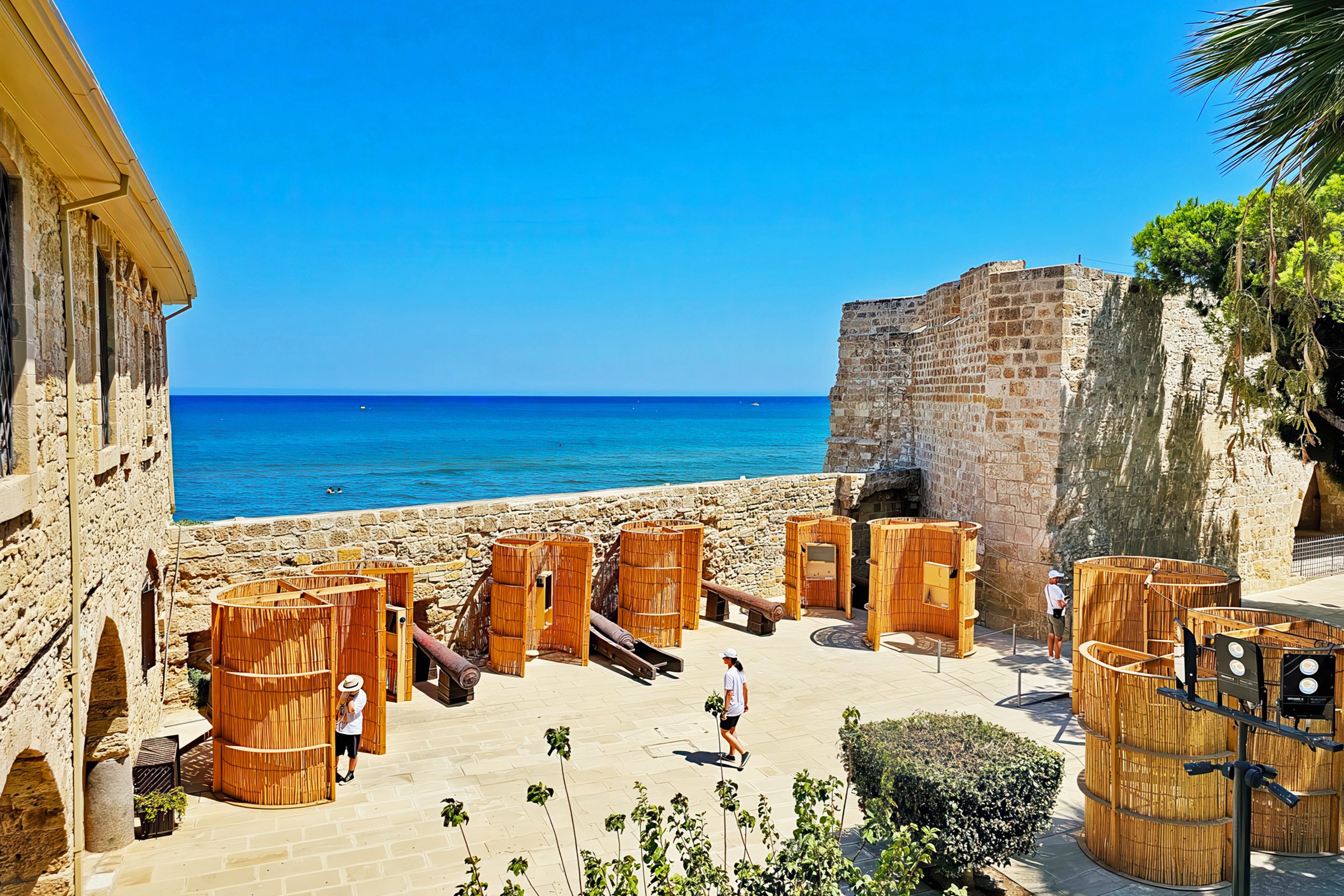
The southern half of the eastern side features an unusual architectural detail: a semi-circular apse on the inside that transforms into a rectangular shape on the outside. This section contains rooms covered with pointed arches, typical of medieval military architecture. A square tower sits on the eastern side, under which 14th-century tombstones from Gothic churches in Nicosia are displayed.
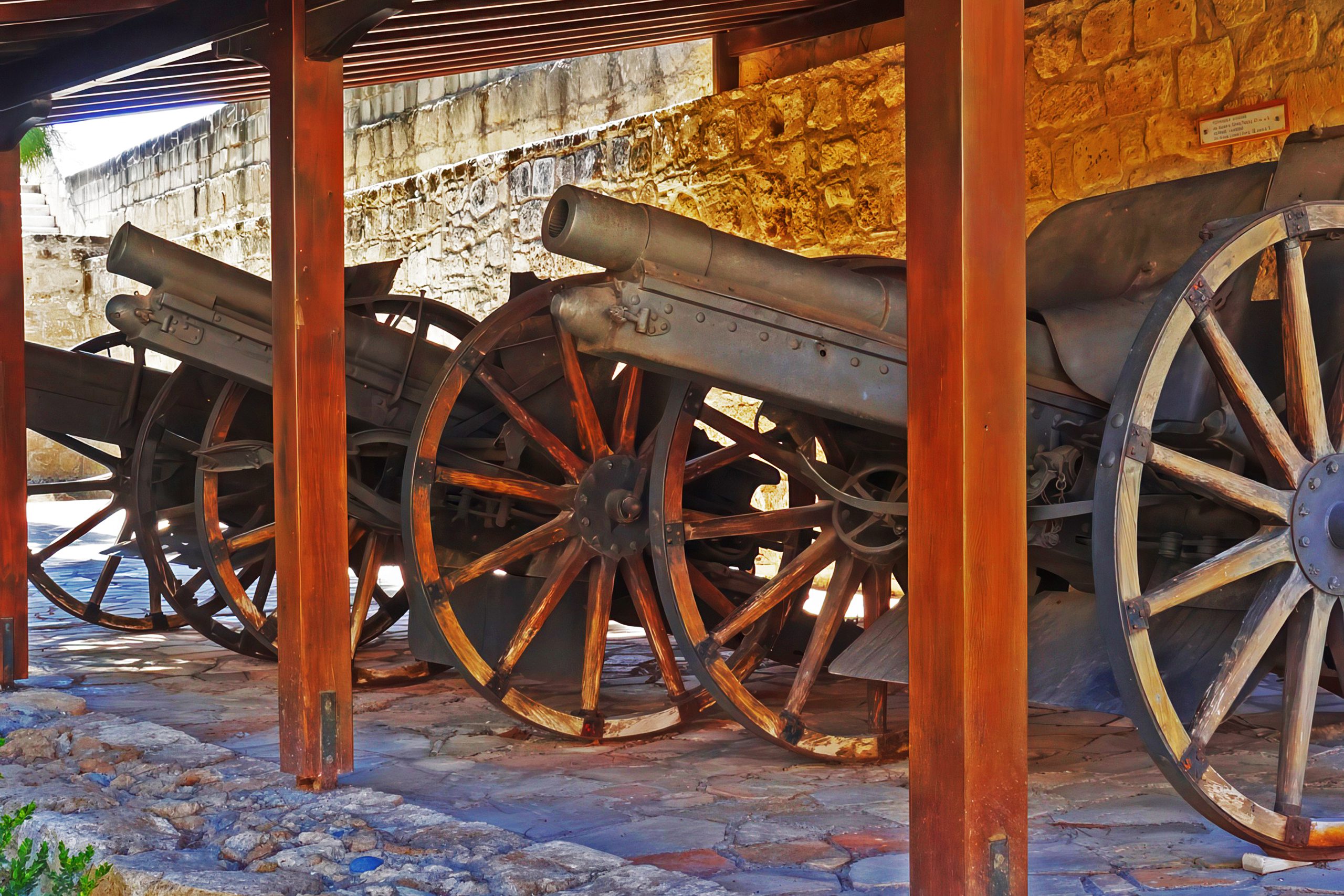
The courtyard serves as the fort’s central space, connecting various rooms and buildings from different periods. A porch connects two rooms, one now housing the ticket office and the other leading to the former gallows area. The courtyard contains a collection of well-preserved Ottoman cannons from the medieval period that children particularly enjoy examining. Outside the fort walls, the old moat once provided additional defensive capabilities.
The Medieval Museum Collections
After Cyprus gained independence in 1960, the fort was converted into a museum. The Larnaca Medieval Museum occupies three rooms on the upper floor of the main building, directly above the entrance. The collection spans 15 centuries of Cypriot history, organized chronologically and thematically.
The western room displays antiquities from the Early Christian period (4th–7th centuries), along with photographs of Byzantine and post-Byzantine monuments from across Cyprus. The central room contains photographic material documenting Byzantine wall paintings dated from the 11th to 16th centuries. These photographs preserve images of important religious artwork from churches throughout the island.
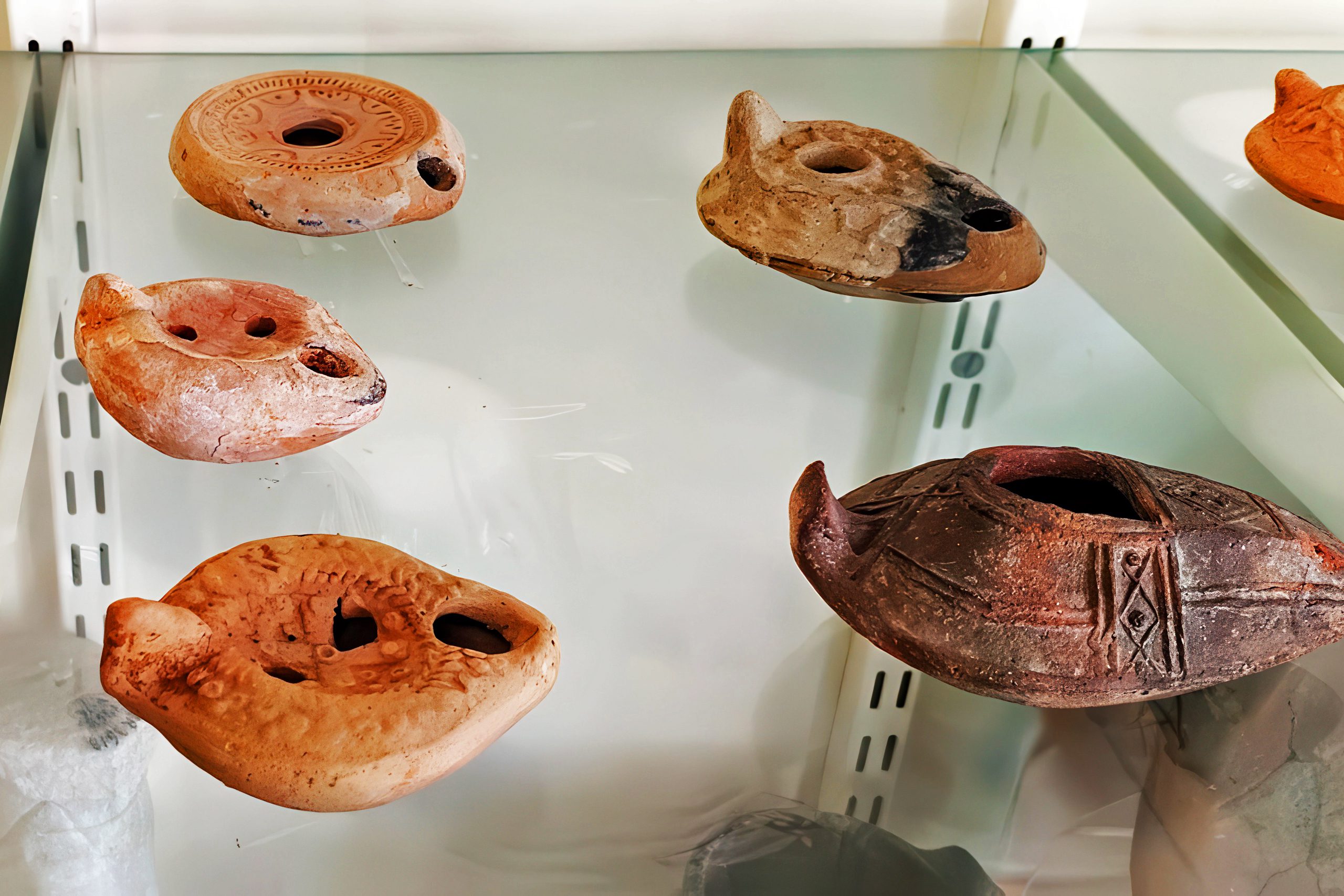
The large eastern room presents the most diverse collection. Visitors can examine representative examples of medieval glazed pottery, particularly Sgraffito ware from the 12th to 18th centuries. The room also displays metal cooking utensils and firearms from the Ottoman period (18th–19th centuries), as well as helmets and swords from the Venetian period (15th–16th centuries). Photographs of defensive structures and Gothic and Renaissance architectural styles of Cyprus from the 13th to 16th centuries enrich the exhibition.
The easternmost section of this room has been furnished to recreate an Ottoman ontas (living quarters) from the 18th–19th centuries, giving visitors a glimpse of daily life during Ottoman rule.
Visiting Larnaca Fort Today
Larnaca Fort is open to visitors year-round, with extended hours during summer months. Winter hours typically run from 8:00 AM to 5:00 PM, while summer hours extend from 8:00 AM to 7:30 PM. Weekend hours are abbreviated to 9:30 AM to 5:00 PM regardless of season. The entrance fee is modest at €2.50, with free admission for senior citizens.
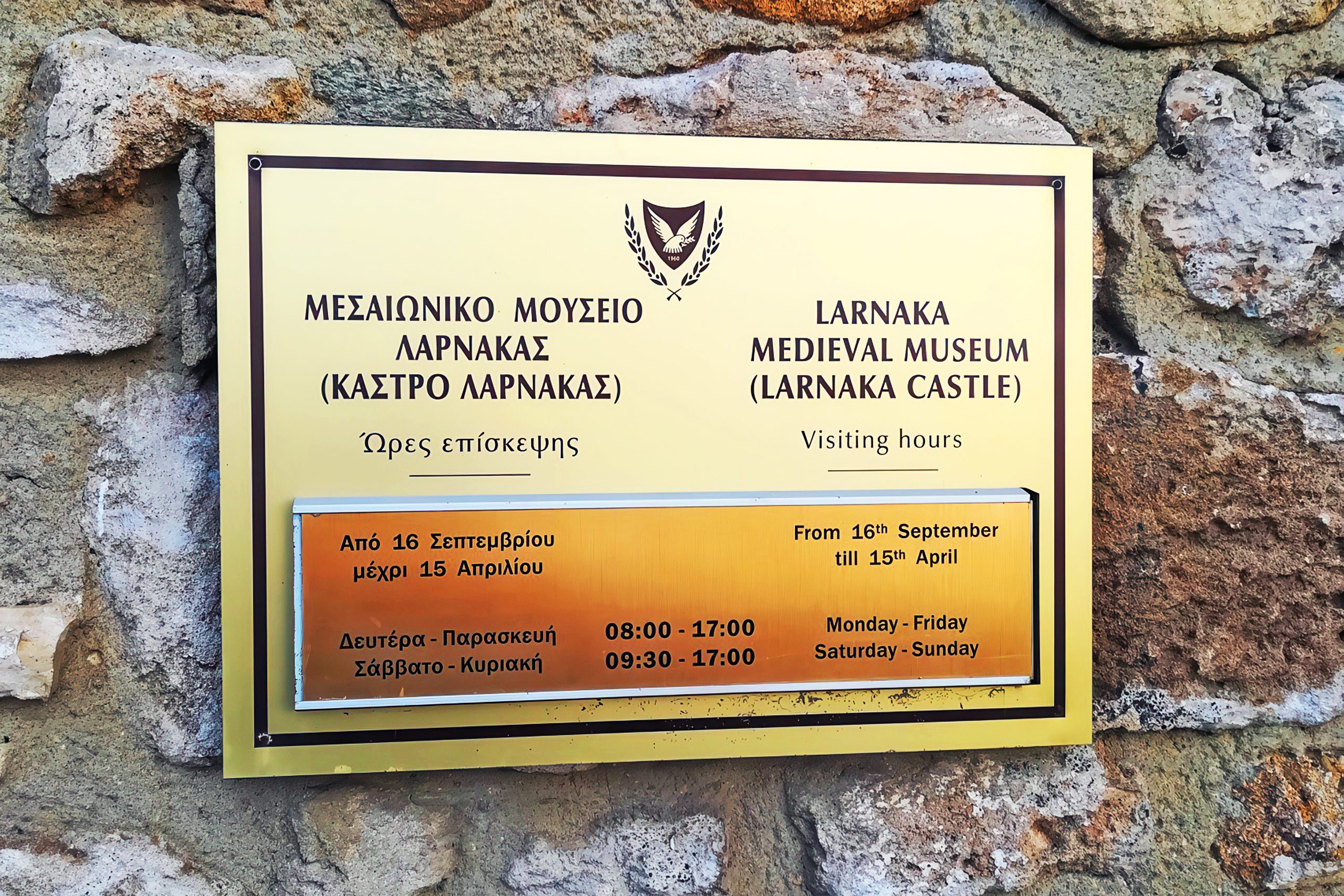
The fort’s location makes it extremely accessible. Visitors staying in central Larnaca can easily walk to the fort along the seafront promenade. The site is also conveniently located near Larnaca International Airport, making it an ideal first or last stop for travelers. Local buses stop along Foinikoudes Promenade within easy walking distance.
The fort offers nice views of Larnaca’s coastline from its ramparts. The combination of historical exploration and Mediterranean scenery provides a pleasant experience without overwhelming visitors with excessive information or requiring extensive physical exertion.
Why Larnaca Fort Matters
Larnaca Fort stands as an accessible introduction to Cyprus’s medieval and colonial history. Its walls bear the marks of Byzantines, Crusaders, Ottomans, and British colonizers, making it a physical timeline of the island’s complex past. The fort demonstrates how a single structure can serve wildly different purposes across centuries, from military defense to imprisonment to cultural center.
Unlike some historical sites that feel disconnected from modern life, Larnaca Fort remains integrated into the city’s daily rhythm. Its position on the popular waterfront promenade means locals and tourists encounter it regularly, keeping historical awareness alive in contemporary settings. The fort’s transformation into a museum and cultural venue ensures it continues to serve the community rather than existing as a purely historical monument.