Cyprus has a long historical relationship with early religious movements introduced to the island during the 1st century, which influenced its later social and cultural development. Over time, a large number of historical and semi-legendary figures became embedded in local traditions, with their stories preserved through oral history, village customs, and regional identity.
Across the island, many villages associate themselves with a specific historical or symbolic figure. These associations are reflected in annual community festivals known as panigyria, which combine commemorative ceremonies with food markets, music, and public gatherings. The result is a tradition that connects medieval heritage with modern village life.
These village-based commemorations function as a form of cultural continuity, linking local identity to historical narratives that have been transmitted across generations. They also reflect how rural communities in Cyprus organized social life around shared memory, seasonal cycles, and communal gathering points.
Historical Background
Historical accounts place the arrival of early religious movements in Cyprus in the 1st century AD, associated with traveling teachers and local figures who played a role in establishing early communities on the island. Over time, these narratives became part of regional tradition, shaping how later generations understood local identity and history.
Cyprus developed a system in which religious leadership and community organization were closely linked to regional centers. Archaeological and historical sources indicate that early communities were often centered around settlements that later evolved into villages and towns with long-standing cultural traditions.
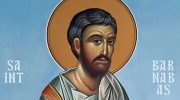
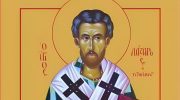
One of the most frequently referenced historical figures in Cypriot tradition is Spyridon, associated with the 3rd–4th centuries. Historical records describe him as a regional religious leader connected to the area near Assia and later linked to Trimythous. He is mentioned in connection with the Council of Nicaea in 325 AD, a major historical assembly that addressed doctrinal and organizational issues in the early institutional structure of Christianity.

Over time, his name became strongly associated with Cypriot architectural heritage, with numerous churches and monuments dedicated to him across different districts. Artistic depictions and local traditions helped preserve his image as part of the island’s broader cultural memory.
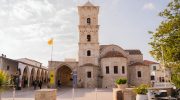
Another important figure in Cypriot tradition is Lazarus, a name associated with early regional narratives connected to Kition (modern Larnaca). According to later historical and traditional accounts, his story became integrated into Cypriot religious and cultural heritage, and a church built in Larnaca in later centuries became linked to his burial tradition. This site later developed into one of the most historically significant landmarks in the city.
The Pattern of Village Patronage
Across Cyprus, villages are commonly associated with a patron figure whose name and story form part of local identity. These associations are reflected in the naming of churches, annual festivals, and community spaces.

Patron figures typically fall into several broad categories:
- Early regional religious leaders and historical personalities from late antiquity
- Hermits and monastic figures connected to rural or mountainous settlements
- Later historical figures whose memory became part of local tradition
In many cases, the central church of a village is dedicated to its patron figure and serves as the main gathering point for communal life. These churches often hold important local artifacts, icons, and historical objects that reflect the village’s heritage.
Family life is frequently connected to these local institutions. Important life events such as naming ceremonies, marriages, and memorial gatherings are often held within the same community church, reinforcing long-term social ties within the village structure.
In the broader social context, these figures function as symbolic references for community identity. Local oral traditions often attribute periods of survival, stability, or recovery during difficult historical moments to the protection or symbolic presence of these patron figures. These narratives are transmitted across generations as part of local folklore and cultural memory, reinforcing continuity and shared identity within rural Cypriot society.

The Panagiri Festival Tradition
The panigyri represents the most important annual event in many Cypriot villages. The term refers to a communal gathering that historically attracted participants from surrounding regions and continues to serve as a key moment in the village calendar.
The celebration typically begins on the evening before the designated feast day with a structured church service marking the start of the event. Hymns, readings, and communal participation form part of the opening gathering, bringing together residents, returning family members, and visitors.

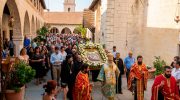
Following the service, a procession often takes place through the village streets. An icon or symbolic representation associated with the local tradition is carried through the community, accompanied by participants holding candles. This procession creates a shared visual experience that reinforces collective participation.
A key ritual in many villages involves the preparation and distribution of bread, wine, and olive oil, which are presented within the church and later shared among participants. This practice reflects long-standing Mediterranean traditions of communal sharing and symbolic offering.
After the formal ceremonies conclude, the festival transitions into a public celebration. Streets and open spaces are filled with food stalls offering traditional Cypriot foods prepared for large crowds. Popular festival foods include honey-based pastries, filled dough items, and grilled seasonal produce prepared on-site.
Music and dance are central to the event, with live performances using traditional instruments such as violin and lute. Folk songs, regional melodies, and community dances bring together participants of all ages. These performances often continue late into the night, creating a strong sense of communal participation.
The following morning typically includes another formal gathering in the village church, followed by shared meals and continued social interaction among families and visitors.
Important Village Saint Celebrations
Several recurring dates in the Cypriot cultural calendar are associated with large-scale village gatherings across the island.
In May, widespread celebrations occur in many communities where certain personal names are extremely common, leading to large public gatherings and family reunions. These events often combine formal observance with extensive social activity.
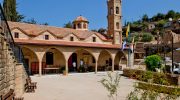
In August, one of the largest annual festival periods takes place, during which numerous villages and monasteries organize major gatherings. These events coincide with summer holidays, resulting in high participation from both residents and diaspora communities returning to Cyprus.
September includes a series of village festivals across different districts, each tied to specific local traditions. These events are particularly common in rural regions and often include multi-day programs of music, food distribution, and community gatherings.
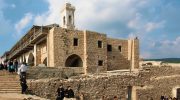
Late November also features widespread celebrations associated with commonly used personal names, resulting in one of the largest seasonal cycles of village-level gatherings in Cyprus.
Experiencing Village Saint Celebrations
Visitors attending a panigyri are expected to respect local customs, particularly during formal gatherings held inside churches. Modest clothing is generally required during structured parts of the program, and respectful behavior is expected throughout ceremonial activities.
Photography is often permitted in outdoor areas and during public celebrations, but restrictions may apply inside churches during formal services. Candlelight processions and evening gatherings are among the most visually distinctive aspects of these festivals.
Outside formal settings, visitors are typically welcomed to participate in food stalls, music performances, and communal dancing. Hospitality is an important cultural value in rural Cyprus, and guests are often included in social activities.
Smaller villages may have limited infrastructure, while larger festivals in urban or tourist-accessible areas offer more organized facilities. Information about event timing is usually available through local announcements and regional cultural listings.
The Future of Village Veneration
Village-based festivals in Cyprus face ongoing challenges related to population movement and changing lifestyles. Many rural communities have experienced demographic decline as younger residents move to urban centers for education and employment.
Despite these changes, annual festivals continue to attract former residents who return to their home villages for major celebrations. This pattern helps maintain connections between dispersed populations and their places of origin.
Efforts to preserve cultural traditions include documentation of music, food practices, and oral narratives, as well as support for community-led organization of annual events. Some festivals have also received formal recognition for their cultural significance, contributing to preservation initiatives.
Local institutions continue to play a role in maintaining traditional calendars and organizing events, ensuring that these practices remain active rather than purely historical.