Bufotes cypriensis – the island’s adaptable night singer
A Master of Change
On warm spring evenings in Cyprus, strange musical trills sometimes rise from temporary pools, flooded fields, and village ponds. The performers are not birds, but one of the island’s most remarkable amphibians: the Cyprus Green Toad.
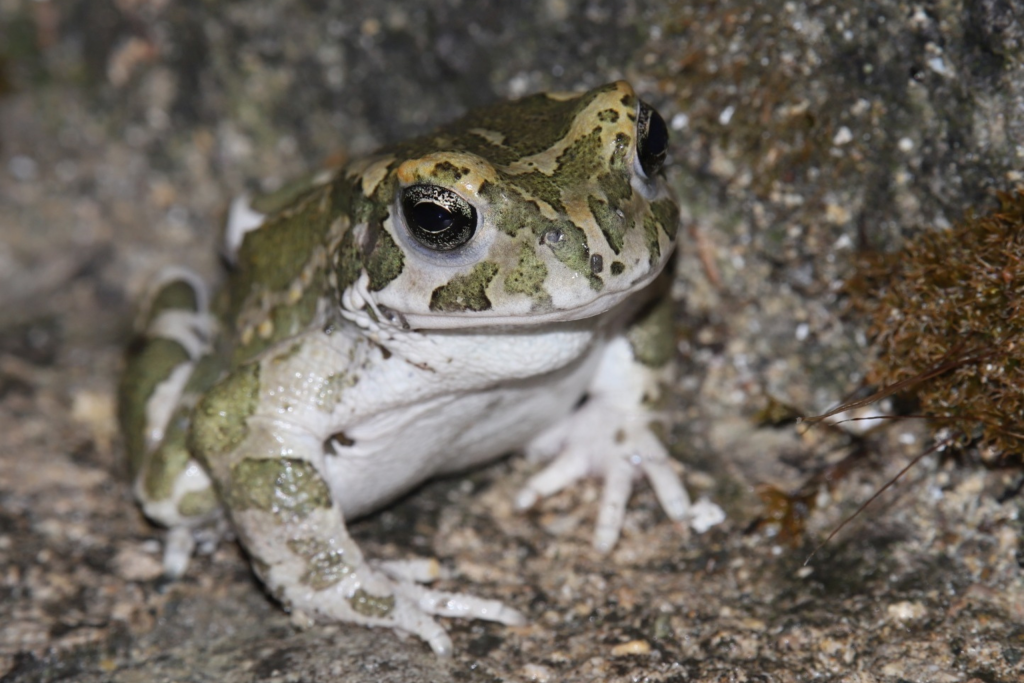
Beautifully patterned with olive-green patches on a pale background, this toad is one of the few amphibians that has successfully adapted to the island’s dry Mediterranean climate. Despite being common in some places, many people hear its chorus long before they ever see one.
Meet the Green Toad
The Cyprus Green Toad (Bufotes cypriensis) is a medium-sized amphibian belonging to the true toad family, Bufonidae. Unlike frogs, toads usually have drier, rougher skin, shorter legs, and spend much of their lives on land.
For many years, Cyprus green toads were considered part of the widespread Green Toad complex found from Europe to Central Asia. Modern genetic studies have shown that the Cypriot population is unique enough to be recognised as its own species, Bufotes cypriensis.
Today, it is one of only three native amphibians found on the island.
An Ancient Island Story
The ancestors of Cyprus green toads probably arrived on Cyprus hundreds of thousands or even millions of years ago, during periods when sea levels were lower and geographical connections between landmasses were different from today.
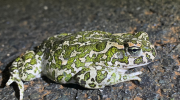
During spring nights, the Cyprus green toad is often encountered on roads as it moves between breeding sites. Over long periods of isolation, the Cypriot population gradually followed its own evolutionary path. Genetic studies have revealed that the species carries a unique combination of characteristics not found elsewhere. Interestingly, the Cyprus Green Toad possesses mitochondrial DNA related to Anatolian green toads, reflecting a complex evolutionary history in the eastern Mediterranean.
Like many island animals, it became a small but distinctive piece of Cyprus’ natural heritage.
Painted Like a Mediterranean Landscape
The Cyprus Green Toad is one of the easiest amphibians on the island to recognise.
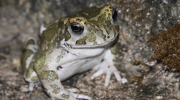
Its skin is covered with irregular olive-green patches scattered across a pale cream, grey, or sandy background. Small reddish warts often decorate the flanks. Large poison glands, called parotoid glands, sit behind the eyes. Like other toads, these glands produce defensive chemicals that discourage predators.
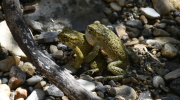
One of its most fascinating traits is its ability to subtly change the contrast of its colours depending on temperature, light, and conditions. This ability gave many green toads their common name in Europe, where they are often called “changeable toads.”
Adult females can reach around 10 cm in length, while males are usually slightly smaller.
Curious Things About Cyprus Green Toads
- They thrive where other amphibians struggle – Many amphibians need permanent ponds. Cyprus Green Toads can breed in temporary pools that may exist for only a few weeks.
- Their tadpoles grow fast – Because Mediterranean pools often dry out quickly, tadpoles can develop at remarkable speed before their watery nursery disappears.
- They are surprisingly tolerant of salt – Green toads are among the most salt-tolerant amphibians in Europe and the Middle East. This allows them to survive near coastal wetlands where many other amphibians would struggle.
- Males are talented musicians – During breeding season, males produce a long, musical trill that can continue for many seconds. On warm nights, dozens of males may call together, creating one of the most characteristic sounds of spring in Cyprus.
- Thousands of eggs at once – A single female may lay several thousand eggs in long gelatinous strings. In related green toads, clutches can contain between 5,000 and 10,000 eggs.
Life in a Dry Island
Cyprus is not an easy place for amphibians. Summers are long, hot, and dry. To survive, green toads spend much of the year hidden beneath stones, in cracks, under vegetation, or buried in loose soil.
They emerge mainly at night to hunt insects, beetles, ants, spiders, and other small invertebrates. Their broad diet helps control many insect populations naturally.
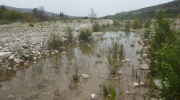
When the first rains arrive, especially during late winter and spring, adults travel to breeding sites. These can be natural pools, flooded fields, reservoirs, roadside puddles, irrigation ponds, or seasonal wetlands.
Like many Mediterranean amphibians, they are opportunists, quickly exploiting temporary water whenever it appears.
Why They Matter Today
The Cyprus Green Toad remains one of the island’s most widespread amphibians, but it still faces challenges.
The disappearance of seasonal wetlands, urban expansion, road mortality, pollution, and prolonged droughts can all affect local populations. Amphibians are often considered environmental indicators because their sensitive skin reacts quickly to changes in water quality and habitat conditions.
When green toads disappear from an area, it can be an early warning that something in the local environment is changing.
Protecting temporary wetlands and small freshwater habitats helps not only green toads but also dragonflies, aquatic insects, birds, and many other species.
Where Can You See One?
The best time to encounter Cyprus Green Toads is between February and May, particularly after rain.
Look around:
- Temporary rain-filled pools
- Village ponds
- Irrigation reservoirs
- Wet agricultural fields
- Seasonal wetlands
Nighttime is usually best. Bring a torch and listen carefully for the males’ trilling chorus. Often you will hear them long before you spot their patterned bodies sitting in shallow water.
As with all wildlife, observe from a distance and avoid handling them unnecessarily.
A Small Amphibian with a Big Story
The Cyprus Green Toad is a wonderful example of how island life shapes evolution. Descended from ancient green toad ancestors yet unique to Cyprus, it has adapted to survive in one of the driest corners of the Mediterranean.
Its spring chorus, remarkable adaptability, and beautiful camouflage make it one of the most charming members of Cyprus’ wildlife. The next time rain fills a temporary pool, pause for a moment and listen. You may be hearing one of the island’s oldest and most successful survivors calling through the night.