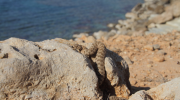
Cyprus hosts two endemic reptile species that exist nowhere else on Earth: the Cyprus rock lizard and the Cyprus whip snake. The Cyprus rock lizard, scientifically known as Phoenicolacerta troodica, represents the island’s only endemic lizard species. The Cyprus whip snake, Hierophis cypriensis, stands as the sole endemic snake species in Cyprus and one of only two endemic island snake species in the entire Mediterranean, alongside the Cyclades viper.
These species evolved in isolation over millions of years following Cyprus’s separation from the mainland. Their unique genetic makeup and limited geographic range make their survival entirely dependent on habitat protection within Cyprus. Both species face threats from habitat loss, climate change, and human activities, making conservation efforts critical to prevent their extinction.
Millions of Years on an Island
The geological history of Cyprus shaped the evolution of its endemic reptiles. Cyprus formed through complex tectonic processes involving two independent landmasses that eventually merged around 5.2 million years ago. During this period, reptiles colonized the island through various means, including temporary land connections to Anatolia and dispersal across water.
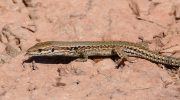
Image Credit: commons.wikimedia.org
The Cyprus rock lizard belongs to the family Lacertidae, commonly known as wall lizards or true lizards. Austrian herpetologist Franz Werner first described the species in 1936 from specimens collected at Platres in the Troodos Mountains. Initially classified as a subspecies of Lacerta laevis, it was elevated to full species status in 2007 and transferred to the newly created genus Phoenicolacerta based on molecular and morphological analyses.
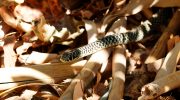
Image Credit: commons.wikimedia.org
The Cyprus whip snake was recognized as a valid species only in 1985 after being frequently mistaken for the black whipsnake. Morphological and molecular data confirm its sister species relationship to western Mediterranean whip snakes but show clear divergence that occurred during millions of years of island isolation. Research indicates Cyprus has been isolated from the European continent for at least 5.2 million years, the period during which speciation occurred.
Characteristics of the Cyprus Rock Lizard
The Cyprus rock lizard measures up to 15 centimeters in total length, though 10 centimeters is more typical. Its coloration ranges from brownish green to greyish green with a broad dark brown lateral stripe running from snout to tail. A distinctive white line borders the lower edge of this dark stripe, separating it from the pale underside.
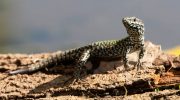
Image Credit: kodami.it
During the breeding season, males undergo dramatic color changes. Orange patches develop on the sides of the head, and the entire underside turns orange with blue and red spots scattered along the flanks. These vivid breeding colors make males highly visible during the mating period from spring through summer.
Characteristics of the Cyprus Whip Snake
The Cyprus whip snake grows to 70 to 90 centimeters in length, with the maximum recorded length reaching approximately 116 centimeters. The body color varies from black to grey-brown or olive-green, with the underside ranging from pale yellow to dirty grey or cream. The snake has a slender build with an exceptionally long, thin tail characteristic of whip snakes.
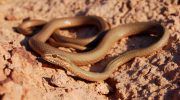
Image Credit: clasbio.ru
This species is non-venomous and feeds on small animals including other snakes, lizards, amphibians, rodents, and invertebrates. Its hunting strategy relies on speed and agility rather than venom or constriction. The snake is particularly elusive and difficult to observe in the wild.
The Cyprus whip snake occupies a more restricted range than the rock lizard. It occurs mainly in forested regions of the Troodos Range in central Cyprus, from elevations of 50 to 1,800 meters, with most records between 700 and 800 meters. The species prefers cool, humid microhabitats in areas with dense scrub, bushes, or forest, especially along streams and rivers. This preference for riparian zones reflects the generally arid conditions across much of Cyprus.
Conservation Status and Threats
The Cyprus rock lizard maintains stable populations across Cyprus and is classified as Least Concern by the IUCN. The species demonstrates adaptability to human-modified landscapes, occurring in rural areas and tolerating moderate levels of disturbance. Its wide distribution and habitat flexibility provide some resilience against threats.
The Cyprus whip snake faces more serious conservation challenges. The IUCN lists it as Near Threatened, with populations declining due to restricted range, habitat degradation, and various human impacts. Threats include water pollution from pesticide spraying, logging, road construction, and direct persecution by humans who kill snakes out of fear.
The species may be vulnerable to roadkill as it forages on asphalt surfaces, though systematic data on this threat remains limited. Water resource management poses particular concerns, as the snake’s preference for streamside habitats makes it vulnerable to stream desiccation from drought and groundwater extraction.
Both species benefit from protection under multiple legal frameworks. Cyprus provides protection under national fisheries regulations established in 1971 and updated subsequently. Following Cyprus’s entry into the European Union in 2004, both species received strict protection under the EU Habitats Directive. The Cyprus rock lizard appears in Annex IV, while the Cyprus whip snake holds listings in both Annex II and Annex IV, indicating its status as a species requiring special habitat conservation measures.
Habitat Protection Through Natura 2000
Cyprus ranks among the top five EU countries in terms of land area covered by the Natura 2000 network, with 28.8 percent of the island designated as protected sites. The network includes 63 marine and terrestrial sites covering 1,789 square kilometers. A significant portion (60 percent) of Natura 2000 areas falls within State Forest Land, providing governmental oversight and management.
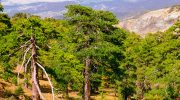
Image Credit: commons.wikimedia.org
Cyprus hosts 13 reptile species protected under the Habitats Directive, including both endemic species. The Natura 2000 network designates specific sites for reptile conservation, protecting critical habitats in the Troodos Mountains, Akamas Peninsula, and other key regions.
Multiple LIFE projects funded by the European Commission have supported reptile conservation in Cyprus. The ICOSTACY project from 2009 to 2016 targeted 20 fauna species including the Cyprus whip snake, focusing on habitat restoration, monitoring, and threat mitigation. The project improved ecological connectivity between Natura 2000 sites and controlled invasive alien species that competed with native reptiles.
Experiencing Endemic Reptiles
Visitors to Cyprus can observe the Cyprus rock lizard throughout much of the island, particularly in the Troodos Mountains and Akamas Peninsula. The species is active during daylight hours and often basks on rocks or stone walls. Spring and early summer provide the best viewing opportunities when breeding males display their most vibrant colors.

Image Credit: chooseyourcyprus.com
Several nature trails in the Troodos region pass through prime rock lizard habitat. The Artemis Trail, Atalante Trail, and various shorter paths near Troodos Square all offer good chances for observation. Rocky areas near streams and shaded forest edges typically support higher lizard densities.
Observing the Cyprus whip snake requires considerably more effort and luck due to the species’ rarity and shy nature. The best opportunities occur during spring months along streams in the Troodos forests, particularly in early morning or late afternoon when snakes are most active. Visitors should never attempt to catch or handle snakes, both for safety and conservation reasons.
Protecting Island Treasures
Habitat preservation for Cyprus’s endemic reptiles represents an essential component of the island’s conservation priorities. The Cyprus rock lizard and Cyprus whip snake exist as living products of millions of years of island evolution, carrying genetic heritage found nowhere else. Their survival depends entirely on maintaining suitable habitats within Cyprus’s limited land area. The Natura 2000 network provides the legal framework and protected areas necessary for long-term conservation, while ongoing research fills knowledge gaps and informs management decisions. These species demonstrate that small island nations can successfully protect unique biodiversity through sustained commitment to conservation. By safeguarding the habitats that support endemic reptiles, Cyprus preserves irreplaceable elements of Mediterranean natural heritage for future generations.