Religious Processions with Musical Accompaniment in Cyprus

4 minutes read See on map

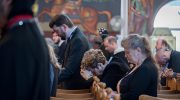
In Cyprus, religious processions are not confined to church interiors. On major feast days, faith moves outward, carried through streets, village lanes, and open squares by chanting voices, ringing bells, and slow communal steps. These processions turn ordinary space into sacred ground, if only for an evening. They are not performances staged for an audience, but living traditions that reveal how religion, sound, and community remain tightly bound in Cypriot life.
thisisathens-org

What makes them unforgettable is often the sound. Not a concert sound, not a soundtrack added for effect, but the steady human voice, the measured toll of bells, the hush that falls over a neighbourhood when an icon approaches. In Cyprus, sacred music is not something you only listen to. It is something you walk with.

When Worship Leaves the Church Walls

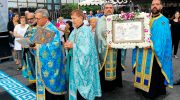
In the Orthodox tradition of Cyprus, a procession is a deliberate act. It represents the Church stepping beyond its sanctuary to bless the world outside. Icons, crosses, and relics are carried through public space to remind participants that faith is not separate from daily life.
commons-wikimedia-org

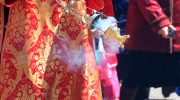
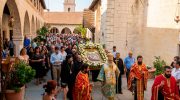
The structure is recognisable across the island. Clergy lead. Chanters follow. The community moves together behind them. Candles flicker in the evening air. Incense drifts slowly, sometimes catching in the folds of stone alleys and lingering under balconies. The pace is unhurried, and that slowness is part of the meaning. A procession is not meant to rush past you. It is meant to draw you in, step by step.
greekboston-com

Rather than spectacle, the emphasis is on presence. These moments are about being seen together, not about being watched. In a world that often feels fragmented, the procession becomes a moving picture of unity. People who may not share much in daily life share time, sound, and direction here.

Sound as the Heart of the Experience

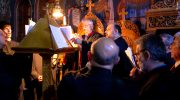
Music is central to Cypriot processions, but not in the way many visitors expect. Instruments are largely absent from the liturgy itself. Instead, the human voice carries the ritual.
ich-unesco-org

Byzantine chant dominates the soundscape. Sung in Greek, the chants are monophonic and steady, designed to support reflection rather than excite emotion. A lead chanter guides the melody, while others sustain a continuous note beneath it, creating a calm but powerful sonic foundation.

The effect is subtle and strong at the same time. The chant does not push itself forward. It holds the space. It steadies the crowd. It gives the procession a shared breath. In that sense, the music is not decoration. It is guidance. The pace of the chanting controls the pace of the procession, making sound and movement inseparable.

Bells, Wood, and the Language of Ritual Sound

While voices dominate, other sounds mark key moments.

pixy-org

Church bells signal joy or mourning depending on the day. On Good Friday, bells toll slowly and deliberately. At Easter midnight, they erupt in celebration. The contrast is immediate, and even if you do not understand the words being sung, you understand the message carried by the rhythm.

commons-wikimedia-org

In some monasteries and villages, an older instrument still plays a role: the simantron, a wooden or metal board struck rhythmically to call the faithful together. It has a raw, direct tone. It feels ancient because it is. And it has a practical beauty because it was never meant to be pretty. It was meant to be heard.

These sounds do not decorate the procession. They announce it. Long before people see the icons approaching, they hear them coming.

Easter: The Emotional Centre of the Year

No time of year captures the power of Cypriot processions more clearly than Easter.
en-wikipedia-org

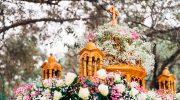
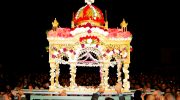
On Good Friday, the Epitafios procession commemorates the burial of Christ. A flower-covered bier is carried slowly through the community as mournful hymns fill the night air. Streets fall quiet. People step outside their homes to stand in silence as the procession passes. Even those who are not regular churchgoers often appear at their gates or on the pavement, as if drawn out by memory rather than obligation.
artemiscynthia-com

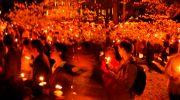
Two days later, the mood reverses completely. At midnight on Holy Saturday, the Resurrection is announced. The chant changes. Bells ring joyfully. Candlelight spreads outward as people carry the flame home. The contrast between these moments defines the emotional rhythm of the Cypriot year. It is grief and hope expressed not only through theology, but through sound, light, and the shared motion of a crowd.
Discover more about the fascinating edges of Cyprus

Cyprus Religion & Everyday Moral Values

Cyprus Religion & Everyday Moral Values

Religion in Cyprus functions less as private ideology and more as a shared moral framework that shapes hospitality, honour, family rituals, and the annual rhythm of life. Orthodox Christianity, Islam, and smaller communities such as Armenians and Maronites developed side by side, turning belief into a social structure that often outlasted shifting rulers and institutions. This article explains how faith became intertwined with identity, how it still guides everyday behaviour, and how modern Cyprus is reshaping religious practice without erasing its moral centre. Faith as Daily Social Order Cyprus has always sat at a crossroads between continents, cultures, and empires. Christianity and Islam did not simply arrive here as belief systems. They became organising principles for society itself. Rather than existing as private convictions, religious traditions in Cyprus historically governed education, law, community leadership, and moral behaviour. Faith helped explain the world, but it also regulated it. In villages, especially, religious authority often filled the role that distant state institutions could not, shaping everyday decisions through shared expectations rather than formal enforcement. This deep integration explains why religion in Cyprus feels less ideological and more practical. It answers not only questions of belief, but questions of belonging. Identity Marked by Belonging In Cyprus, religious affiliation has long functioned as a marker of communal identity. For centuries, being Greek Cypriot meant…

Read more
Saints Feast Days in Cyprus

Saints Feast Days in Cyprus

Commemorative days in Cyprus establish the seasonal rhythm of rural life throughout the year, with each community recognizing a historical figure through formal ceremonies and traditional public festivals called panigyria. These events integrate regional customs with large-scale social gatherings, featuring organized walks, artifact displays, communal meals, folk music, and traditional dances that continue until dawn. Unlike various international traditions where individual birthdays are the primary focus, Cypriots emphasize these shared name days with significant social enthusiasm. The regional calendar includes hundreds of these occasions honoring figures from antiquity, the Byzantine era, and more recent local history. Major events like the August 15 commemoration attract thousands to historical landmarks and village squares, while smaller festivals serve to maintain regional identity and ancestral family connections. The panigyri tradition has functioned for centuries as a vital element of Cypriot social culture, earning international recognition for its role in preserving community heritage and local bonds. The Structure of a Traditional Panigyri A typical panigyri begins on the evening before the designated feast day with a formal church service marking the start of the celebration within the traditional liturgical calendar. Residents, expatriates, and visitors gather in the village church for hymns, prayers, and community participation. Following the service, a procession often takes place through village streets where an icon associated with the local tradition is…

Read more
Cyprus Village Prayer Traditions

Cyprus Village Prayer Traditions

Daily prayer life in traditional Cyprus villages revolved around Orthodox Christian practices that structured time according to liturgical calendars rather than secular schedules. Families maintained home iconostases with oil lamps burning constantly before sacred images, recited morning and evening prayers, blessed meals with the sign of the cross, and observed fasting periods that eliminated meat and dairy for approximately 180 days annually. The village church anchored communal religious life through Sunday Divine Liturgies, daily services during Lent and Holy Week, and feast day celebrations honoring patron saints. These panigyria transformed routine existence into sacred time through extended liturgies, icon processions, communal feasting, folk music, and traditional dances that reinforced religious identity while strengthening social bonds. The Orthodox calendar provided the framework for Cyprus life, with Easter as the spiritual pinnacle, the Dormition of the Virgin Mary on August 15 drawing massive pilgrimages, and Epiphany water blessings on January 6 purifying homes and communities. Home Prayer and Icon Veneration Orthodox practice centered the home around a dedicated iconostasis, typically a corner shelf or small cabinet displaying sacred images of Christ, the Virgin Mary, and family patron saints. Families kept oil lamps lit continuously before these icons, with the flame representing eternal prayer and divine presence within domestic space. Women bore primary responsibility for maintaining lamps, ensuring adequate oil supply, and replacing…

Read more