Explore Cyprus with Our Interactive Map

Explore our top stories and discover ideas worth your time.

Protaras Beach

Protaras Beach

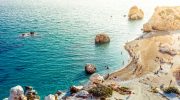
Protaras sits on the southeastern coast of Cyprus in the Famagusta District, approximately 70 kilometers from Larnaca International Airport. This coastal resort developed specifically for tourism offers 10 kilometers of coastline along the Mediterranean Sea. The beaches here feature fine golden sand and exceptionally clear waters that earned international recognition. Fig Tree Bay was named Europe's third best beach by TripAdvisor in 2011, though rankings shifted in following years. Unlike the party atmosphere of nearby Ayia Napa, Protaras built its reputation as a quieter alternative better suited to families and domestic Cypriot tourism. Historical Context In ancient times, the area now known as Protaras was home to the old city-state of Leukolla, which had a small, safe harbor where Demetrius Poliorketes sought refuge in 306 BC. For centuries afterward, the coast remained sparsely populated due to pirate threats that made settlement dangerous. The area earned the nickname "the land of windmills" from agricultural equipment that once dotted the landscape. The first windmills appeared in Paralimni in the early 20th century and were imported from Chicago, Toronto, and later Great Britain. Tourism development began in earnest during the late 20th century following the 1974 events that closed Famagusta to Greek Cypriot tourism. Protaras transformed from agricultural land into a major resort destination. The population of the broader Paralimni area grew from…

Read more
Lorovounos Hiking Trail

Lorovounos Hiking Trail

The Lorovounos Hiking Trail (sometimes spelled Lourovounos) is a short but historically significant trail located in the dramatic coastal mountains of Cyprus. Nestled within the Tylliria region, near the secluded village of Alévga and the coastal community of Pachyammos, the trail primarily serves as a physical tribute to the island's modern history. Winding up toward the top of a prominent hill, it provides hikers with an immersive natural environment that transitions quickly from dry agricultural landscapes to a solemn high-elevation lookout. It is an excellent trek for those who appreciate military history, quiet countryside, and panoramic vistas of the Mediterranean coastline. Lorovounos Hiking Trail Overview Location: Near Alévga and Pachyammos, Paphos District, Western Cyprus. Distance: 2 to 3.5 kilometers (approximately 1.2 to 2.2 miles) depending on the selected route. Route Type: Linear (with local loop alternatives over the summit). Difficulty: Category 1 to 2 (Easy to Moderate). Elevation Gain: Approximately 125 to 148 meters (410 to 486 feet). Duration: 40 minutes to 1 hour. Best Time to Visit: Winter and Spring (December to April) for the most comfortable temperatures and blooming flora. Terrain: Predominantly wide dirt forest roads transitioning into a steep, narrow, rocky footpath near the peak. The Geography and Setting of Alévga and Tylliria To fully understand the context of the Lorovounos trail, one must grasp the unique…

Read more
Copper Identity of Cyprus

Copper Identity of Cyprus

The island of Cyprus owes more than just its prosperity to copper. The very name of this Mediterranean nation comes from the ancient Greek word Kúpros, which scholars believe connects to the metal that defined its economy for over 4,000 years. The English word "copper" itself derives from the Latin phrase aes cyprium, meaning "metal of Cyprus." This linguistic connection reveals a fundamental truth: Cyprus and copper are so deeply intertwined that ancient civilizations could not think of one without the other. From the fourth millennium BC to the Roman Empire and beyond, copper mining transformed Cyprus from a small island into a major economic power in the ancient world. The Ancient Discovery That Changed Everything Copper production on Cyprus began around 4000 BC, when early inhabitants discovered deposits of pure copper on the surface. These first copper workers fashioned simple tools without needing to mine underground. By 2500 BC, Cypriots had learned to smelt copper ore, initially creating an alloy with arsenic before switching to tin around 1900 BC to produce true bronze. The richest deposits lay in the Troodos Mountains, particularly in the pillow lava formations along the northern slopes. These copper-bearing ores formed 90 million years ago through volcanic activity on the ancient ocean floor, when hydrothermal vents ejected mineral-rich water that concentrated into valuable seams. As…

Read more