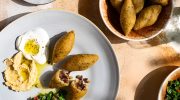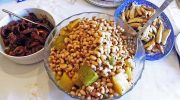
Louvi is one of Cyprus’s most familiar meals, yet it is rarely described in grand terms. Made from black-eyed peas cooked with seasonal greens and finished with olive oil and lemon, it belongs to a category of food that does not seek attention. Louvi exists to nourish, to repeat, and to sustain. More than any celebratory dish, it reflects how Cypriots have cooked for themselves over generations, adapting to land, climate, and routine rather than occasion.
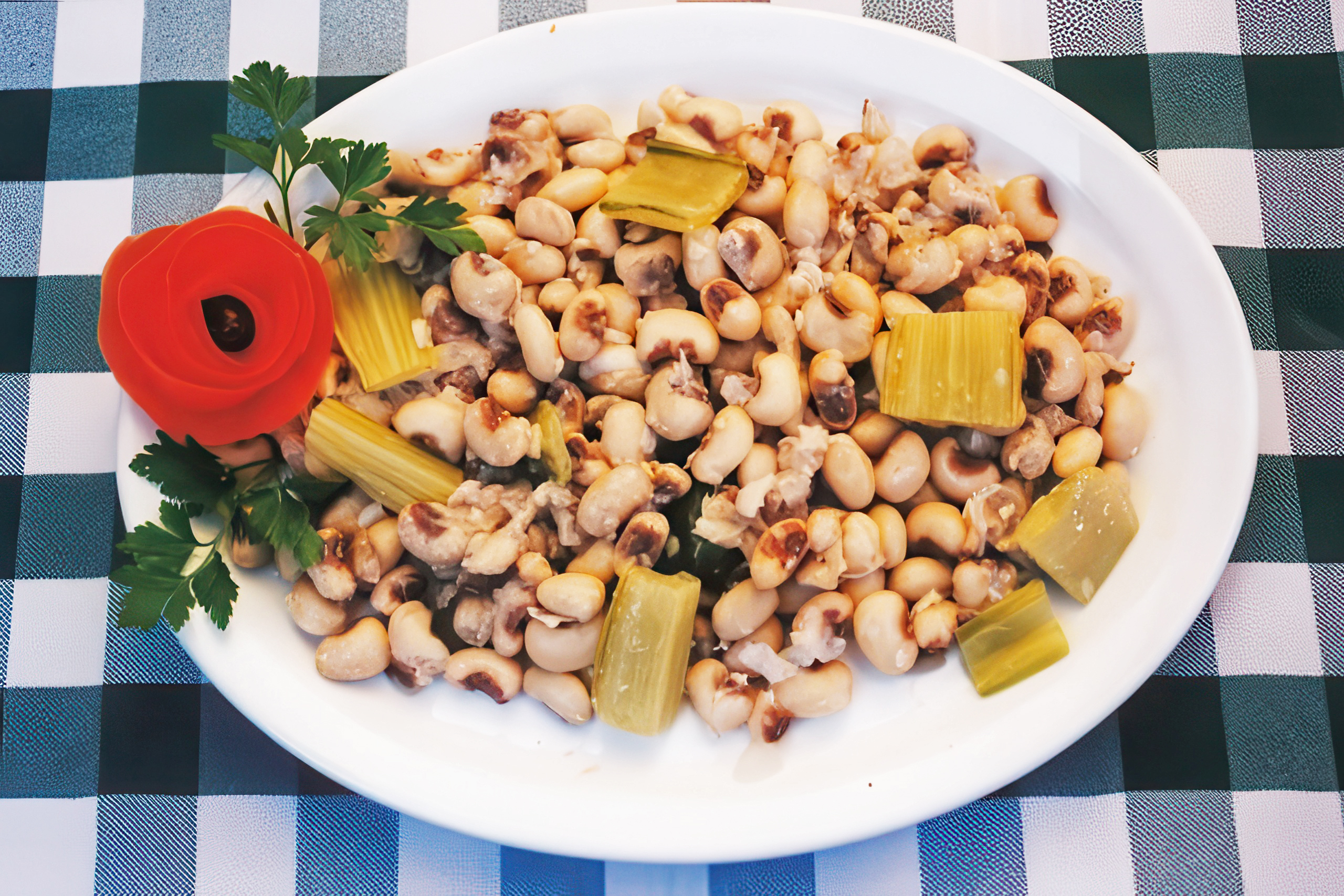
This is not festival food. It is a daily food. And in that quiet repetition, Louvi reveals more about Cypriot home cooking than any elaborate recipe ever could.
A Meal Built Around Necessity, Not Display
At its core, Louvi is simple. Black-eyed peas are gently boiled, paired with whatever greens the season allows, and served with raw olive oil and fresh lemon. There is no heavy sauce and no attempt to disguise the ingredients. What matters is balance: protein from the legumes, bitterness or sweetness from the greens, richness from the oil, and brightness from citrus.
This restraint is deliberate. Louvi developed in rural households where food needed to be reliable, affordable, and filling. It was never meant to impress guests or mark celebrations. It was meant to appear on the table again and again, especially on days when meat was absent or unnecessary.
Why Louvi Became a Daily Staple
The endurance of louvi is closely tied to Cyprus’s environment. Black-eyed peas thrive in heat and tolerate dry conditions, making them well-suited to the island’s semi-arid landscape. They store well when dried and require little preparation to become edible.
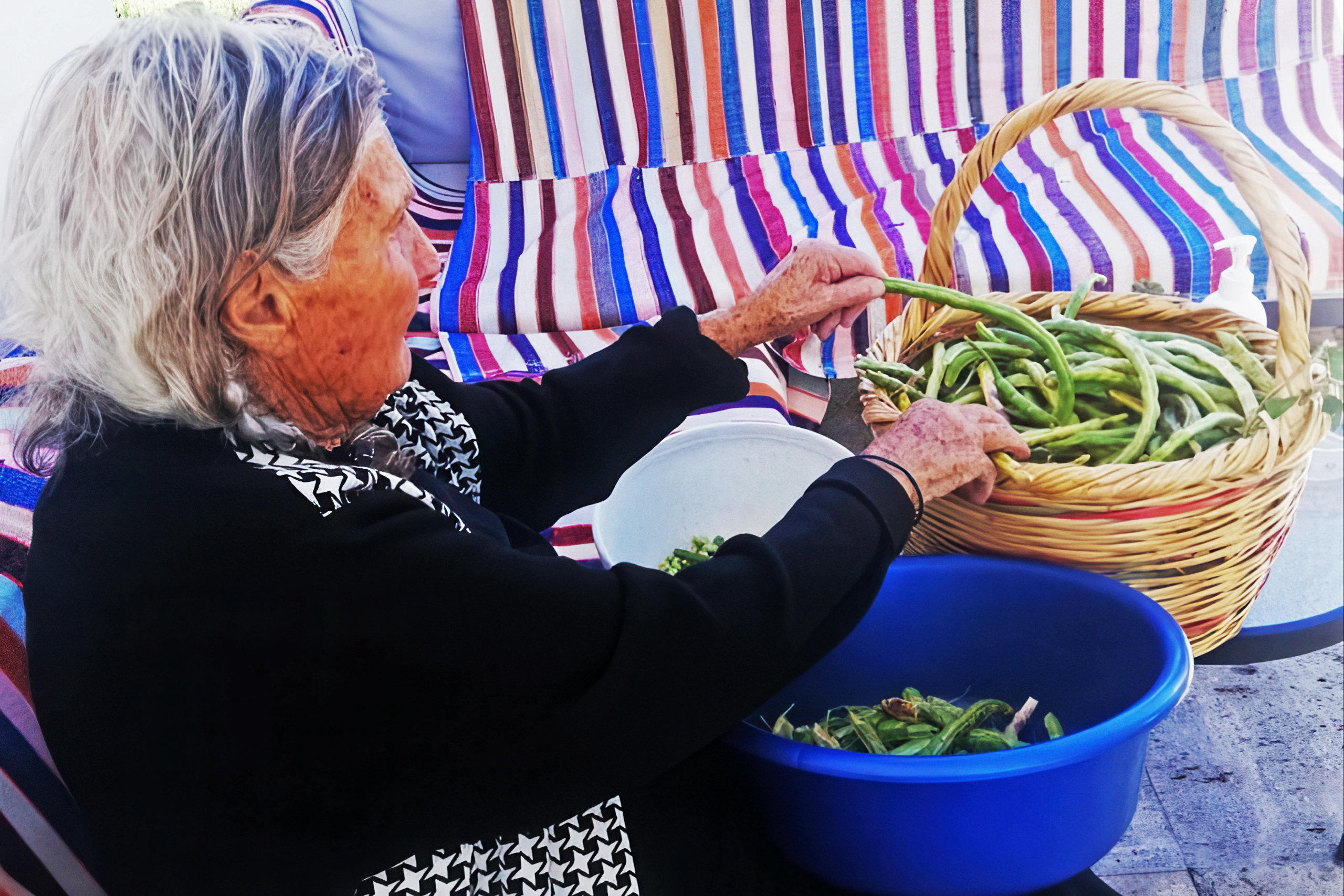
For farming families, this reliability mattered. Louvi provided steady energy for long days of physical work and could be stretched with bread, greens, or potatoes when resources were limited. Over time, the dish became associated not with hardship, but with stability. It was food that could always be counted on, even when circumstances changed.
The Ingredients That Shape the Dish
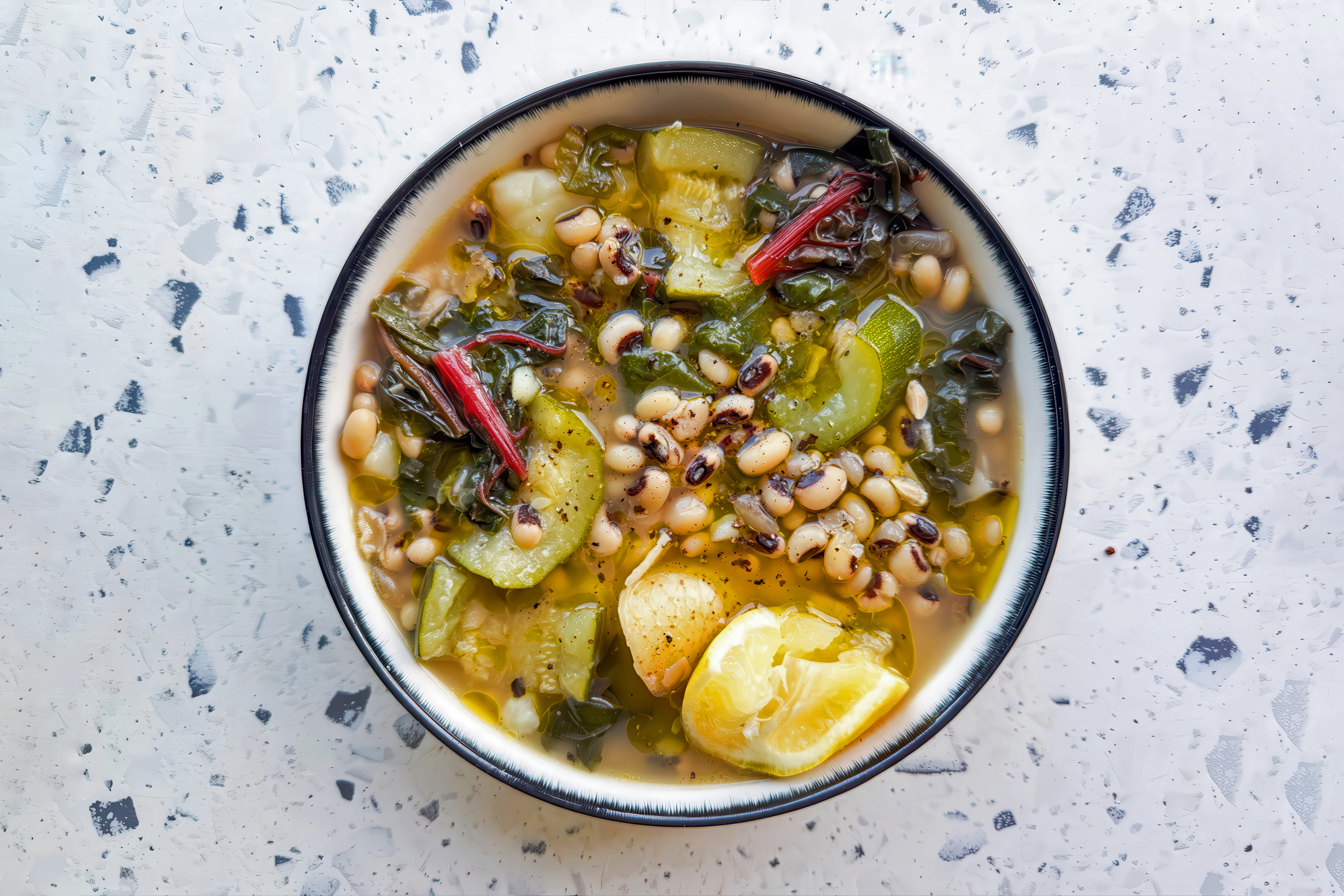
Louvi relies on a small group of components, each chosen for function rather than luxury. The black-eyed pea forms the base, offering a mild, nutty flavour and a texture that remains firm when properly cooked. The greens vary by season and location. Swiss chard is common, but zucchini, wild mustard greens, or other foraged leaves often appear, depending on availability.
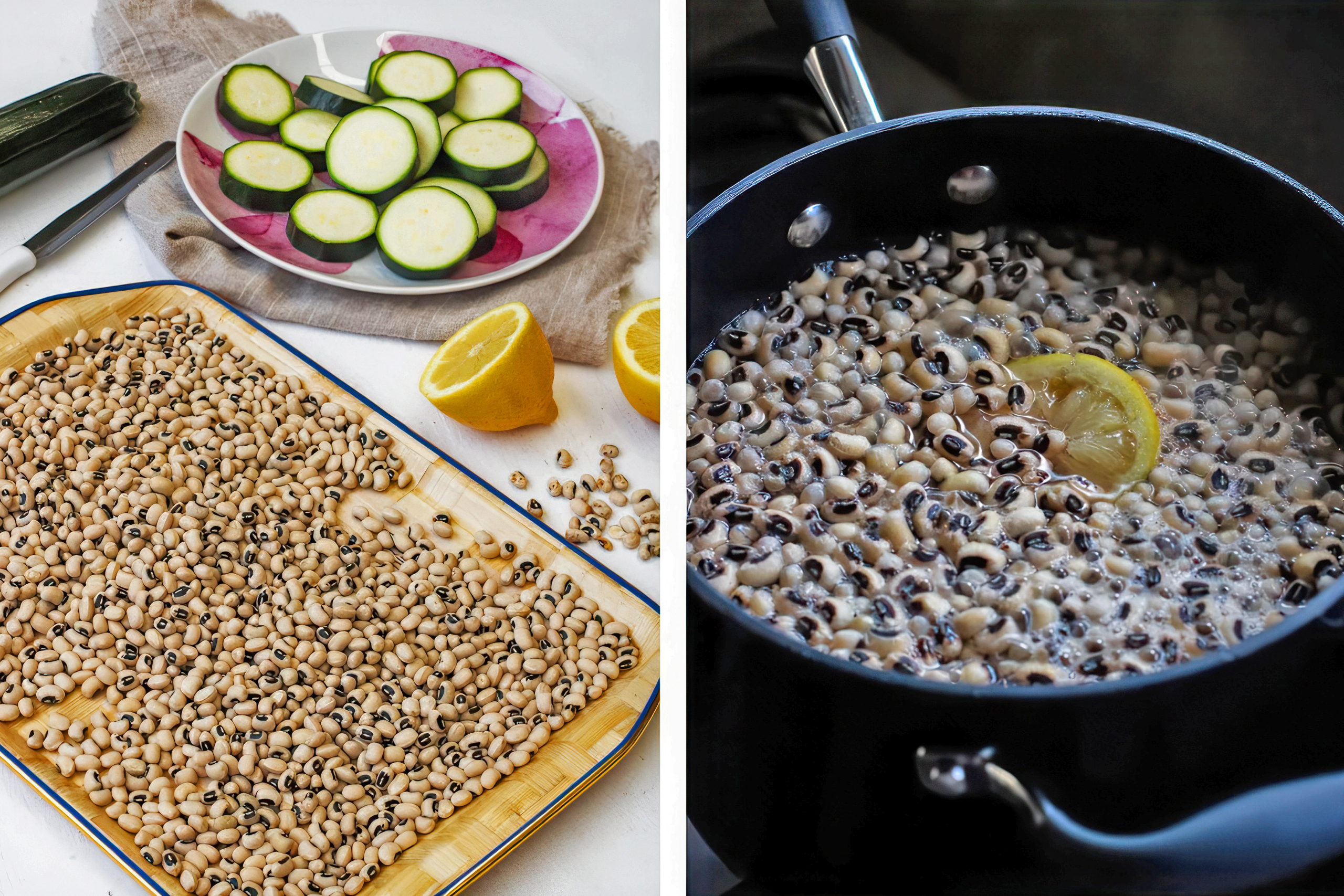
Olive oil is added at the end, not cooked into the pot. This preserves its aroma and gives the dish weight without heaviness. Lemon provides sharpness and keeps the flavours clean. Together, oil and lemon transform boiled beans into something satisfying without complexity.
Fresh and Dried: A Seasonal Rhythm
Cypriot cooks distinguish clearly between fresh and dried louvi, and this distinction shapes how the dish is experienced throughout the year.
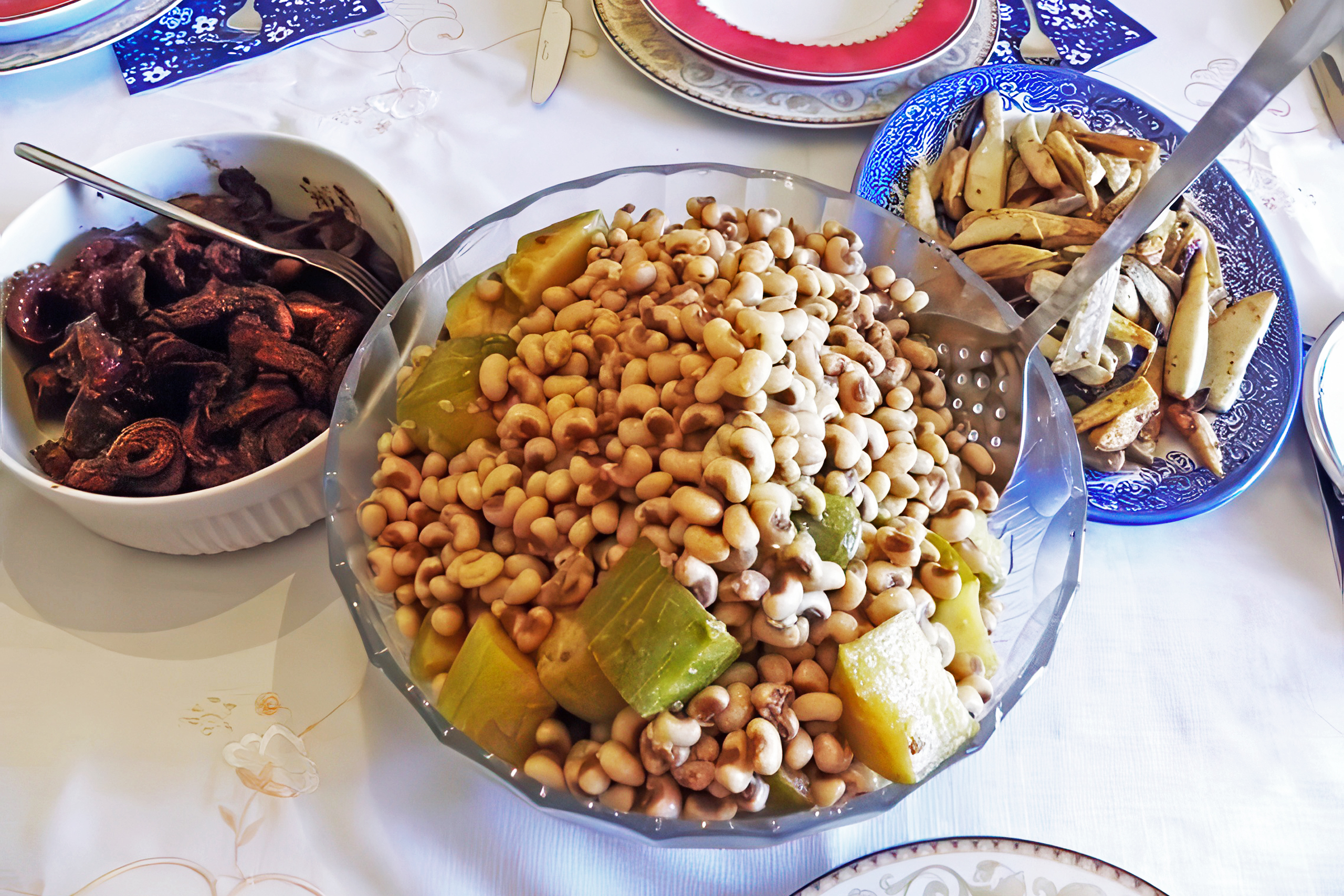
Fresh louvi appears in summer, when green pods are harvested young and cooked whole. These versions are lighter, slightly sweet, and closely tied to warm weather. Dried louvi dominates winter cooking, when stored beans are simmered with sturdier greens and served warm, often with bread and olives.
This seasonal rhythm keeps the dish from feeling repetitive. The method remains the same, but the texture and character shift with the calendar, linking the meal directly to the agricultural cycle.
A Dish Shaped by Fasting and Faith
Louvi also holds a quiet place in the religious rhythm of Cyprus. During Orthodox fasting periods, especially Lent, it becomes a central meal. Its plant-based nature fits fasting rules without feeling like a substitute.
Because of this, Louvi is often associated with restraint and reflection rather than indulgence. It appears alongside olives, pickles, raw onion, and bread, forming a table that is complete without excess. In many households, these combinations are deeply familiar, passed down without written recipes and rarely measured.
How Louvi Is Traditionally Prepared
Preparation is intentionally minimal. Dried peas may be briefly soaked or simply rinsed, then boiled until tender. Some cooks discard the first boiling water; others do not. Greens are added late so they retain structure rather than dissolving into the pot.
There is no sautéing step in traditional village cooking. Onion or garlic may be boiled whole or omitted entirely. The defining moment comes at the table, when olive oil and lemon are added generously, allowing each diner to adjust the balance.
The result is not a stew and not a salad, but something in between. Louvi can be eaten hot, warm, or at room temperature, which suits the Cypriot climate and everyday lifestyle.
Where Louvi Lives Today
Despite modernisation, louvi remains a regular presence in Cypriot homes. It is still cooked weekly, especially by older generations, and continues to appear in small lunch-only eateries that specialise in home cooking.
In tavernas, it is more likely to appear as a side dish than a centrepiece. Locals often order it not out of curiosity, but out of familiarity. Louvi represents continuity, a reminder of how people ate before menus expanded and portions grew larger.
Why Louvi Still Matters
Louvi matters because it reflects a way of cooking that values repetition over novelty. It shows how a cuisine can be defined not only by its festive dishes, but by what people eat when no one is watching.
In a food culture increasingly shaped by presentation and trend, Louvi remains unchanged. It is economical, adaptable, and quietly complete. To understand Cypriot home cooking, it is not enough to look at what is served on holidays. It is Louvi, appearing again at an ordinary table, that tells the more enduring story.