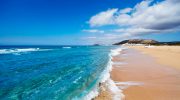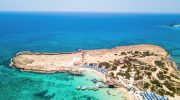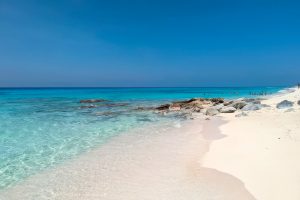
Governor’s Beach is actually two connected beaches near Pentakomo village, about ten kilometers east of Limassol. The main section features dark volcanic sand framed by striking white chalk cliffs, while the neighboring Kalymnos beach extends as a narrow sandy strip approximately 200 meters to the west.
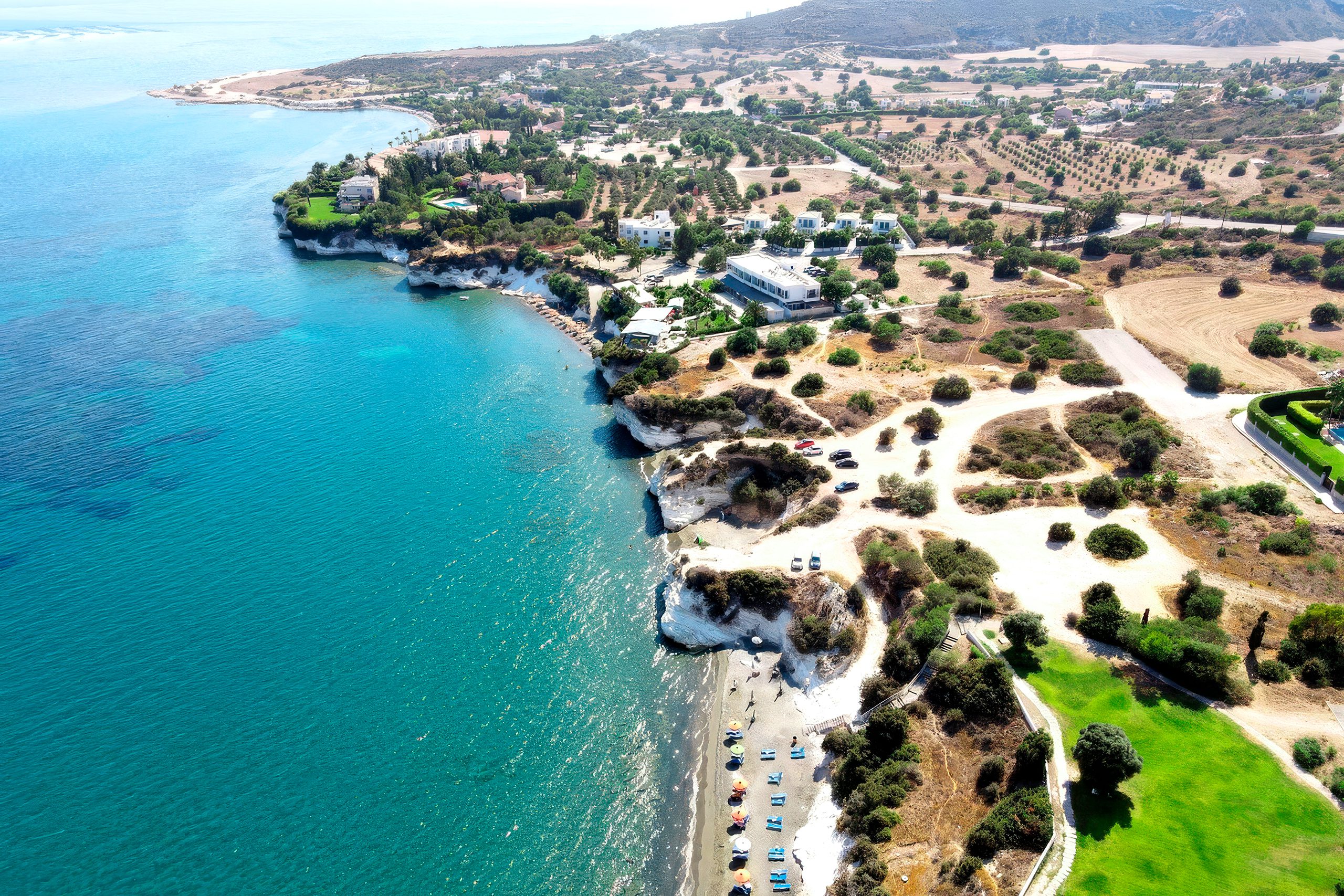
Together they form a two-kilometer coastline recognized for exceptional water quality and environmental standards. The area sits roughly 40 kilometers west of Larnaca and 30 kilometers east of Limassol, positioned far enough from major tourist strips to maintain a more peaceful character.
Historical Background
The beach earned its name during British colonial rule when high-ranking officials chose this location for recreational activities. The striking white cliffs and gray sand apparently reminded them of the Dover coastline back home. A British governor maintained a summer residence nearby in Maroni village, though he frequently visited this particular stretch of coast. The first president of independent Cyprus, Archbishop Makarios III, also enjoyed the former colonial cottage, which still stands today awaiting government decisions about its future use.
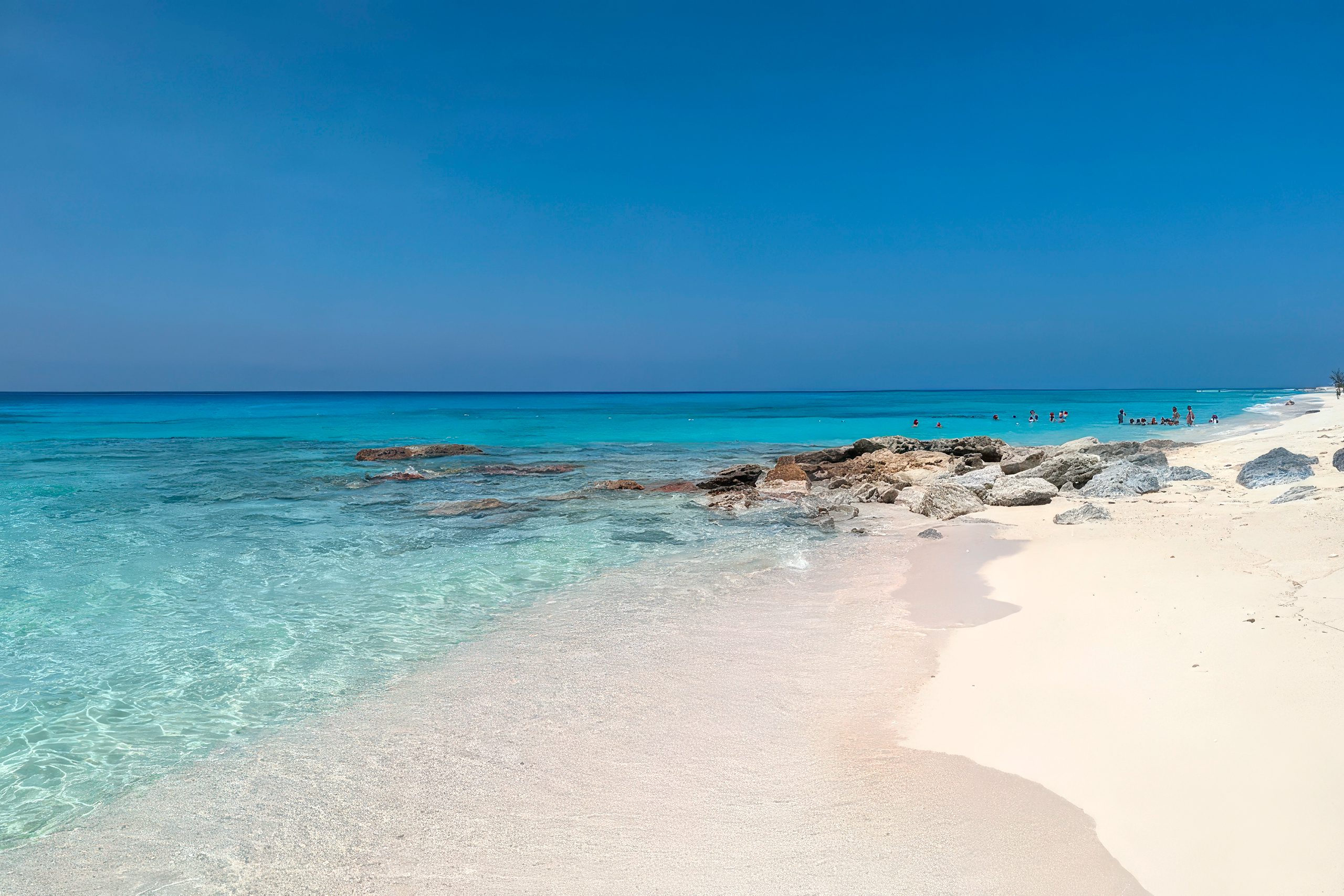
The western section carries the name Kalymnos after professional sponge divers from the Greek island of Kalymnos who berthed their ships in this bay during the late 19th and early 20th centuries. These divers harvested natural sea sponges until overexploitation and disease destroyed the sponge fields throughout the Dodecanese archipelago, ending this traditional craft in Cyprus waters.
Geological Features Of Governor’s Beach
The white limestone cliffs dominate the landscape and create the beach’s signature look. These chalk formations consist primarily of calcium carbonate, formed from billions of microscopic marine organisms that accumulated on the ocean floor millions of years ago. Similar to the White Cliffs of Dover, these structures contain the fossilized remains of tiny planktonic algae called coccoliths. When these organisms died, their calcium-rich shells sank and combined with remains from other sea creatures. Over vast periods, the seabed rose above water level through geological uplift, creating the cliffs visible today.
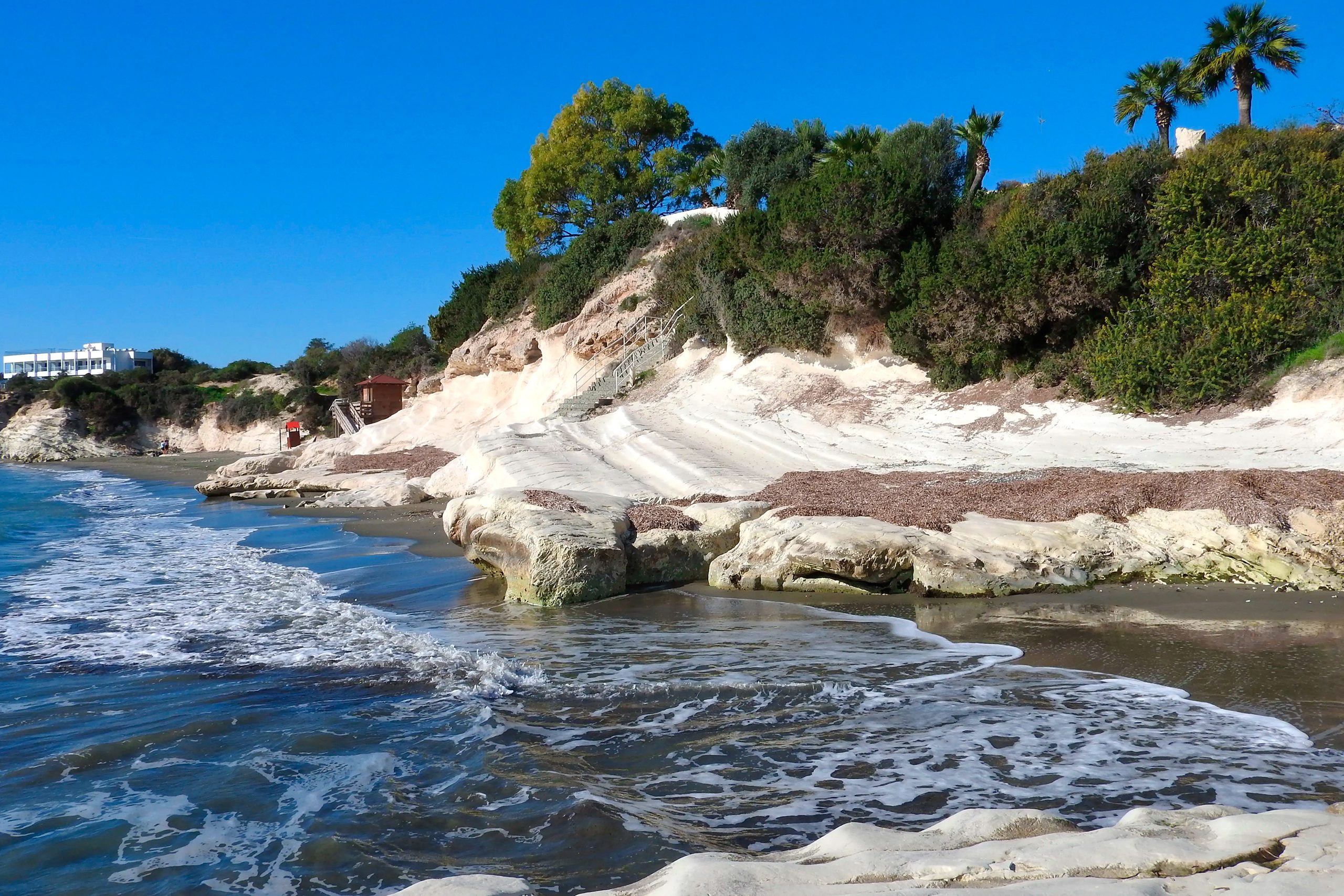
The cliffs maintain their brilliant white color through natural erosion. Where human structures protect sections from weathering, vegetation takes over and the rock appears green when viewed from the sea. The constant action of wind and waves has carved the limestone into caves, sheltered coves, and smooth formations that provide both visual interest and practical swimming spots protected from stronger currents.
The dark volcanic sand creates a dramatic contrast with the white cliffs. This coarse-grained material retains heat considerably more than light-colored sand, making the beach surface quite hot during high summer. The volcanic origin differs from the limestone that produces the golden sand found on most other Cyprus beaches. This unusual combination of white limestone cliffs and dark volcanic sand makes Governor’s Beach visually distinctive and especially photogenic.
Fascinating Facts about Governor’s Beach
Governor’s Beach holds Blue Flag status, an international eco-label awarded to beaches meeting strict standards for water quality, environmental management, safety, and services. The certification confirms that both the water and coastline maintain high cleanliness levels.
The bay structure creates numerous small, semi-private coves between rocky promontories. Each cove offers slightly different conditions. Some feature more sand, others more rocks, and several contain natural pools perfect for snorkeling. The sheltered position keeps conditions typically calm with excellent water clarity and gentle waves, making the area suitable for families with children.
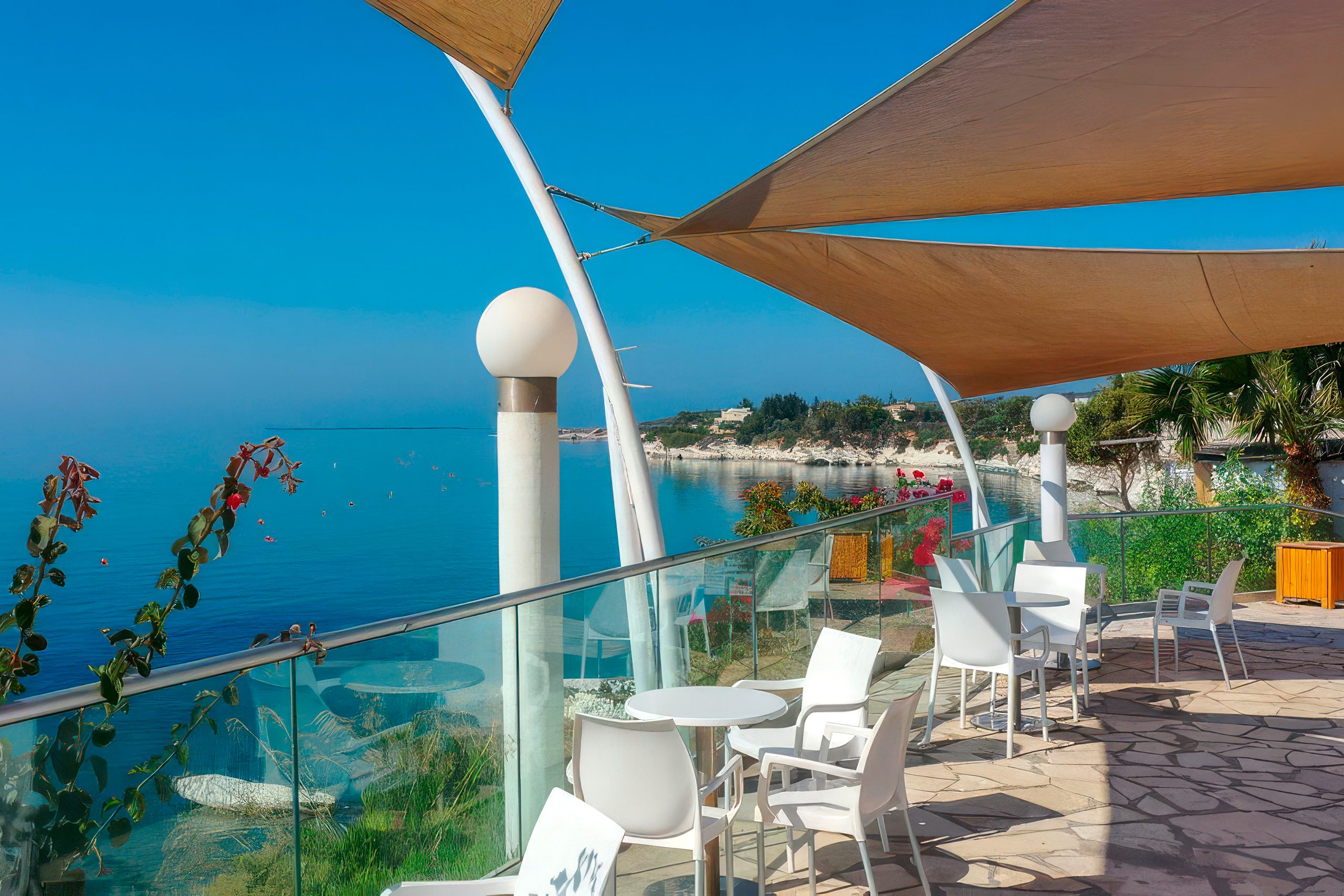
Traditional fish tavernas perch atop the cliffs, particularly the Kalymnos Restaurant and Panayiotis, where visitors can watch fishing boats arrive with fresh catches that appear on lunch menus hours later. This direct connection from sea to plate represents authentic Cypriot coastal dining at reasonable prices.
The area includes one of Cyprus’s oldest campgrounds, located just above the bay with sea views. Many Cypriots and expatriates keep campervans there as summer homes, creating a small seasonal community.
Despite its proximity to two major cities, Governor’s Beach remains relatively quiet compared to developed tourist areas. The combination of natural beauty and low-density development attracts visitors seeking authentic coastal experiences away from crowded resort beaches.
A decorative white gazebo near the beach has become popular for wedding photography and ceremonies, taking advantage of the dramatic cliff and sea backdrop.
The limestone formations are geologically significant, offering insights into Cyprus’s ancient marine environment and the processes that shaped the Mediterranean coastline over millions of years.
Current Role in Cypriot Life
Governor’s Beach serves multiple purposes in contemporary Cyprus. Locals treat it as a weekend retreat where families can spend leisurely days swimming, eating fresh seafood, and enjoying coastal scenery without traveling far from Limassol or Larnaca. The beach attracts both residents and visitors who prefer natural settings over developed resort areas.
The Blue Flag designation reflects ongoing commitment to environmental protection and sustainable tourism. Local authorities and beach operators maintain facilities and water quality standards that preserve the area’s ecological value while accommodating visitors.
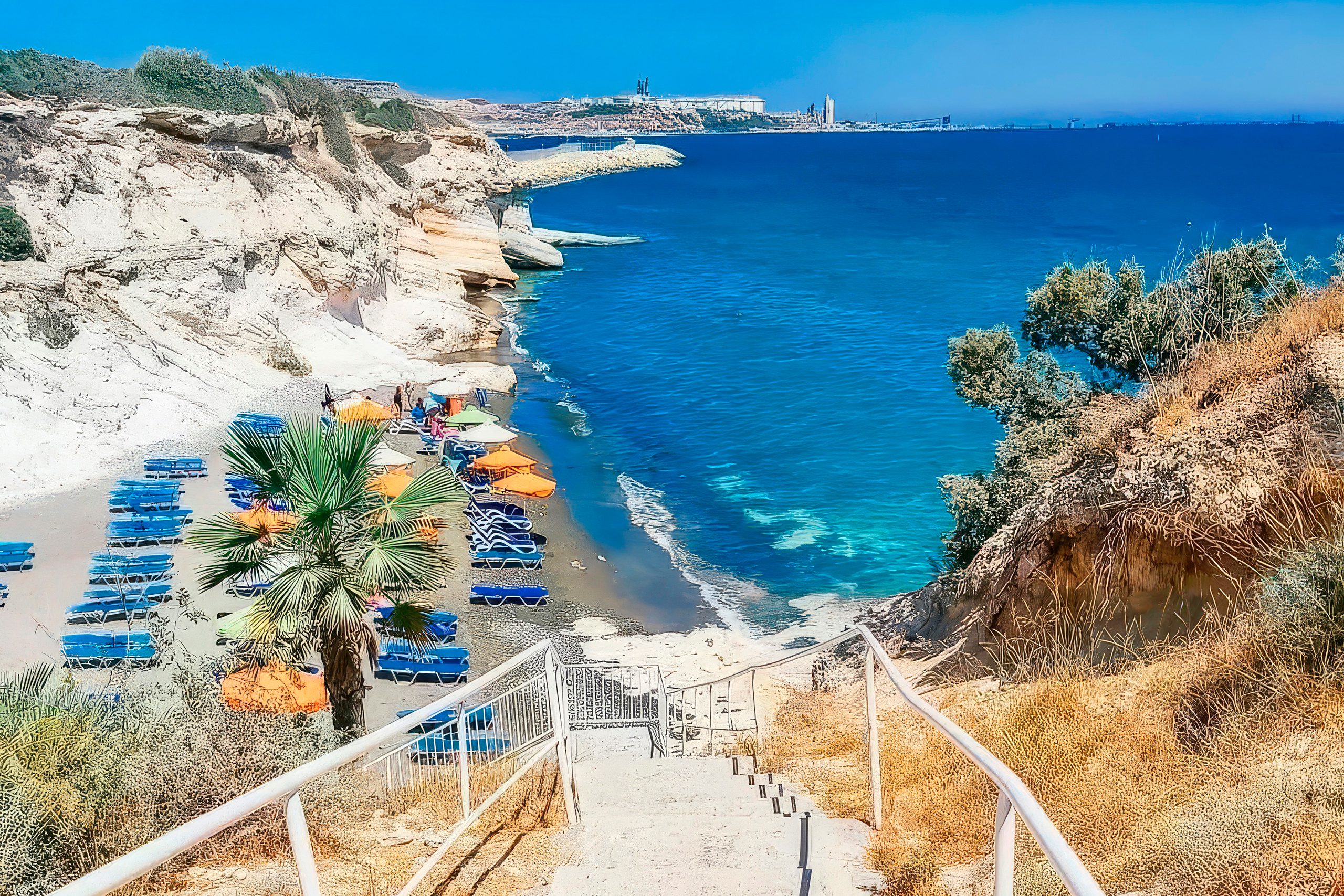
For the photography community and social media users, the striking contrast between white cliffs and dark sand provides compelling visual material. Sunrise and sunset light transforms the limestone into shades of gold and pink, creating optimal conditions for landscape photography.
The traditional restaurants represent important cultural preservation. As coastal areas across Cyprus develop rapidly, these family-run establishments maintain connections to fishing heritage and authentic Cypriot coastal cuisine that disappears in more commercialized locations.
Visiting This Coastal Destination
Access is straightforward by car via the A1 motorway from either Limassol or Larnaca. The journey takes 20-30 minutes from Limassol and slightly longer from Larnaca. Free parking is available near the beach. Steps lead down from the cliff tops to the sand, and ramps provide disabled access. Public transport runs once daily from Limassol, making personal transportation more practical for most visitors.
Facilities include toilets, showers, changing cabins, sunbeds, and umbrellas. Rentals typically cost around €7.50 for two sunbeds and one umbrella. Beach cafes and the clifftop restaurants provide food and drink options. A children’s playground serves families. Lifeguards with rescue equipment and first aid capabilities staff the beach from April through October, 9:00-17:00, extending to 18:00 during summer peak season.
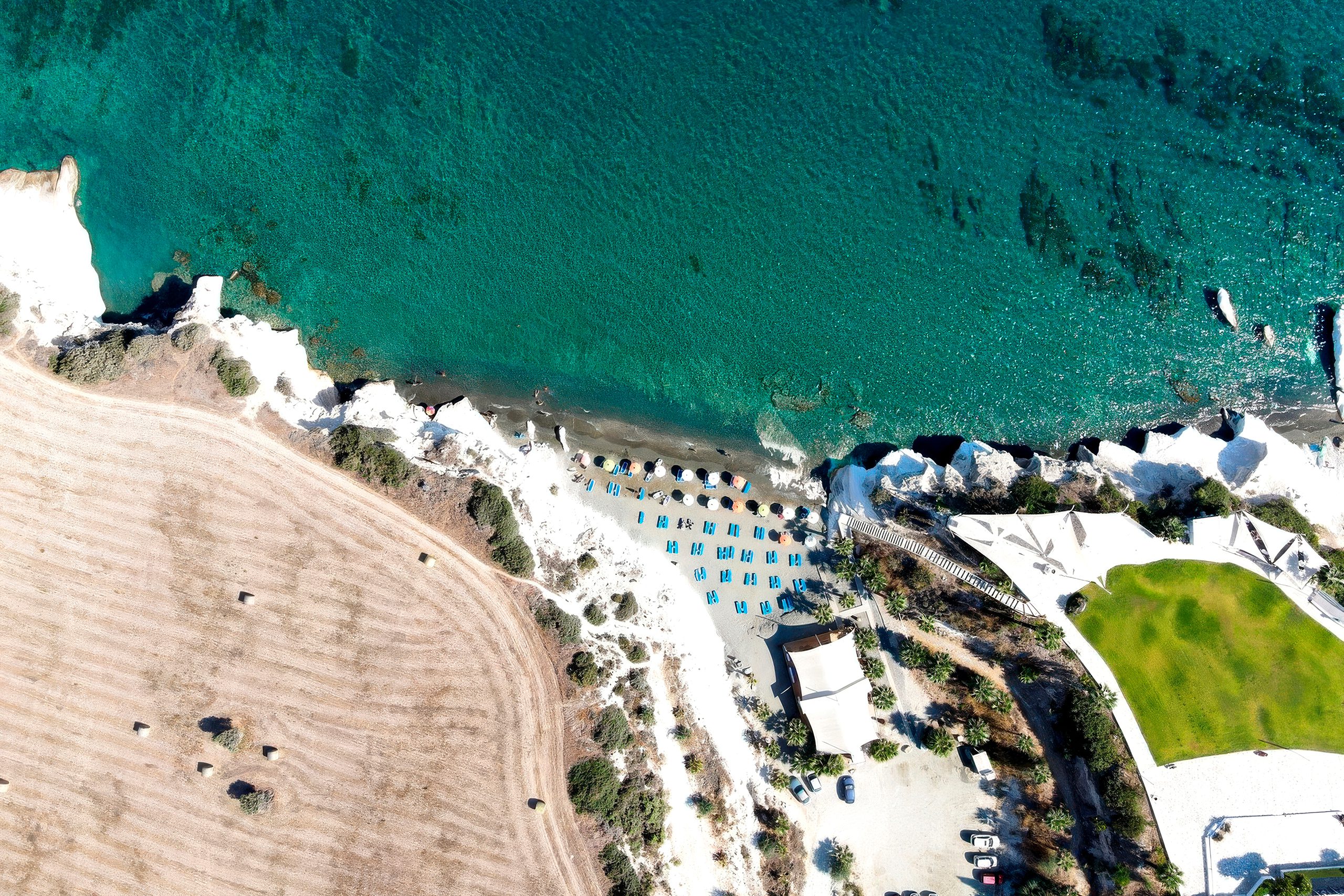
The beach itself is free to enter year-round. Visitors should bring water and food if not planning to use restaurant facilities, as no shops operate in the immediate area. Water shoes or sandals help when the sand becomes hot and when exploring rocky sections.
Why This Place Defines Cyprus
Governor’s Beach demonstrates how geological forces create distinctive coastal landscapes that become valued both for natural beauty and practical recreation. The combination of accessible location and maintained natural character provides an example of balanced coastal development. Unlike many Mediterranean beaches that disappeared under resort construction, this area retained its geological features and traditional character.
The white limestone cliffs serve as visible evidence of Cyprus’s geological history, connecting present-day visitors to ancient marine environments through fossilized remains embedded in the rock. The contrast with volcanic sand illustrates the diverse geological processes that shaped the island.
For Cyprus, Governor’s Beach represents coastal heritage that balances tourism with environmental protection. The Blue Flag status and preserved traditional restaurants show that popular beaches can maintain quality standards while supporting local communities. This balance becomes increasingly important as Cyprus continues developing its coastal tourism infrastructure.