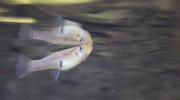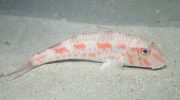
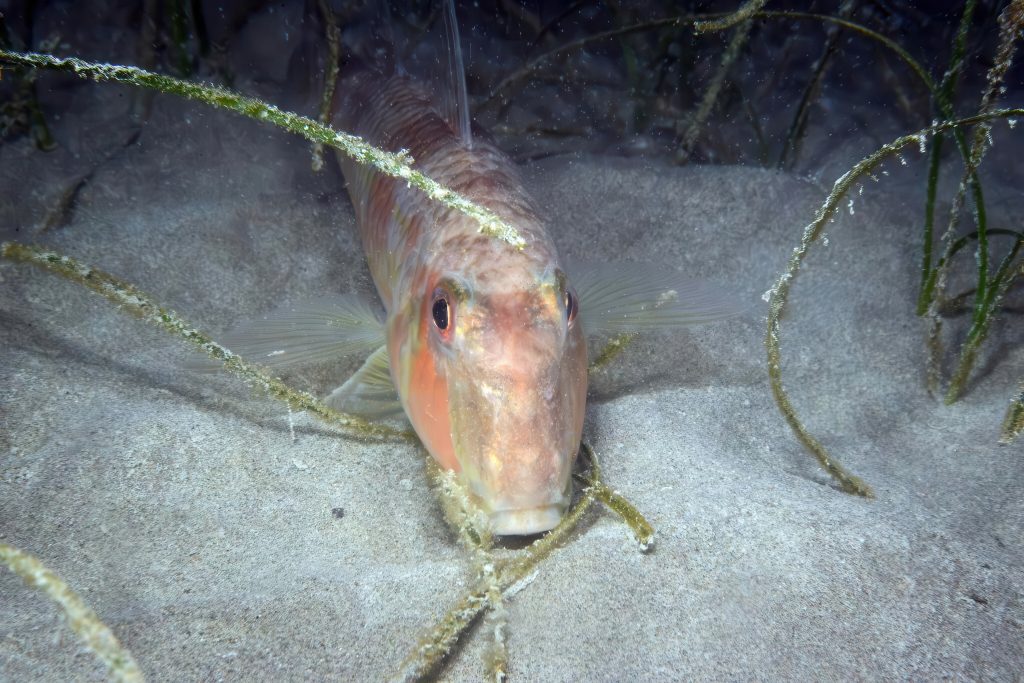
Just below the surface of Cyprus’s warm, clear Mediterranean waters, a small but spectacularly crimson fish goes about its unhurried business – probing the sandy seabed with its whisker-like barbels, digging for worms and shellfish with the focus of a seasoned detective.
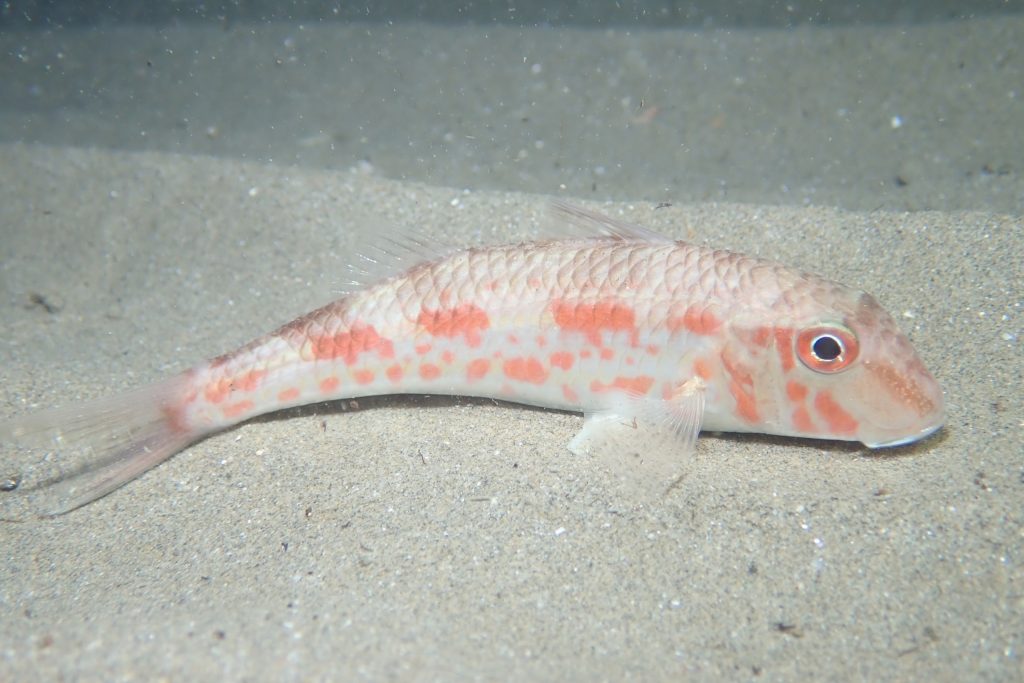
It is the red mullet, and it has been doing exactly this for millions of years. What makes this modest-looking creature so fascinating is not just what it does underwater, but the extraordinary story it carries with it through human history.
Meet the Goatfish Family
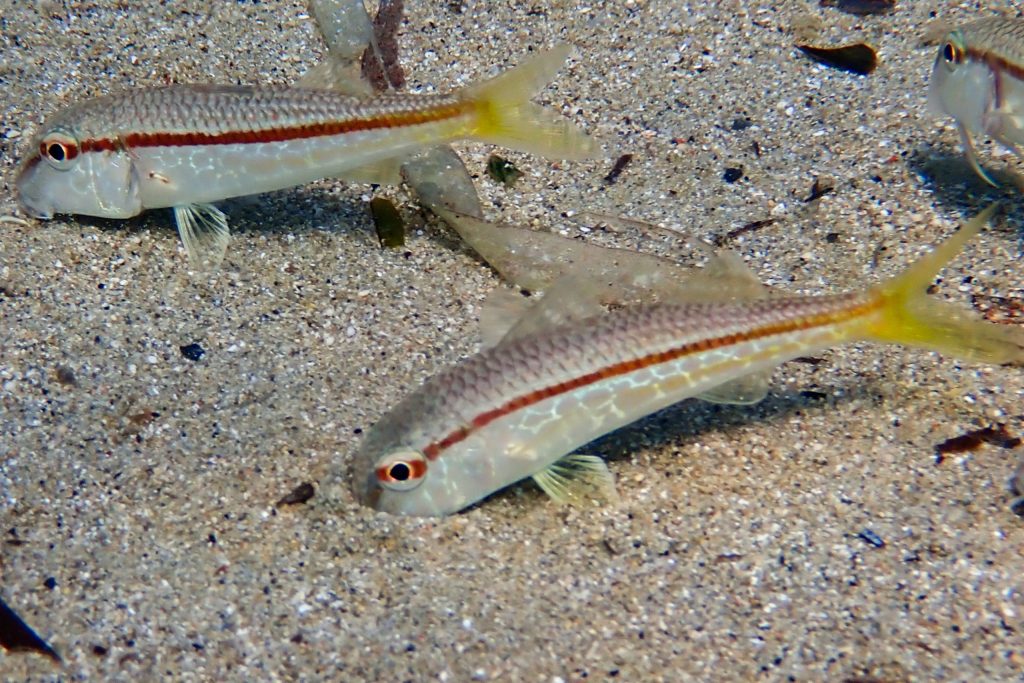
The red mullet belongs to the family Mullidae, a group of fish found throughout tropical and temperate seas worldwide, known collectively as goatfish. The name comes from those distinctive chin barbels – a pair of fleshy, whisker-like sensory organs dangling beneath the jaw, much like the beard of a goat. There are around 80 species of goatfish globally, but in the Mediterranean the ones that matter most are just two: Mullus barbatus (the plain red mullet) and Mullus surmuletus (the striped red mullet). Both are found in Cyprus waters, and both have been known to Mediterranean peoples since the earliest days of recorded history. In Cyprus, locals call the red mullet μπαρμπούνι (barbouni) – the same beloved name used across the Greek-speaking world.
From Ancient Tables to Imperial Obsession
Few fish in history have attracted the kind of passionate, almost irrational devotion that the red mullet inspired in the ancient world. In antiquity, these fish were considered “one of the most famous and valued fish” of the Mediterranean, and nowhere was that obsession more extravagant than in Rome.
Seneca set the price of a two-kilogram specimen at an eye-watering 5,000 sesterces, and when three especially large mullets sold for a staggering 30,000 sesterces, even Emperor Tiberius was alarmed – reportedly attempting to regulate prices at the fish market. Romans also called it the ‘shoe mullet’, as its colour was similar to the red shoes worn by patricians.
The obsession went beyond food. The ancient Romans reared red mullets in ponds where they were attended and caressed by their owners, and taught to come to be fed at the sound of the voice or bell of the keeper. Specimens were sometimes sold for their weight in silver. One Roman senator reportedly wept more at the death of his favourite mullet than he ever did for a slave.
The Greeks had their own complex relationship with the fish. In parts of ancient Greece it was called τρίγλη (trigle), and it was considered connected mythologically to Hecate and Artemis, while its consumption was forbidden at the sacred sites of Eleusis and at the Heraion of Argos. Some ancient writers even claimed the fish fed on the drowned – a dark superstition that added a certain forbidden allure to eating it.
A Creature Built for the Seafloor
The red mullet is a study in elegant practicality. It has a moderately elongate body up to 40 cm in length, two well-separated dorsal fins, and a forked tail. The body carries longitudinal red and brown stripes, and the first dorsal fin has distinct dark markings. The two species in Cyprus waters differ mainly in that Mullus surmuletus – the striped red mullet – sports those distinctive bold stripes on its dorsal fin, while Mullus barbatus is plainer.
It has the remarkable ability to camouflage itself, taking on the colour of the seabed when it feels threatened.
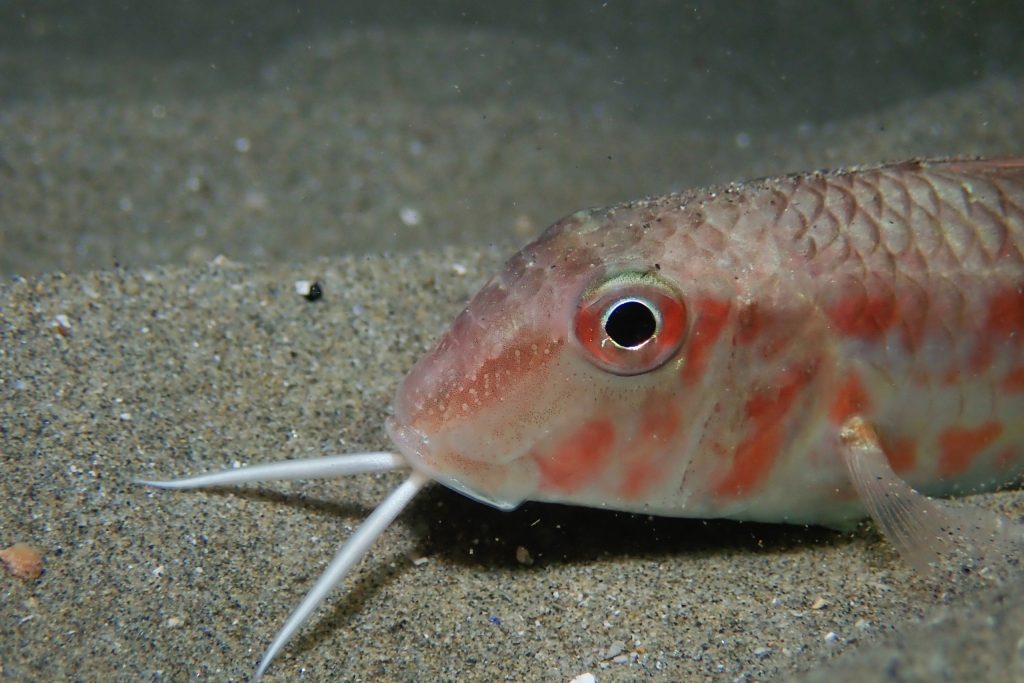
It is a demersal fish – meaning it lives close to the bottom – found from shallow coastal shallows down to surprising depths. The diet consists mainly of polychaete worms, bivalve molluscs and crustaceans. The barbels are sensory organs used to help locate prey. Think of them as built-in metal detectors for the seafloor.
Fun Facts Worth Knowing
- The goatfish connection – those chin barbels give the whole family the nickname “goatfish” worldwide. The Romans called the fish mullus, which is also believed to be connected to mulleus, the word for their distinctive red patrician shoes.
- A dying fish as theatre – Seneca described the spectacle of the dying mullet in a glass bowl, its scales shifting through red, pale, and iridescent hues as it expired. Wealthy Romans brought live mullets to the dinner table in glass jars specifically to watch this colour display before eating them.
- Fish that knew their names – Roman senator Quintus Hortensius maintained mullets in fishponds but refused to eat them, and he took more care that his mullets not go hungry than he did for his mules.
- A Lessepsian newcomer – a tropical goatfish species, Parupeneus forsskali, has now arrived in Cypriot waters from the Indian Ocean via the Suez Canal. Local fishermen call it petrobarbouno (rock barbouni) and it is considered very tasty.
Sacred Fish, Prized Liver
In ancient times the mullet was popular with the Greeks, who dedicated it to Artemis (Diana). Its liver was particularly prized by Roman gourmets – the great cook Apicius left recipes using mullet livers as a primary ingredient, alongside oysters, sea urchins, and lobster.
Breeding takes place in spring and summer, with spawning occurring at depths between 60 and 70 m. The larvae soon move to shallower depths, and at a length of about 5 cm the juveniles move to the coast and become demersal, sometimes swimming a short distance upstream into estuaries.
As for conservation, both Mediterranean species are currently assessed by the IUCN as Least Concern at a global level. Mullus surmuletus is a relatively short-lived species capable of rapid reproductive turnover. However, in the Mediterranean there are signs of overfishing, and many of the fish caught are shorter than 15 cm, being under two years old and not yet sexually mature. For conservation of the species, breeding grounds and nursery areas need to be protected.
Still on Every Cypriot Table
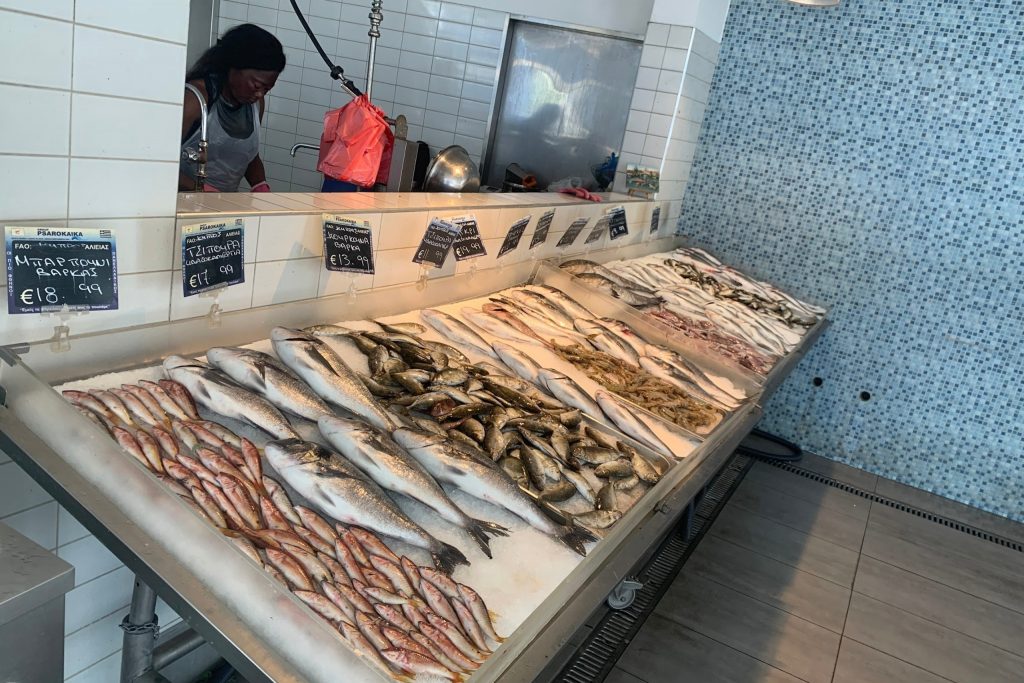
Today, the red mullet remains one of the most sought-after fish at Cypriot fish markets and restaurants. It appears at waterfront tavernas from Limassol to Paphos, Larnaca to Kyrenia, usually simply fried whole in olive oil and served with lemon – a preparation that would not have surprised Apicius or any Roman banqueter two thousand years ago. Local Cypriot fishermen catch both barbouni species using trammel nets, longlines, and small-scale artisanal gear in the shallow coastal waters around the island. The best-tasting specimens, fishermen will tell you, are those caught over rocky bottoms – the so-called petrobarbouno – whose flesh is firmer and more flavourful than those from muddy seabeds.
Conservation regulations now set a minimum landing size of 11 cm, though experts recommend allowing fish to reach at least 15 cm before harvest – giving them time to reproduce at least once. Sustainable seafood guides in Greece and Cyprus increasingly encourage consumers to choose larger, seasonal fish and support local small-scale fisheries over industrial trawling.
Finding the Red Mullet Around Cyprus
The best way to encounter red mullet in Cyprus is almost certainly on a plate – but divers can spot them in the shallows along rocky and sandy coastal stretches around the island. Underwater, they are endearingly busy creatures – heads down, barbels twitching, completely absorbed in the ancient task of rooting through the seafloor. They are found throughout Cypriot coastal waters, particularly around Akamas, the Paphos marine area, Cape Greco near Ayia Napa, and the rocky outcrops of the Karpaz Peninsula. Fish markets in Limassol and Larnaca are good places to see them fresh, and patient snorkellers occasionally spot them in shallower sandy bays on calm summer mornings.
Small Fish, Long Memory
There is something quietly remarkable about the red mullet. It is not the largest fish in the sea, nor the rarest, nor the most dramatic. And yet this small, bewhiskered creature has inspired Roman emperors to regulate fish markets, moved Greek philosophers to write about its breeding cycles, earned a place in the sacred rites of Artemis, and graced the tables of Cypriot fishermen for millennia. It connects the island’s present to its deepest past – a reminder that the sea around Cyprus is not merely geography, but history made liquid. The next time you see a plate of barbouni, fried golden and fragrant, know that you are looking at one of the oldest and most storied meals the Mediterranean has ever produced.