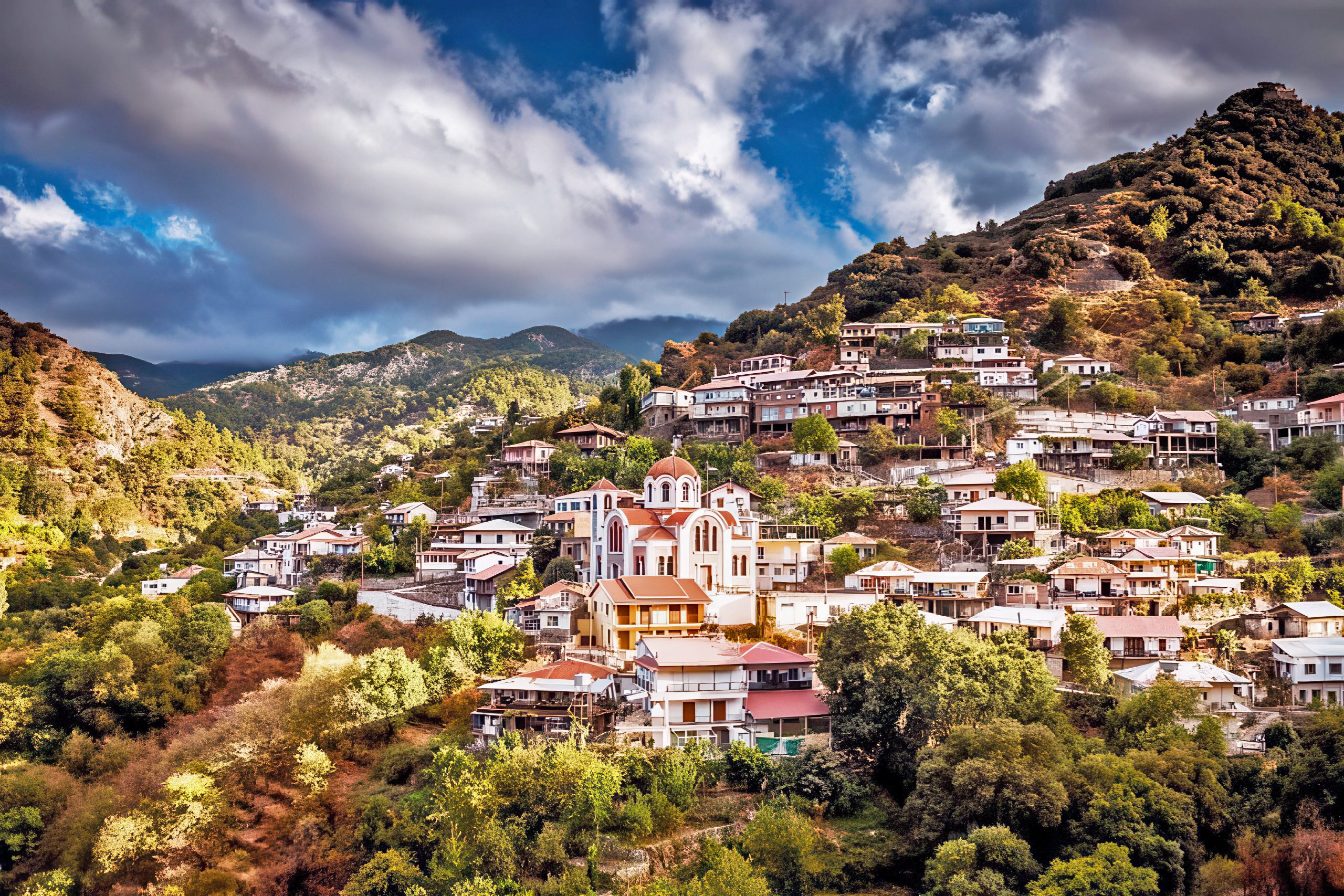
The Troodos Hill Stations refer to two main areas in the Troodos Mountains where the British colonial administration established summer retreats. Platres, located at an altitude of 1,100 meters on the southern slopes, became the premier mountain resort with luxury hotels, villas, and tree-lined walks. Troodos Square, situated near Mount Olympus at approximately 1,700 meters, served as the administrative center where the British governor relocated his entire government during the hot summer months. Together, these hill stations formed a unique mountain retreat system that shaped Cyprus tourism for over a century.
Historical Background
When Lieutenant-General Sir Garnet Wolseley arrived in Larnaca on July 22, 1878, as the island’s first High Commissioner, he immediately recognized a serious problem. British troops stationed on the coastal plains suffered terribly from extreme heat that often exceeded 40 degrees Celsius, and malaria was widespread in low-lying areas. Coming from their experience in India, where hill stations had successfully reduced mortality rates among troops and civilians, the British knew exactly what to do.
In September 1878, just two months after taking control of the island, construction began on the Troodos Hill Station. The site was chosen because elevations above 1,500 meters provided relief from tropical diseases and heat stress. Wooden huts were ordered from England, though records suggest these may never have arrived. By May 1879, around 400 British personnel, mostly Royal Engineers, were able to withdraw to their summer camp in the mountains.
The decision was entirely about health, not strategy. In fact, the British government initially considered Cyprus unsuitable as a military base. However, the tradition of escaping to the cooler hills between May and September became so deeply rooted that it continued for nearly a century, long after the health threats had diminished.
The Rise of Platres as a Luxury Resort
Platres had existed as a small agricultural village since at least the Byzantine period and was mentioned among 119 villages in the Limassol district during the Lusignan Era (1192-1489 AD). However, it remained relatively unknown until the British discovered its unique natural advantages. Unlike the arid hills that characterize most of the Troodos range, Platres straddles a perennial stream called Krios Potamos, which starts at Mount Olympus and flows year-round. This reliable water source allowed for lush vegetation and made the area unusually green.
The British quickly invested in transforming Platres into a proper resort. From the early years of the 20th century, the first hotels in Cyprus began appearing here, along with luxurious villas built by wealthy families. The establishment of hotels placed Cyprus on the global tourism map for the first time. The initial wave of tourists came from the international community in Egypt, particularly wealthy Cypriot expatriates who returned to their homeland to enjoy this paradise on earth.
The first hotel, called Ta Krya Nera (Cold Water), opened in 1900. This was followed by Grand Hotel in 1905, Pafsilipon in 1912, Helvetia in 1915, Monte Carlo in 1920, and Forest Park in 1936. After 1905, Platres experienced a genuine tourist boom. The village population swelled from a few hundred permanent residents to 10,000 during peak tourist seasons. Numerous bars, taverns, cafes, and restaurants appeared to serve the growing number of visitors.
The Governor’s Summer Residence
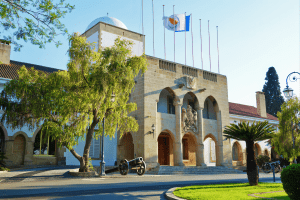
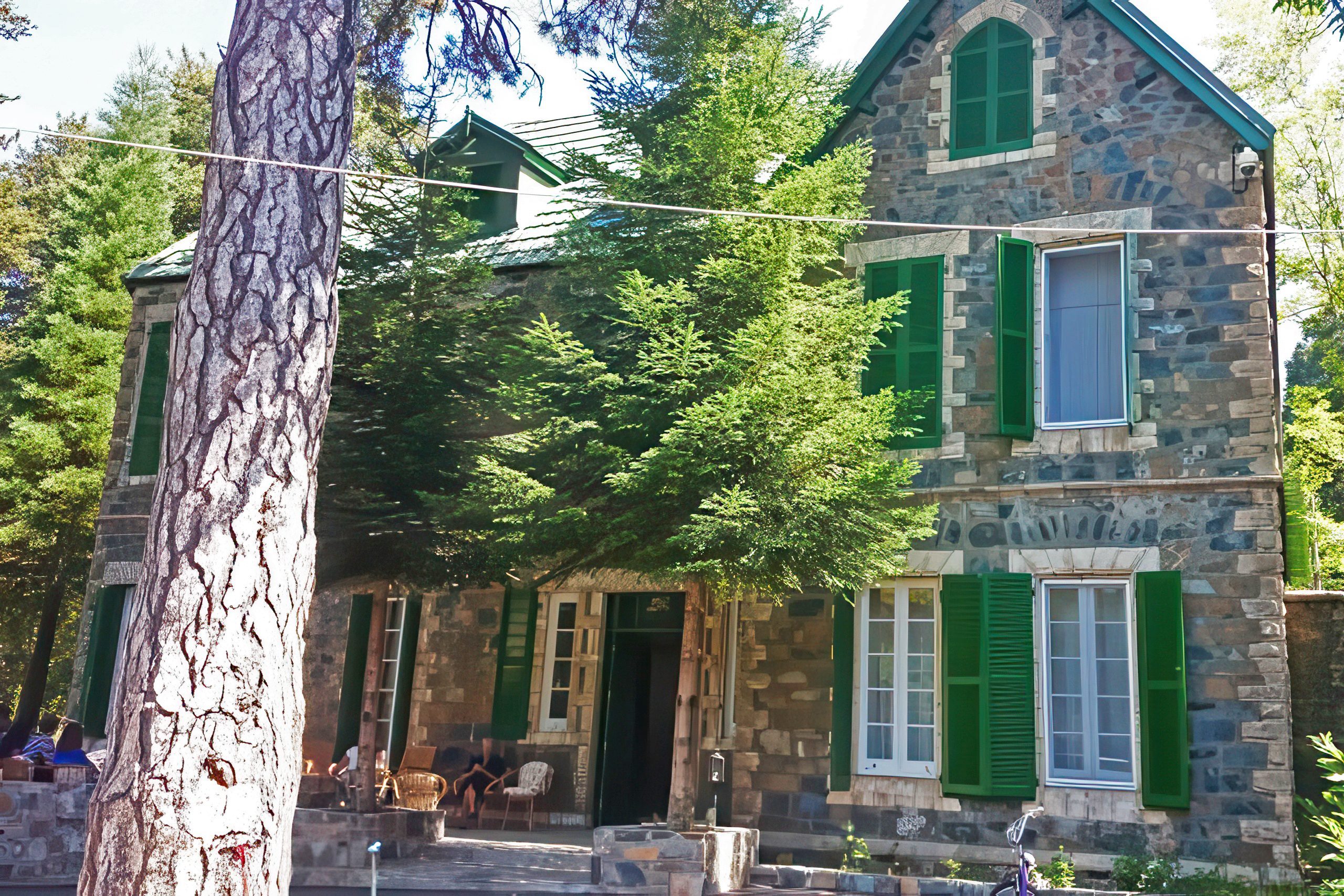
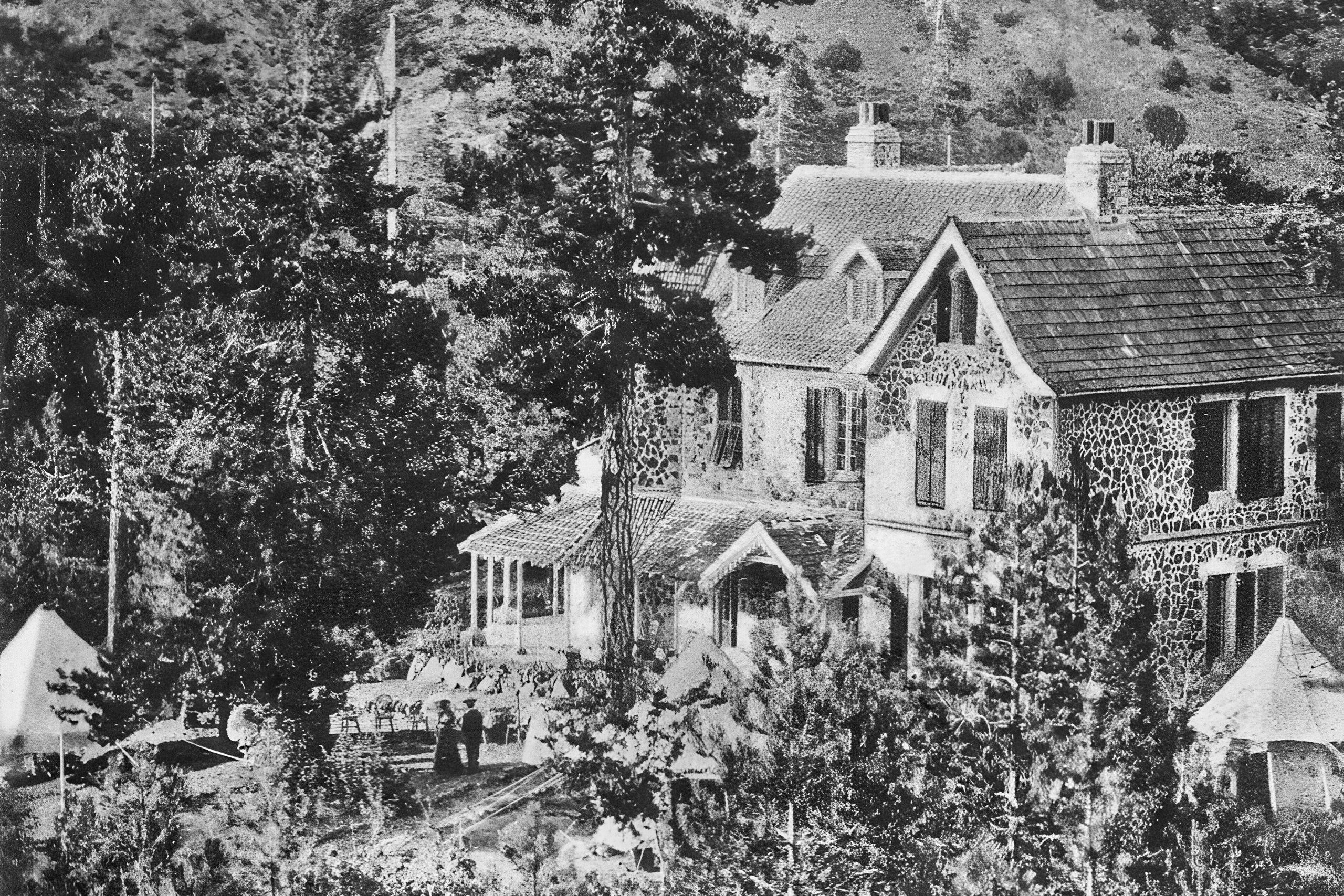
Between Platres and Troodos Square, the British built a summer residence for the colonial governor. Every year, the entire colonial administration relocated to the Troodos region for the summer months. The governor’s residence, completed around 1880, became the center of British colonial life during these periods. The building is notable for an interesting historical connection: the French poet Arthur Rimbaud worked on its construction as a manager. A commemorative plaque was installed in 1946, stating with typical British irony that Rimbaud, a genius of French poetry, worked with his own hands on the building despite his fame.
After Cyprus gained independence in 1960, the building became the Presidential Summer Residence, serving every president of the Republic. Today, it continues this function and occasionally opens to the public for special events. The Cabinet of Ministers still holds meetings there during summer months, maintaining the century-old tradition of mountain governance.
Interesting Facts About the Hill Stations
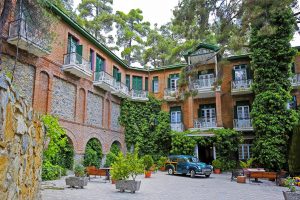
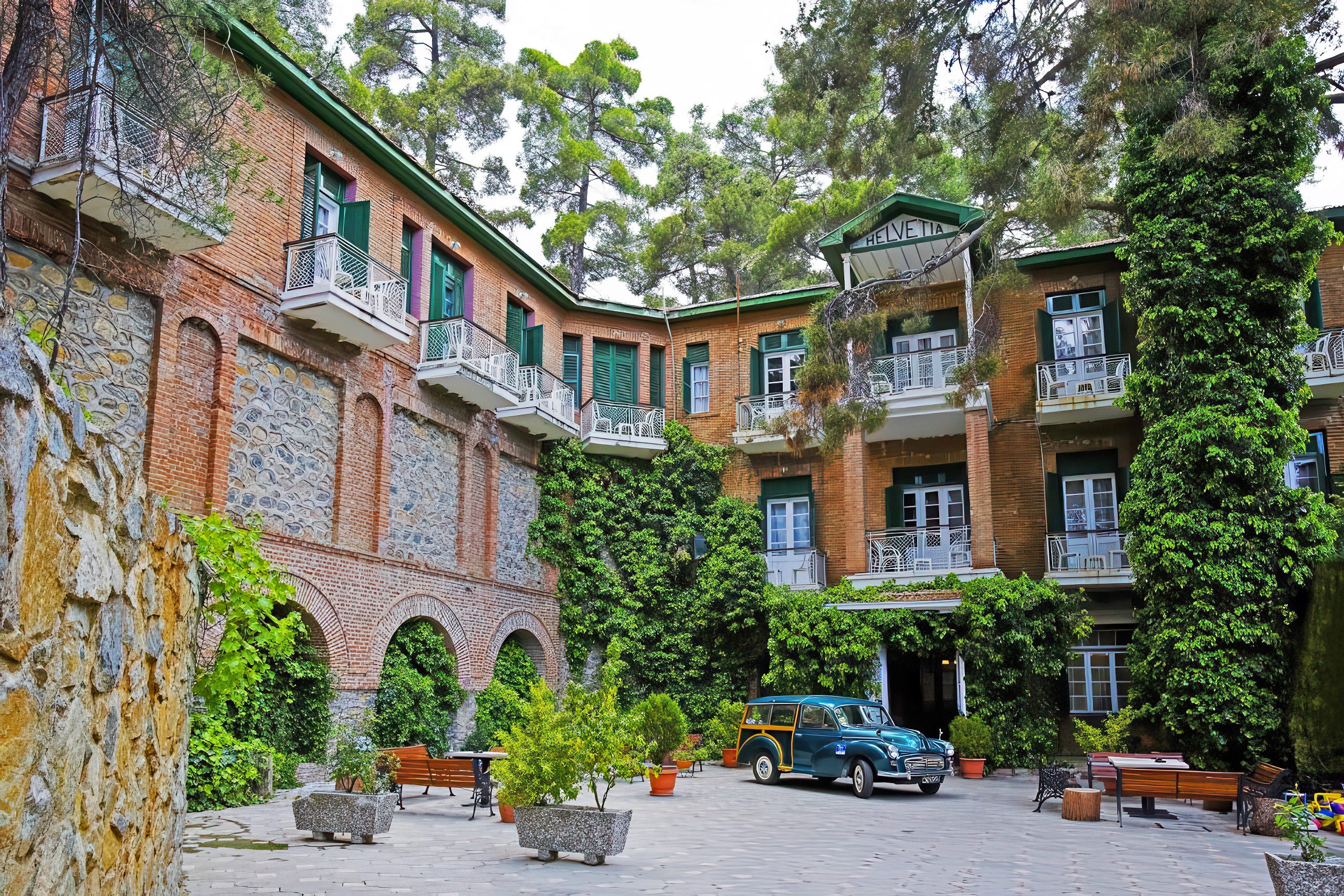
The Grand Hotel Helvetia, later renamed New Helvetia, was built in 1906 by Nikolaos Kypriotis from Limassol. He is considered one of the first hoteliers in Cyprus. When he expanded the hotel in 1929, he created a distinctive three-story building with red bricks made on-site using a special press that still exists today. The hotel imported classic furniture specially ordered from Austria. New Helvetia has operated continuously for over 100 years, making it the oldest functioning hotel in Cyprus.
The Troodos Mountains played an unexpected role in geological science. The range contains an undisturbed ophiolite sequence called the Troodos Ophiolite, which formed millions of years ago when the African and European tectonic plates collided. Observations of this formation by geologist Ian Graham Gass and his colleagues provided crucial evidence for the theory of seafloor spreading, a key component of modern plate tectonics.
At its peak in 1960, Platres had 16 operating hotels. The village maintained 500 permanent residents in 1950. However, when many hotel owners died, their properties were divided among children who could not agree on management. Some owners lost interest and abandoned the buildings. Hotels that were rented out fell into disrepair because tenants did not invest in maintenance. The Forest Park Hotel, once the jewel of Platres with 150 rooms and 85 years of history, finally closed in 2017. By 2018, the permanent population had dropped to just 200 residents.
Colonial Architecture and British Legacy
The hill stations feature distinctive colonial architecture that remains visible today. Buildings were constructed with unbleached walls made from large tuff blocks, a yellow Cypriot stone. Characteristic features include arcades with pointed arches that imitate the Cypriot Gothic style, along with wooden frames, tiled roofs, and classic furnishings. The British imported their architectural tastes and created structures that combined local materials with European design principles.
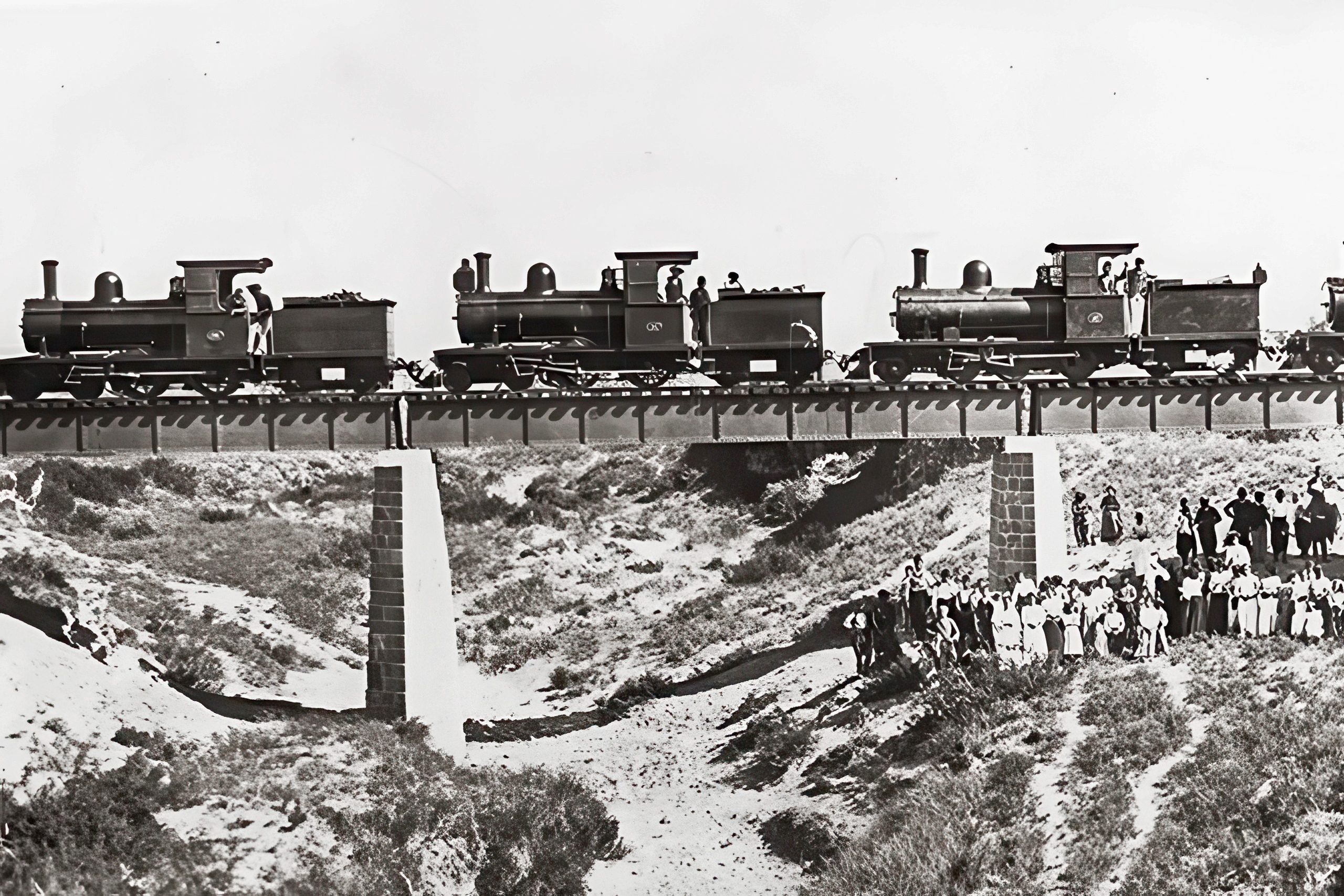
The development of infrastructure in the area contributed significantly to growth. The British built a network of roads connecting the mountains to coastal cities. A narrow-gauge railway, the Cyprus Government Railway, was constructed to link the port of Famagusta to Nicosia and the copper mines of the northwest. Although the 2 foot 6 inch gauge line was not economically successful and was progressively wound down between 1932 and 1951, it represents an important chapter in Cyprus infrastructure history. One of the few substantial remains is the station at Evrychou, located on the route between Troodos and the capital.
The Hill Stations Today
The invention of air conditioning in the mid-20th century fundamentally changed the need for mountain retreats. Coastal resorts gained popularity as visitors could now enjoy beaches without suffering from oppressive heat. Beach tourism gradually replaced mountain tourism as the primary attraction for international visitors. The 1974 Turkish invasion of Cyprus dealt another blow to the mountain resort economy, as uncertainty and reduced tourism affected the entire island.
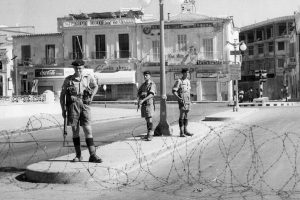
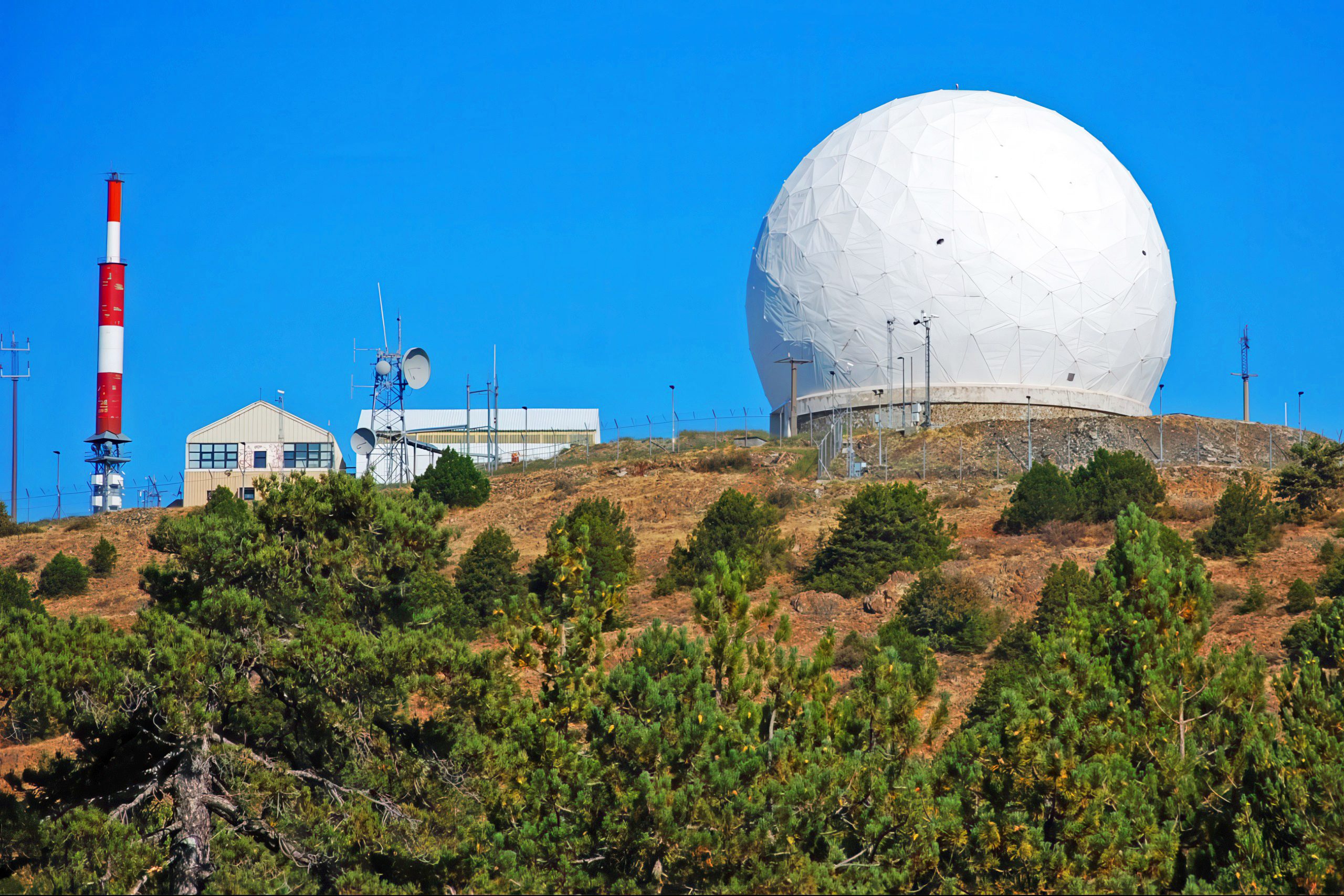
During the Cyprus struggle for independence from 1955 to 1959, Platres was turned into an operational camp for the British army and hotels were used by the military. This ceased tourist visits during that period. When British military presence was reduced in the area around 1990, it removed another economic pillar. About 120 soldiers and their families had stayed in apartments, mostly young couples who contributed to the local economy.
Despite these challenges, the Troodos Mountains remain an important destination for Cypriots and visitors. The area offers a cooler alternative to coastal resorts during summer, and in winter, the ski slopes near Mount Olympus attract winter sports enthusiasts. The Presidential Summer Residence continues to host government meetings and occasional public events. The mountains are home to nine Byzantine churches and one monastery that together form a UNESCO World Heritage Site, originally inscribed in 1985. Nature trails, waterfalls, and scenic villages attract tens of thousands of travelers annually.
Visiting the Troodos Hill Stations
Platres is located about 25 kilometers northwest of Limassol and 45 kilometers southwest of Nicosia. The village is easily accessible by car, with the drive from Limassol taking approximately 45 minutes. Troodos Square is about 5 kilometers from Platres. The area offers numerous hiking trails, including paths to the Caledonia Waterfall, Millomeris Waterfall, and the medieval Milia Bridge. Mountain biking and rock climbing opportunities attract adventure enthusiasts.
Several historic hotels continue to operate, including New Helvetia, Semiramis, and Pendeli. These establishments maintain their colonial charm while offering modern amenities. The village center features cobbled streets, cafes, and traditional tavernas where visitors can sample authentic Cypriot cuisine. Local specialties include halloumi cheese, moussaka, and souvlaki. Wine enthusiasts can explore the nearby wine villages as part of the Krasochoria wine route.
A Legacy That Shaped Cyprus Tourism
The Troodos Hill Stations represent a fascinating chapter in Cyprus history where health concerns, colonial administration, and natural beauty converged to create the island’s first tourism industry. What began as a practical solution to protect British troops from heat and disease evolved into a sophisticated resort system that attracted international royalty, literary figures, and wealthy travelers from across the Mediterranean.
Although the golden age has passed, the mountain villages retain their charm and continue to offer visitors a glimpse into this unique period when Cyprus transformed from an agricultural island into a destination for leisure and luxury. The legacy of those early pioneers, from the hoteliers who built the first grand establishments to the bartender who invented a national cocktail, lives on in the pine forests and historic buildings that still dot the mountainside.