Explore Cyprus with Our Interactive Map

Explore our top stories and discover ideas worth your time.

Whispers from the Antipodes

Whispers from the Antipodes

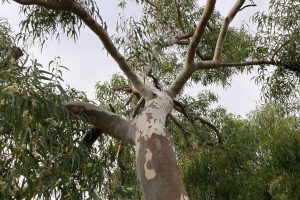
Imagine strolling across the sun-drenched plains of central Cyprus on a warm spring morning. Tall, graceful trees with silvery, peeling bark rise above the dry grasses, their narrow leaves whispering in the breeze and filling the air with a fresh, camphor-like scent. These are the eucalypts of Cyprus – not ancient natives, but fascinating newcomers whose story weaves together botany, colonial history, and the island’s fight against desertification. www.inaturalist.org Getting to Know the Genus Eucalyptus belongs to the vast Myrtaceae family, a group of flowering plants that also includes myrtles, guavas, and bottlebrushes. The genus Eucalyptus alone contains over 700 species, nearly all native to Australia, where they dominate woodlands and riverbanks. In Cyprus we mainly encounter Eucalyptus camaldulensis, the river red gum, though other species such as E. gomphocephala and E. torquata appear in small numbers. Locally they are known as Ευκάλυπτος (Efkalyptos), from the ancient Greek words “eu” (well) and “kalyptos” (covered), referring to the neat little cap that protects each flower bud until it is ready to bloom. Their Journey to Cypriot Soil When the British took control of Cyprus in 1878, the island had lost much of its original forest cover to centuries of grazing, firewood cutting and fires. In 1876 the French arborist P.G. Madon, working for the Ottoman administration, had already recommended eucalypts in…

Read more

Almond Tree

Almond Tree

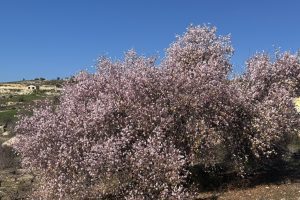
Picture a Cypriot hillside in late February, when most trees are still bare. Suddenly, clouds of delicate pink and white flowers appear as if by magic, painting the landscape in soft pastel tones weeks before any leaves unfold. This early burst of beauty belongs to the almond tree, a cherished symbol of spring and one of the island’s most generous gifts. Konstantin-Solovev A Tree Steeped in Mediterranean Sweetness Prunus amygdalus, the almond tree, belongs to the Rosaceae family – the same group as peaches, cherries and roses. In Cyprus it grows as a graceful deciduous tree, usually 4–10 metres tall, with a rounded crown and slender branches. It thrives in the sunny, well-drained soils of the island’s valleys, hillsides and traditional orchards. Roots in the Dawn of Agriculture Almonds are among the very first fruit trees domesticated by humans, with archaeological evidence from the Early Bronze Age in the Levant and remains found in Tutankhamun’s tomb. The wild ancestor likely grew in the hills of western Asia and the eastern Mediterranean. In Cyprus, cultivation dates back thousands of years; the tree appears in ancient texts and has been part of village life for generations. Early naturalists such as Unger and Kotschy noted almond orchards during their 1862 explorations, while modern forest and agricultural records show how the almond has been…

Read more
Church of Agios Nikolaos tis Stegis Byzantine Art

Church of Agios Nikolaos tis Stegis Byzantine Art

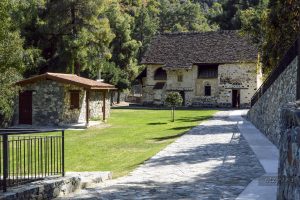
Historical Background and Monastic Context The Church of Agios Nikolaos tis Stegis, located in the Troodos Mountains of Cyprus near the village of Kakopetria, holds a central place in the island’s medieval religious and artistic heritage. It is one of the most important monuments included in the UNESCO World Heritage listing of the “Painted Churches in the Troodos Region,” a group recognized for preserving exceptional examples of Byzantine wall painting. Agios Nikolaos tis Stegis is especially significant because it is the only surviving katholikon, or main church, of an 11th-century monastery that once functioned as a spiritual, cultural, and economic center in the mountainous interior of Cyprus. Although the surrounding monastic complex has largely disappeared, the church remains as a rare and well-preserved witness to the monastic life that flourished on the island during the Middle Byzantine period. wikimedia-org The foundation of the church dates to the 11th century, a time when Cyprus was part of the Byzantine Empire and experienced a period of religious and artistic vitality. Monasteries in the Troodos Mountains served as centers of spiritual retreat and learning, offering relative security during times of political instability along the coasts. The survival of Agios Nikolaos tis Stegis is therefore linked not only to its construction but also to its remote location, which helped protect it from destruction during…

Read more