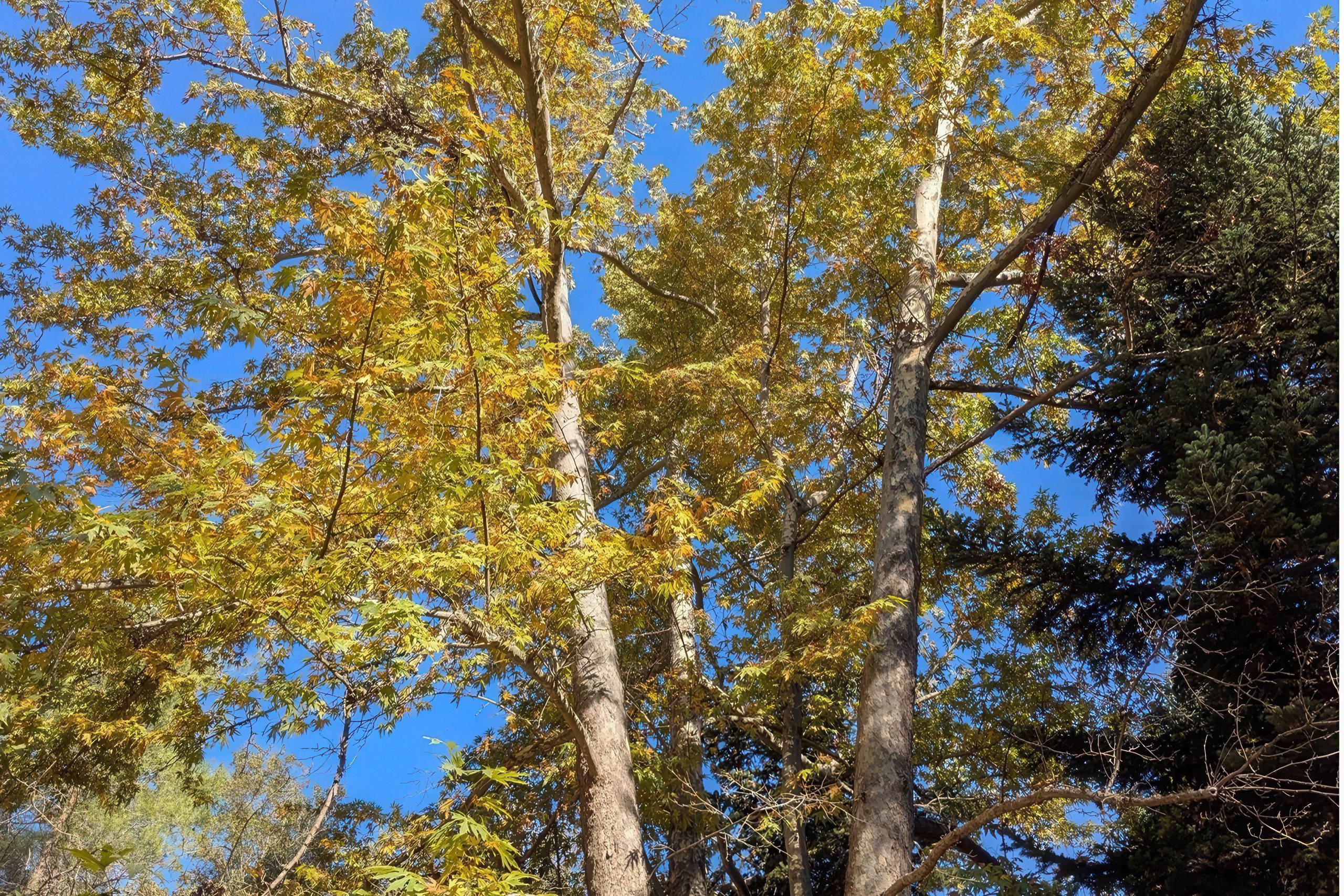
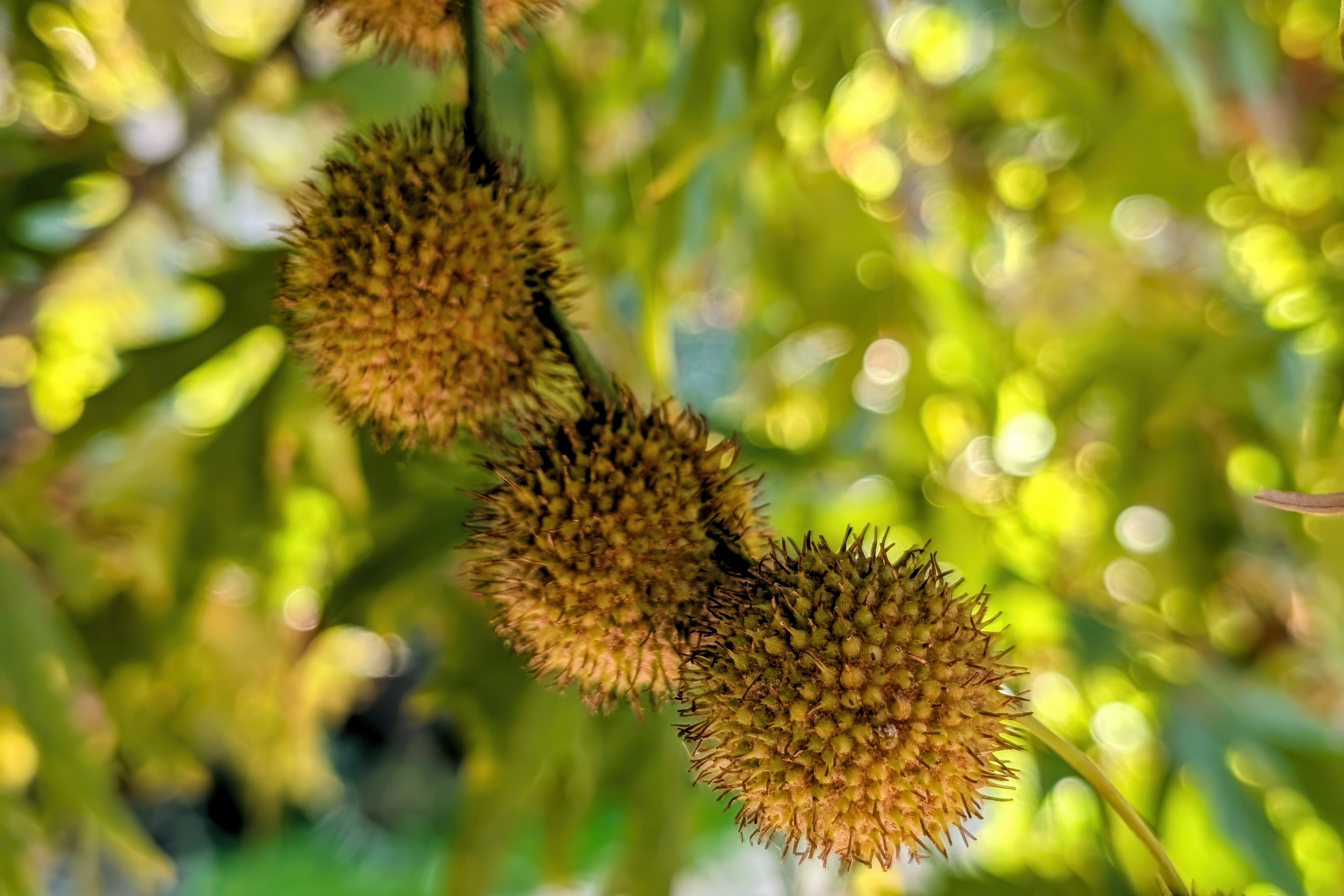
Beside a sparkling mountain stream in the Troodos foothills, tall trees with beautiful patchwork trunks cast deep, cool shade over the water. Their large, hand-shaped leaves rustle gently, while round, spiky fruit-balls dangle like tiny planets through the winter. This is the Oriental Plane, Platanus orientalis – Cyprus’s own river guardian and one of the island’s most majestic native trees.
A Member of an Ancient Family
Known scientifically as Platanus orientalis, the Oriental Plane belongs to the small but noble Platanaceae family within the order Proteales. The Tree of Hippocrates, under which Hippocrates—the “Father of Medicine”—taught at Kos, is reputed to have been an oriental plane. In Cyprus it is the only native plane tree, perfectly adapted to life along permanent watercourses where it often forms beautiful gallery forests with willows and alders.
From Ancient Rivers to Modern Cyprus
The Oriental Plane has been part of Cyprus’s landscape since prehistoric times and is listed as fully indigenous in the Flora of Cyprus. It was already noted by 19th-century British foresters in riverine woodlands, and in 2001 the Department of Forests honoured it as one of Cyprus’s Trees of the Year. Today it remains a flagship species of the island’s precious riparian habitats.
Distinctive Features That Make It Unmistakable
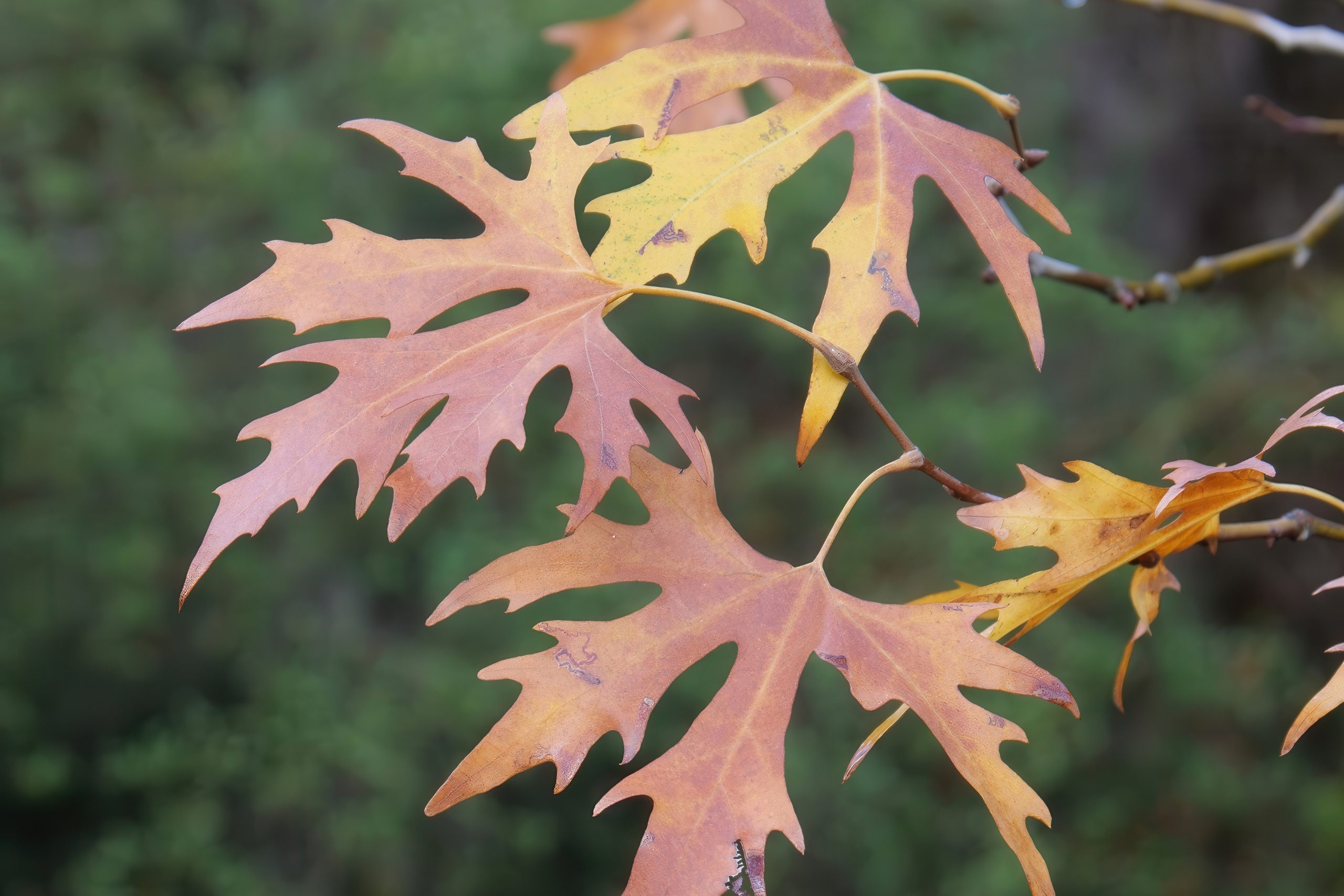
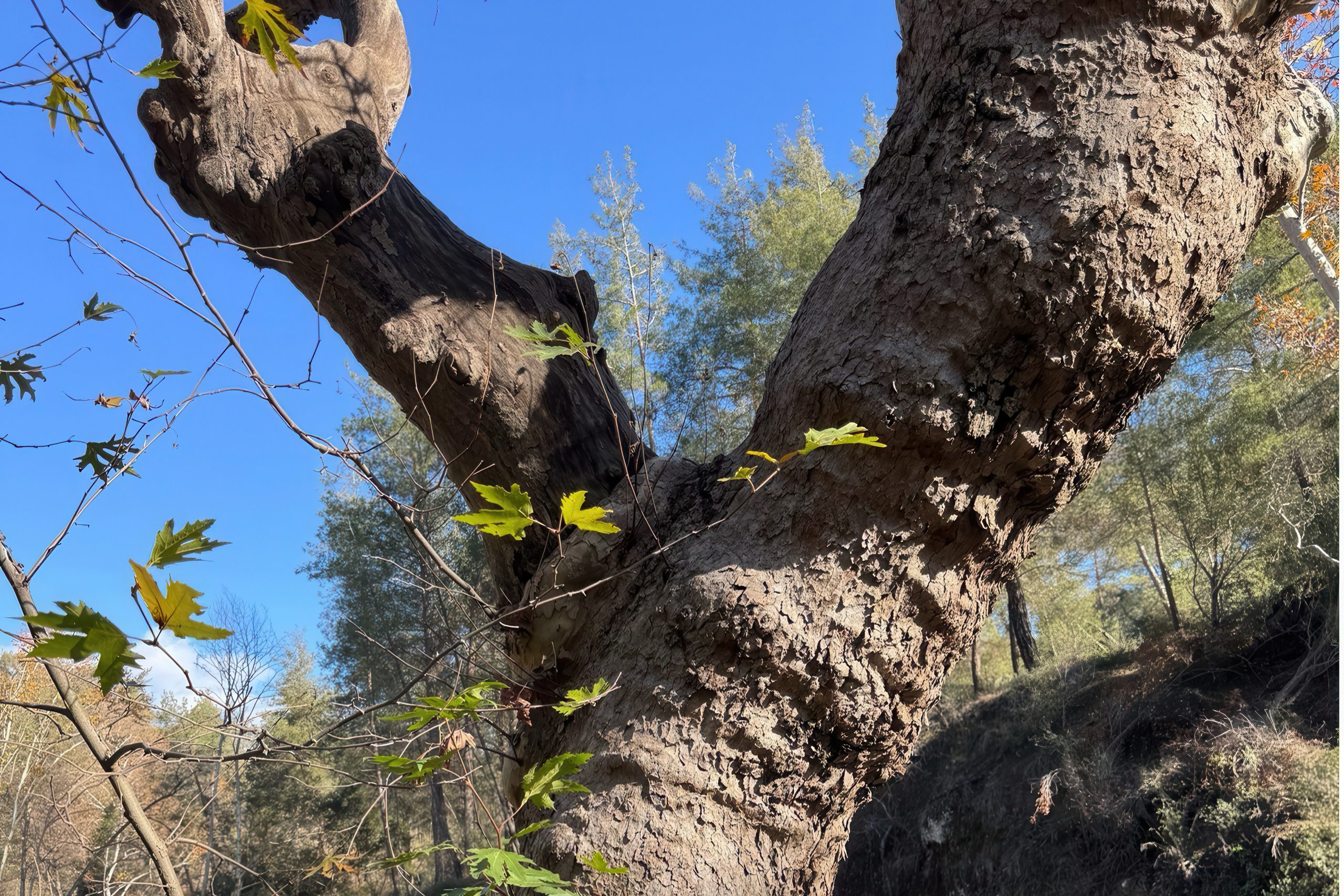
The Oriental Plane is a large deciduous tree reaching 20–30 metres with a broad, spreading crown. Its smooth bark peels away in large, irregular plates each year, creating a striking mottled pattern of creamy white, olive green, grey and pale brown. The leaves are large (10–25 cm), palmately lobed with 5–7 pointed segments, turning rich gold in autumn. In spring it produces hanging clusters of tiny flowers; by late summer these become the characteristic spherical fruit heads that persist on the branches through winter.
As the centuries pass, the central trunk frequently hollows out and eventually dies back. Yet the tree survives by sending up vigorous lateral trunks from the base and roots. These new stems grow upward in a dramatic circle-like ring around the old hollow centre, creating one of nature’s most impressive living monuments – a circle of multiple trunks that can continue thriving for hundreds more years.
Five Delightful Tidbits
• In Cypriot Greek it is simply called Πλάτανος (Platanos), from the ancient Greek word for “broad” – referring to its wide, cooling shade and large leaves.
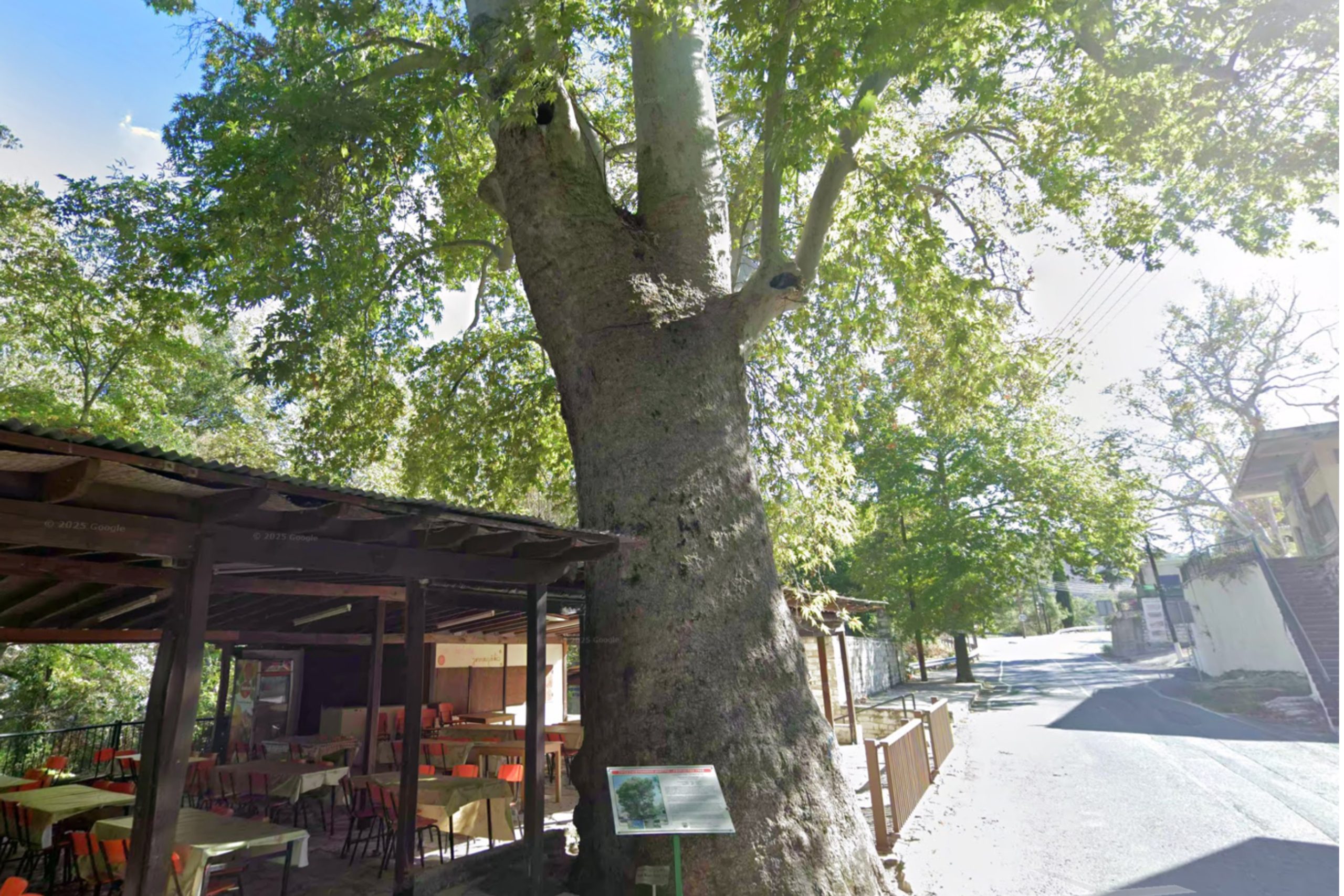
• The famous plane tree beside the old church at Agia Mavri (Paphos district) has a girth of about 8.5 metres and is estimated at around 800 years old.
• Its peeling bark helps the tree shed pollutants, pests and fire damage, allowing it to live for centuries.
• Children love collecting the spiky fruit-balls as “plane-tree apples” or using them in winter crafts.
• It is listed as Least Concern on the IUCN Red List globally and remains secure and common in Cyprus.
Deeper Layers of Beauty and Ecology
As a true riparian specialist, the Oriental Plane stabilises stream banks, cools the water for fish and insects, and creates vital wildlife corridors through the maquis and pine forests. Its leaves break down quickly, enriching the soil, while the dense crown offers year-round shelter for birds and bats. In traditional Cypriot life it provided excellent shade for village kafeneia, picnics and summer gatherings – a living reminder that water and trees are the true wealth of the island.
Still Standing Strong in Cypriot Life Today
In modern Cyprus the Oriental Plane continues to define the island’s loveliest river walks and village squares. It is fully protected by law, especially the ancient monumental specimens with their circle-like trunk formations, and is widely planted in restoration projects along dried-up streams. Its ability to tolerate pollution also makes it a favourite for town avenues and parks, helping keep Cyprus green and cool even as the climate warms.
Finding and Experiencing the Plane Tree
The easiest and most rewarding place to meet these giants is the magnificent 800-year-old plane tree at Agia Mavri village in the Paphos district (near the old church). Other wonderful populations line the streams around Platres, Kakopetria, Phini, Milikouri, Moutoullas and Goudi in the Troodos. In the Akamas and Pentadaktylos you will find smaller but equally beautiful stands beside permanent springs. Visit in autumn when the leaves turn golden or in summer when the mottled bark glows in the sunlight. Walk the shaded river trails, sit beneath the broad canopy, and listen to the water – it feels like stepping into a living postcard of old Cyprus.
In the end, the Oriental Plane is far more than a beautiful tree. It is Cyprus’s own river guardian – a living link between ancient forests, village life and the clear streams that still flow through our island. Protecting these mottled giants, with their remarkable circle-like trunk formations, means preserving the cool, green heart of the Mediterranean landscape we all love. Next time you rest in their generous shade or run your fingers over that beautiful peeling bark, remember you are touching a piece of Cyprus that has stood watch for centuries – and will continue to do so for many more, right here on our beautiful island home.