Explore Cyprus with Our Interactive Map

Explore our top stories and discover ideas worth your time.

Two Festivals, One Island

Two Festivals, One Island

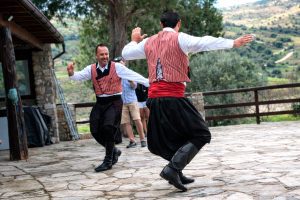
Cyprus expresses its culture best when it gathers people together in public spaces, after sunset, with music in the air and tradition close at hand. Two annual festivals capture this instinct especially clearly: the Limassol Wine Festival and the Ayia Napa International Festival. Though different in tone and setting, they reveal how Cyprus balances heritage and openness, local pride and global exchange. Experiencing them side by side offers a clear insight into how celebration functions as a cultural language on the island. Two Ways of Telling the Same Story At first glance, these festivals appear to represent different worlds. Limassol's event revolves around wine, harvest traditions, and large-scale public gatherings, while Ayia Napa's focuses on music, performance, and international cultural exchange. Yet both serve the same purpose: they turn shared space into shared identity. Limassol’s festival unfolds in a broad seaside garden, encouraging movement, conversation, and repetition. Ayia Napa’s festival concentrates activity in a historic square, drawing attention inward toward performance and spectacle. One spreads outward, the other gathers inward, but both rely on the same idea that culture becomes meaningful when it is experienced collectively. Why These Festivals Were Created in the First Place Neither festival began as a decorative addition to the calendar. Each emerged from a practical and cultural need. The first Limassol Wine Festival was held…

Read more
Larnaca Museum

Larnaca Museum

The Larnaca District Archaeological Museum houses discoveries from one of Cyprus's most important ancient port cities. The museum was inaugurated in 1969 and underwent major renovation in 2022, emerging with two new wings organized thematically. The collection showcases finds from the ancient city kingdom of Kition and major Neolithic settlements including Choirokoitia and Tenta Kalavasos. Located just 100 meters from the Kition Bamboula archaeological site, the museum serves as an essential introduction to understanding Larnaca's 11,000 year history as a coastal trading center. The exhibits span from 8000 BC through the Roman period, demonstrating how Larnaca participated in Mediterranean wide trade networks while developing distinct local culture. Entry is free, making the museum accessible to all visitors regardless of budget. Bronze Age Kition Ruled Copper Trade Kition emerged as one of Cyprus's most powerful city kingdoms during the Bronze Age due to its control of copper resources and strategic harbor. The city exported copper throughout the Mediterranean, establishing commercial ties with Egypt, the Levant, Mycenaean Greece, and Anatolia. Archaeological evidence shows that Kition maintained extensive trade connections, importing luxury goods in exchange for Cyprus's prized copper. The museum displays pottery, tools, and weapons that demonstrate sophisticated Bronze Age metalworking techniques. A faience scepter bearing the cartouche of Pharaoh Horemheb proves direct contact with Egypt's New Kingdom. Mycenaean pottery including jugs,…

Read more
Cyprus Green Line Today

Cyprus Green Line Today

The Green Line takes its name from a green chinagraph pencil used by British Major General Peter Young on December 30, 1963. He drew a ceasefire line on a map of Nicosia during a twelve-hour meeting following intercommunal violence between Greek and Turkish Cypriots. That pencil mark became the basis for one of Europe's most visible political divisions. Today the Green Line stretches 180 kilometers from Kato Pyrgos in the west to Paralimni in the east, cutting across the entire island. It varies from just 3.3 meters wide in central Nicosia to 7.4 kilometers wide in rural areas. The buffer zone covers 346 square kilometers, roughly 3.7 percent of Cyprus's total land area. After the Berlin Wall fell in 1989, Nicosia became the last divided capital city in the world, a distinction it still holds. From Pencil Line to Military Frontier The original 1963 Green Line addressed only Nicosia and remained relatively informal. The 1974 Turkish invasion changed everything permanently. Following a coup attempt by Greek Cypriot nationalists seeking union with Greece, Turkey intervened militarily and captured approximately 37 percent of the island. The ceasefire of August 16, 1974, froze the front lines in place. These lines became the boundaries of the current buffer zone, with the Turkish army holding the north and the Republic of Cyprus controlling the south.…

Read more