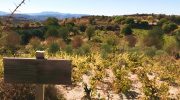
Explore Cyprus with Our Interactive Map

Explore our top stories and discover ideas worth your time.

Cyprus Driving Rules Car Ownership

Cyprus Driving Rules Car Ownership

Cyprus follows left-hand traffic, a legacy of British colonial rule that makes it one of only three EU nations where vehicles drive on the left side of the road. This characteristic stems from over 40 years of British administration, which shaped the island's road infrastructure before independence in 1960. The country has developed a comprehensive set of driving regulations that blend European standards with local requirements. With 658 cars per 1,000 inhabitants, Cyprus ranks fourth highest in the European Union for car ownership, significantly exceeding the EU average of 560 vehicles per 1,000 people. This extraordinary car dependency reflects limited public transportation options, dispersed settlement patterns, and cultural factors where car ownership is often viewed as a status symbol. The Basic Rules Every Driver Must Follow Driving in Cyprus requires adherence to specific regulations that all motorists must understand before taking to the roads. Seat belts are mandatory for all occupants, including rear passengers. Children under five years old cannot travel in the front seat under any circumstances. Children between five and ten years old may sit in the front only if an appropriate child seat is fitted. Children under 150 centimeters must use proper child restraint systems regardless of seating position. The legal blood alcohol limit is 0.22 milligrams per 100 milliliters of breath for drivers with more than…

Read more
Kantou-Koufovounos

Kantou-Koufovounos

High on a hill near the Kouris River in the Limassol district of Cyprus sits Kantou Koufovounos, one of the island’s most significant Late Neolithic settlements. This archaeological site has quietly rewritten our understanding of life on Cyprus between 4,400 and 3,900 BC. Unlike the dramatic clifftop fortresses or coastal harbors that often capture imaginations, Kantou-Koufovounos was simply a community where people lived, worked, raised families, and built a society that lasted longer than many of its contemporary neighbors. The site takes its name from Koufovounos Hill, where it rests approximately 20 to 50 centimeters below the modern ground surface. This shallow depth speaks to how close we still are to these ancient inhabitants. The settlement sits on the western bank of the Kouris River, positioned in terrain that offered natural protection while remaining accessible to vital resources. Historical Background Excavations at Kantou-Koufovounos began in summer 1992 under the direction of the National and Kapodistrian University of Athens. This marked the first archaeological project the university undertook in Cyprus. The work continued through 1999, with additional periods in 1996, 1998, 2000, and 2001 dedicated to recording and studying the recovered materials. These careful excavations revealed rectangular residential units, storage pits, fire hearths, graves, and an extensive collection of stone tools. What makes this site particularly interesting is how much of…

Read more
Marion and Tamassos

Marion and Tamassos

Funerary reliefs in ancient Cyprus were public status tools, not private grief markers, and Marion and Tamassos developed two distinct ways of making rank visible in stone. Marion favoured framed relief panels and inscriptions that anchored individuals within families, while Tamassos emphasised tomb architecture, guardians, and scale to project continuity and authority. This article compares how imagery, materials, and writing systems shaped remembrance in both kingdoms, and what those choices still reveal about power and belief on the island. Two Kingdoms, Two Worlds Although Marion and Tamassos existed on the same island, their landscapes shaped very different societies. Marion, located on the northwestern coast near modern Polis Chrysochous, was outward-facing. Its wealth depended on maritime trade and access to copper exported through nearby harbours. This openness brought strong Aegean influence, visible in imported pottery and artistic styles. Tamassos, by contrast, was inland. Situated close to the copper-rich foothills of the Troodos Mountains, it drew power from controlling resources rather than sea routes. Its rulers operated within Near Eastern political networks, and that reality shaped how authority and status were presented in death. These different foundations mattered. They influenced not just economics, but how memory itself was constructed in stone. Cemeteries Built to Be Seen The cemeteries of Marion were expansive and varied. Tombs stretched across eastern and western necropoleis, with…

Read more