Explore Cyprus with Our Interactive Map

Explore our top stories and discover ideas worth your time.

Cyprus Volcanic Rocks

Cyprus Volcanic Rocks

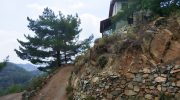
Cyprus holds a unique position in geological science. The island contains Earth's best preserved ophiolite complex, a rare slice of ancient oceanic crust and upper mantle thrust upward onto land. This exceptional geological heritage shaped both the island's dramatic landscapes and its human history, particularly through copper deposits that gave Cyprus its very name. The Troodos Massif formed 90 million years ago during the Upper Cretaceous period at the bottom of the ancient Tethys Ocean. The rocks visible today once existed 8,000 meters below sea level at a mid-ocean ridge spreading center, where new oceanic crust continuously forms as tectonic plates pull apart. Geologists call this complete sequence an ophiolite complex. Troodos was not metamorphosed during uplift, allowing scientists to study pristine oceanic rocks without submarines. This makes Cyprus an on-land analogue for modern mid-ocean ridges. The collision of African and Eurasian tectonic plates pushed the oceanic lithosphere upward rather than downward into a trench. Troodos first rose above sea level about 20 million years ago, with uplift centered around Mount Olympus at 1,952 meters. Erosion exposed deeper layers, allowing visitors to walk from rocks that once existed in Earth's mantle to rocks that formed at the ancient seafloor. Complete Rock Sequence from Mantle to Seafloor The ophiolite exposes a perfect vertical sequence. At the deepest level lie mantle rocks…

Read more
Cyprus Museum Nicosia

Cyprus Museum Nicosia

The Cyprus Museum stands on Museum Street in central Nicosia as the oldest and largest archaeological museum in Cyprus. Founded in 1882 during British occupation, the museum houses the most extensive collection of Cypriot antiquities in the world. The institution displays only artifacts discovered on the island, creating a focused narrative of Cyprus's archaeological heritage from the Neolithic period through the Roman era.  The museum building itself carries historical importance, with construction commencing in 1908 and completing in 1924 when Cyprus remained a British colony. Extensions added in 1961 created additional galleries, storerooms, and offices that surround a central square area housing auxiliary offices, a library, and laboratories for preserving and studying items. Fourteen display halls follow chronological and thematic succession, though the collection has far outgrown existing capacity with only a small fraction on display at any time. How a petition saved Cyprus's heritage The museum was founded following a petition delivered to British authorities by a delegation headed by religious leaders of both Christian and Muslim populations. The catalyst for this action was several illicit excavations and the smuggling of antiquities off the island during the early British period.  Cypriots recognized that their archaeological heritage was disappearing to foreign museums and private collections, prompting joint action across religious communities. The British administration agreed to establish a central repository…

Read more
Cyprus Lifestyle & Leisure

Cyprus Lifestyle & Leisure

Cyprus offers more than 300 days of sunshine per year and a coastline awarded numerous Blue Flag distinctions, making outdoor activities and water sports a highlight of island life. With its warm Mediterranean climate, there are very few days lost to bad weather. The island's geography and climate support diverse recreational pursuits from paragliding and climbing to sailing and scuba diving, and even skiing on the snowcapped Troodos Mountains for a few weeks each year. Whether you prefer active sports, cultural activities, or relaxed social clubs, Cyprus provides countless ways to enjoy leisure time throughout the year. Water Sports Along the Coastline Swimming represents the most accessible water activity. Public pools are available in major towns like Nicosia, Larnaca, and Limassol, featuring both Olympic-sized facilities and family pools with flexible entry options including day passes or seasonal memberships. Many locals prefer sea swimming, which is usually safe and possible year-round, particularly in the more sheltered southern beaches. Recognized swimming zones ensure safety for swimmers of all abilities. Scuba diving in Cyprus is world-class. The Zenobia wreck off the coast of Larnaca is a bucket-list dive site regularly featured in global rankings among the top ten wreck dives worldwide. The 172-meter Swedish roll-on roll-off ferry sank on her maiden voyage in 1980 and now rests at depths ranging from 16 to…

Read more