Explore Cyprus with Our Interactive Map

Explore our top stories and discover ideas worth your time.

Gallery Kypriaki Gonia, Cyprus

Gallery Kypriaki Gonia, Cyprus

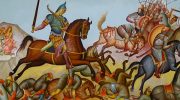
Gallery Kypriaki Gonia stands as one of Larnaca's most established independent art spaces. Located at 45 Stadiou Street in central Larnaca, this gallery has operated continuously since 1993. The name "Kypriaki Gonia" translates to "Cypriot Corner," which accurately reflects its core mission to showcase art by local and international artists. The gallery maintains a focus on both traditional and contemporary artistic approaches, giving visitors exposure to different styles and periods of Cypriot art. Over three decades, the gallery has built a reputation for consistent quality in its exhibition program. It provides a platform where established artists can present major bodies of work and emerging artists can gain visibility. The space operates as a commercial gallery while also functioning as a cultural venue that contributes to Larnaca's artistic infrastructure. Historical Context By 2013, Gallery Kypriaki Gonia celebrated its 20th anniversary with a significant group exhibition. This show brought together works by 70 Cypriot and foreign artists across multiple media, including paintings, sculpture, ceramics, etchings, and photography. The exhibition received the auspices of the Mayor of Larnaca, and the opening ceremony was performed by Petros Christodoulou. All works were offered at modest prices of up to 200 euros, with 50 percent of revenue directed to the Larnaca Municipality Community Store. This charitable component demonstrated the gallery's commitment to community service alongside its…

Read more
Tamassos Sacred Valley

Tamassos Sacred Valley

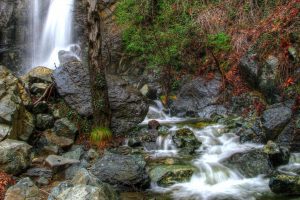
Tamassos was an inland city-kingdom that thrived from the Late Bronze Age to the Roman period, from around 1200 BC to the 10th century AD. The city appears in an Assyrian inscription from about 673 BC as Tamesi, a city-state that paid tribute to the Neo-Assyrian Empire. Homer may have mentioned it in the Odyssey as Temese, described as the main copper market on the island. The archaeological site is next to the modern village of Politiko. Much of the ancient city center has not been excavated because it lies under the village and the nearby Monastery of Saint Herakleidios. Archaeologists have uncovered two large royal tombs from the 6th century BC, the foundations of a temple to Aphrodite, parts of city walls, and signs of extensive copper-processing workshops. Historical Background The region was inhabited since the Chalcolithic Age, and villages in the area were densely populated from the Early Bronze Age. Small farming settlements existed long before Tamassos became a unified city. The discovery and use of copper deposits transformed the farmland into an industrial center. The population grew significantly after the copper mines were exploited. Tombs and copper-processing workshops from the Late Bronze Age show this growth. Tamassos controlled major mines near its capital, like Mavrovouni and Kokkinopezoula, which made it a center of copper production. Classical authors…

Read more
Limassol Lefkosia Fault Zones

Limassol Lefkosia Fault Zones

The Limassol-Lefkosia region contains several major fault systems, with the Southern Troodos Transform Fault Zone being the most significant. This fault zone runs along the southern margin of the Troodos ophiolite, the massive block of ocean floor rock that forms the central mountains of Cyprus. The fault is at least 5 kilometers wide in some places and trends east to west across the island. Transform faults are places where two tectonic plates slide horizontally past each other rather than colliding or pulling apart. The Southern Troodos Transform Fault formed around 90 million years ago on the ocean floor when Cyprus was still underwater. The fault separated two spreading ridges where new ocean crust was being created, much like the San Andreas Fault in California separates two plates today. Historical Background About 90 million years ago, during the Late Cretaceous period, Cyprus didn't exist as an island. Instead, the rocks that now form the Troodos Mountains were part of the Neotethys Ocean seafloor. At underwater spreading ridges, hot magma rose from deep in the Earth and created new ocean crust. This process happened in a region above a subduction zone where one tectonic plate was diving beneath another. The transform fault developed perpendicular to these spreading ridges and allowed different sections of ocean floor to move past each other. As the…

Read more