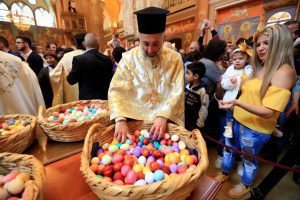
March 25 stands as a major public holiday in Cyprus, commemorating Greek Independence Day alongside the religious Feast of the Annunciation. The day celebrates the beginning of the Greek War of Independence in 1821 when Greeks rose against nearly 400 years of Ottoman rule.
For Cyprus, this holiday holds special significance beyond historical solidarity, representing the deep cultural, linguistic, and religious bonds between Greek Cypriots and mainland Greece. The celebration is particularly important for Greek Cypriots, who see parallels between Greece’s struggle for freedom and their own fight for independence from British rule that succeeded in 1960.
The Historical Background of the Revolution
Greece had been under Ottoman control since the mid-15th century when Constantinople fell in 1453. For nearly four centuries, Greeks maintained their cultural identity through language, Orthodox Christianity, and collective memory of their ancient heritage. The revolution was officially declared by Bishop Germanos of Patras on March 25, 1821, at the Agia Lavra Monastery near Kalavryta. The date was specifically chosen to coincide with the Feast of the Annunciation, blending the struggle for political freedom with religious significance.
The revolutionary slogan “Eleftheria i Thanatos,” meaning “Freedom or Death,” became the rallying cry. This powerful phrase represented the determination of Greeks who pledged they would rather die than continue living under subjugation. The banner of revolution became the Greek flag with nine blue and white stripes, each stripe symbolizing one syllable of the freedom or death slogan.
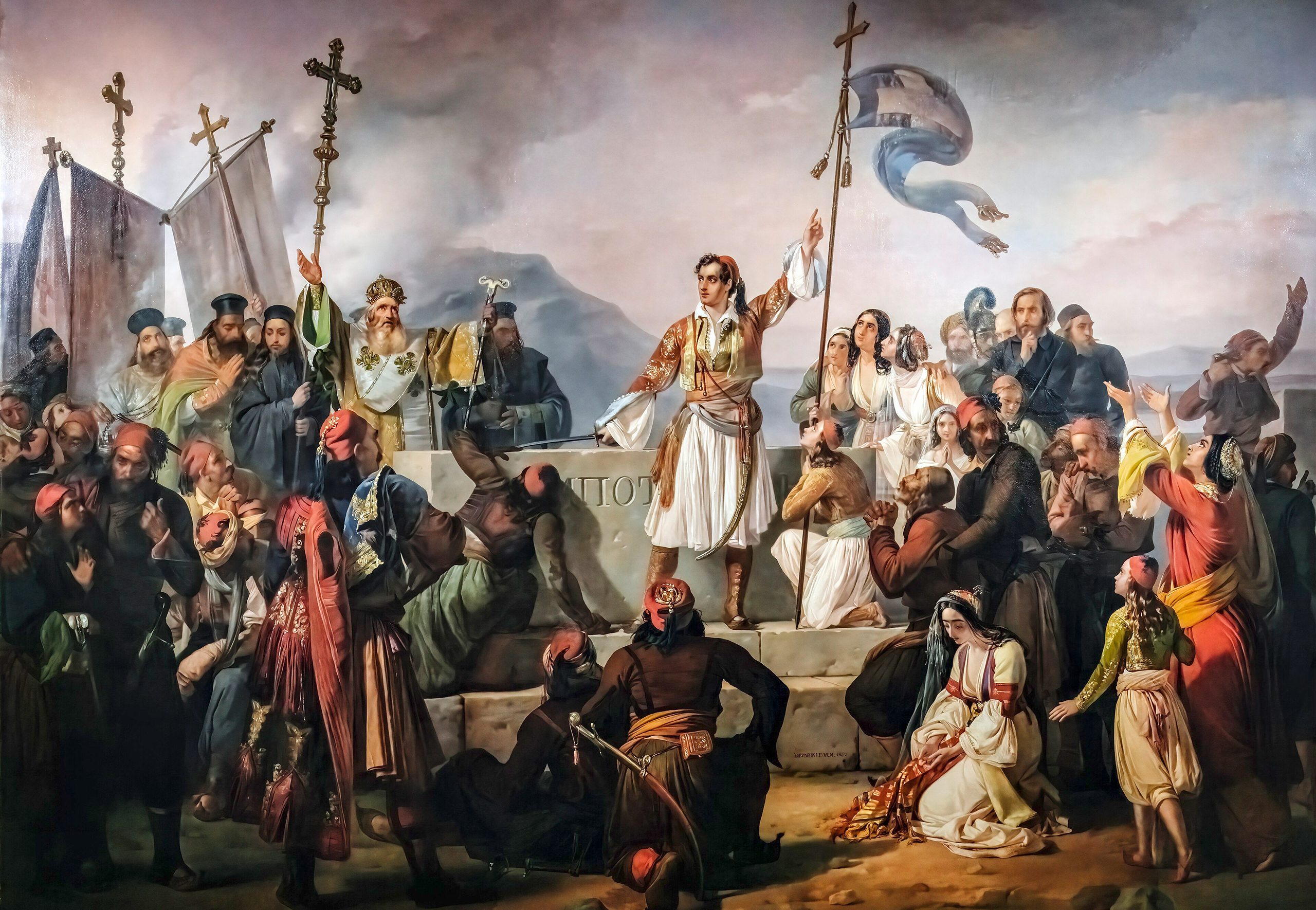
The struggle for independence lasted eight years and involved over 100,000 Greek fighters. Greeks experienced early successes on the battlefield, including the capture of Athens in June 1822, but infighting complicated revolutionary efforts. By 1827, Athens and most Greek islands had been recaptured by Ottoman forces. The revolution appeared close to failure when Great Britain, France, and Russia intervened. The Greek cause had elicited strong sympathy across Europe, with leading intellectuals including English poet Lord Byron promoting Greek independence and even dying while fighting alongside revolutionaries.
Cyprus’s Connection to the Greek Revolution
Although Cyprus remained under Ottoman control during the Greek War of Independence, Cypriots contributed to the revolutionary effort despite facing violent repression at home. The island provided secret support through food supplies and fighters who traveled to mainland Greece to join the struggle. The heroic spirit and solidarity of Cypriots played a role in shifting international support toward Greek independence.
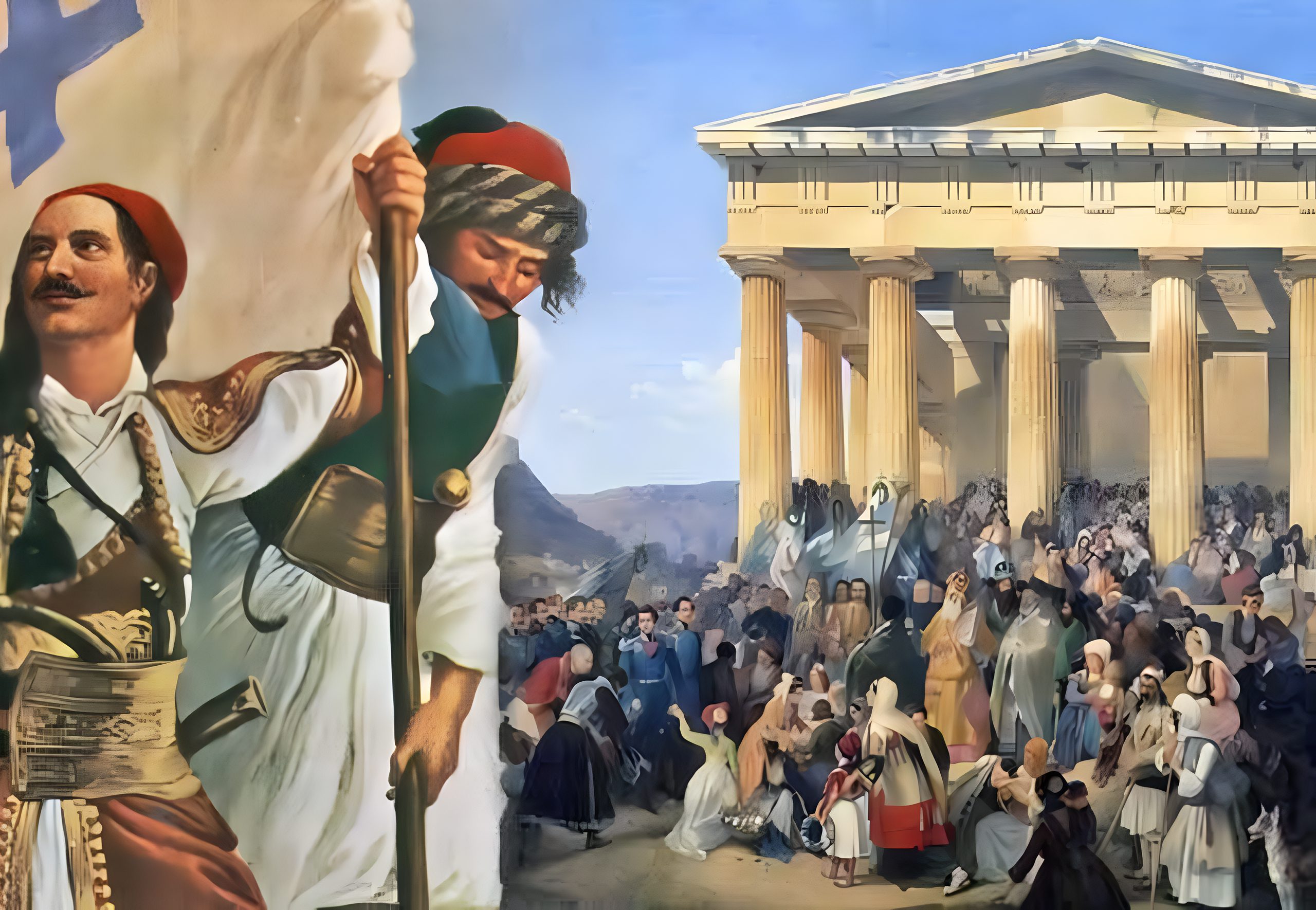
Cyprus paid a heavy price for this support. On July 9, 1821, Ottoman authorities executed Archbishop Kyprianos and other prominent Greek Cypriots in Nicosia as punishment for the island’s sympathies with the Greek revolution. These executions are remembered during March 25 commemorations as examples of Cypriot sacrifice for the broader Hellenic cause. The executions also demonstrate how Cyprus has historically shared in Greek struggles despite geographic separation.
For Cypriots, Greek Independence Day serves as a reminder of their own struggle for independence from British rule during the 1950s. Many Cypriots see the holiday as reflecting their own fight for freedom, which led to the creation of the Republic of Cyprus in 1960. The shared experience of liberation from foreign occupation creates deep emotional connections between the two nations.
How March 25 Is Celebrated in Cyprus
The 25th of March is celebrated in special ways across Cyprus to highlight the fraternal relations between Greeks and Cypriots. Greek and Cypriot flags are displayed side by side in streets, on balconies, and at public buildings throughout the island. All government offices, banks, schools, and kindergartens remain closed for the public holiday.
Celebrations normally take place throughout Cypriot schools on the eve of the holiday, March 24. Students participate in educational events commemorating the events of 1821 and the heroes of the revolution, such as Theodoros Kolokotronis and Georgios Karaiskakis. Teachers organize presentations, readings, and performances that explain the historical significance and connect it to Cypriot experiences.
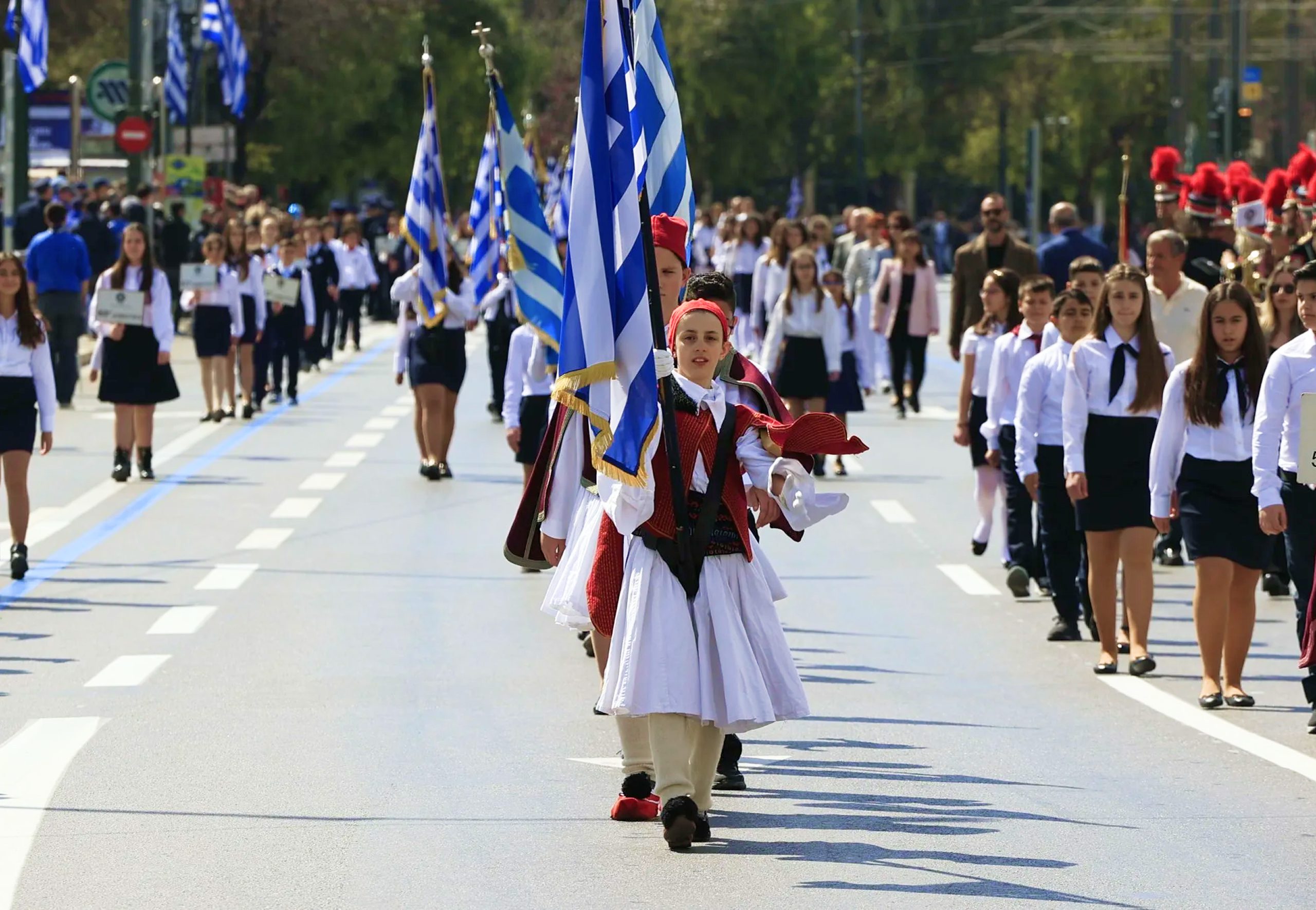
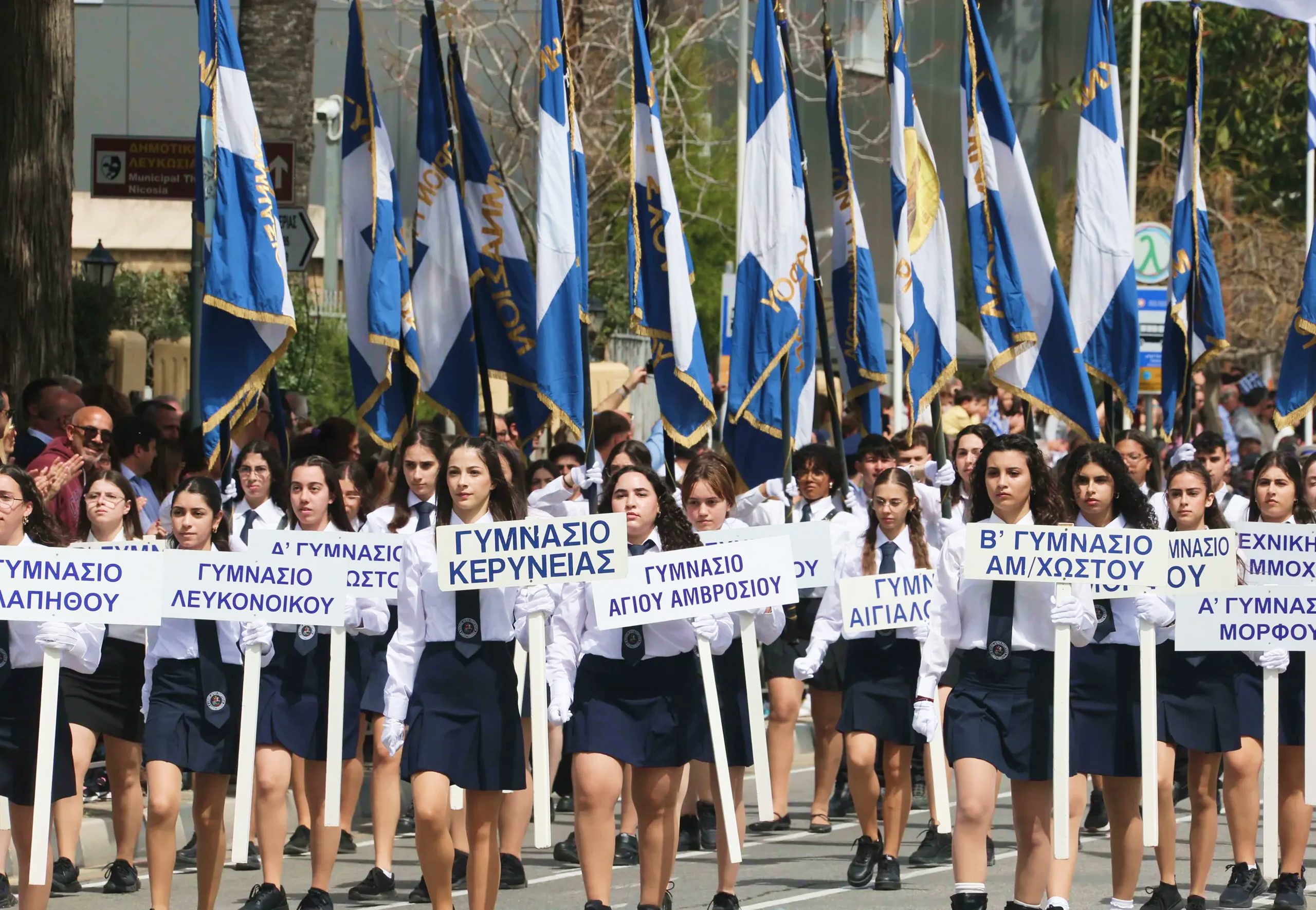
On March 25, major cities, including Nicosia, Limassol, Larnaca, and Paphos organize parades with participation from students, schoolchildren, National Guard units, and representatives of various organizations. Children march with Greek flags while many dress in traditional Greek costumes. Military parades consist of several divisions from the National Guard, Greek forces stationed in Cyprus, police, and fire services. Marching bands accompany the processions, playing the national anthem and patriotic songs.
Greek Orthodox churches, at Saint John’s Cathedral (Agios Ioannis), Nicosia, and overall across the island, hold solemn services celebrating both Greece’s independence and the Annunciation of the Blessed Virgin Mary, as the religious holiday coincides with the national celebration. The church was crucial to the revolutionary cause, with many clergy members leading the struggle. Special liturgies acknowledge this dual spiritual and political significance.
Traditional Foods and Family Gatherings
March 25 always falls during the Lenten period before Easter when Orthodox Christians traditionally avoid eating meat. However, the Feast of the Annunciation is one of only two days during Lent when fish is permitted, Palm Sunday being the other. This exception makes eating fish on March 25 particularly popular among Greek Cypriots who observe Lenten fasting.
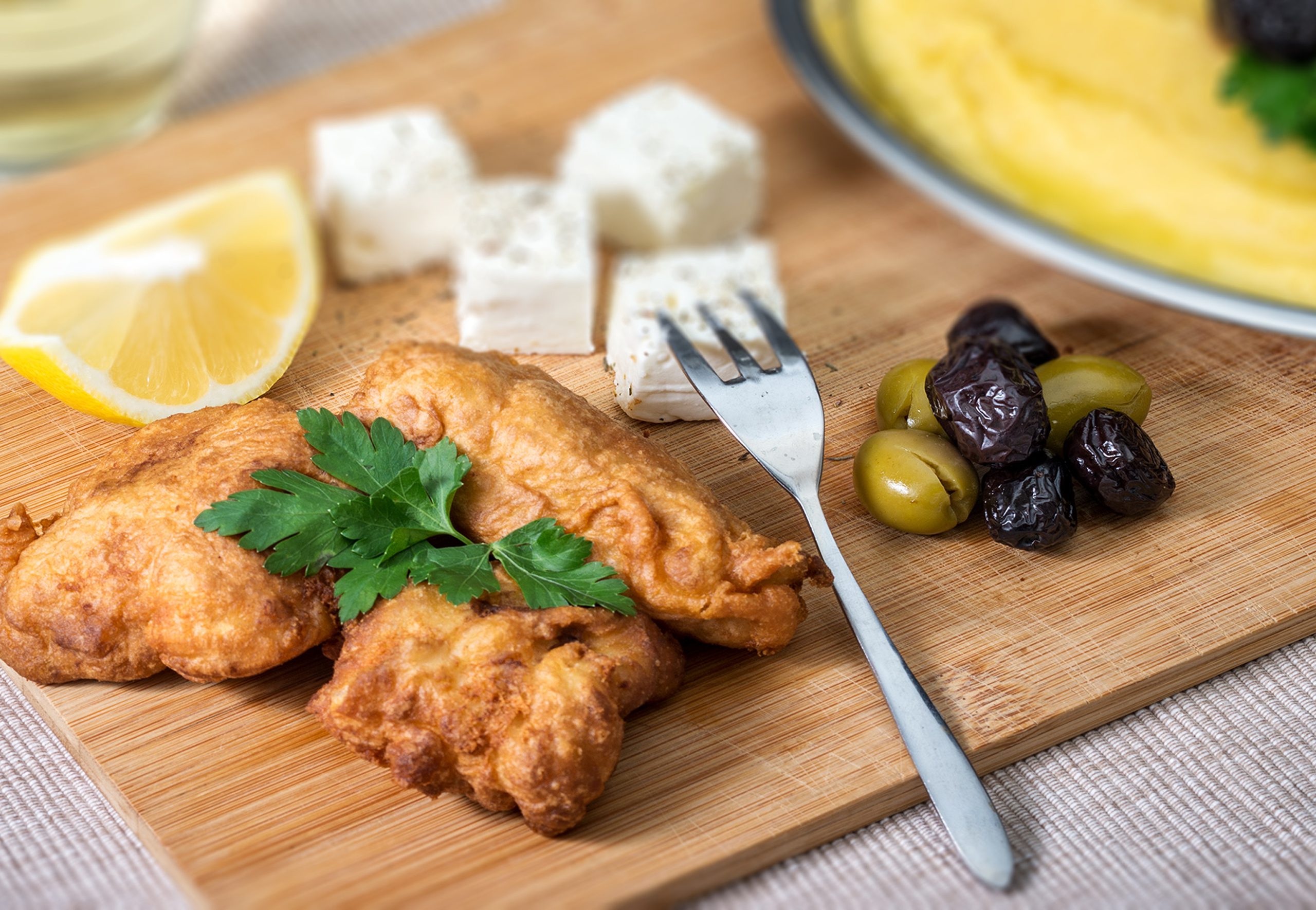
The most traditional dish is bakaliaros, batter-fried salted cod, served with skordalia, a garlic and potato dip. This combination has become synonymous with the holiday across Greece and Cyprus. Families gather around large tables to share meals, with fish and seafood taking center stage instead of meat. The meal becomes an opportunity for multiple generations to celebrate together.
The older generation of Cypriots approach the holiday with particular reverence. Families spend hours discussing the exploits of the revolutionaries, the brotherhood between Greece and Cyprus, and the importance of remembering history. These conversations transmit values and historical knowledge to younger generations, maintaining cultural continuity.
Public Events and Ceremonies
The celebrations begin with church services across Cyprus. In Paphos, the service takes place at St Theodoros Cathedral, officiated by the Bishop of Paphos. Government ministers and officials attend on behalf of the state. Similar services occur in other cities, with local bishops conducting liturgies that blend religious observance with patriotic commemoration.
Keynote addresses are delivered by prominent political figures, educators, or community leaders. These speeches typically emphasize themes of freedom, national identity, resistance to oppression, and the ongoing challenges facing Cyprus. Speakers draw parallels between the 1821 Greek revolution and contemporary Cypriot issues, particularly the ongoing division of the island since 1974.
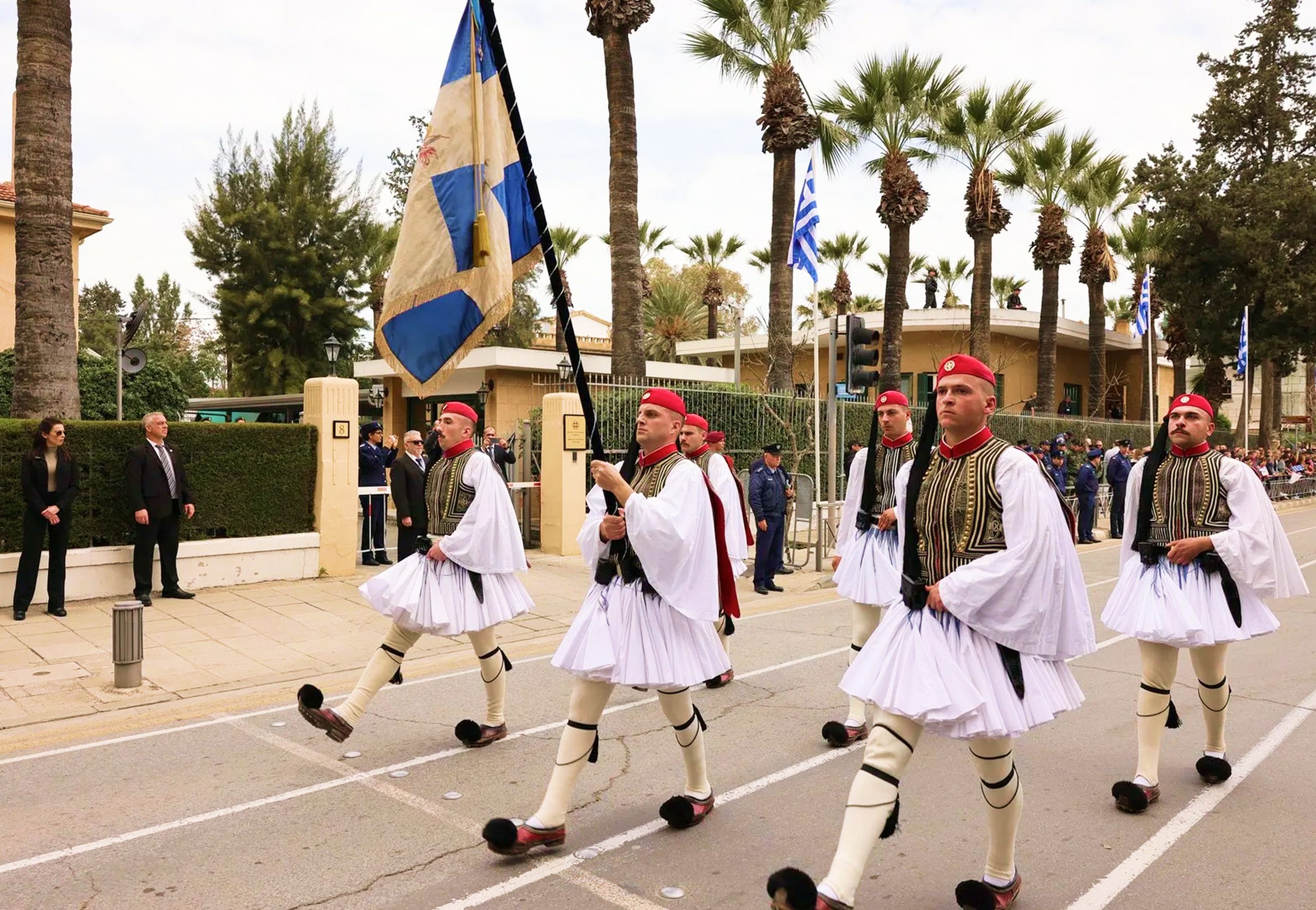
After religious services conclude, parades begin. The routes typically start at or near churches and proceed through main streets to central squares or municipal buildings. Large crowds gather to watch, lining streets and filling public spaces. In Paphos, the parade proceeds along Griva Digeni Avenue. In Paralimni and other towns, routes connect churches to municipal markets or central gathering points.
The evenings usually feature concerts of traditional Greek and Cypriot music, with folk songs and dances. Cultural exhibitions showcase revolutionary history through photographs, documents, and artifacts. These events blend education with entertainment, making history accessible to all ages.
Why This Holiday Defines Cyprus
For Greek Cypriots, March 25 represents more than commemoration of a foreign nation’s independence. The holiday affirms Greek Cypriot identity and the cultural bonds linking Cyprus to Greece through shared language, religion, and historical experience. Despite Cyprus being an independent republic with its own national holidays, including October 1 Cypriot Independence Day, the connection to Greek heritage remains central to Greek Cypriot self-understanding.
The day symbolizes national pride that unites Greeks and Cypriots despite different political realities. The celebration demonstrates that Greek Cypriot identity includes identification with broader Hellenism beyond Cyprus’s borders. This dual identity, being both Cypriot and Greek, shapes political views, cultural practices, and social values.
In a political context, the holiday often becomes an occasion to discuss the Cyprus problem and the partition of the island since 1974. Speakers emphasize the importance of unity, preservation of national identity, and continuation of cultural traditions. The parallels between Greece’s successful liberation and Cyprus’s ongoing division create powerful emotional resonance.