Explore Cyprus with Our Interactive Map

Explore our top stories and discover ideas worth your time.

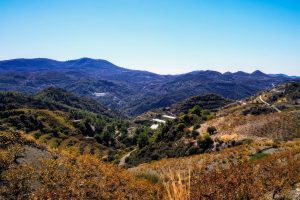
Papoutsa Peak Cyprus Eco Trails Wildlife Scenery

Papoutsa Peak Cyprus Eco Trails Wildlife Scenery

Papoutsa Peak stands at 1,554 metres in the eastern Troodos Mountains, surrounded by one of Cyprus's most important forest reserves. The forests are part of the Adelfoi Forest system, a vast protected area recognized within the Troodos Geopark for its ecological significance. The peak sits between Mount Olympus to the west and Madari to the north, creating a corridor of protected wilderness that covers over 120 square kilometres. Unlike more accessible Troodos peaks with developed facilities, Papoutsa maintains a wilder character with fewer visitors and more pristine ecosystems. wikiloc-com The mountain lies within the Papoutsa and Adelfoi Forests mentioned by the Troodos Geopark as among the island's most noteworthy woodland areas. These forests protect crucial habitat for species found nowhere else on Earth. The combination of elevation, geology, and minimal human disturbance creates conditions where rare plants and animals can survive pressures that threaten them in more accessible locations. Historical Background The Troodos Mountains, including Papoutsa, emerged approximately 92 million years ago as oceanic crust from the ancient Tethys Ocean. Tectonic forces pushed this underwater rock upward through obduction, eventually creating the island's central mountain mass. Papoutsa consists of the same serpentinized harzburgite and peridotite rocks found throughout Troodos, representing mantle material from thousands of metres beneath the ancient seabed. wikiloc-com These ultramafic rocks create unique soil chemistry with high…

Read more
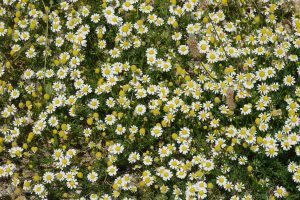
Wild Chamomile of Cyprus

Wild Chamomile of Cyprus

Imagine wandering through the sun-kissed fields of Cyprus, where a delicate flower with daisy-like petals sways in the breeze, releasing a soothing apple-like aroma that whispers of healing and calm. This is wild chamomile, a humble herb that has graced the island's landscapes for millennia, offering comfort to weary souls. But what secrets does this unassuming plant hold in its tiny blooms, and why does it continue to captivate us? www.inaturalist.org Unveiling the Humble Herb Wild chamomile, known scientifically as Matricaria recutita, is a member of the vast Asteraceae family, which includes sunflowers and daisies, showcasing how even the smallest relatives can pack a punch in nature's pharmacy. It's an annual plant that pops up in disturbed soils, roadsides, and meadows, thriving in the Mediterranean's mild winters and warm summers. Simply put, it's nature's resilient wanderer, adapting to wherever the wind scatters its seeds. Roots in Time: From Ancient Remedies to Island Lore The story of wild chamomile in Cyprus stretches back to antiquity, intertwined with the island's rich tapestry of civilizations – from the Mycenaeans to the Romans and Ottomans. Historical texts, like those referenced in ancient Greek manuscripts and echoed in Cyprus' ethnobotanical records from the Troodos Mountains, reveal its use by early healers for soothing ailments, much as Dioscorides described in his "De Materia Medica" around 50…

Read more

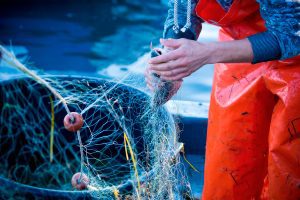
Artisanal and Industrial Fishing Cyprus

Artisanal and Industrial Fishing Cyprus

kiprinform.com Fishing in Cyprus faces significant external pressures and rising socio-economic concerns rather than a simple quiet balance. Small-scale artisanal fishers still work close to shore using selective, traditional methods, while a limited number of industrial operations supply markets with consistency and volume. Both exist within the same narrow waters, governed by strict regulation and ecological limits. Understanding this balance explains not only how seafood reaches Cypriot tables, but also how culture, sustainability, and modern life intersect around the sea. An island that learned to read the sea Cyprus has always depended on the Mediterranean in practical ways. Long before engines or harbours, coastal communities relied on observation, memory, and seasonal rhythm. Fishing was guided by wind, water temperature, and experience passed quietly between generations. As the island modernised during the twentieth century, fishing evolved rather than disappeared. Motors replaced oars, ice replaced immediate consumption, and ports became more organised. Yet many families continued to fish in familiar ways, preserving a working connection between past and present rather than treating tradition as nostalgia. What artisanal fishing really looks like fishingtourism.org Artisanal fishing in Cyprus is defined by proximity and restraint. Boats are small, usually under twelve metres, and operations remain close to the coast. Gear is chosen not for volume, but for precision. Common methods include trammel nets laid carefully…

Read more