Explore Cyprus with Our Interactive Map

Explore our top stories and discover ideas worth your time.

Living Fossils in Cypriot Gardens

Living Fossils in Cypriot Gardens

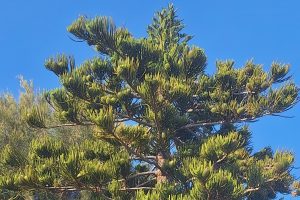
Stand in a quiet park in Limassol or Nicosia on a sunny day, and you might spot tall, pyramid-shaped trees that look like they stepped out of a prehistoric forest. These are the Araucaria trees ancient conifers from far-away lands that bring a touch of exotic elegance to our island's urban green spaces. Konstantin-Solovev Ancient Guardians of the Pine Family Araucaria trees belong to the Araucariaceae family, a group of evergreen conifers that once dominated vast forests across the southern hemisphere. In Cyprus, the most common is Araucaria heterophylla, often joined by its cousin Araucaria columnaris. Locally known as Αρωκάρια (Arokária), a name derived from the genus's scientific title, which honors the Arauco people of Chile where related species grow wild. Survivors from a Lost World These trees trace their lineage back over 200 million years to the time of the dinosaurs, when supercontinents like Gondwana were still united. Native to places like Norfolk Island in the Pacific for A. heterophylla, they arrived in Cyprus during the British colonial era around the early 20th century, planted as striking ornamentals in gardens and along avenues. Like many introduced species, they were chosen for their ability to thrive in our Mediterranean climate, echoing the island's long history of welcoming plants from distant shores. Symmetrical Towers of Green Araucaria heterophylla grows into a…

Read more
Temple of Zeus Salaminios

Temple of Zeus Salaminios

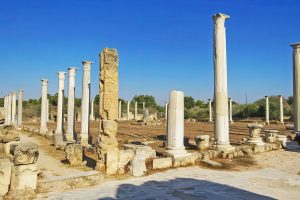
The Temple of Zeus Salaminios was one of the most important religious monuments of ancient Salamis. Dedicated to Zeus as the supreme god of the Olympian pantheon, it symbolised the city’s Greek identity, political authority, and connection to divine protection. dreamstime-com Through this temple, Salamis expressed its place within the wider Greek world while affirming its own power and prestige. A Temple at the Heart of Salamis The Temple of Zeus Salaminios stood within the great city of Salamis on the eastern coast of Cyprus. As one of the island’s largest and wealthiest cities, Salamis required a religious centre that matched its status. vici-org The choice of Zeus was deliberate. As ruler of gods and men, Zeus represented order, authority, and legitimacy. Worshipping him in monumental form reinforced Salamis’s role as a leading city with strong ties to Greek tradition and values. Zeus as Guardian of the City Zeus Salaminios was not a distant or abstract god. He was believed to actively protect the city, its people, and its rulers. His cult emphasised stability, justice, and continuity, qualities essential for a powerful urban centre. wikipedia-org Rulers and elites used the sanctuary to demonstrate their devotion and to associate their authority with divine approval. Public ceremonies held at the temple reinforced the idea that Salamis thrived under Zeus’s watchful presence. From…

Read more

Ottoman Baths in Cyprus – Historic Hamams

Ottoman Baths in Cyprus – Historic Hamams

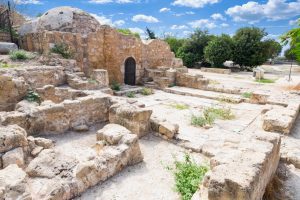
wikimedia.org1 Ottoman baths, known as hamams, represent a distinctive cultural contribution to Cyprus architecture and social life. These public bathhouses served communities across the island for centuries, combining cleansing rituals with social gathering spaces. Several hamams survive today as monuments to Ottoman rule, with two still operating as functional spas. The hamam tradition did not originate with the Ottomans. Its roots stretch back to Roman thermae and Byzantine bathing practices, which the Ottomans inherited and adapted to Islamic requirements for ritual cleanliness. The word hamam comes from the Arabic root meaning heat or heating, reflecting the central role of warmth in the bathing process. Islamic tradition emphasizes cleanliness as a prerequisite for prayer. This religious requirement, combined with social customs, made hamams essential public facilities throughout the Ottoman Empire. Most homes lacked private bathing facilities, so hamams served practical hygiene needs while also becoming important social institutions. Historical Background thisispafos.com The Ottoman Empire captured Cyprus from Venice in 1571 after a prolonged military campaign. This conquest marked the beginning of over three centuries of Ottoman administration that fundamentally reshaped the island's demographic and cultural character. One of the Ottomans' first priorities in newly conquered cities was establishing hamams. These buildings demonstrated Ottoman presence and provided essential services to both the Turkish soldiers and settlers who arrived from Anatolia and the…

Read more