Explore Cyprus with Our Interactive Map

Explore our top stories and discover ideas worth your time.

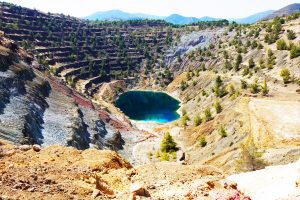
Limassol Lefkosia Fault Zones

Limassol Lefkosia Fault Zones

The Limassol-Lefkosia region contains several major fault systems, with the Southern Troodos Transform Fault Zone being the most significant. This fault zone runs along the southern margin of the Troodos ophiolite, the massive block of ocean floor rock that forms the central mountains of Cyprus. The fault is at least 5 kilometers wide in some places and trends east to west across the island. mail-com Transform faults are places where two tectonic plates slide horizontally past each other rather than colliding or pulling apart. The Southern Troodos Transform Fault formed around 90 million years ago on the ocean floor when Cyprus was still underwater. The fault separated two spreading ridges where new ocean crust was being created, much like the San Andreas Fault in California separates two plates today. Historical Background About 90 million years ago, during the Late Cretaceous period, Cyprus didn't exist as an island. Instead, the rocks that now form the Troodos Mountains were part of the Neotethys Ocean seafloor. At underwater spreading ridges, hot magma rose from deep in the Earth and created new ocean crust. This process happened in a region above a subduction zone where one tectonic plate was diving beneath another. researchgate-net The transform fault developed perpendicular to these spreading ridges and allowed different sections of ocean floor to move past each other.…

Read more
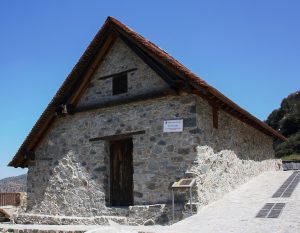
Church of Panagia tou Moutoulla Byzantine Art

Church of Panagia tou Moutoulla Byzantine Art

Historical Background and Regional Context The Church of Panagia tou Moutoulla, located in the village of Moutoullas in the Marathasa Valley of the Troodos Mountains, holds a special place among the Painted Churches of Cyprus recognized by UNESCO. Built in 1280, according to an inscription preserved within the building, the church represents the earliest securely dated example of the steep-pitched wooden roof style that became characteristic of mountain churches in Cyprus. Its importance lies not only in its artistic decoration but also in its architectural form, which demonstrates how local communities adapted Byzantine religious architecture to the demanding climatic conditions of the highlands. This combination of artistic heritage and environmental adaptation makes the church a key monument for understanding the development of medieval Cypriot ecclesiastical architecture. kiprguru-com During the late Byzantine period, Cyprus experienced both political transition and continued religious vitality. Rural mountain communities maintained strong ties to Orthodox Christian traditions, even as the island came under Lusignan and later Venetian rule. In such regions, churches often served as the focal point of community life, functioning as places of worship, social gathering, and cultural continuity. Panagia tou Moutoulla emerged within this context, reflecting a society that valued religious devotion while responding practically to local environmental realities. Its survival offers insight into how architecture, climate, and spiritual life were closely connected…

Read more
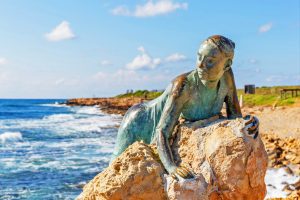
Cyprus Ancient Gods

Cyprus Ancient Gods

Long before saints and churches, Cyprus was home to powerful gods and goddesses whose temples dotted the island and whose myths shaped Mediterranean culture. From Aphrodite rising from the sea foam to warrior deities protecting cities, Cyprus's ancient pantheon blended Greek, Phoenician, and local traditions into something uniquely Cypriot - and traces of these divine beings still linger in the landscape today. A Crossroads of the Divine Ancient Cyprus didn't worship just one set of deities. Instead, the island's position at the crossroads of Greek, Near Eastern, and Egyptian civilizations created a rich religious tapestry where different cultures' gods merged, borrowed from each other, and sometimes became the same deity under different names. myfirstticket-com From the Bronze Age onward, Cypriots worshipped a Great Goddess of fertility who would eventually be identified with the Greek Aphrodite. But they also honored male gods adapted from neighboring lands - Phoenician warrior protectors, Greek sky fathers, and mysterious local spirits. By classical times, the island had developed a complex pantheon where Greek Aphrodite and Apollo appeared alongside Near Eastern Astarte and Resheph, creating a unique mythic identity that belonged fully to neither East nor West but to Cyprus itself. Where Divine Traditions Met and Merged Cyprus's religious history stretches back thousands of years, with each wave of settlers adding new layers to the island's…

Read more