Explore Cyprus with Our Interactive Map

Explore our top stories and discover ideas worth your time.

The Arabis Species of Cyprus

The Arabis Species of Cyprus

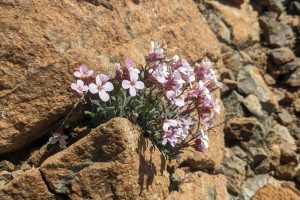
Tucked away in the rocky crevices and mountainous slopes of Cyprus, the Arabis species offer delicate bursts of color amid the island's rugged terrain. These small, resilient rockcresses, with their clusters of white, pink, or purple flowers, are a testament to the unique flora that thrives in this Mediterranean hotspot. Discovering them in the wild feels like finding hidden gems that whisper stories of Cyprus's ancient landscapes. www.flora-of-cyprus.eu Why is it interesting? Arabis, commonly known as rockcresses, are a genus of flowering plants in the mustard family (Brassicaceae). In Cyprus, there are four notable species, three of which are endemic to the island: Arabis cypria, Arabis purpurea, and Arabis kennedyae, along with the more widespread Arabis verna. These hardy perennials or annuals are adapted to dry, rocky environments, producing charming flowers that attract pollinators in spring. Background and Origins The Arabis species in Cyprus have evolved over millennia in the island's isolated ecosystems, particularly in the Troodos Mountains and northern ranges. Shaped by the Mediterranean climate with hot summers and mild winters, they trace their roots to ancient plant lineages that adapted to limestone cliffs and serpentine soils. Endemic varieties like Arabis purpurea and Arabis kennedyae highlight Cyprus's role as a biodiversity refuge, surviving through geological changes that separated the island from surrounding lands. www.inaturalist.org Description Arabis plants are typically…

Read more

Summer vs Winter Travel in Cyprus

Summer vs Winter Travel in Cyprus

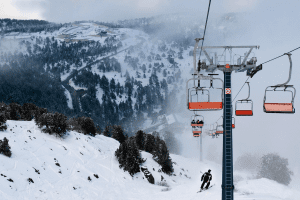
Cyprus offers two distinctly different travel experiences depending on when visitors visit. The Mediterranean island transforms from a sun-soaked beach paradise in summer to a mild, green sanctuary in winter. Both seasons have their unique advantages, and choosing between them depends on what visitors want from their trip. Shutterstock-com Summer brings hot weather and crowded beaches, while winter offers cooler temperatures and fewer tourists. Understanding these differences helps visitor plan a trip that matches their expectations and budget. Weather Patterns Throughout the Year Summer in Cyprus runs from June to August, with temperatures regularly reaching 30 to 34 degrees Celsius along the coast. Summer in Larnaca is also hot, dry, and incredibly sunny. Daily highs typically climb from 30°C (86°F) in June to a peak of 33°C (91°F) in July and August, though heatwaves can occasionally push temperatures above 40°C (104°F). The sea temperature stays around 26 degrees Celsius, perfect for swimming and water sports. Shutterstock-com Winter lasts from December to February, with daytime temperatures averaging 16 to 18 degrees Celsius along the coast. Nights can drop to 8 to 10 degrees Celsius. The season brings most of the island's annual rainfall, particularly in December and January. The Troodos Mountains experience much colder conditions, with temperatures dropping to minus 5 degrees Celsius at night and snow coverage reaching up to…

Read more
Cape Greco National Forest Park

Cape Greco National Forest Park

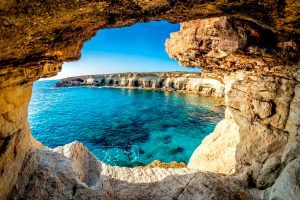
Cape Greco National Forest Park occupies 385 hectares on a rocky promontory at the southeastern tip of Cyprus, nestled between the resorts of Ayia Napa and Protaras. The park was designated as a National Forest Park in 1993 to protect this area of unspoiled natural beauty. The broader Natura 2000 site encompasses 1,876 hectares, including 915 hectares of terrestrial area and 961 hectares of marine zones. tripbucket.com The dramatic limestone cliffs rise 30 feet above turquoise Mediterranean waters, creating spectacular coastal scenery. Sea caves carved by thousands of years of wave action punctuate the coastline, while natural rock arches frame views of the endless blue horizon. The park combines hiking trails, cycling paths, endemic plant species, and coastal beauty in a relatively compact area. Visitors experience Cyprus at its wildest and most beautiful, with pine scented paths overlooking crystal clear waters. The lost juniper forest and current vegetation Cape Greco was originally covered by a dense juniper forest that gave the area its distinctive character. Between 1910 and 1920, these trees were rapidly cut down and burned to power steam flour mills that operated in abundance in the Paralimni area. Since then the slow growing juniper has never fully recovered, though scattered specimens still survive alongside varieties of pine. tripbucket.com Today the vegetation consists mostly of sparse low level growth,…

Read more