Explore Cyprus with Our Interactive Map

Explore our top stories and discover ideas worth your time.

Easter Traditions in Cyprus

Easter Traditions in Cyprus

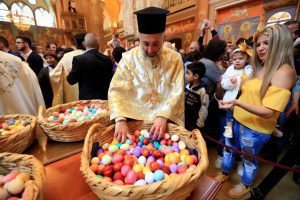
Easter represents the most important religious celebration in Cyprus, surpassing Christmas in spiritual significance and cultural observance. Known as Pascha in Greek, the Orthodox Easter follows the Julian calendar, often falling weeks after Western Easter. The celebration spans Holy Week with solemn church services, candlelit processions through village streets, and the midnight Resurrection liturgy when bells ring and fireworks light the sky. facebook.com Families gather for elaborate feasts featuring roasted lamb, traditional flaounes cheese pastries, and red-dyed eggs. The festivities blend Byzantine religious ritual with distinctly Cypriot customs like bonfire lighting and the tsougrisma egg-cracking game. For both devout believers and secular Cypriots, Easter functions as the primary family reunion occasion and cultural identity marker, bringing together generations to maintain traditions passed down through centuries of Orthodox faith. The 40 Days of Lenten Preparation Orthodox Lent begins on Clean Monday, called Kathara Deftera, exactly 48 days before Easter Sunday. This day marks a dramatic shift from the excess of carnival to the austerity of fasting. Cypriots traditionally spend Clean Monday outdoors with countryside picnics, flying kites and consuming only fasting foods like tahini, olives, beans, flatbreads, and shellfish. The outdoor gathering symbolizes spiritual renewal and connection with nature before the solemn weeks ahead. During the 40-day Lenten period, observant Orthodox Christians abstain from meat, dairy products, eggs, fish with backbones,…

Read more

Laouto (Lute)

Laouto (Lute)

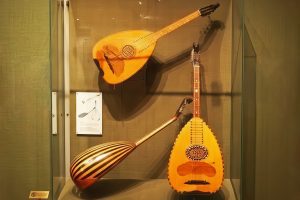
The Cypriot laouto is a plucked string instrument with a distinctive accompaniment style that plays a crucial rhythmic and harmonic role in the island's music, supporting both instrumental ensembles and vocal traditions while embodying strong regional identities. Its pear-shaped body and resonant tone allow for improvisation within ancient modal systems inherited from Byzantine and Ottoman influences, making it a cornerstone of Cypriot folk expression. This instrument not only preserves historical musical practices but also adapts to contemporary settings, raising interest in how such traditions endure in a modern world. nakas-com A Core Element of Cypriot Musical Heritage The laouto, a lute-like instrument central to Cypriot folk music, features a large pear-shaped body, long neck, and four strings tuned in a way that facilitates both melody and rhythm. Crafted from local woods like mulberry or walnut, with a soundboard often made from spruce or cedar for resonance, it produces a warm, bright sound that blends seamlessly with other instruments. In traditional settings, the laouto provides the backbone for dances, songs, and improvisations, its strings plucked with a plectrum to create driving rhythms and harmonic support. This role extends beyond mere backing; it shapes the music's texture, allowing vocalists or lead instruments like the violin to soar while maintaining a grounded, percussive foundation. Regional variations in playing styles—more ornate in the south,…

Read more
Mesaoria Basin Cyprus

Mesaoria Basin Cyprus

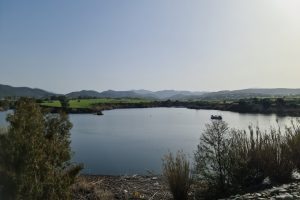
Stand on a small hill just outside Nicosia and look around. To the south the Troodos Mountains rise dark and rugged on the horizon, their volcanic slopes fading into forests. To the north the Kyrenia range appears as a long pale wall of limestone cliffs or rugged forms stretching as far as the eye can see. Between them lies an immense open landscape. Vasily Papkovskiy This is Mesaoria. In Greek it literally means “between the mountains”. This basin forms a natural wide corridor across the island, a broad open landscape framed by two very different geological worlds. At first glance the region may appear quiet compared with the dramatic mountains that surround it. There are no towering cliffs or deep gorges. Instead, the land spreads outward in broad plains and gentle plateaus where fields stretch toward distant villages. Yet beneath this calm landscape lies one of the most revealing geological chapters of Cyprus.Mesaoria is not simply a plain between mountains. It is the remnant of a vast sea basin that once separated the Troodos massif from the Kyrenia range. For millions of years this basin collected sediments washed from the surrounding highlands while marine life thrived in its waters. Later tectonic movements slowly lifted the seabed, turning the marine basin into dry land. Now imagine travelling ten million years back…

Read more