
Environmental Conservation in Cyprus

Articles: Environmental Conservation in Cyprus

Stories in this category and its subcategories.

Cyprus Mouflon Wildlife and Habitat

Cyprus Mouflon Wildlife and Habitat

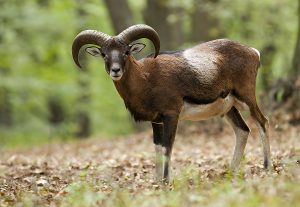
The Cyprus mouflon represents the only wild sheep endemic to Cyprus and the largest wild land mammal on the island. This subspecies stands about one meter tall at the shoulder and exhibits the classic features of mouflon: reddish to dark brown coats with distinctive black dorsal stripes and lighter saddle patches. The name "mouflon" comes from the Corsican words "mufro" for males and "mufra" for females. In Cyprus, locals call this animal "agrino," derived from the Greek word "Αγρινό." Adult males weigh up to 50 kilograms, while females typically reach around 35 kilograms. Males develop spectacular curved horns that grow in nearly complete circles, reaching lengths up to 85 centimeters. Most females do not develop horns, though some carry small…

Read more
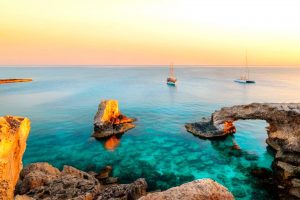
Marine Conservation Programs

Marine Conservation Programs

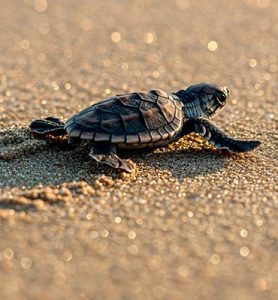
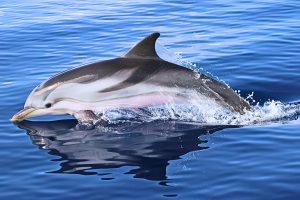
Cyprus sits at the crossroads of the eastern Mediterranean Sea where diverse marine species converge. The island's coastal waters support endangered sea turtles, rare monk seals, extensive seagrass meadows, and dozens of shark and ray species. Marine conservation programs work to protect these ecosystems through scientific research, policy reform, and community engagement. These initiatives span both the government-controlled south and the Turkish-occupied north, with multiple organizations collaborating to safeguard Cyprus's marine biodiversity. cyprus-mail-com A History of Marine Protection Efforts Sea turtle conservation in Cyprus began in 1971 when the government enacted legal protection for turtles and their eggs under the Fisheries Law. A comprehensive survey in 1976 and 1977 identified critical nesting beaches, particularly for green turtles in the Lara…

Read more
Environmental Awareness and Eco Trails

Environmental Awareness and Eco Trails

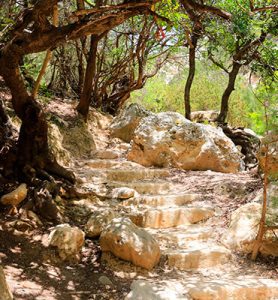
Cyprus has transformed itself into a model for environmental education and sustainable tourism across the Mediterranean region. The island maintains a network of 52 designated nature trails covering 319.6 kilometers through national forests, complemented by 47 additional trails outside protected areas, for a total of 99 marked routes accessible to visitors. These paths connect to specialized environmental education centers, green certification programs, and conservation initiatives that demonstrate how tourism and environmental protection can support each other. nicetrip.com The Department of Forests developed the initial network of nature trails to offer direct contact with Cypriot nature while serving environmental education, general information, and physical exercise. These trails span three major regions: the Akamas Peninsula, Troodos Mountains, and Cape Greco National Forest…

Read more
Diarizos Valley, Cyprus

Diarizos Valley, Cyprus

The Diarizos Valley stretches through the heart of western Cyprus, where ancient traditions meet rare wildlife in one of the island's most important conservation zones. Located east of Paphos and carved by the fourth-longest river in Cyprus (Diarizos River), this valley combines ecological significance with centuries of winemaking heritage across 14 traditional villages. The area covers 8,804 hectares and serves as both a Natura 2000 protected site and an Important Bird Area recognized for its unique biodiversity. vkcyprus.com The Diarizos River flows for 42 kilometers from two sources on the southeastern slopes of the Paphos Forest near Mount Olympus. Its name derives from the Greek word for two roots, referencing the Platys and Kaminaria tributaries that merge north of the…

Read more
Larnaca Salt Lake Cyprus

Larnaca Salt Lake Cyprus

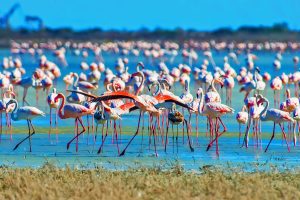
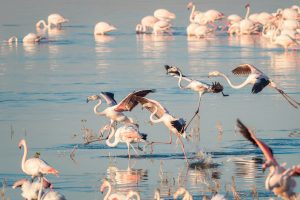
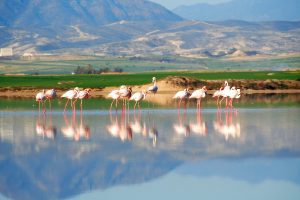
Larnaca Salt Lake is a complex network of four salt lakes of different sizes to the west of the city of Larnaca. The largest is Lake Aliki, followed by Lake Orphani, Lake Soros, and Lake Spiro. Three of these lakes interconnect to form the second largest salt lake complex in Cyprus after Limassol Salt Lake. Wikipedia-com The total surface area of the lakes adds up to 2.2 square kilometers, positioned between Larnaca International Airport and the historic Hala Sultan Tekke mosque. This location makes the salt lake one of the most visible natural landmarks for anyone arriving in Cyprus by air. Historical Background Archaeological finds show that the salt lake area has been inhabited since the Late Bronze Age, with…

Read more
Cyprus Biodiversity Protection Global Organizations

Cyprus Biodiversity Protection Global Organizations

Cyprus holds exceptional biological diversity for an island of its size. The island hosts approximately 1,800 plant species, with 143 endemic taxa found only in Cyprus. Among animals, the island supports 385 bird species, 21 mammals, 24 reptiles, and 3 amphibians. Over 5,000 insect species have been documented. This diversity results from Cyprus's unique position at the crossroads of Europe, Asia, and Africa, combined with varied climate conditions and dramatic elevation changes from sea level to the 1,952-meter peak of Mount Olympus in the Troodos Mountains. land-cy The island's geological history as an uplifted oceanic plate rather than a continental fragment also contributed to the evolution of distinctive species. This combination of geographic isolation, habitat variety, and ancient history created…

Read more
Akrotiri Environmental Protected Area, Cyprus

Akrotiri Environmental Protected Area, Cyprus

The Akrotiri Peninsula stands at the southernmost tip of Cyprus, where wetlands, salt lakes, and coastal habitats create one of the most important wildlife sanctuaries in the Mediterranean. This protected area combines ancient traditions with modern conservation to safeguard a landscape that supports rare species found nowhere else on Earth. tripadvisor.com Akrotiri Peninsula covers 60 square kilometers within the British Sovereign Base Area, just southwest of Limassol. The area centers around the Akrotiri Salt Lake, Cyprus's largest aquatic system, surrounded by coastal dunes, Mediterranean juniper forests, saltmarshes, and reedbeds. It holds designations as a Ramsar Wetland of International Importance, a Special Protection Area for birds, and a Special Area of Conservation. Historical Background Thousands of years ago, Akrotiri existed as…

Read more