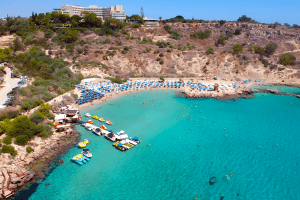
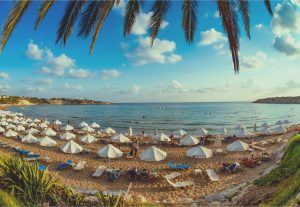
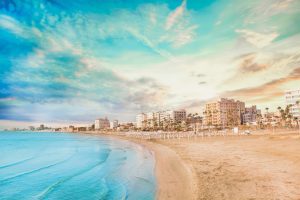
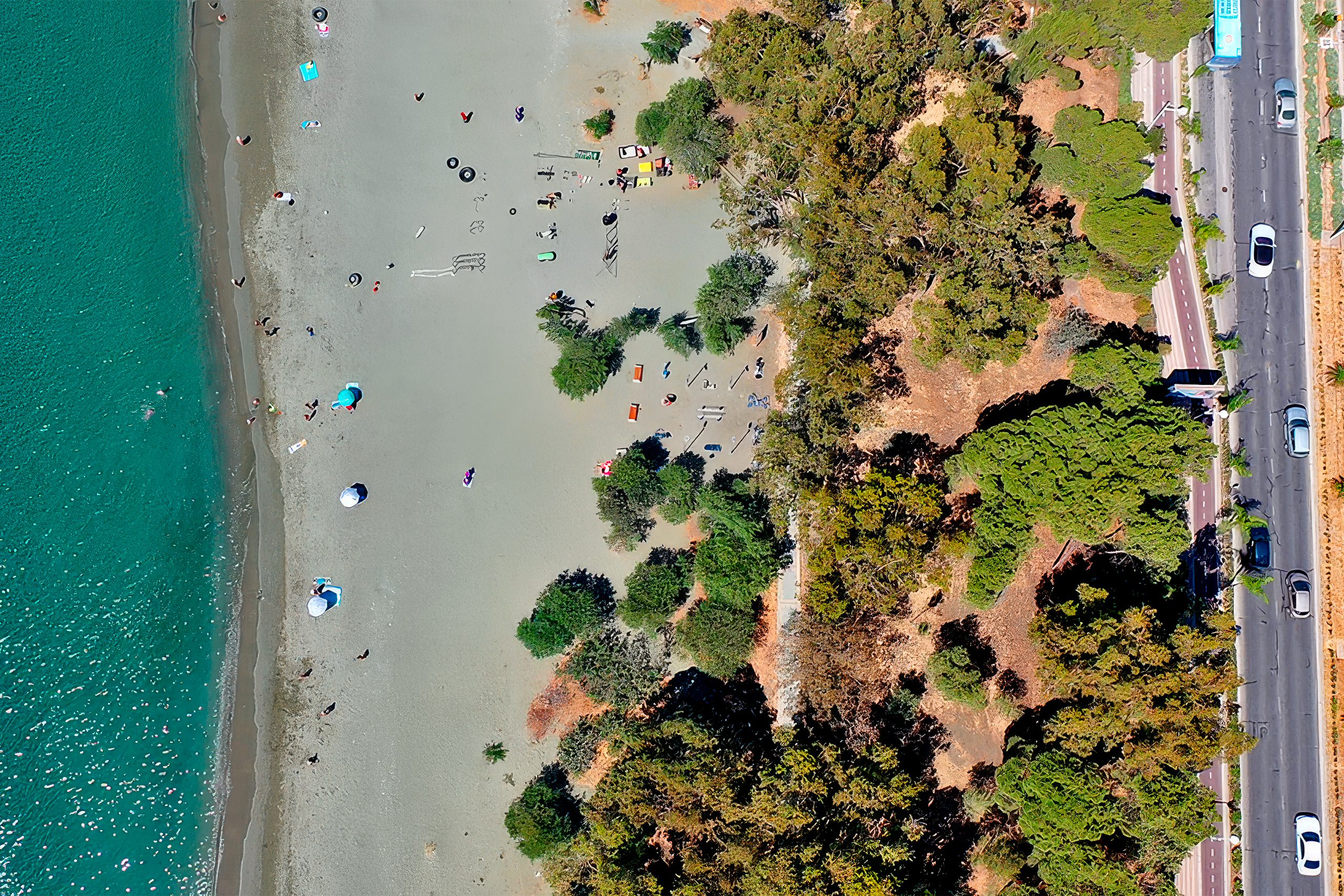
Dasoudi Beach extends one kilometer along the Limassol coastline in Germasogeia, approximately 3.5 kilometers east of the city center. The beach is the only one in Cyprus which, despite proximity to the city center, boasts rich greenery that reaches all the way down to the sandy coast.
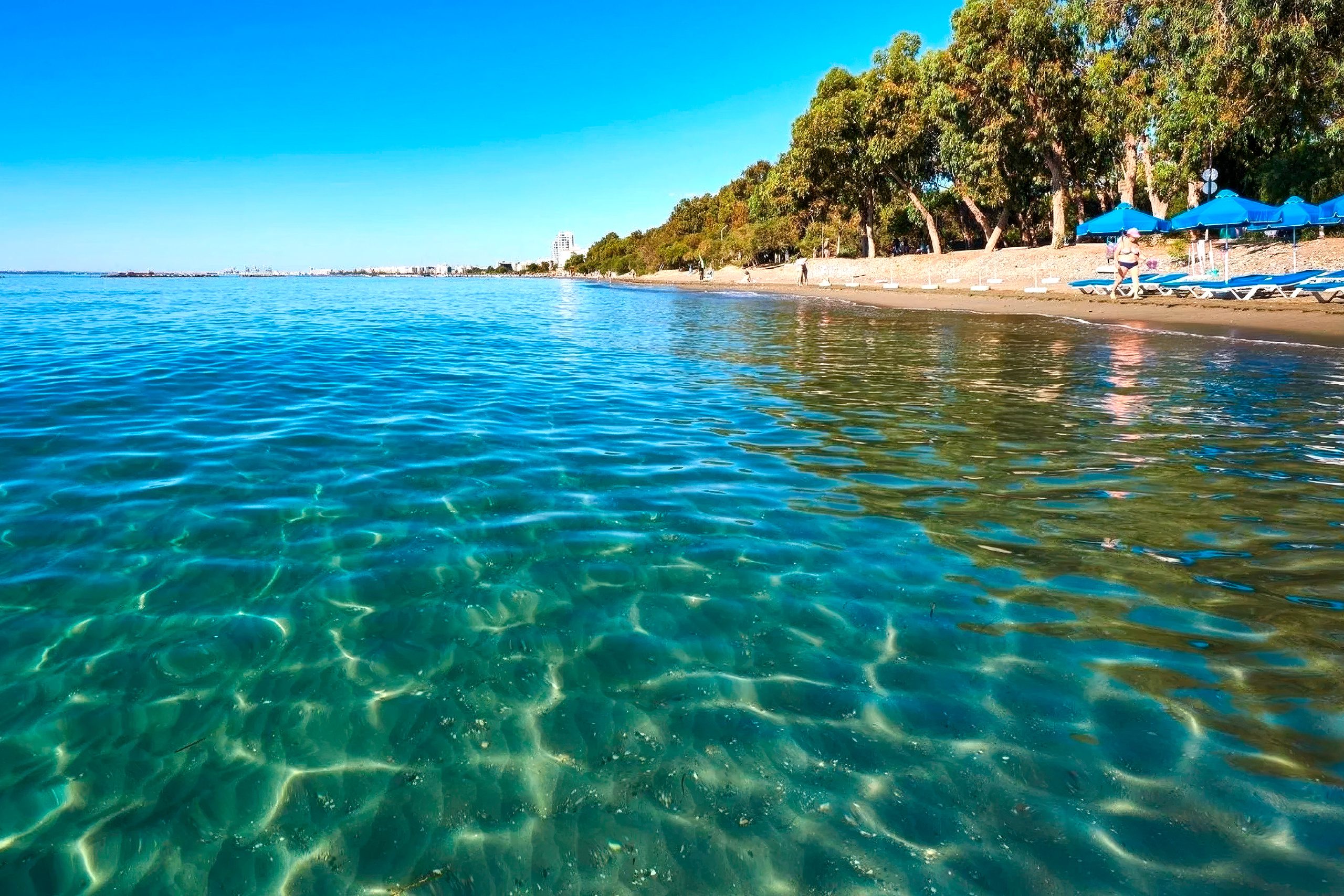
The name Dasoudi translates from Greek as little forest, referring to the park’s ambiance created by dense eucalyptus and pine groves. This urban beach combines standard Mediterranean beach facilities with unusual additions including an Olympic-size swimming pool and a forested park that provides natural shade and scenic walking paths just meters from the waterline.
Historical Background
Dasoudi Park was established in the mid-20th century as part of a greening initiative in Limassol. City planners recognized the need for public recreational space along the rapidly developing tourist corridor east of downtown. Eucalyptus trees were planted specifically to reinforce sandy dunes and provide shade during hot summer days. These Australian imports adapted well to Mediterranean conditions, growing quickly to create the forested atmosphere that defines Dasoudi today.
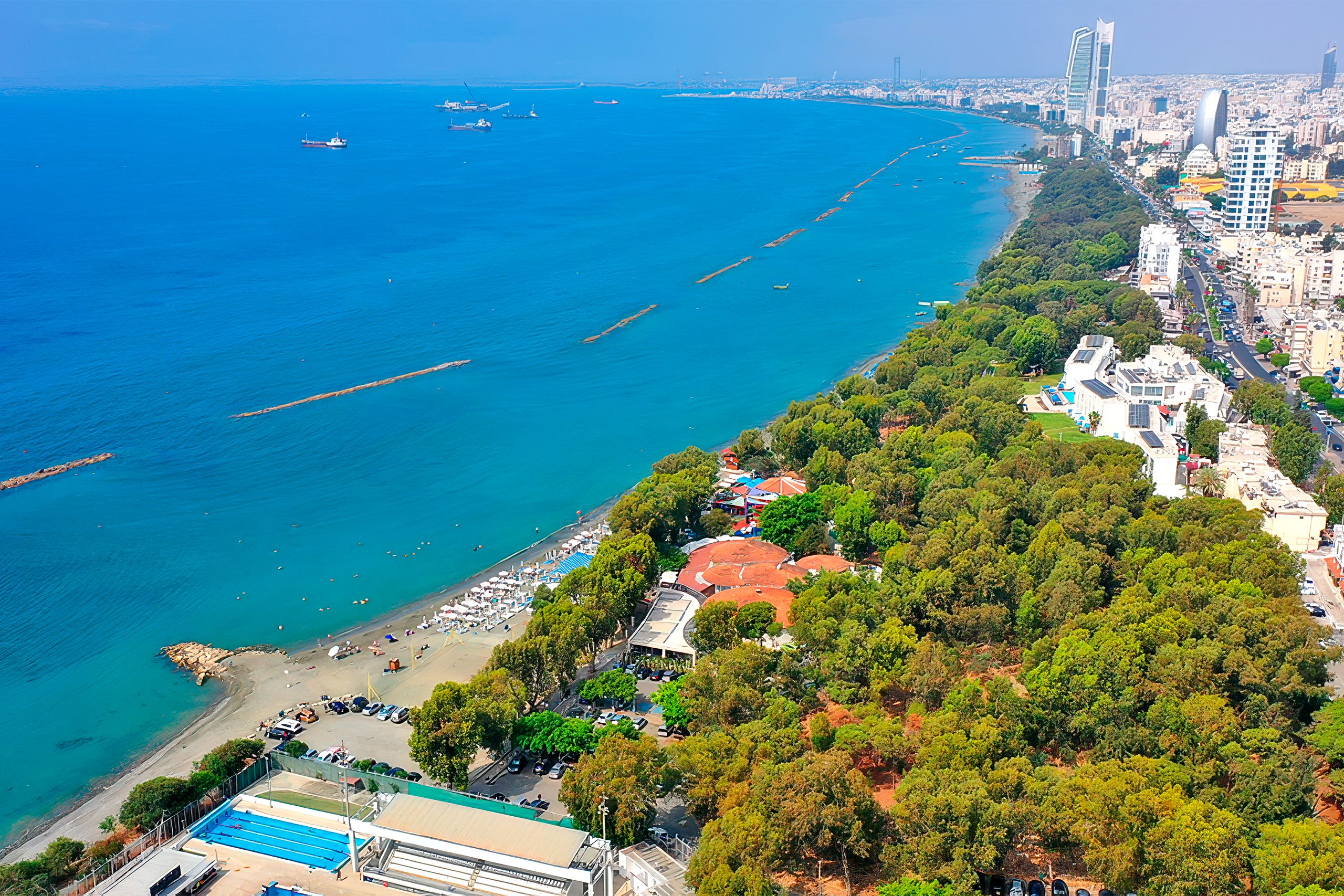
The park and beach developed together rather than sequentially, with infrastructure planned to integrate both elements. Walking paths wind through eucalyptus, pine, and acacia groves parallel to the shoreline, creating a buffer zone between urban development and the beach itself. This design allows visitors to transition gradually from city streets through shaded park to open sand and sea. The beach earned Blue Flag certification, indicating compliance with European Union standards for water quality, safety measures, and environmental management.
Gray Sand and Forest Shade Combined
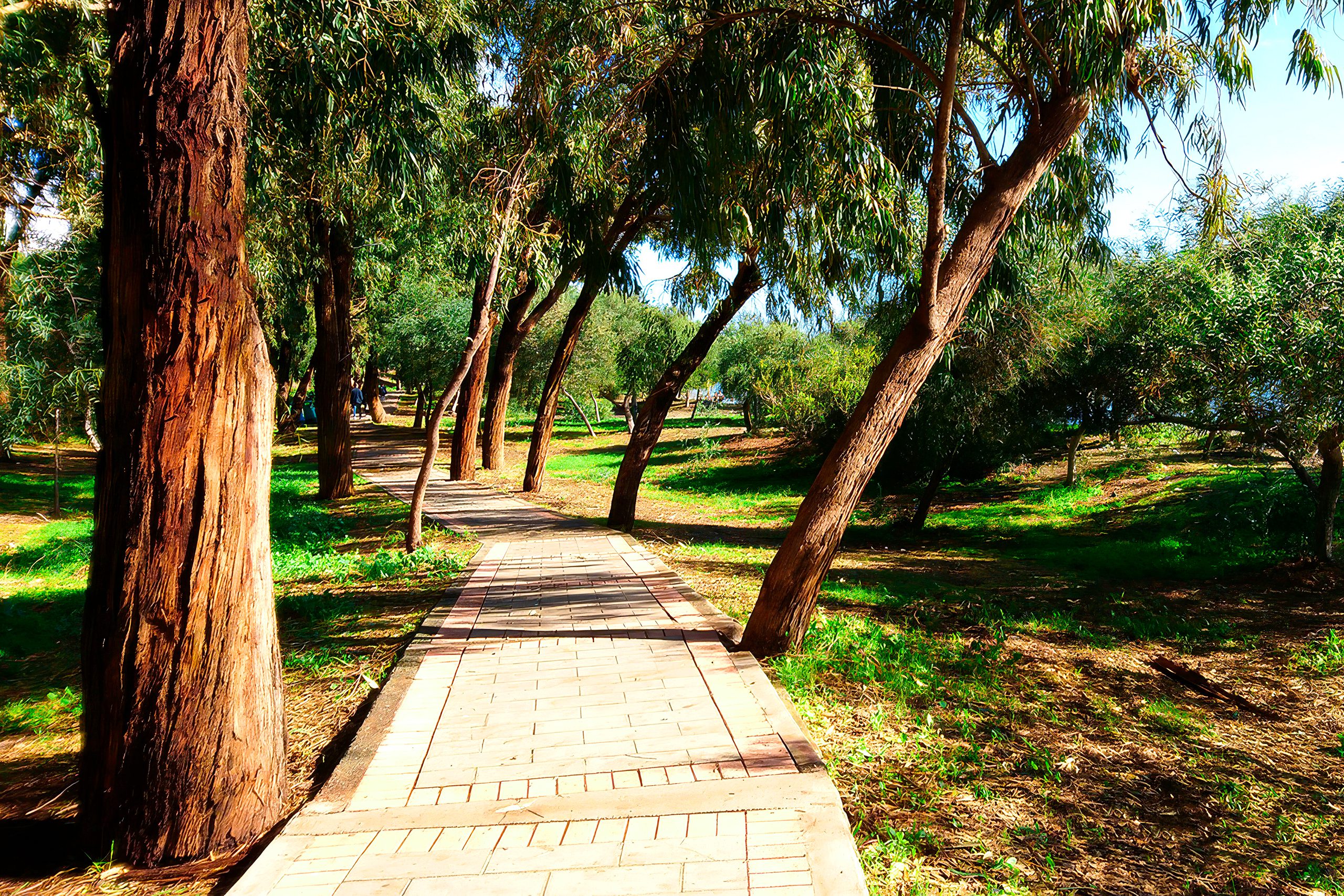
The beach consists of gray volcanic sand mixed with occasional fine pebbles. Waters clean and calm deepen fairly quickly, with some sections showing gradual slopes while others drop more steeply just beyond the shallow zone. Artificial breakwaters protect portions of the beach, reducing wave action and creating calmer conditions for swimming. Since sand heats up quickly, Dasoudi is equipped with wide wooden walkways that make it easy to walk along the beach. These boardwalks connect various sections and provide access points from the parking areas through the park.
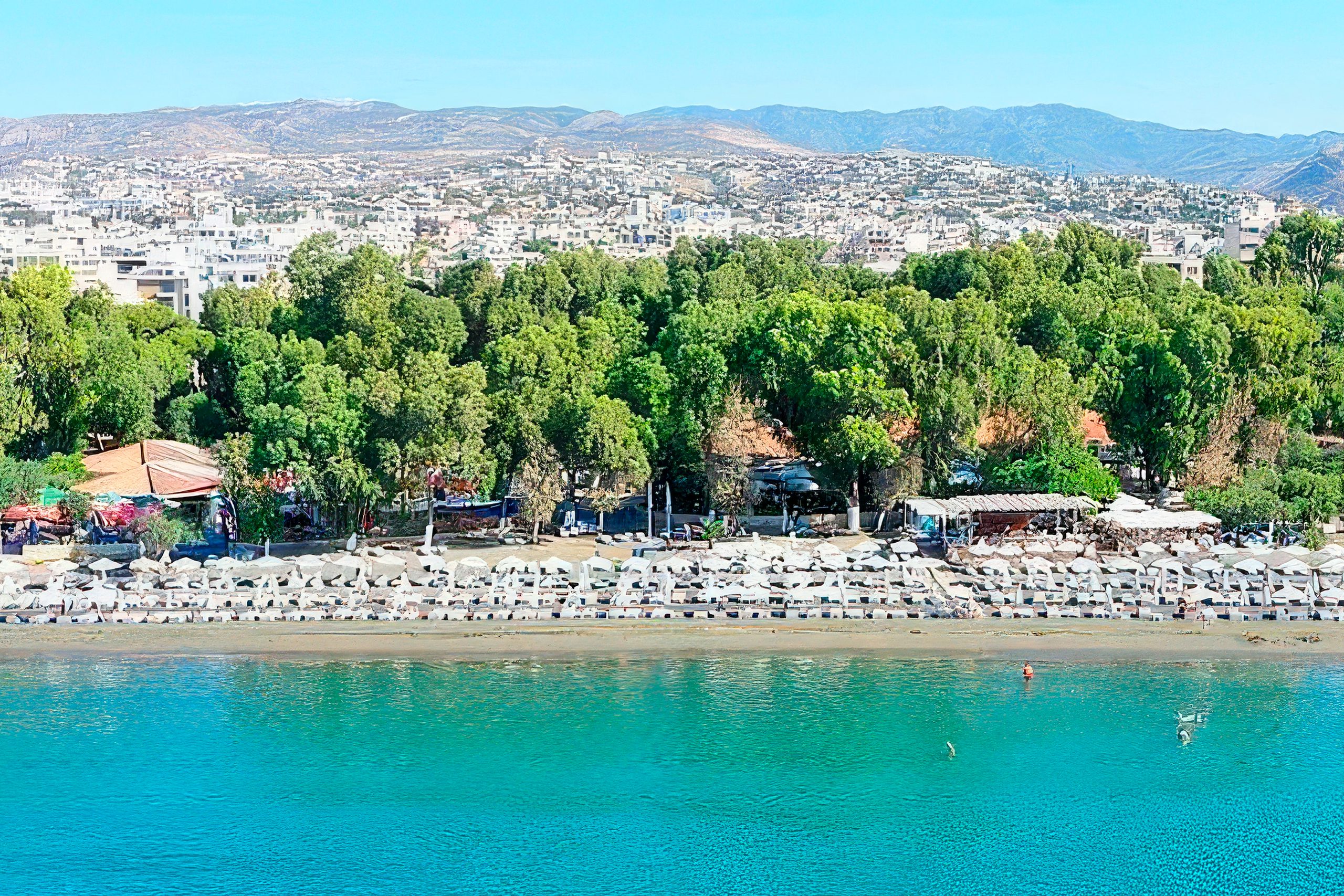
Behind the beach, the park contains mature eucalyptus and pine trees that tower overhead, their canopies creating dappled shade across the ground. The air carries the distinctive scent of eucalyptus oil, released naturally by the trees and intensified during hot weather. Small clearings within the forest contain benches positioned for rest or observation. Trails accommodate walkers, joggers, and cyclists who use the park for exercise throughout the day. The combination of beach and forest in one location makes Dasoudi unique among Cyprus urban beaches.
Five Distinctive Beach Features
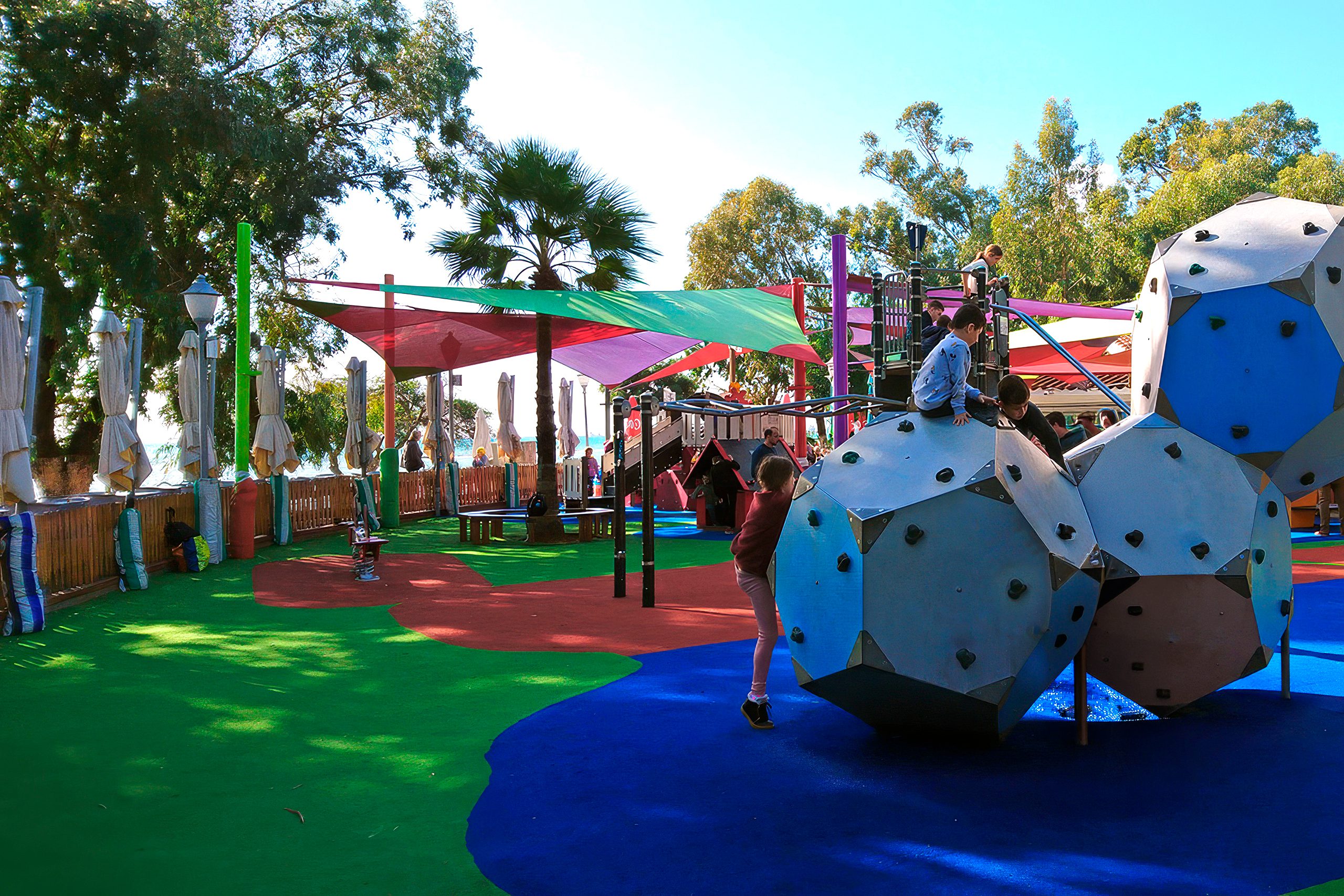
Facilities include toilets, showers, changing rooms, sunbeds, umbrellas, water sports and a diving center, beach volleyball court, children’s playground, bicycle station, and an Olympic-size swimming pool. The swimming pool operates as a training facility for competitive swimmers rather than a public recreation pool. The Limassol Aquatic Centre boasts an eight-lane heated 50-meter pool with competition lane ropes, starting blocks, and backstroke flags. Access requires membership with recognized swimming clubs or coaching programs, though the pool hosts occasional competitions open to spectators.
The beach provides wheelchair access through specialized equipment including beach wheelchairs stored at the lifeguard station. These allow disabled visitors to reach the water with lifeguard assistance. Wooden ramps connect parking areas to the beach, eliminating steps that would otherwise block access. Sunbed and umbrella rental costs approximately 2.50 euros per day, with lifeguards on duty from April through October. Service hours run from 9:00 AM to 5:00 PM early season, extending to 6:00 PM during peak summer months.
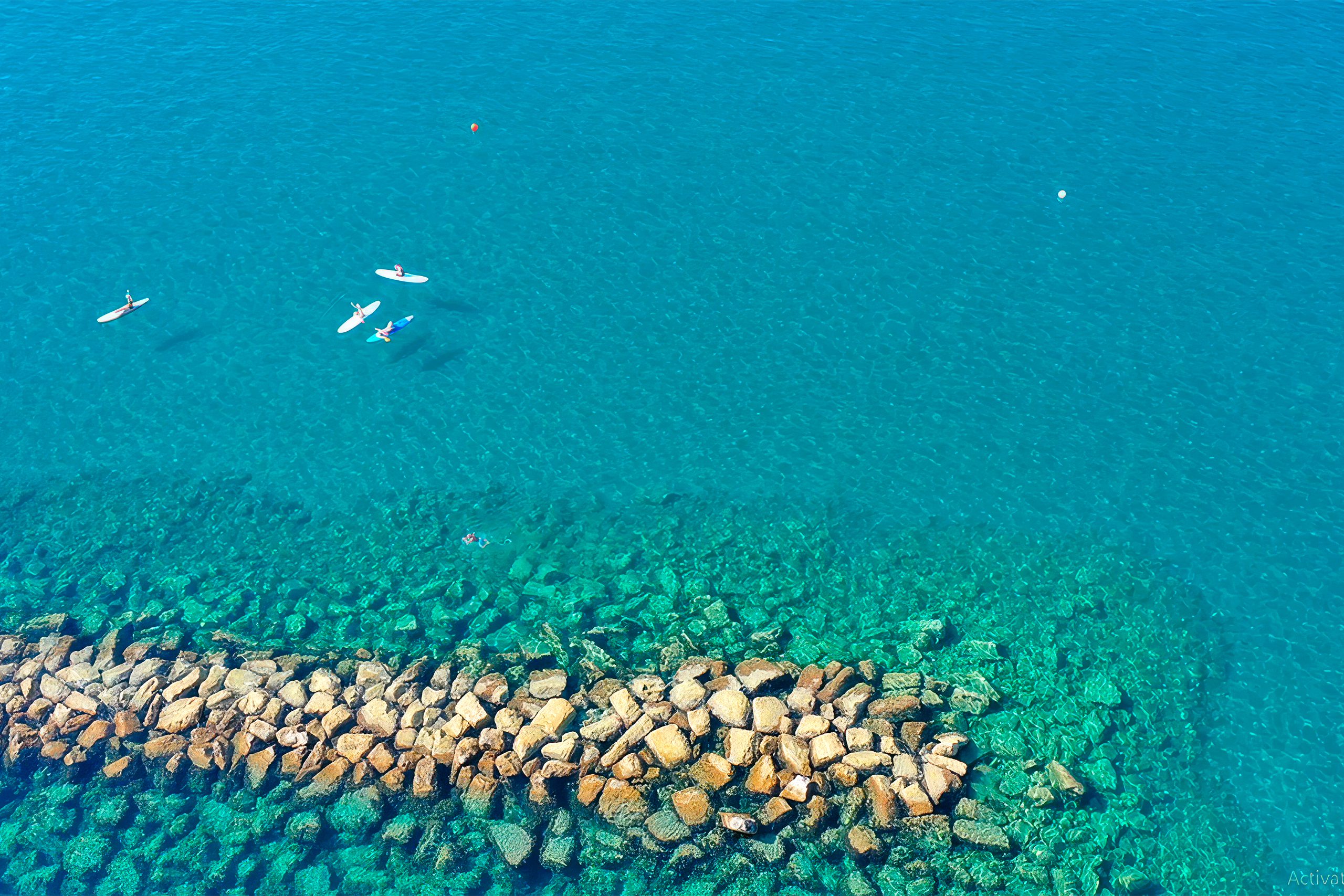
Water sports operators offer parasailing, jet skiing, banana boat rides, windsurfing, and diving excursions. A diving center runs certification courses and organizes trips to offshore dive sites, including wrecks and reef formations. The beach volleyball court sees regular use by both organized teams and casual players. A fenced playground provides equipment for young children, including swings, slides, and climbing structures.
Fat Fish Restaurant operates at the eastern end of the park, serving seafood, traditional Cypriot dishes, and international cuisine. Additional cafes and snack bars dot the park interior, offering drinks, ice cream, and light meals. Several establishments feature outdoor seating under the trees, combining food service with park ambiance. Prices at beachfront locations run higher than inland Limassol restaurants but remain moderate compared to resort areas.
Park Activities Beyond Beach Use
The park functions as an exercise zone for Limassol residents who jog or walk the trails during early morning and evening hours. The paths total several kilometers when combined, with some sections paved and others consisting of packed dirt. Fitness equipment installed at various points allows outdoor workouts without gym membership. These stations include pull-up bars, parallel bars, and stations for core exercises.
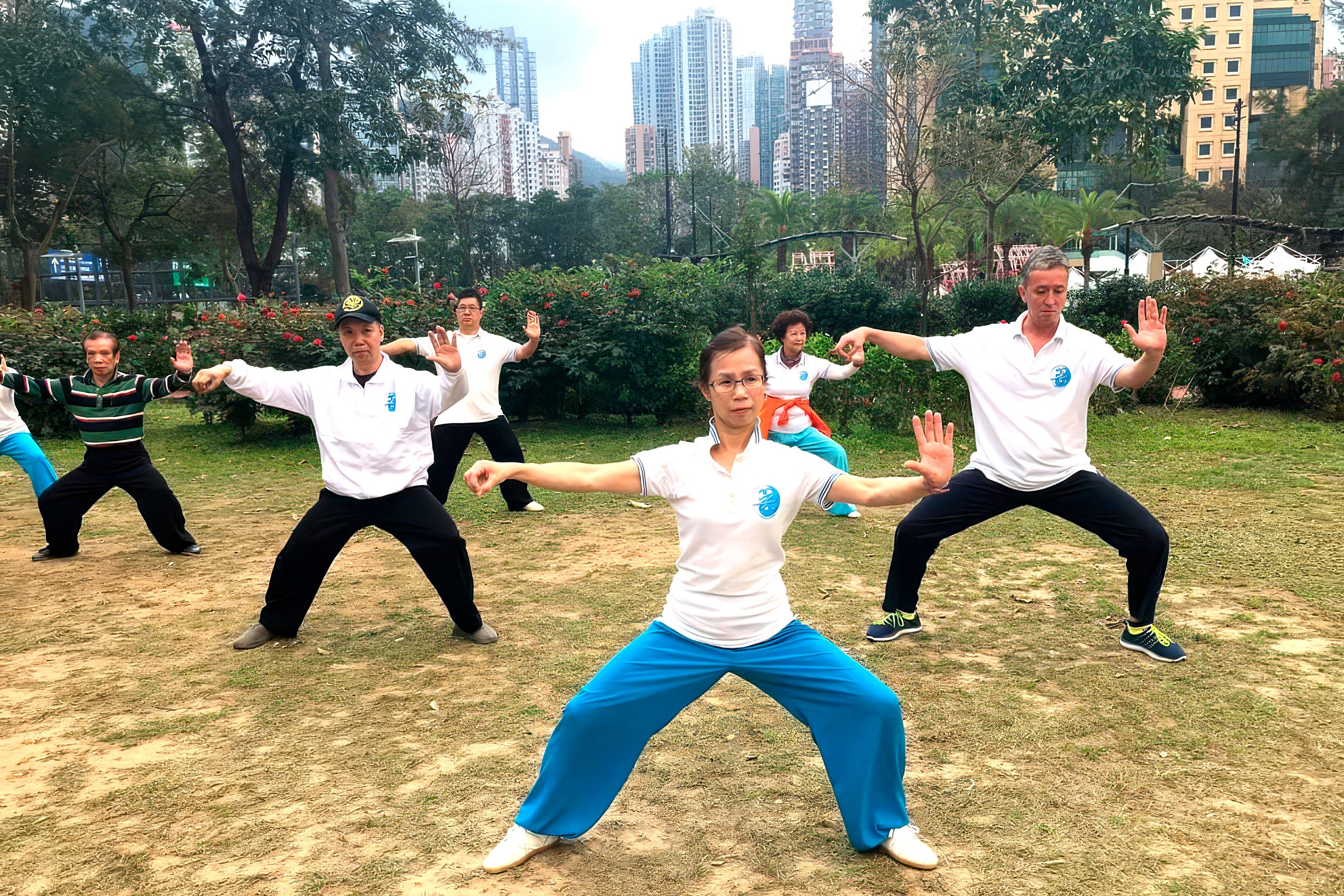
Outdoor yoga sessions occur regularly during the summer months, with instructors leading classes on the grass under the trees. Stand-up paddleboarding and pedal boat rentals operate from the beach during tourist season, providing water-based activities beyond standard swimming. The calm protected waters near shore suit these activities well, particularly for beginners.
The park contains habitat for numerous bird species that nest in the eucalyptus and pine trees. Common residents include collared doves, hooded crows, and various warbler species. During migration periods, the trees attract passage birds resting on their journey across the Mediterranean. Small mammals, including hedgehogs, occasionally appear in quieter park sections, though human activity limits wildlife diversity compared to natural areas.
Visiting Dasoudi Beach Today
Multiple bus routes serve Dasoudi with stops along the B1 coastal road. Bus number 30 provides the most direct connection between the city center and the beach, with service every 15 minutes during peak hours. The stop name varies by direction, listed as either Park Beach Hotel Bus Stop or Moniatis Hotel. Buses 80, 12, 33, 95, and 95A also pass near the beach. Single fares cost approximately 1.50 euros.
Drivers from Limassol center reach Dasoudi in about nine minutes via the scenic B1 road that follows the coast. Multiple parking lots serve the beach and park, located at the western end near Piscina Limassol pool, the central section, and the eastern end near Fat Fish cafe. Parking fees apply during peak season but remain modest. Many visitors from nearby hotels and apartments walk to the beach, as significant tourist development occupies the blocks immediately inland from the park.
The beach operates year-round with peak activity from May through October when water temperatures reach comfortable levels, and all facilities function fully. July and August bring maximum crowds, with locals and tourists sharing the space on weekends. The beach becomes quite busy during these months, particularly on Saturday and Sunday afternoons. Early morning visits before 10:00 AM offer calmer conditions with fewer people.
Evening use picks up as temperatures cool, with many people arriving after 5:00 PM to avoid peak heat. The park attracts walkers and joggers throughout the day, regardless of beach conditions. Winter months see reduced beach use but continued park activity, as the trees provide shelter from rain and wind while trails remain accessible.
Why Dasoudi Matters to Limassol
Dasoudi demonstrates successful integration of natural elements into urban beach development. The forest park prevents the visual monotony common at purely commercial beach strips where hotels and restaurants dominate every view. The trees create microclimate conditions cooler than the surrounding areas, making the beach usable even during extreme summer heat when exposed beaches become uncomfortable.
The combination of facilities serves diverse users rather than focusing solely on sunbathing tourists. Competitive swimmers train at the Olympic pool, joggers use the paths, families bring children to the playground, and beachgoers enjoy the water. This multifunctional design maximizes public value from limited coastal space. The model shows that urban beaches can provide more than just swimming areas, functioning as parks, sports facilities, and community gathering spaces simultaneously.
For Limassol specifically, Dasoudi provides quality beach access within the city rather than forcing residents to drive to resort areas or remote coves. The Blue Flag certification assures water quality despite the urban location, addressing concerns about pollution from nearby development. The beach serves as proof that cities can maintain clean swimming areas when proper management systems operate.
The forest component contributes environmental benefits beyond recreation. The trees absorb carbon dioxide, produce oxygen, filter air pollutants, and stabilize soil that might otherwise erode. These ecosystem services operate continuously, providing value even when no visitors are present. The park represents an investment in both human recreation and natural system function.