The Venetian fortifications of Cyprus represent some of the most impressive defensive structures built during the Renaissance period. Between 1489 and 1571, the Republic of Venice controlled Cyprus and invested heavily in fortifying three major cities: Nicosia, Famagusta, and Kyrenia.
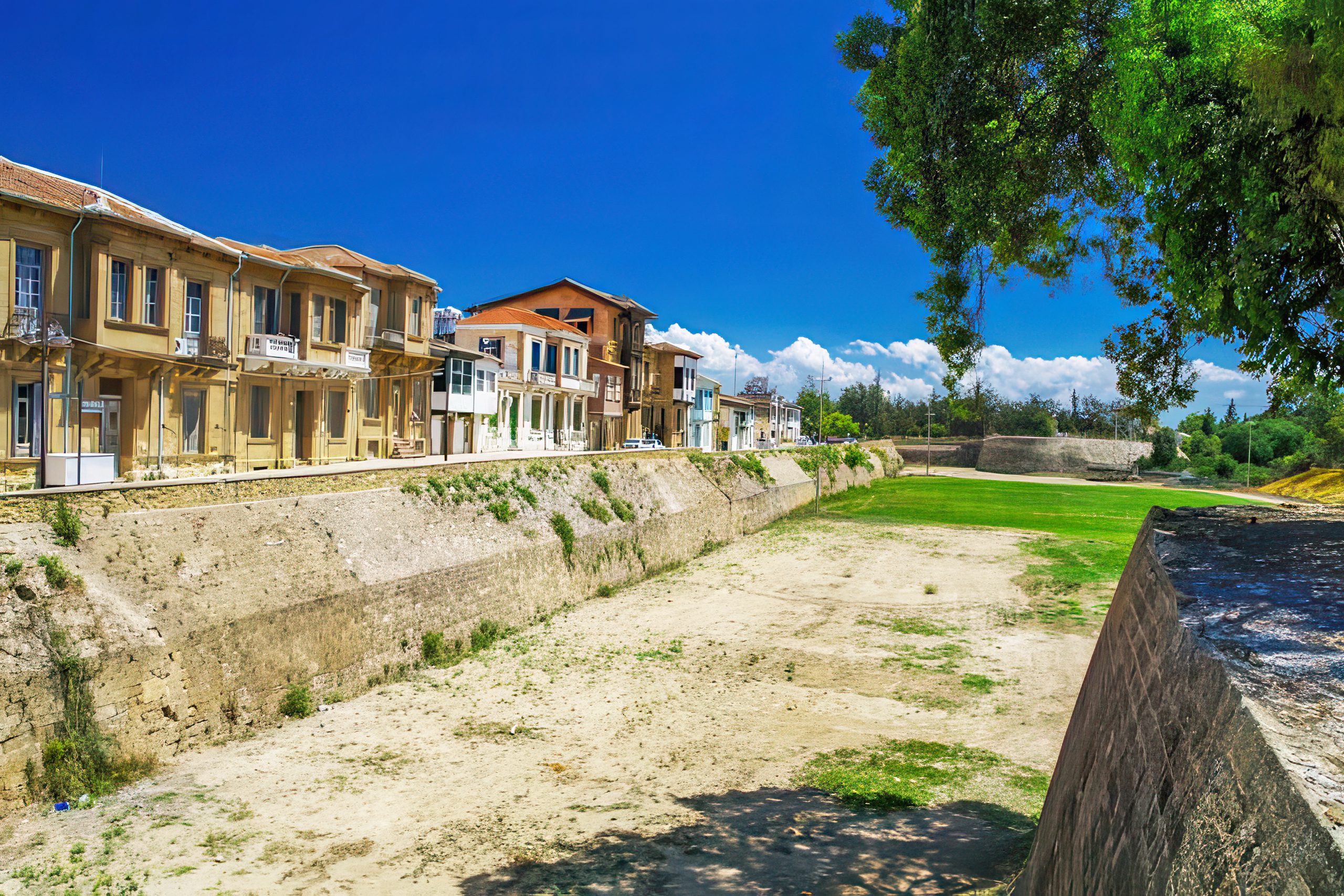
These fortifications were designed to protect the island from Ottoman invasion using the latest military engineering techniques of the 16th century. The walls featured pentagonal bastions, thick earthwork ramparts, and deep moats, all adapted for the age of gunpowder artillery.
Despite their sophisticated design, these fortifications faced their ultimate test in 1570 when Ottoman forces invaded Cyprus. The siege of Famagusta in particular demonstrated both the strength of Venetian military architecture and the determination of defenders who held out for nearly a year against overwhelming odds.
Historical Background
Cyprus became a Venetian possession in 1489 when Queen Catherine Cornaro, who had married into the Lusignan royal family of Cyprus, was forced to abdicate and cede the island to Venice. The Republic saw Cyprus primarily as a military base to protect its commercial interests in the Eastern Mediterranean. Venice had been active in Cyprus since around 1000 AD, and the island’s location made it valuable for controlling Levantine trade routes. The island also produced profitable cotton and sugar exports.
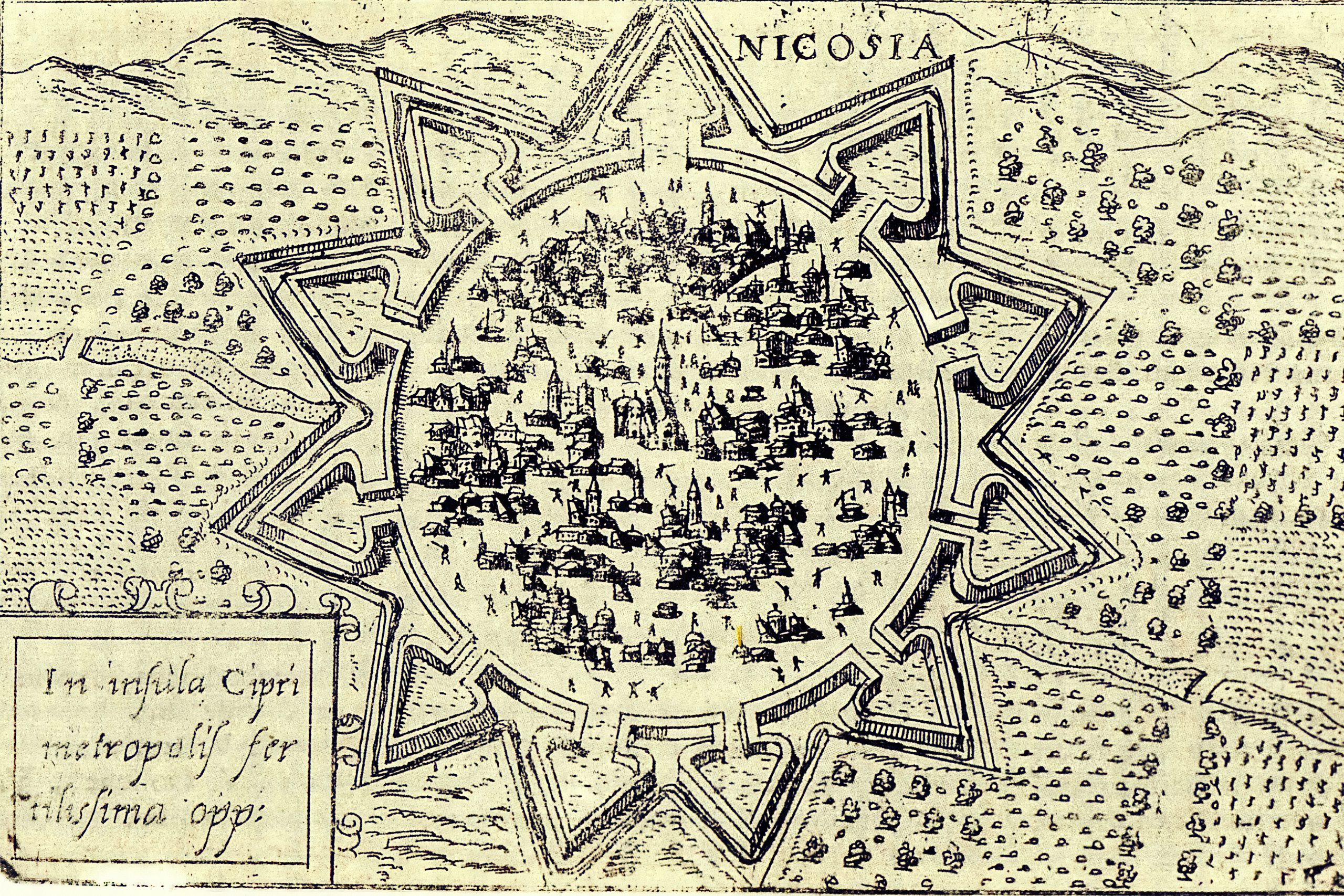
For decades, Venetian governors emphasized the need for better fortifications, but little action was taken until the Great Siege of Malta in 1565. That siege demonstrated the serious Ottoman threat to Christian holdings in the Mediterranean. Many European states began strengthening their defenses. In 1567, Venice finally commissioned the construction of new fortifications for Nicosia, hiring the best military architects in Europe to design walls that could withstand modern artillery. This decision came barely three years before the Ottoman invasion, leaving insufficient time to complete all planned defenses.
The Walls of Nicosia
In 1567, Italian military engineers Giulio Savorgnan and Francesco Barbaro were commissioned to redesign Nicosia’s fortifications. The existing medieval walls built by the Lusignans were deemed inadequate for defending against artillery. The Venetians demolished these old fortifications along with numerous churches, palaces, and other buildings to acquire building materials and create clear fields of fire. The royal palace and buildings belonging to both Orthodox and Latin Christians were destroyed for this purpose.
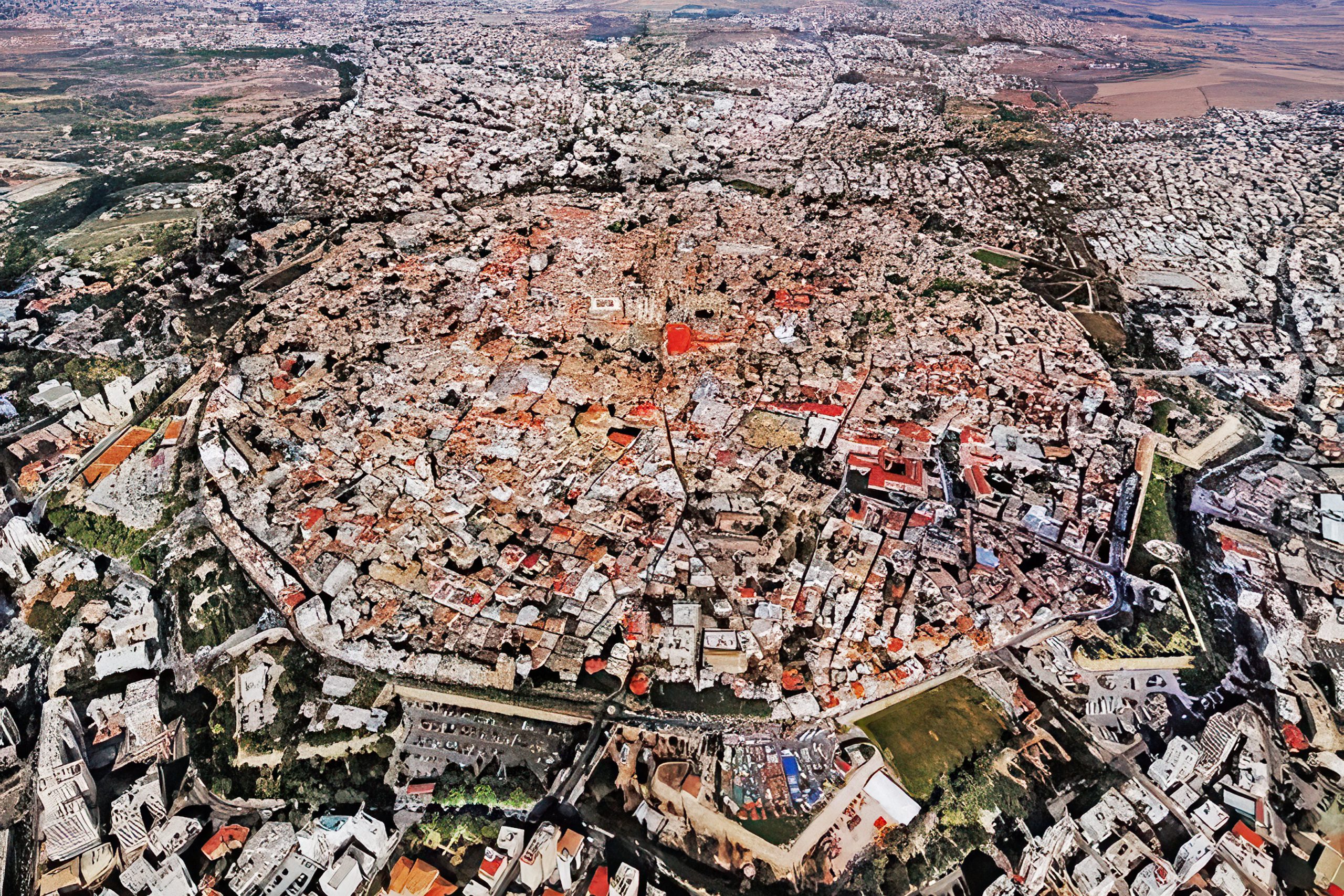
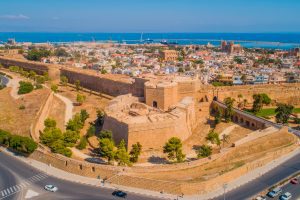
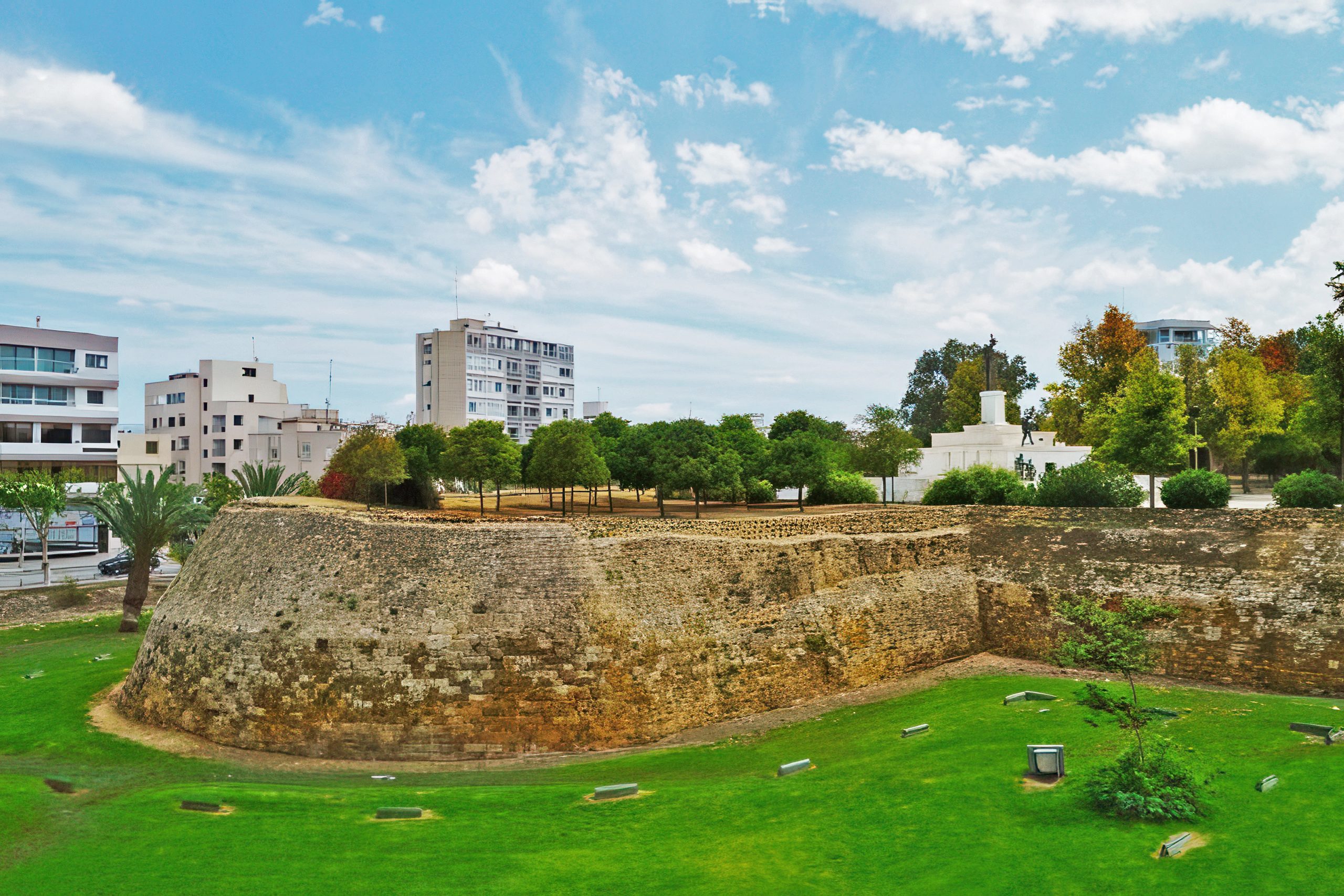
The new walls took a circular shape with a circumference of approximately five kilometers. Eleven pentagonal bastions with rounded orillons projected from the walls, similar to those at Palmanova in Italy.
Each bastion was named after prominent Italian aristocratic families who donated funds toward construction: Caraffa, Podocattaro, Constanza, D’Avila, Tripoli, Roccas, Mula, Quirini, Barbaro, Loredano, and Flatro. The design positioned gates to the side of adjoining bastions, allowing defenders to protect them more easily during sieges. The upper portion of the walls was left unlined with masonry to better absorb cannon impacts.
The Fortifications of Famagusta
Famagusta had been fortified earlier during the 14th century by the Lusignans, who built Othello Castle to defend both the harbor and the town. The Venetians extensively redesigned these defenses between the 15th and 16th centuries to meet the challenges of artillery warfare. The walls featured 14 bastions and originally two gates, the Land Gate and the Sea Gate. These fortifications reached over 15 meters in height and up to eight meters in thickness, surrounded by a rock-hewn moat on the landward side.
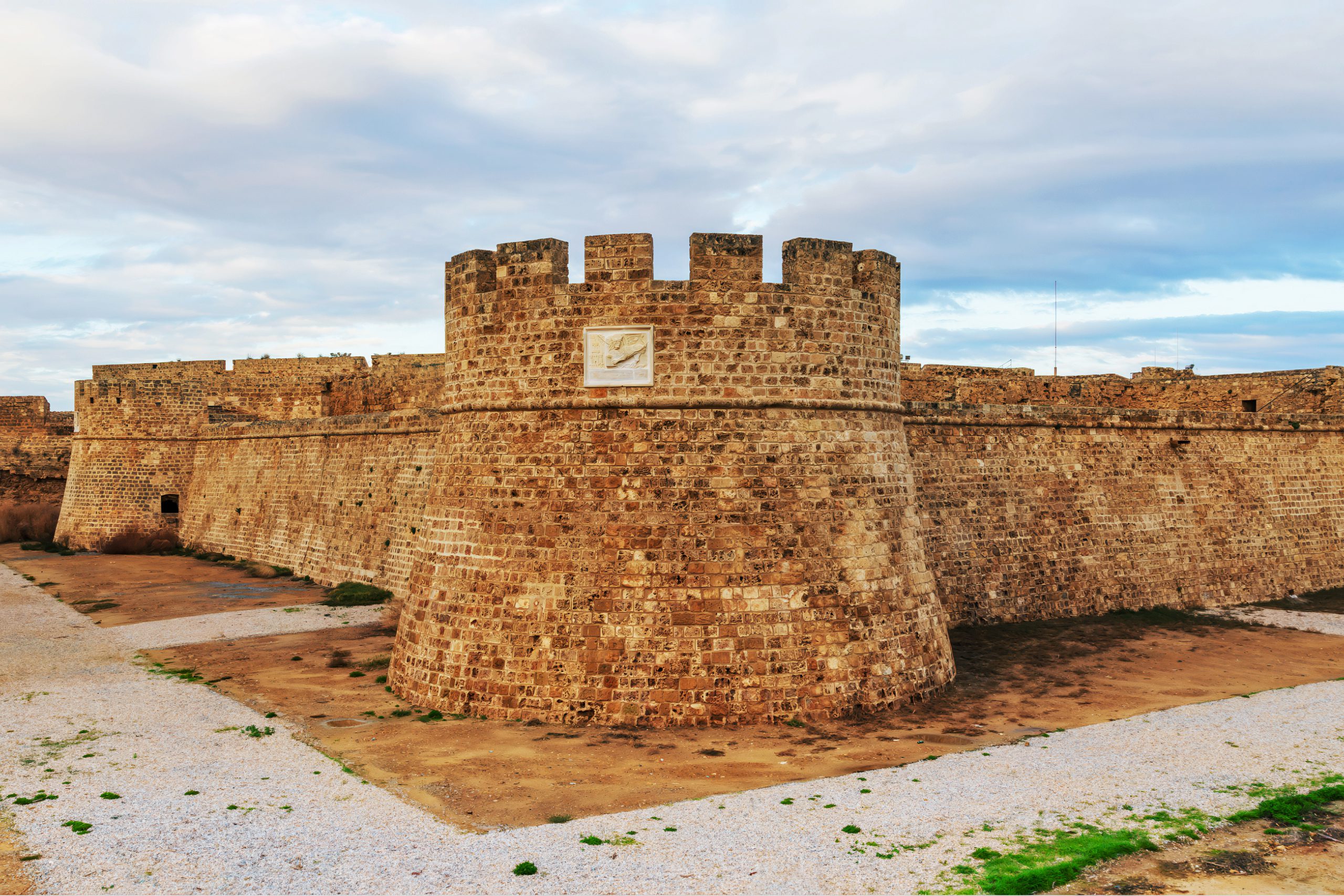
The strategic objective was to create a fortress strong enough to delay any attack until the Venetian fleet could arrive with reinforcements and supplies. The walls were built using massive earthworks cased with stone, a technique that proved effective at absorbing artillery bombardment.
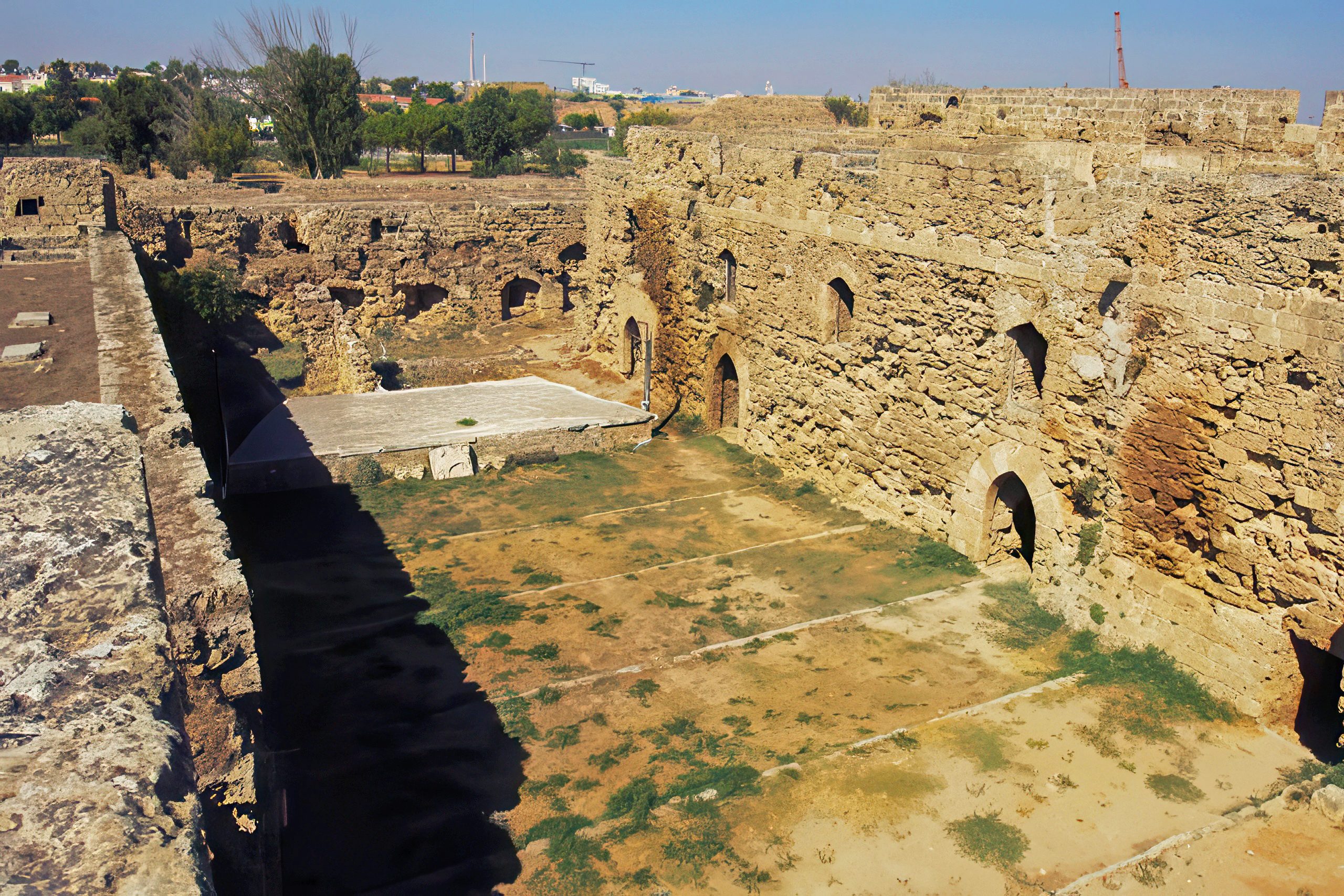
The fortifications incorporated covered ways for defenders to move safely and positions for mounting cannons at multiple levels. The design allowed rapid movement of artillery to wherever it was needed. These defenses made Famagusta one of the most heavily fortified cities in the Eastern Mediterranean, comparable to Rhodes.
Kyrenia Castle Modifications
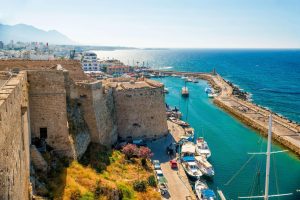
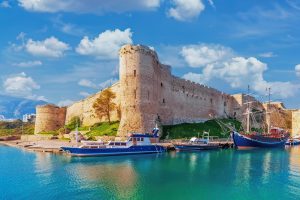
The Venetians also modified Kyrenia Castle, which had originally been built by the Byzantines in the 7th century and enlarged by the Lusignans. Between 1540 and 1544, Venetian engineers transformed this medieval fortress into a gunpowder-era stronghold.
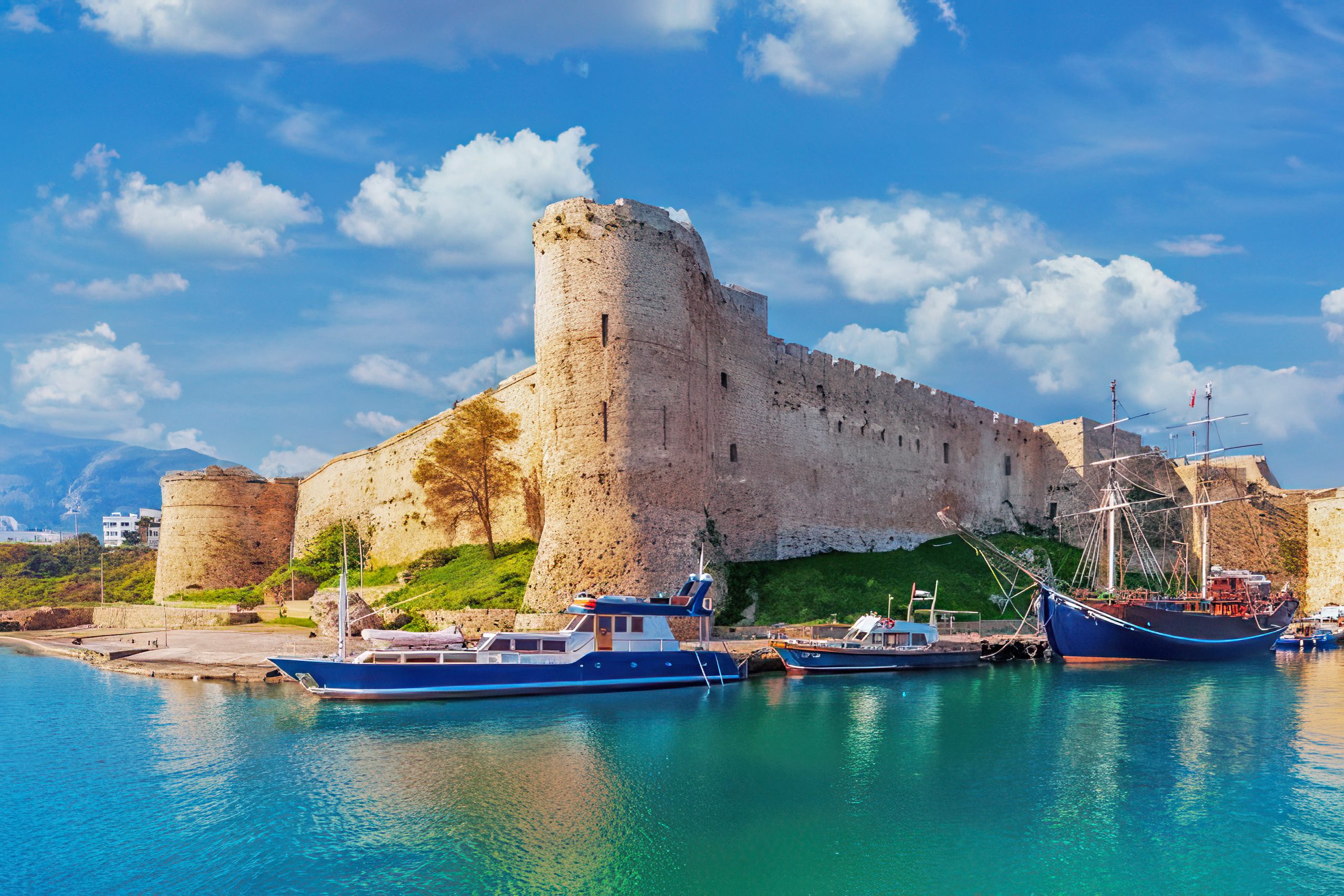
The modifications included replacing the castle’s elegant Frankish towers with thick circular towers better able to withstand cannon fire. The walls were enlarged, thickened to 12 feet, and reinforced with an outer wall. The gap between the old and new walls was filled with earth to create an artillery rampart.
The Venetians installed gun ports at three levels to direct cannon fire against land attackers. Inside the castle, they built long ramps to allow artillery to be dragged up onto the walls. They replaced the original drawbridge with a protected gatehouse that still exists today. The modifications preserved the 12th-century Byzantine Chapel of St. George within the expanded walls. An outer defensive wall was erected around the entire castle complex, creating multiple layers of defense.
Remarkable Engineering Features
Several innovative construction techniques distinguished these Venetian fortifications. The bastioned trace italienne system represented the most advanced military architecture of the period. The pentagonal bastions projected from the walls at angles that eliminated blind spots, allowing defenders to provide covering fire along the entire perimeter.
The rounded orillons at the bastion tips deflected cannonballs rather than presenting flat surfaces that would shatter under impact. The Nicosia fortifications required diverting the Pedieos River outside the walls into the newly constructed moat for strategic reasons.
The walls combined different materials for maximum effectiveness. Stone formed the outer facing, while earth fill absorbed the impact of cannon shot. This layered construction proved more resilient than solid stone walls, which would crack and crumble under sustained bombardment.
The moats surrounding the fortifications reached 80 meters wide in some places and were excavated from solid rock. The fortifications lacked certain advanced features found elsewhere, including piazza-bassa, cavaliers, and outworks, partly because construction was incomplete when the Ottomans attacked.
Visiting the Fortifications Today
Visitors can explore the Venetian fortifications at multiple locations across Cyprus. In Nicosia, walking and cycling paths follow the moat around the entire circuit of walls, providing close views of the bastions and curtain walls. The Shacolas Tower offers an aerial perspective showing the complete circular structure. Access to the old city is through the three historic gates, with pedestrian pathways allowing easy entry. There is no entrance fee to walk around the exterior of the walls.
The Famagusta fortifications are located in the Turkish-occupied part of Cyprus. Visitors can climb onto the walls and walk from the Ravelin Bastion to the Canbulat Bastion, passing several intermediate bastions. The massive scale of the walls becomes apparent when standing on top, with the moat visible below and the old city spreading out inside. Kyrenia Castle charges a small entrance fee and is open daily, with hours varying by season. The castle interior includes multiple levels accessible to visitors, though climbing to the battlements requires navigating stairs and uneven surfaces. Modest dress is recommended when visiting religious sites within the fortifications.
A Monument to Military Architecture
The Venetian fortifications of Cyprus stand as remarkable achievements of Renaissance military engineering. They represent a crucial transition period when defensive architecture adapted to gunpowder artillery through scientific design and mathematical precision. Although the fortifications ultimately failed to prevent Ottoman conquest, their sophisticated design forced attacking armies to commit massive resources and suffer heavy casualties. The 11-month defense of Famagusta became legendary in European history, symbolizing resistance against overwhelming odds. For modern visitors, these walls offer tangible connections to a pivotal period when Cyprus changed hands between major Mediterranean powers. The fortifications preserve the ambitions, expertise, and determination of the Venetian Republic during its final decades of control over this strategic island.