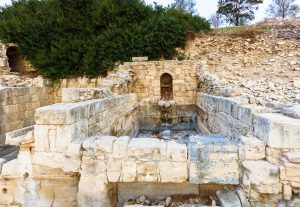
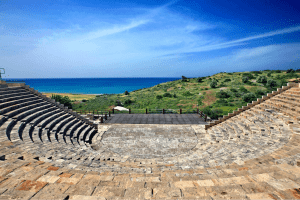
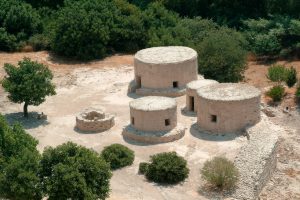
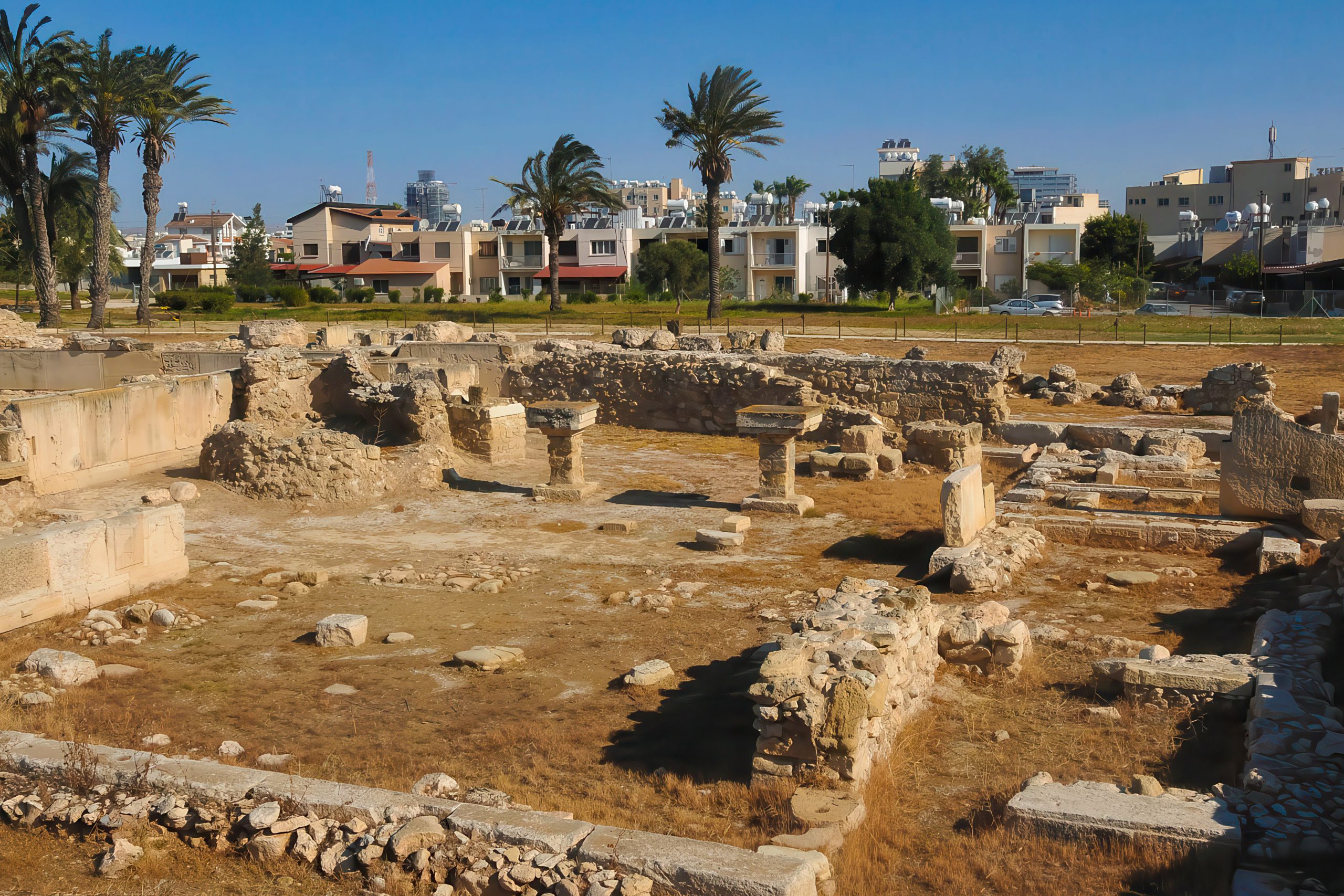
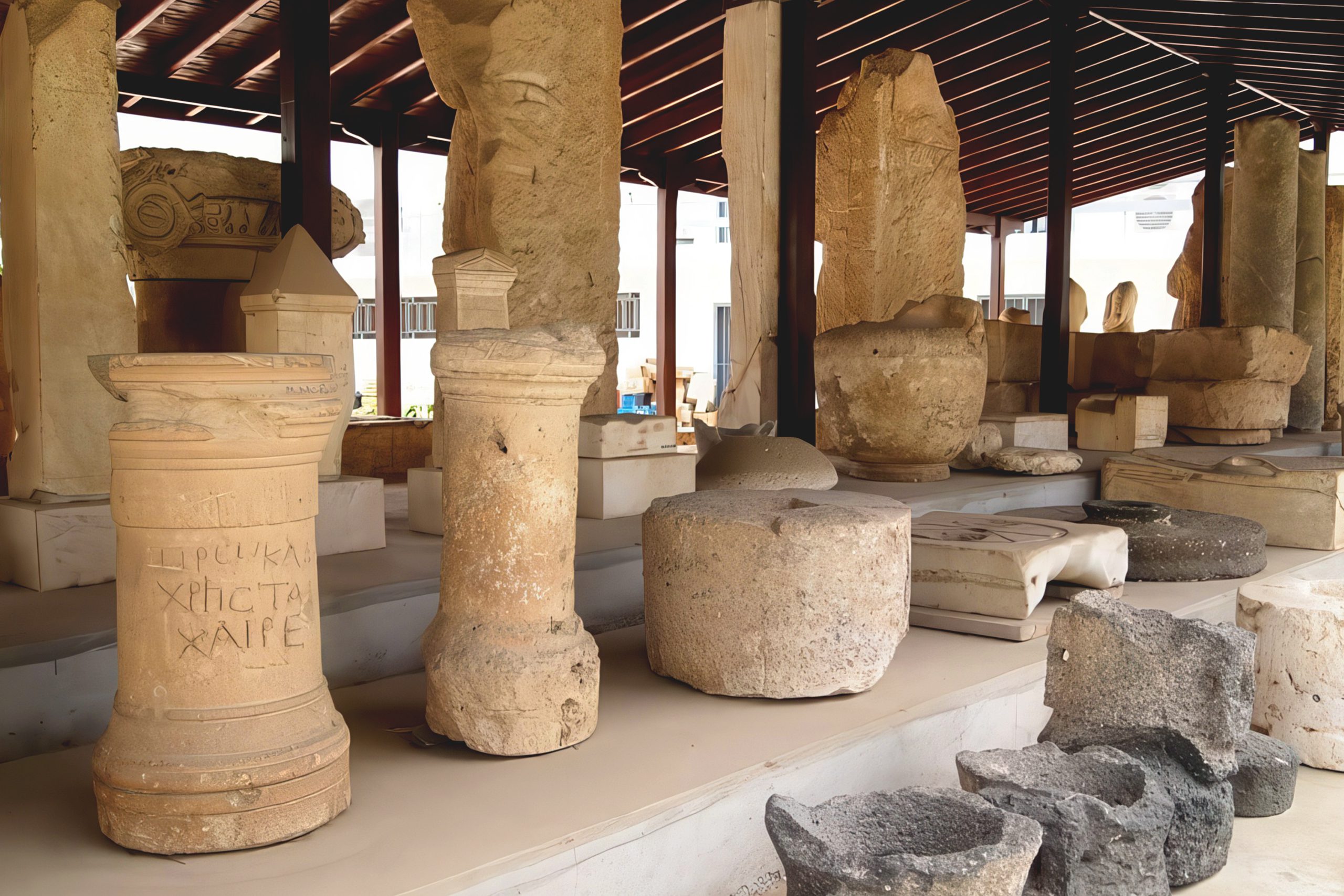
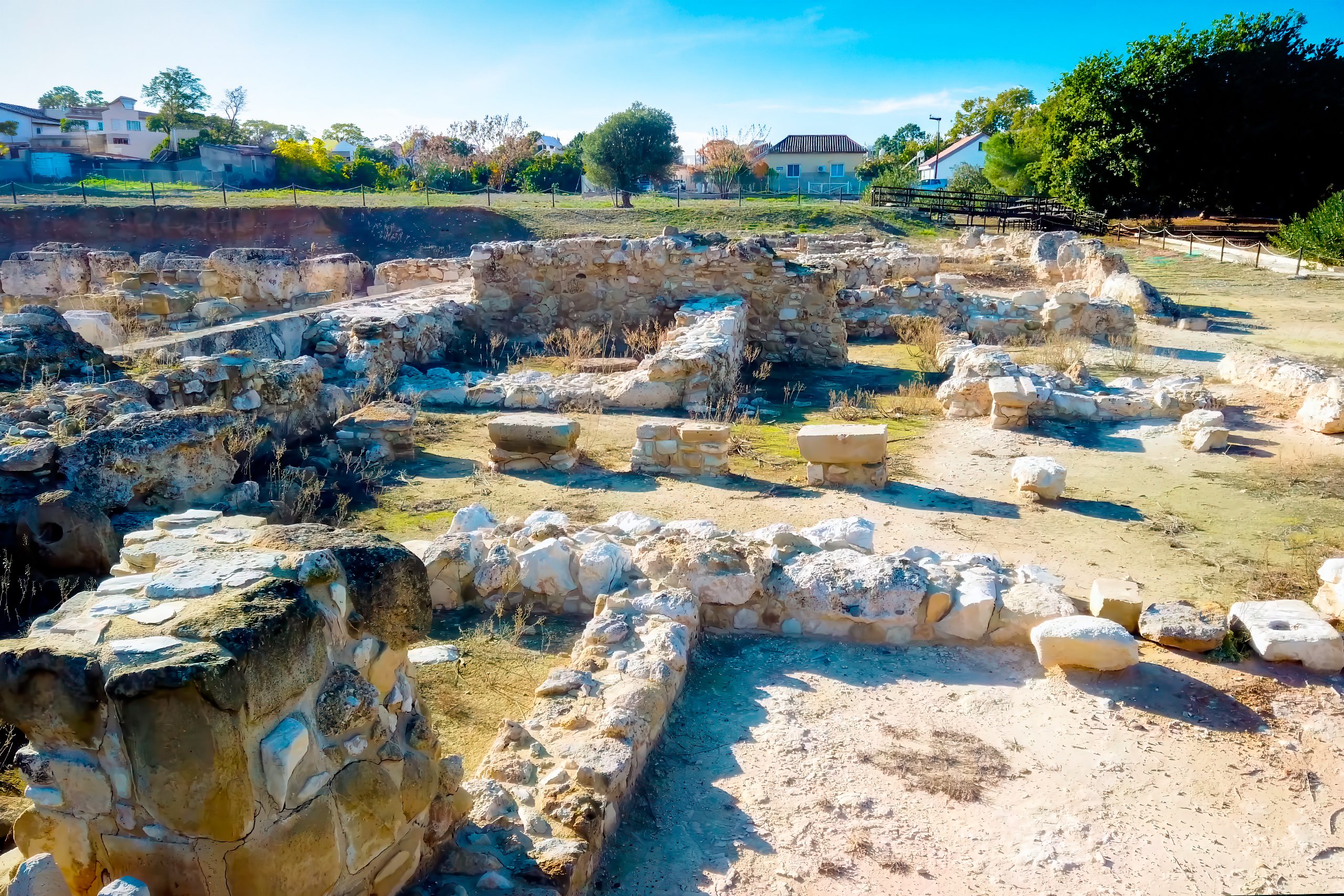
A sacred complex in Kition constructed with massive stone blocks, housing temples dedicated to Astarte and Melqart, serving the Phoenician community.
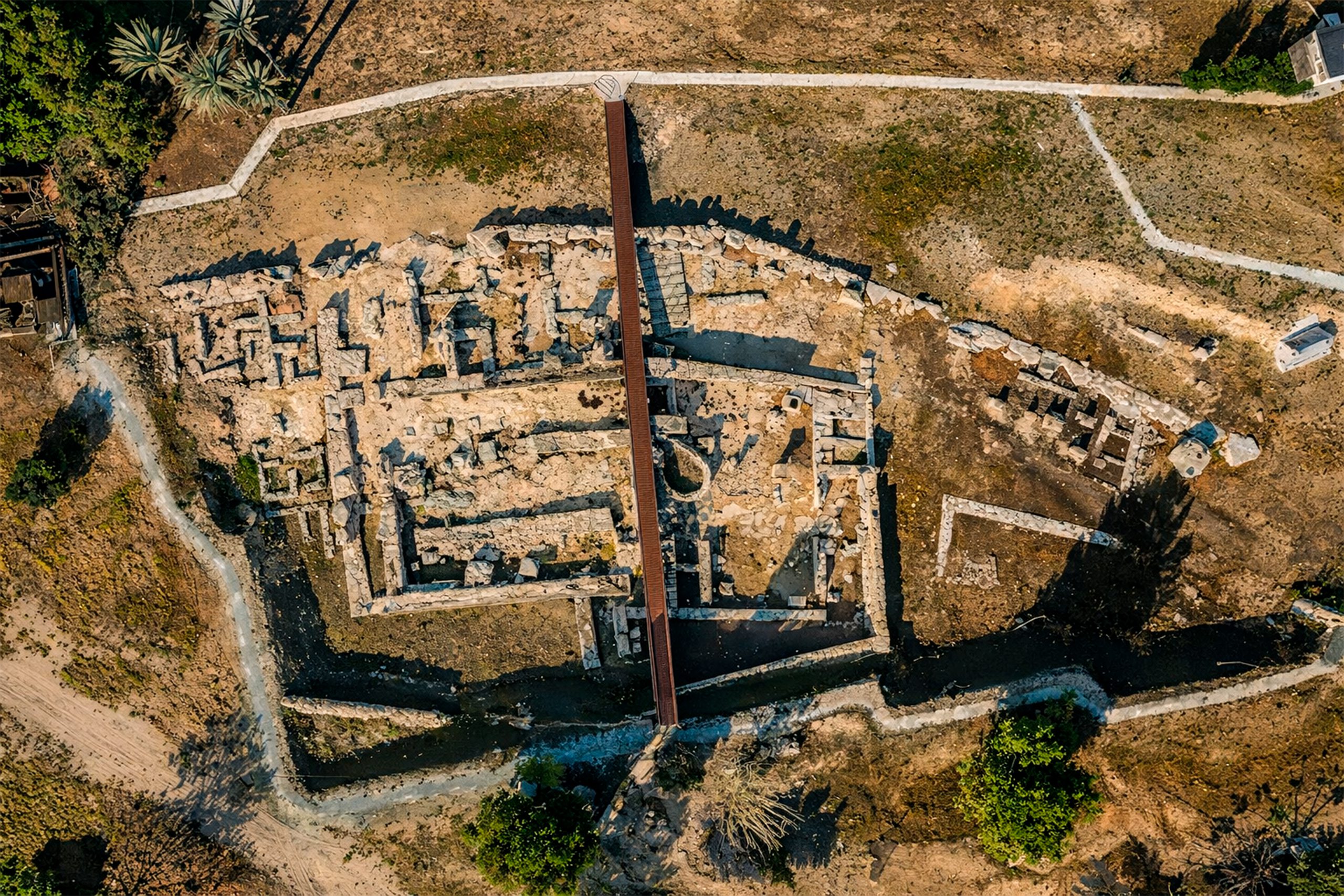
The Cyclopean Walls and Temples of Kition represent a cornerstone of Cyprus’s ancient heritage, where monumental architecture and religious devotion intertwined to form a vibrant sacred precinct in the heart of the island’s earliest urban center. Located in modern Larnaca, ancient Kition was one of Cyprus’s ten city-kingdoms, thriving as a hub of trade, culture, and spirituality from the Late Bronze Age onward. This complex, characterized by its imposing walls built from enormous limestone blocks, enclosed a series of temples primarily dedicated to the Phoenician deities Astarte, goddess of fertility and war, and Melqart, a protector figure akin to Heracles.
Serving the Phoenician settlers who dominated the city from the 9th century BC, the site facilitated rituals, offerings, and communal gatherings that reinforced social bonds and economic ties across the Mediterranean. As a testament to Cyprus’s role in bridging Eastern and Western civilizations, Kition’s sacred spaces evolved over centuries, blending indigenous Cypriot traditions with influences from Mycenaean Greece, Phoenicia, and beyond, offering modern visitors a window into the island’s multifaceted past.
A Sacred Complex in Ancient Kition
The Cyclopean Walls and Temples of Kition formed the defensive and spiritual core of the ancient city, sprawling across several hectares in what is now central Larnaca, with remnants scattered amid urban development. The walls, named for their massive, roughly fitted stones that legend attributed to the one-eyed Cyclopes, encircled the settlement, providing protection while defining sacred enclosures.
Within these fortifications lay multiple temples, the most prominent being a large sanctuary to Astarte, rebuilt over time with Phoenician craftsmanship that echoed designs from Tyre and even the Temple of Solomon in Jerusalem. Melqart’s temple, though less extensively preserved, complemented this, honoring the god’s role in navigation and heroism, vital for a seafaring community.
The complex included courtyards for processions, altars for sacrifices, and workshops for copper smelting, linking religion with Kition’s economic prowess in metal trade. Situated near natural harbors, the site benefited from a semi-arid climate with annual rainfall around 350mm, where winter floods symbolized renewal in fertility rites. Pilgrims from Phoenicia, Greece, and Egypt converged here, offering votives like terracotta figurines and jewelry, making it a melting pot of beliefs that sustained the Phoenician diaspora in Cyprus for generations.
The Historical Formation and Evolution
Kition’s sacred complex emerged during the Late Bronze Age around 1400 BC, when Mycenaean Achaeans from Greece settled the area, fortifying it with the initial Cyclopean walls to defend against threats and assert urban identity. These early structures, built from giant limestone blocks up to 7 meters long, marked a shift from rural villages to organized city-states, with temples initially dedicated to local fertility deities.
By the 12th century BC, amid regional upheavals including the Sea Peoples’ invasions, the site adapted, incorporating five successive temples in the Kathari area. Phoenician colonization in the 9th century BC transformed Kition, as settlers from Tyre rebuilt the temples, dedicating the largest to Astarte and another to Melqart, introducing Semitic rituals while preserving Mycenaean foundations.
Historical accounts, such as those in Strabo’s Geography, note Kition’s prosperity under Persian rule from the 5th century BC, with the complex serving as a naval base. Hellenistic kings like Ptolemy I destroyed parts in 312 BC, but Roman reconstructions in the 1st century AD added grandeur, blending Greek styles. Byzantine adaptations in the 4th-7th centuries AD overlaid Christian elements, while Arab raids led to abandonment.
Medieval periods saw reuse of stones, with Ottoman villagers incorporating ruins into folklore. British colonial excavations in the 19th century, followed by systematic digs by the Swedish Cyprus Expedition in the 1920s and French missions since 1979, revealed layers, establishing its Phoenician-Mycenaean links. Today, climate change exacerbates erosion, with rising seas threatening coastal remnants by 20% since 1960.
Features of the Cyclopean Walls and Temples
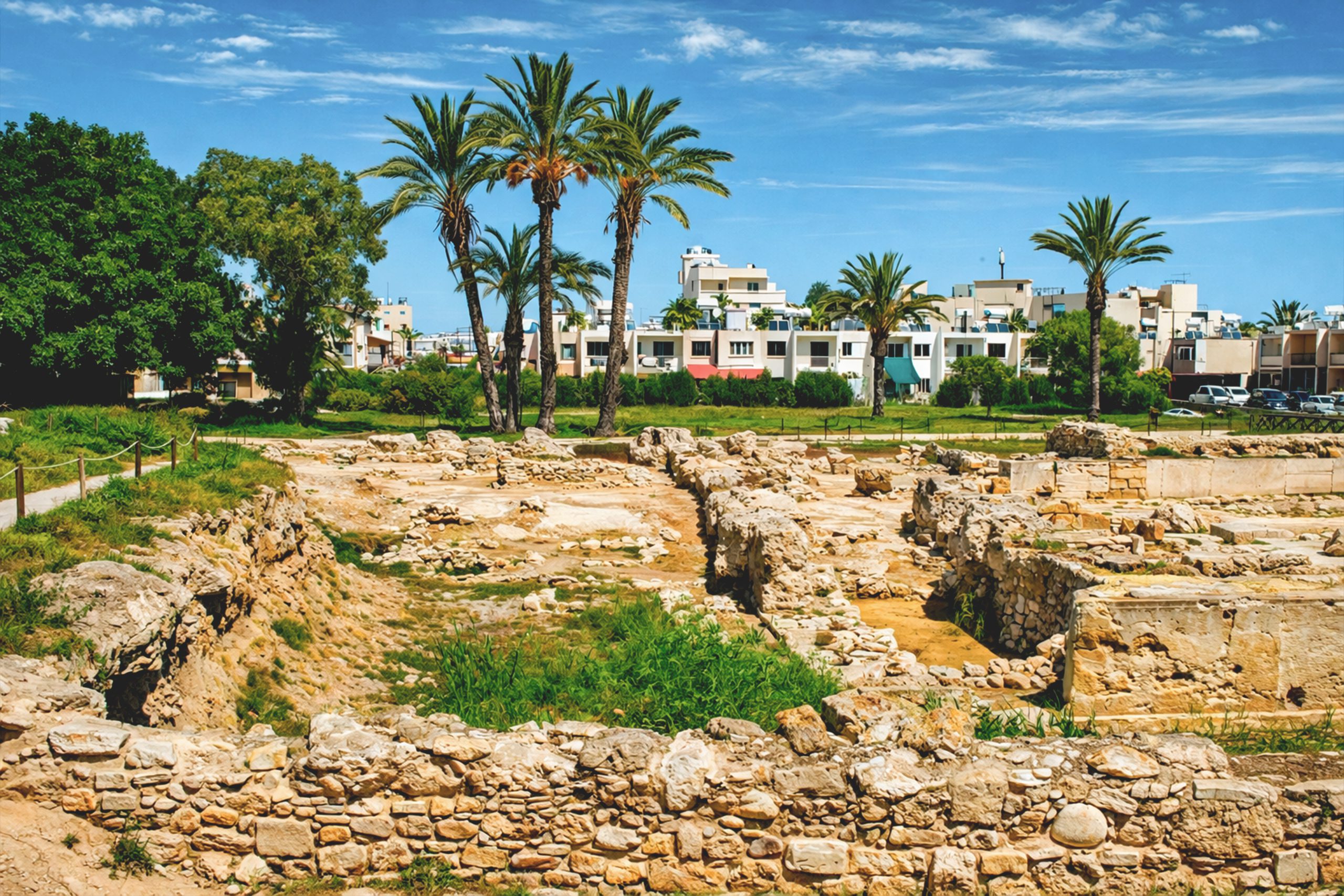
The Cyclopean walls, constructed from unhewn limestone boulders fitted without mortar, stretched over 2.5 kilometers around Kition, with sections up to 3 meters thick and 5 meters high, designed for defense and seismic resistance in an earthquake-prone region.
Within, the temples featured ashlar masonry in later Phoenician phases, with the Astarte sanctuary measuring 35 by 22 meters, including a holy-of-holies, altars, and courtyards for animal sacrifices and libations. Melqart’s temple, identified through inscriptions, included pillars and hearths, symbolizing resurrection themes in fire rituals.
Artifacts like bronze tools and imported pottery highlight trade, while copper workshops integrated metallurgy into sacred practices, producing ingots for export. The site’s topography, on a low plateau near the sea, created microclimates with cooler breezes in 35°C summers and wet 10°C winters, aligning rituals with seasonal cycles like spring fertility festivals. Phoenician innovations included mudbrick superstructures on stone bases, allowing rebuilding after destructions, fostering continuity in worship.
Notable Aspects That Highlight Its Uniqueness
One remarkable feature is the sheer scale of the Cyclopean walls, among the earliest in the Eastern Mediterranean, rivaling Mycenaean fortifications at Tiryns and symbolizing Kition’s early urban ambition. The complex holds Cyprus’s record for continuous temple use, with five superimposed sanctuaries spanning 500 years, illustrating architectural evolution from Mycenaean to Phoenician styles.
Rare finds like a Phoenician inscription invoking Astarte and Melqart underscore bilingual rituals, while legends tie the site to biblical parallels, as its masons reportedly built Solomon’s Temple. Adaptations include the integration of copper production in sacred spaces, studied for their ritual-metallurgical links, with artifacts like oxhide ingots evoking divine craftsmanship.
Excavations reveal “ritual deposits” with ash and bones, indicating feasts that drew communities, inspiring modern reconstructions. The walls’ polygonal fitting creates acoustic echoes, enhancing ceremonial drama, a phenomenon noted in visitor experiences.
Deeper Ecological and Cultural Impacts for Cyprus’s Cultural Mosaic
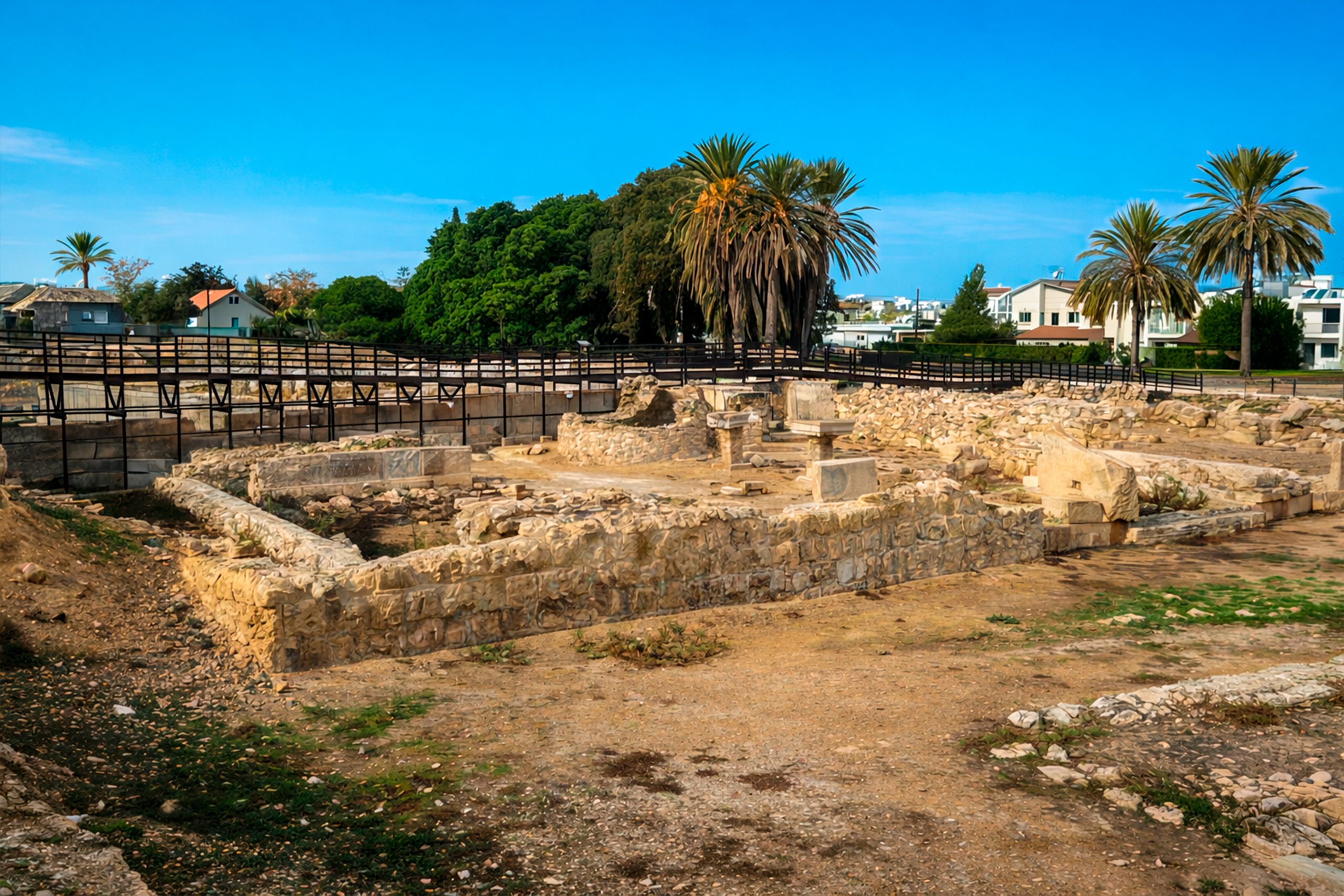
This complex preserved Cyprus’s cultural mosaic, acting as a conduit for Phoenician influences that shaped island religion, reducing isolation by fostering trade networks boosting economy through copper exports. It supported social structures, with temples as communal hubs aiding cohesion and knowledge exchange in agriculture and crafts.
This formed cultural webs: offerings sustained artisans, rites inspired myths, and deities influenced later Greek gods like Aphrodite from Astarte. Culturally, it molded folklore of protective walls against invaders, shaping festivals like harvest celebrations. Socially, it offered livelihoods for priests and traders, with Persian taxes on votives funding expansions.
The site’s balance endured invasions, hosting diverse artifacts, but end-Bronze Age crises risked decline, per reports predicting 25% site loss by 2100 from urbanization. Human impacts include Phoenician rebuilds over Mycenaean layers, as in geoarchaeological studies. The coastal location nurtured biodiversity like migratory birds, symbolizing renewal in rituals.
Cyclopean Walls and Temples of Kition in Cyprus Today
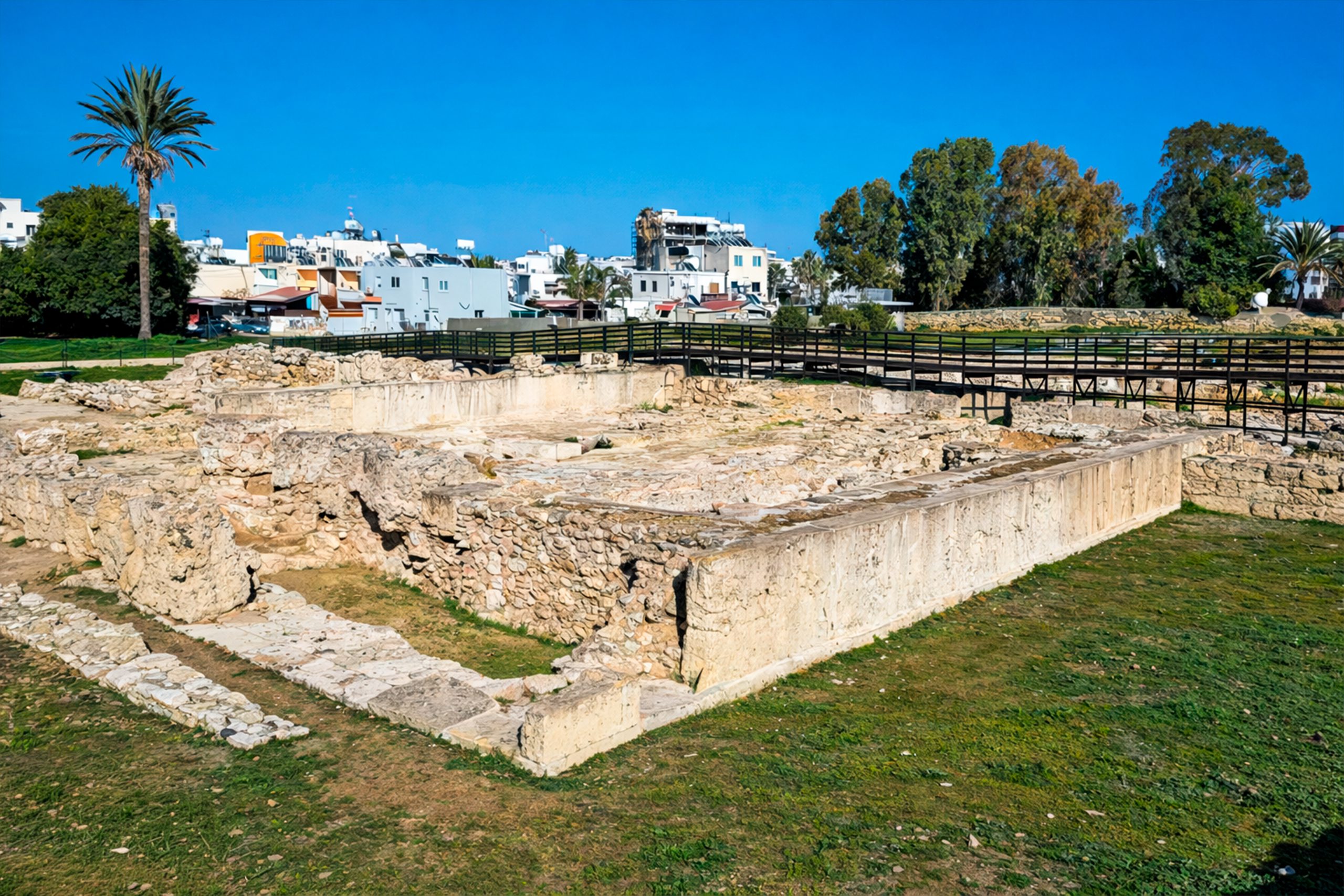
On January 30, 2026, the Cyclopean Walls and Temples of Kition define Larnaca’s archaeological landscape, with ongoing excavations uncovering Iron Age layers amid climate challenges like 2°C warmer temperatures shortening dig seasons by 15%. Heritage threats from development are addressed by Department of Antiquities protections since 2010, enhancing fencing by 20%.
Modern adaptations include virtual reality tours for global access, increasing visitor engagement by 25%. This site shapes identity, with events like “Phoenician Day” educating on ancient ties, blending rites with contemporary tourism generating €500,000 annually.
Opportunities for Exploration
Larnaca trails offer wall and temple viewing, open year-round with €2.50 entry. Guided archaeology tours by Cyprus Tourism cost €15-20 to explore artifacts. Winter site walks in January include eco-hikes, no fee. Spring ritual reenactments in April pair with city stays for insights. Many areas have online cams for remote viewing.
A Complex of Phoenician Legacy
Cyclopean Walls and Temples of Kition, a sacred complex in Kition constructed with massive stone blocks, housing temples dedicated to Astarte and Melqart, serving the Phoenician community, defines Cyprus’s ancient diversity. This pattern’s balance has fostered unique traditions and human ingenuity, from prehistoric myths to modern challenges.
Knowing it deepens appreciation for Cyprus as a resilient cultural haven. Engagement with its ruins or vistas evokes wonder at history’s layers. In a changing climate, it reminds of the need to safeguard this delicate balance.
Videos: