Articles: Music

and oral culture

Tsiattista

Tsiattista

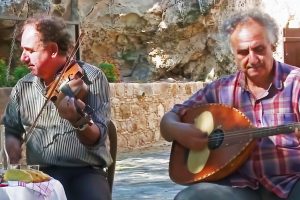
Tsiattista is a form of improvised vocal poetry unique to Cyprus, where performers engage in competitive exchanges of sung verses, demonstrating quick wit, strong memory, and mastery of language. This tradition, central to social gatherings and celebrations, involves rhymed couplets improvised on the spot, often touching on love, humor, or daily life. Recognized by UNESCO as intangible cultural heritage in 2011, tsiattista preserves ancient poetic roots while adapting to contemporary expression, leaving a sense of admiration for its lively, spontaneous nature. youtube-com A Timeless Tradition of Wit and Song Tsiattista embodies Cyprus's rich oral heritage, a practice where two or more singers alternate verses in a rhythmic duel, crafting poetry from the moment's inspiration. Rooted in the island's multilingual history,…

Read more
Laouto (Lute)

Laouto (Lute)

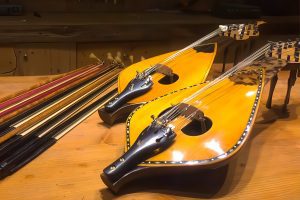
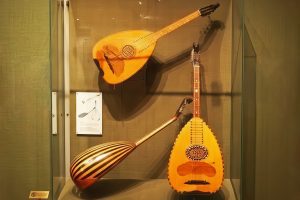
The Cypriot laouto is a plucked string instrument with a distinctive accompaniment style that plays a crucial rhythmic and harmonic role in the island's music, supporting both instrumental ensembles and vocal traditions while embodying strong regional identities. Its pear-shaped body and resonant tone allow for improvisation within ancient modal systems inherited from Byzantine and Ottoman influences, making it a cornerstone of Cypriot folk expression. This instrument not only preserves historical musical practices but also adapts to contemporary settings, raising interest in how such traditions endure in a modern world. nakas-com A Core Element of Cypriot Musical Heritage The laouto, a lute-like instrument central to Cypriot folk music, features a large pear-shaped body, long neck, and four strings tuned in a…

Read more
Folk Traditions Shaping New Cypriot Identity

Folk Traditions Shaping New Cypriot Identity

Cyprus's contemporary music scene is not driven by nostalgia, nor by imitation of global trends. Instead, it is shaped by a quiet but deliberate return to local sound. Over the past two decades, musicians across the island have begun reworking traditional Cypriot music into modern forms, blending ancient instruments, irregular rhythms, and modal melodies with rock, jazz, and electronic influences. The result is not a revival of folklore, but a living musical language that reflects modern Cypriot identity while remaining deeply rooted in place, memory, and shared experience. This evolving folk-fusion movement explains how Cyprus sounds today. It also reveals how music has become one of the island's most powerful tools for cultural continuity and dialogue. Not a Revival, but…

Read more
Shepherd Calls and Vocal Signals

Shepherd Calls and Vocal Signals

Shepherd Calls and Vocal Signals are non-musical vocal expressions integral to pastoral life in Cyprus, forming a unique soundscape shaped by the island's landscape and herding traditions. These calls, including whistles, shouts, and melodic cries, serve practical purposes like directing flocks or communicating across distances, while carrying cultural depth. This practice preserves ancient methods of interaction with nature, highlighting how sound connects livelihood, environment, and community in Cypriot rural heritage. polignosi-com An Acoustic Tradition of the Countryside Shepherd calls and vocal signals represent a functional form of communication in Cypriot pastoralism, where sounds replace words to manage livestock and navigate terrain. These expressions, devoid of formal melody, rely on pitch, volume, and timbre to convey commands or alerts. In the…

Read more
Cypriot Lyra

Cypriot Lyra

The Cypriot lyra is a bowed string instrument with a distinctive sound and playing style, at the heart of village music traditions and improvisation in Cyprus. It keeps alive ancient modal systems that date back to Byzantine times, blending melody and rhythm in ways that echo the island's rich history. This humble yet expressive tool has shaped Cypriot folk culture for centuries, raising questions about how such a simple device captures the soul of a people. facebook-com A Timeless Voice of the Island The Cypriot lyra represents a key element of the island's musical heritage, a three-stringed bowed instrument that produces haunting, resonant tones unique to Mediterranean folk traditions. Crafted from local woods like walnut or mulberry, its pear-shaped body…

Read more
Byzantine Chant in Cypriot Style

Byzantine Chant in Cypriot Style

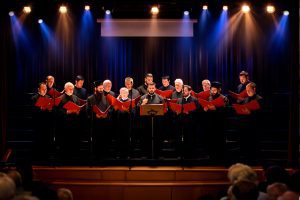
Byzantine Chant in Cypriot Style is a localized variant of Orthodox liturgical music, characterized by unique melodic phrasing and vocal delivery that distinguish it from mainland traditions. Preserved in monasteries and village churches across the island, it incorporates ancient modes with Cypriot inflections, blending spiritual depth with cultural expression. This form of chant reflects Cyprus's role as a guardian of Byzantine heritage, evoking how sacred sound has shaped devotion for centuries. A Distinct Voice in Orthodox Liturgy Byzantine chant in Cypriot style represents a regional adaptation of the Eastern Orthodox musical tradition, where melodies and rhythms carry theological meaning through voice alone. Developed over centuries in Cyprus's isolated monasteries and rural churches, it features elongated notes, subtle ornamentation, and a…

Read more
Sonic Evolution Cyprus Tradition Meets Fusion

Sonic Evolution Cyprus Tradition Meets Fusion

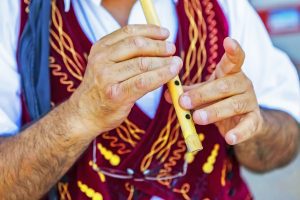
Music in Cyprus has never existed in isolation. It has always moved with people, landscapes, rituals, and political change. From shepherds playing flutes in mountain pastures to electrified bands performing in divided city streets, Cypriot music reflects the island’s role as a cultural meeting point in the Eastern Mediterranean. Today, that long tradition is not fading. It is transforming. Contemporary Cypriot musicians are reshaping ancient sounds into new forms, proving that heritage survives not by standing still, but by adapting. An Island Shaped by Crossing Sounds Cyprus sits at the intersection of Greek, Byzantine, Ottoman, and Western European worlds, and its music carries traces of each. Rather than following Western major and minor scales, traditional Cypriot music is built on…

Read more
Cypriot Greek Dance Music Rhythm and Commu

Cypriot Greek Dance Music Rhythm and Commu

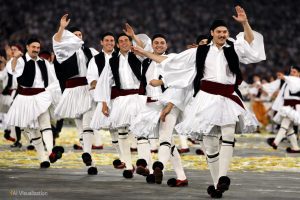
Greek and Cypriot dance music is not background sound. It is structure, instruction, and memory working at the same time. Across villages, islands, and generations, specific rhythms have guided how people move together, celebrate together, and mark life’s most important moments. This article explains how three core dance forms, Syrtos, Sousta, and Ballos, shape the musical language of Cyprus and Greece, why their rhythms matter, and how they continue to function not as performances, but as social glue. Music That Tells the Body What to Do In Greek and Cypriot tradition, dance music is practical before it is expressive. Its primary job is not to impress the listener, but to tell the dancer when to step, pause, turn, or leap.…

Read more
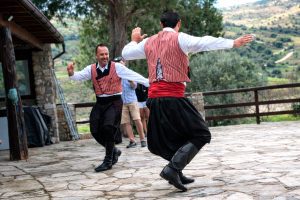
Traditional Cypriot Dances Spoke Without Words

Traditional Cypriot Dances Spoke Without Words

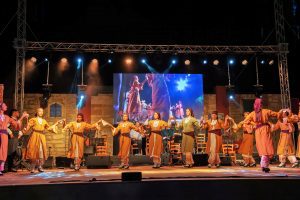
Long before dating, private meetings, or casual conversation between young men and women were socially acceptable, Cyprus had another system. It happened in village squares, at weddings, and during festivals. It used rhythm instead of language and movement instead of promises. Through paired dances such as the Sousta and Antikristos, Cypriot communities created a public, structured way for courtship to unfold, allowing interest, character, and respect to be displayed openly while remaining within strict social boundaries. These dances were never casual entertainment. They were carefully coded social encounters, understood by everyone watching. Face to Face, but Never Too Close At the heart of Cypriot courtship dancing is a simple idea: two people facing one another. The Antikristos, whose name literally…

Read more