Historical Background and Regional Context
The Church of Panagia tou Moutoulla, located in the village of Moutoullas in the Marathasa Valley of the Troodos Mountains, holds a special place among the Painted Churches of Cyprus recognized by UNESCO. Built in 1280, according to an inscription preserved within the building, the church represents the earliest securely dated example of the steep-pitched wooden roof style that became characteristic of mountain churches in Cyprus. Its importance lies not only in its artistic decoration but also in its architectural form, which demonstrates how local communities adapted Byzantine religious architecture to the demanding climatic conditions of the highlands. This combination of artistic heritage and environmental adaptation makes the church a key monument for understanding the development of medieval Cypriot ecclesiastical architecture.
kiprguru-com
During the late Byzantine period, Cyprus experienced both political transition and continued religious vitality. Rural mountain communities maintained strong ties to Orthodox Christian traditions, even as the island came under Lusignan and later Venetian rule. In such regions, churches often served as the focal point of community life, functioning as places of worship, social gathering, and cultural continuity. Panagia tou Moutoulla emerged within this context, reflecting a society that valued religious devotion while responding practically to local environmental realities. Its survival offers insight into how architecture, climate, and spiritual life were closely connected in medieval Cyprus.
Architectural Design and Climatic Adaptation
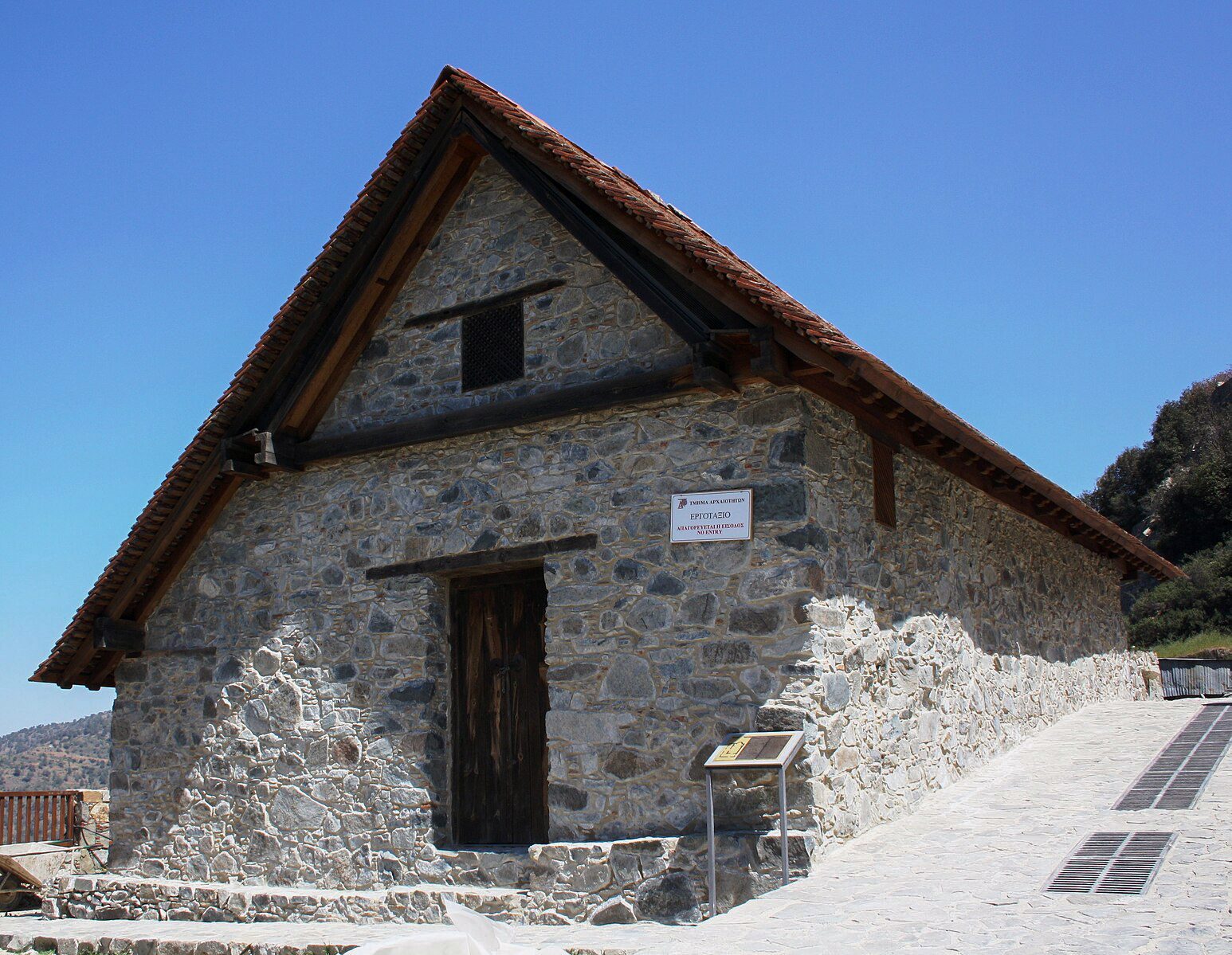
The most distinctive feature of Panagia tou Moutoulla is its steeply pitched wooden roof, a design that became a defining characteristic of churches in the Troodos Mountains. Unlike the domed and flat-roofed forms common in lowland Byzantine architecture, this structure incorporates a high timber roof built above the original stone vault. The purpose of this addition was primarily protective, designed to shield the masonry and interior decoration from heavy winter rainfall and occasional snowfall. The mountain climate posed significant challenges to building preservation, and this architectural solution demonstrates a practical and effective response.
livejournal-com
The outer wooden roof created an insulating layer that reduced moisture penetration and temperature fluctuation inside the church. This feature not only extended the building’s structural life but also played a crucial role in preserving the interior frescoes. The external appearance of the church remains simple and modest, constructed from local stone and blending into the surrounding landscape. This restraint reflects the rural character of the community that built it, where functionality took precedence over monumental display. Yet within this modest shell lies a carefully designed sacred space shaped by Byzantine liturgical tradition.
Interior Space and Liturgical Arrangement
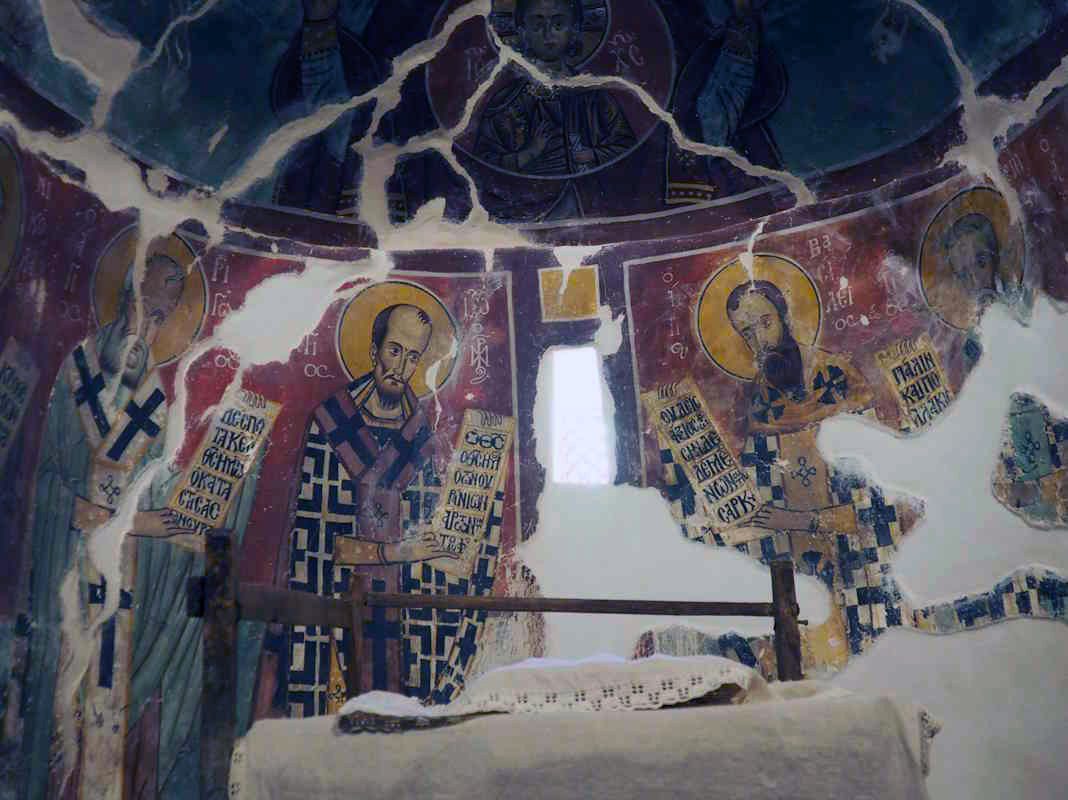
Despite its small size, the church follows a structured liturgical plan. The interior consists of a single nave ending in an eastern apse where the altar is located. The apse, separated from the nave by an iconostasis, forms the most sacred part of the church, reserved for clergy during the Divine Liturgy. The longitudinal orientation of the nave directs attention toward the sanctuary, reinforcing the spiritual focus of worship. The compact scale creates an intimate environment where painted imagery envelops the viewer, intensifying the devotional atmosphere.
fotoload-ru
Light enters through small openings, creating a subdued interior that enhances the visual impact of the frescoes. The architectural simplicity ensures that decoration becomes the dominant expressive element, transforming the interior surfaces into a continuous theological narrative. The church thus exemplifies how modest rural architecture could serve as a powerful setting for religious experience.
Frescoes and Artistic Style
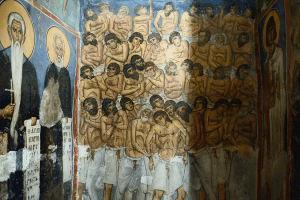
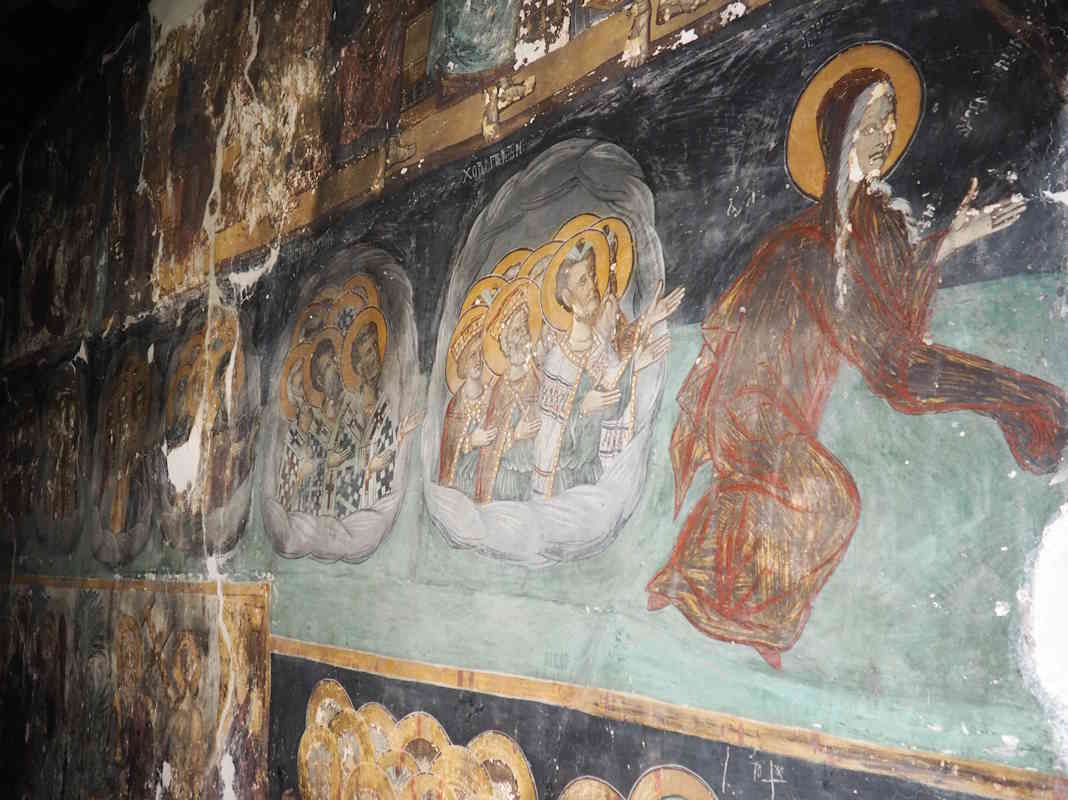
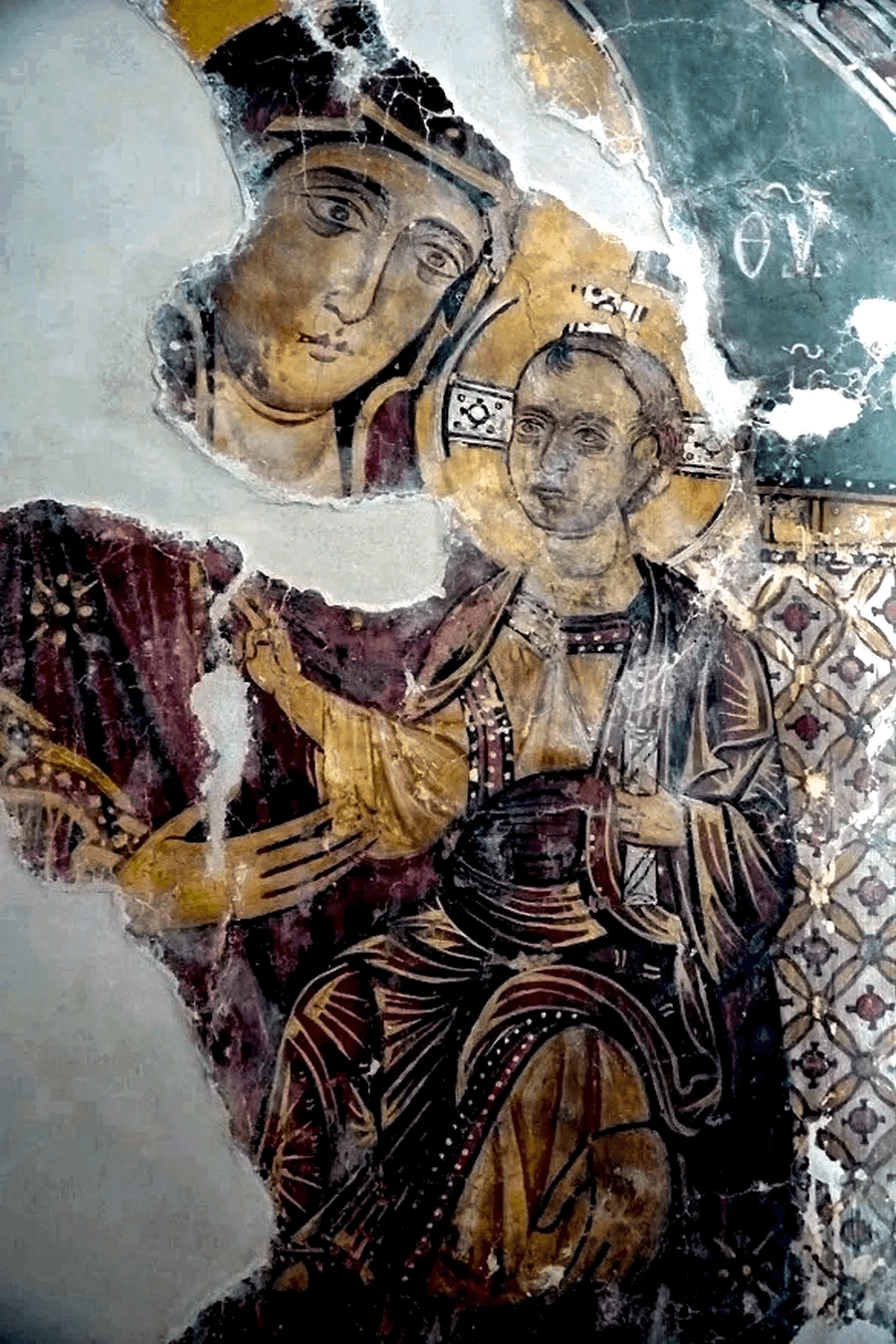
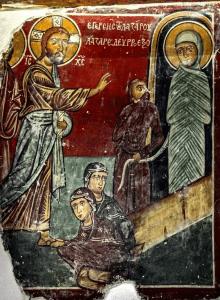
The frescoes of Panagia tou Moutoulla date to the late 13th century and reflect the artistic traditions of the period following the Comnenian era. Painted by skilled artists, the decoration demonstrates both adherence to Byzantine iconographic conventions and sensitivity to local devotional needs. The dome area, although modest compared to larger churches, typically features Christ Pantokrator, emphasizing divine authority. Surrounding walls present scenes from the life of Christ and the Virgin Mary, arranged in a sequence that mirrors the liturgical calendar.
Figures are rendered with expressive faces and carefully modeled forms, reflecting stylistic developments that favored greater emotional engagement. Drapery folds are outlined with rhythmic lines, and colors are applied with subtle shading to create depth. The style balances spiritual solemnity with human warmth, allowing worshippers to connect visually and emotionally with sacred figures. These frescoes demonstrate that even small rural churches could achieve high artistic standards, linking local practice to broader Byzantine aesthetic currents.
Iconographic Program and Theological Meaning
The iconographic scheme of Panagia tou Moutoulla reflects core themes of Orthodox theology, including the Incarnation, Passion, and Resurrection of Christ. The Virgin Mary occupies a central position, consistent with the church’s dedication and her importance in Cypriot devotional life. Saints depicted along the walls include both universal figures of the Orthodox Church and locally venerated saints, illustrating the integration of global and regional religious traditions.
kiprguru-com
These images functioned as visual instruction, teaching biblical narratives and theological concepts to a largely non-literate congregation. The frescoes reinforced the idea that sacred history was present within the liturgical space, creating a sense of continuity between the earthly community and the heavenly realm. Through color, gesture, and placement, the paintings guided worshippers’ spiritual attention and supported communal prayer.
Community Role and Religious Life
Panagia tou Moutoulla served not only as a place of worship but as a center of community identity. In mountain villages, churches were focal points of social life, hosting religious festivals, baptisms, weddings, and funerals. The presence of high-quality decoration suggests that the local community invested considerable resources and devotion in maintaining the church as a sacred and communal landmark.
The church’s architecture and decoration reflect a balance between humility and reverence. While the exterior remains simple, the interior communicates theological richness, emphasizing that spiritual value lies within. This approach mirrors the ethos of rural Orthodox communities, where faith was expressed through shared participation rather than monumental display.
Preservation and Cultural Significance
The preservation of Panagia tou Moutoulla owes much to its protective wooden roof and the continued care of the local community. Modern conservation efforts focus on stabilizing the structure and safeguarding the frescoes from environmental damage. The church’s inclusion in the UNESCO World Heritage listing of the Painted Churches of the Troodos Region recognizes its outstanding value as an early example of mountain church architecture and medieval wall painting.
Scholars regard Panagia tou Moutoulla as a key monument for understanding how architectural forms evolved in response to environmental conditions while maintaining liturgical and artistic continuity. Its dated inscription provides a firm chronological anchor, making it particularly valuable for studying the development of Cypriot ecclesiastical art.
Conclusion
The Church of Panagia tou Moutoulla stands as a pioneering example of architectural adaptation in the Troodos Mountains and a significant monument of Byzantine devotional art. Its steep-pitched wooden roof reflects practical responses to climate, while its interior frescoes preserve theological and artistic traditions of the late Byzantine period. As the earliest dated example of this distinctive architectural style, the church marks the beginning of a regional tradition that would shape mountain ecclesiastical design for centuries. Through its preservation and recognition as part of the Painted Churches World Heritage listing, Panagia tou Moutoulla continues to illuminate the relationship between environment, architecture, and faith in medieval Cyprus.