Explore Cyprus with Our Interactive Map

Explore our top stories and discover ideas worth your time.

Agia Paraskevi Necropolis, Cyprus – History & Facts

Agia Paraskevi Necropolis, Cyprus – History & Facts

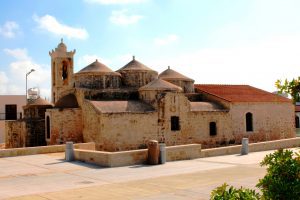
The Agia Paraskevi necropolis is an extensive Bronze Age burial ground located approximately half a mile north of the Church of Agia Paraskevi in the Nicosia district. The site occupies the edge of a plateau southwest of Cyprus's modern capital. It takes its name from the nearby Byzantine church. This cemetery was used continuously throughout the Early and Middle Bronze Age periods, roughly from 2400 BCE to 1100 BCE. The site contains hundreds of rock-cut chamber tombs where ancient communities buried their dead along with pottery, tools, jewelry, and other grave goods. These artifacts provide detailed information about how Cypriots lived, traded, and organized their societies during prehistoric times. The necropolis is particularly important because it represents the burial ground for ancient Ledra, one of the early kingdoms mentioned in Assyrian records. While the settlement itself lies buried beneath modern Nicosia, the cemetery on the plateau has survived and offers the most complete picture of life in central Cyprus during the Bronze Age. Historical Background The Agia Paraskevi necropolis came to archaeological attention in the late 19th century. In 1883 and 1884, German archaeologist Dr. Max Ohnefalsch-Richter conducted extensive excavations at the site. His work uncovered numerous tombs and established the cemetery's importance for understanding Cypriot prehistory. cyprusisland.net Ohnefalsch-Richter arrived in Cyprus in 1878 as a journalist but quickly shifted…

Read more
Marion Polis Chrysochous Ancient City Mines

Marion Polis Chrysochous Ancient City Mines

On the northwest coast of Cyprus, the small town of Polis Chrysochous sits on top of two ancient cities. Most people who pass through treat it as a quiet stop on the way to the Akamas Peninsula. chooseyourcyprus-com Few realise that beneath the modern streets, beneath the cafes and the central square, there are over 3,000 years of history. The town is built directly on the ruins of Marion, one of the ten city-kingdoms of ancient Cyprus, and its later successor, Arsinoe. The name "Chrysochous" itself is a clue. It comes from the Greek word "chrysos," meaning gold. This was not a random choice. It was a city that made its name from the ground beneath it. Historical Background The earliest traces of human activity in the area date back to the Neolithic period. The land was occupied long before anyone thought to build a city. According to ancient literary sources recorded by the Byzantine writer Stephanos Vyzantios, Marion was founded by a legendary king called Marieas. Tradition also connects the area to Akamas, the son of the Athenian hero Theseus, who is said to have passed through the region after the Trojan War and gave his name to the nearby cape and peninsula. By the 8th century BC, Marion had grown into a formal city-kingdom. It sat on two…

Read more
Cyprus Wild Mammal

Cyprus Wild Mammal

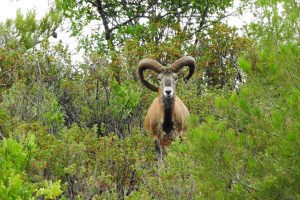
Imagine a rugged hillside in Cyprus, where ancient cedars cling to rocky slopes and the air hums with the distant call of a hidden survivor. This is the realm of the Cyprus mouflon, a wild sheep that has roamed the island's mountains for millennia, embodying the untamed spirit of Mediterranean wilderness. Let’s explore this elusive creature, a living link to Cyprus' prehistoric past that still graces its landscapes today. Sadly, this endemic mammal is listed as Endangered in IUCN Red List. www.inaturalist.org A Gentle Giant of the Hills The Cyprus mouflon, known scientifically as Ovis gmelini ophion, is a subspecies of wild sheep belonging to the broader family of Bovidae, which includes goats, antelopes, and cattle. These animals are ungulates – hoofed herbivores adapted to rugged terrains across Europe, Asia, and Africa and all modern sheep breeds are it’s descendants. Zooming into zoological details, the Cyprus mouflon belongs to the Caprinae subfamily, sharing traits with ibex and wild goats but distinguished by its non-shedding wool and seasonal breeding cycles. Genetic studies reveal close ties to Anatolian and Iranian mouflons, with mitochondrial DNA suggesting a basal lineage from early domestication escapes. In Cyprus, the mouflon stands out as an endemic treasure, perfectly tuned to the island's dry, mountainous environments, where it grazes and navigates steep cliffs with effortless grace. Echoes of…

Read more