Historical Background and Regional Setting
The Church of Archangelos Michael stands in the mountain village of Pedoulas in the Troodos region of Cyprus and forms part of the UNESCO World Heritage group known as the Painted Churches of the Troodos Region. Dated to 1474 by an inscription inside the building, the church belongs to the late Byzantine period, a time when Cyprus had passed through political change yet retained strong Orthodox artistic traditions. Unlike earlier monuments that reflect close ties to Constantinopolitan styles, this church is celebrated for its vivid and more rustic wall paintings, which represent a local interpretation of Byzantine artistic language. The monument therefore offers valuable insight into how artistic traditions continued to evolve in rural settings during the later medieval centuries.
Pedoulas was a small mountain community where agriculture and local craftsmanship shaped daily life. In such villages, churches were central to communal identity, serving as places of worship, gathering, and cultural continuity. The Church of Archangelos Michael emerged within this context as both a spiritual center and a statement of local devotion. Its modest scale and materials reflect the resources of a rural population, yet its decoration demonstrates that even remote communities participated actively in the visual culture of the Orthodox world. The church preserves a moment when Byzantine art had become more regional in character while maintaining its theological core.
Architectural Form and Climatic Adaptation
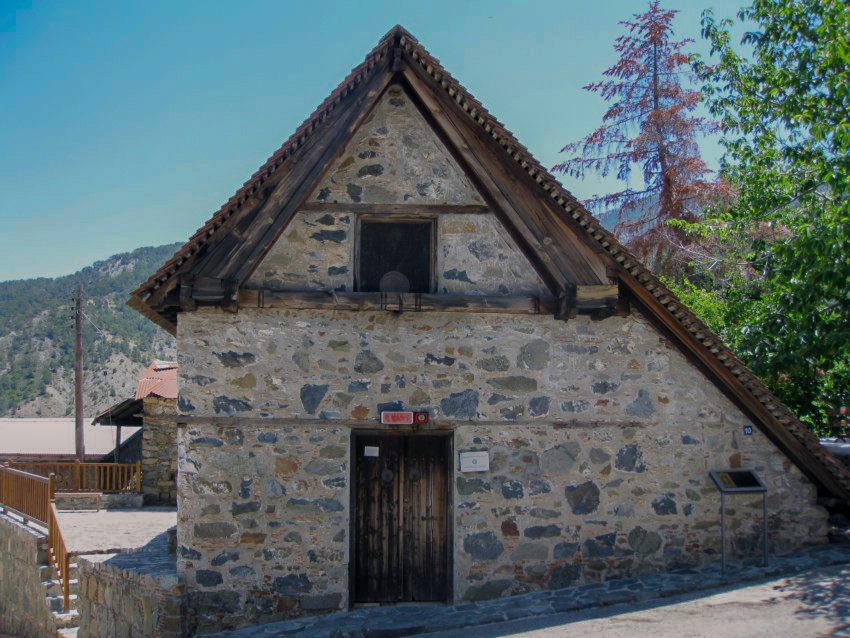
Architecturally, the Church of Archangelos Michael follows the familiar mountain church type that developed in the Troodos region. It is a single-aisled structure built from local stone and covered by a steeply pitched wooden roof. This roof, a defining feature of the Painted Churches of Cyprus, was designed to protect the masonry and interior decoration from the heavy rainfall and occasional snowfall of the mountainous climate. The timber structure extends beyond the walls, creating deep eaves that shield the building from moisture and temperature variation.
The use of wood for the outer roof contrasts with the internal vault, demonstrating a layered construction method that combines Byzantine structural principles with local environmental adaptation. Externally, the church appears simple and unpretentious, blending into the natural landscape. This simplicity emphasizes functionality and reflects the humble setting of a rural village. However, the interior space reveals a richly decorated environment that transforms the modest building into a vibrant spiritual and artistic center.
Interior Space and Liturgical Arrangement
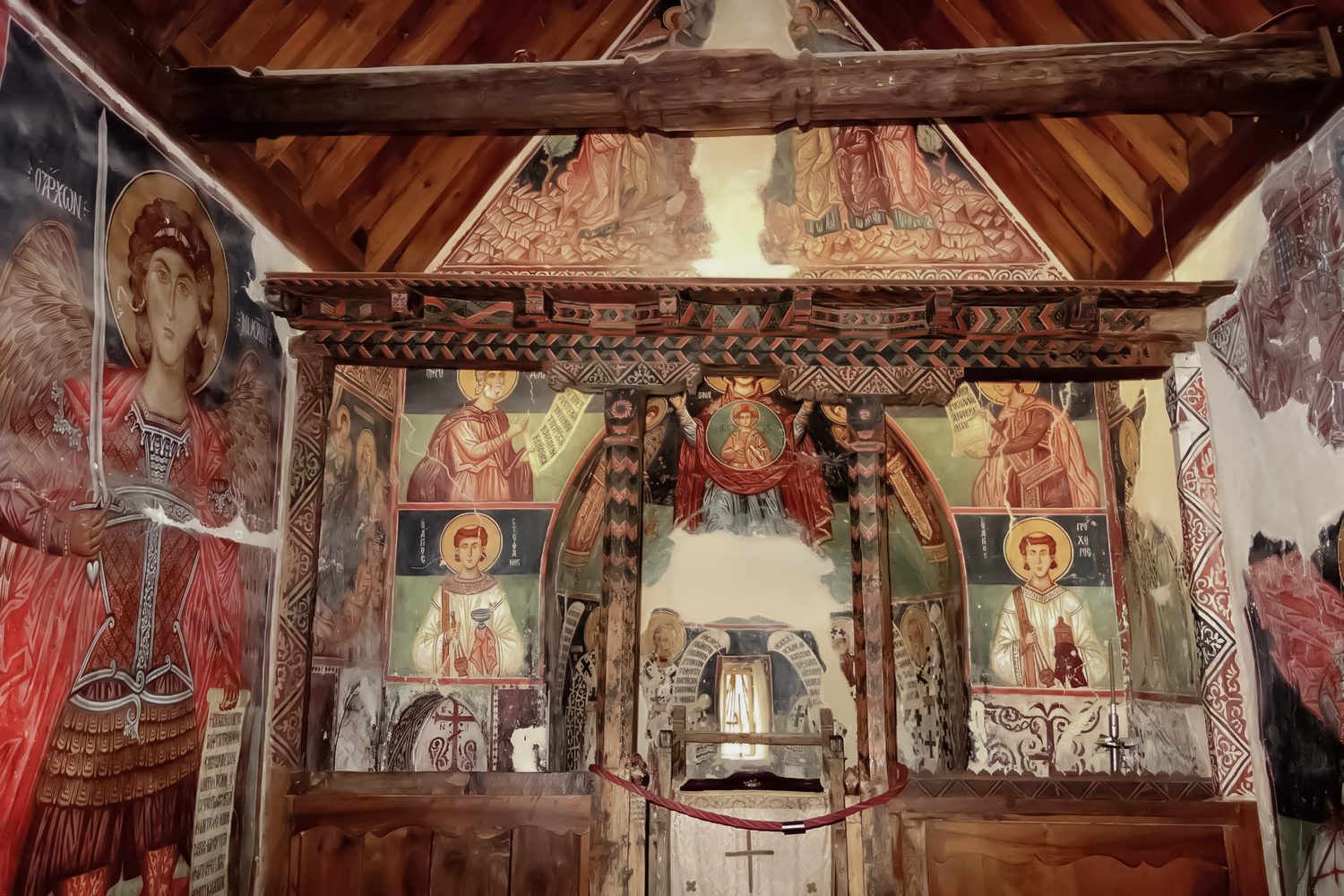
The interior of the church consists of a rectangular nave ending in a semicircular apse where the altar is located. The space is relatively small, creating an intimate environment for worship. An iconostasis separates the sanctuary from the nave, marking the boundary between the sacred space of the clergy and the area occupied by the faithful. The simple layout directs attention toward the altar and the painted imagery that covers the walls and vaults.
Light enters through small openings, producing a subdued atmosphere that enhances the visual intensity of the frescoes. The close proximity of the painted surfaces allows worshippers to engage directly with the images, reinforcing the didactic and devotional purpose of the decoration. In this way, architecture and painting work together to create a cohesive sacred environment.
Rustic Frescoes and Artistic Character
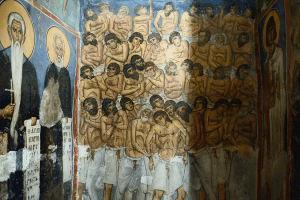
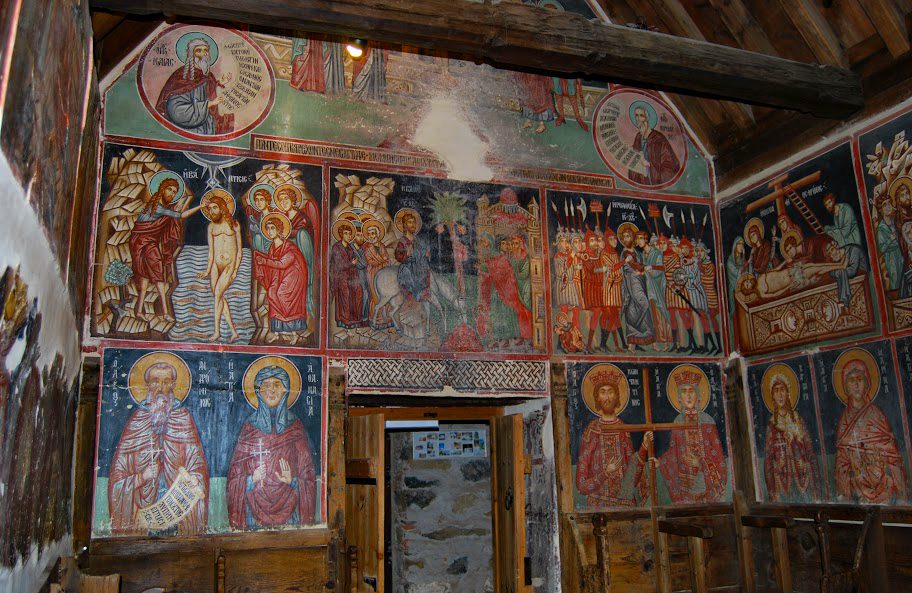
The wall paintings of the Church of Archangelos Michael are notable for their vivid colors and expressive, rustic style. Unlike the refined elegance of earlier Byzantine monuments influenced by Constantinopolitan models, these frescoes reflect a more direct and narrative approach. Figures are outlined boldly, gestures are energetic, and scenes are presented with a sense of immediacy that brings biblical events closer to the everyday experience of the viewer. This style does not indicate a decline in artistic quality but rather a shift toward local expression that emphasizes clarity and emotional engagement.
The dome and upper vaults typically depict Christ Pantokrator and celestial figures, maintaining the traditional hierarchical arrangement of Byzantine iconography. Below, scenes from the life of Christ and the Virgin Mary unfold in a continuous narrative cycle. The painter’s use of strong contrasts and simplified forms makes the images easily legible, an important feature in a rural church where visual storytelling played a central role in religious education. The overall effect is one of vitality and accessibility, reflecting the needs and sensibilities of the local community.
Iconographic Program and Devotional Meaning
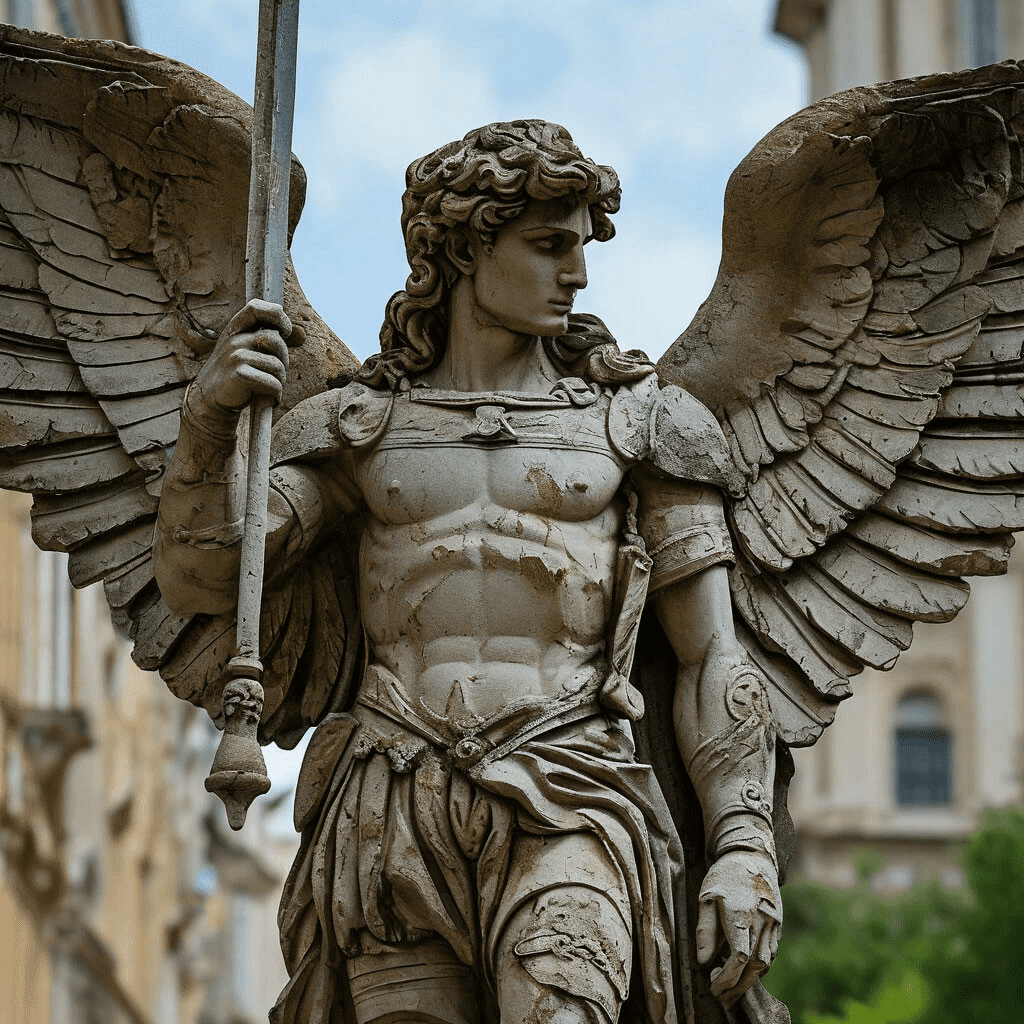
The iconographic program of the church follows established Orthodox theological themes while incorporating local devotional emphasis. The presence of Archangel Michael, to whom the church is dedicated, highlights the importance of angelic intercession and protection. Scenes illustrating Christ’s Incarnation, Passion, and Resurrection form the core of the narrative sequence, guiding worshippers through the central events of salvation history. The Virgin Mary appears prominently, reinforcing her role as mediator and protector in Cypriot religious tradition.
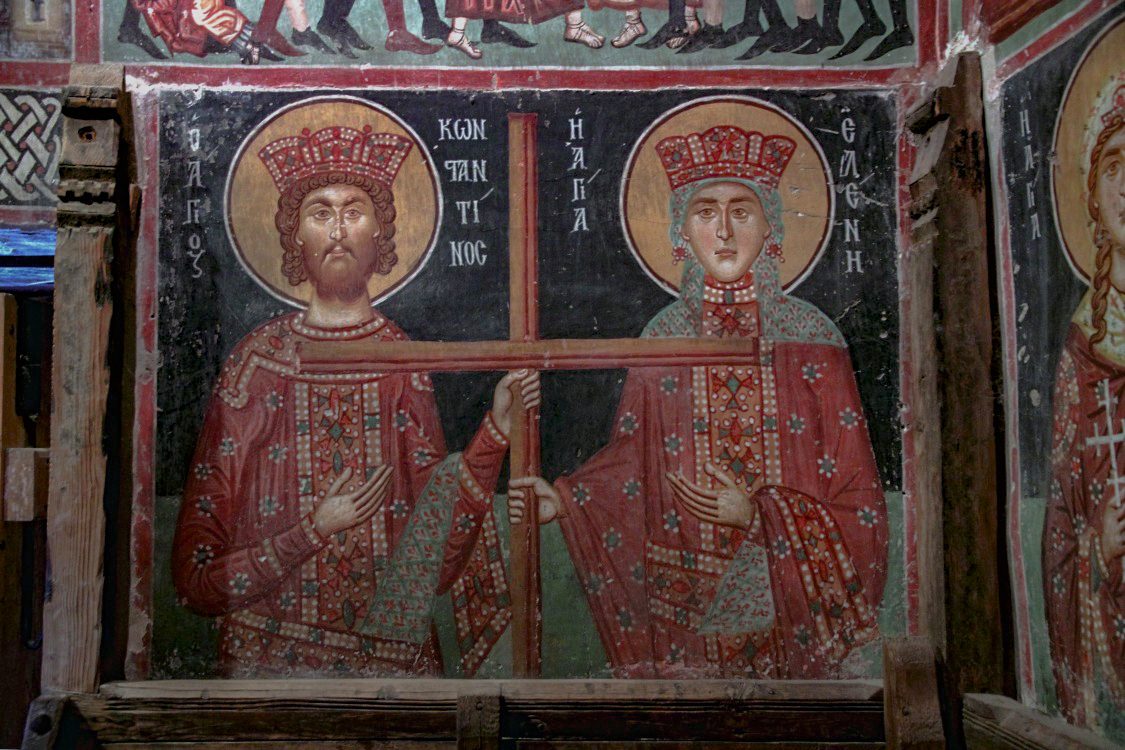
Saints depicted along the walls include both widely venerated figures and those with particular significance to local worship. Their presence links the congregation to the broader communion of saints, emphasizing continuity between heaven and earth. The vivid and approachable style of the paintings strengthens this connection, allowing worshippers to feel a personal relationship with the sacred figures represented.
Cultural Context and Artistic Transition
The 15th century, when the church was decorated, was a period of cultural transition for Cyprus. Although Byzantine political authority had ended, Orthodox artistic traditions continued to flourish, often blending with influences from Western art introduced during Frankish and Venetian rule. The frescoes at Pedoulas reflect this transitional environment, where traditional iconography was maintained while stylistic execution became more localized and expressive.
This development illustrates how artistic traditions evolve over time without abandoning their theological foundations. The Church of Archangelos Michael demonstrates that even in a period of political change, rural communities preserved their religious identity through art adapted to local tastes and resources. The monument thus provides insight into the resilience and adaptability of Byzantine visual culture.
Community Role and Religious Life
As the principal church of Pedoulas, Archangelos Michael served as the center of religious and social life for the village. It hosted liturgical celebrations, community gatherings, and life-cycle events such as baptisms and weddings. The vivid frescoes contributed to the spiritual experience of these events, reinforcing shared beliefs and collective identity. The church was not only a place of worship but also a symbol of continuity, linking generations through shared ritual and visual tradition.
The modest architecture combined with expressive decoration reflects the values of a rural Orthodox community that emphasized devotion and participation over monumental grandeur. The church’s survival demonstrates the importance of local commitment to preserving religious heritage.
Preservation and World Heritage Recognition
Today, the Church of Archangelos Michael is protected as part of the UNESCO World Heritage listing of the Painted Churches of the Troodos Region. Conservation efforts aim to stabilize the wooden roof and protect the frescoes from environmental damage. The monument’s recognition highlights its importance as a representative example of late Byzantine rural art and mountain church architecture.
Scholars value the church for its insight into the regional adaptation of Byzantine artistic traditions. Visitors encounter a rare example of how sacred art functioned within a small community, preserving theological narratives in a vivid and approachable form.
Conclusion
The Church of Archangelos Michael in Pedoulas stands as a significant example of vernacular Byzantine art in the Troodos Mountains. Its steep wooden roof reflects practical adaptation to mountain climate, while its vivid and rustic frescoes reveal the evolution of religious painting in a rural context. Together, architecture and decoration demonstrate how local communities maintained Orthodox spiritual and artistic traditions during a period of cultural transition. As part of the Painted Churches World Heritage group, the monument continues to represent the enduring relationship between environment, community, and faith in medieval Cyprus.