Choirokoitia Settlement is a remarkable Neolithic village on Cyprus’s southern coast, dating back to around 7000 BC, where early humans first built permanent homes and formed communities. Recognized as the most important site of its kind in the eastern Mediterranean, it reveals how people shifted from wandering hunters to settled farmers, laying foundations for civilization. This ancient spot whispers stories of innovation and survival, sparking interest in humanity’s shared journey toward organized life.
turbinatravels-com
A Window into Early Human Life
Choirokoitia stands as one of the earliest and best-preserved examples of a settled Neolithic community in the region, offering a detailed look at the transition from nomadic existence to village life. Located in the Larnaca District on a hillside overlooking the Maroni River Valley, the site’s strategic position provided natural defenses, access to water, and fertile soil for early agriculture. Spanning about 3 hectares, it housed up to 300 people in circular dwellings, marking a pivotal shift in human history known as the Neolithic Revolution. This change involved domesticating plants like emmer wheat, barley, lentils, and animals such as sheep, goats, and pigs, which were introduced to the island by the first settlers from the Levantine mainland around 8500 BC.
topwar-ru
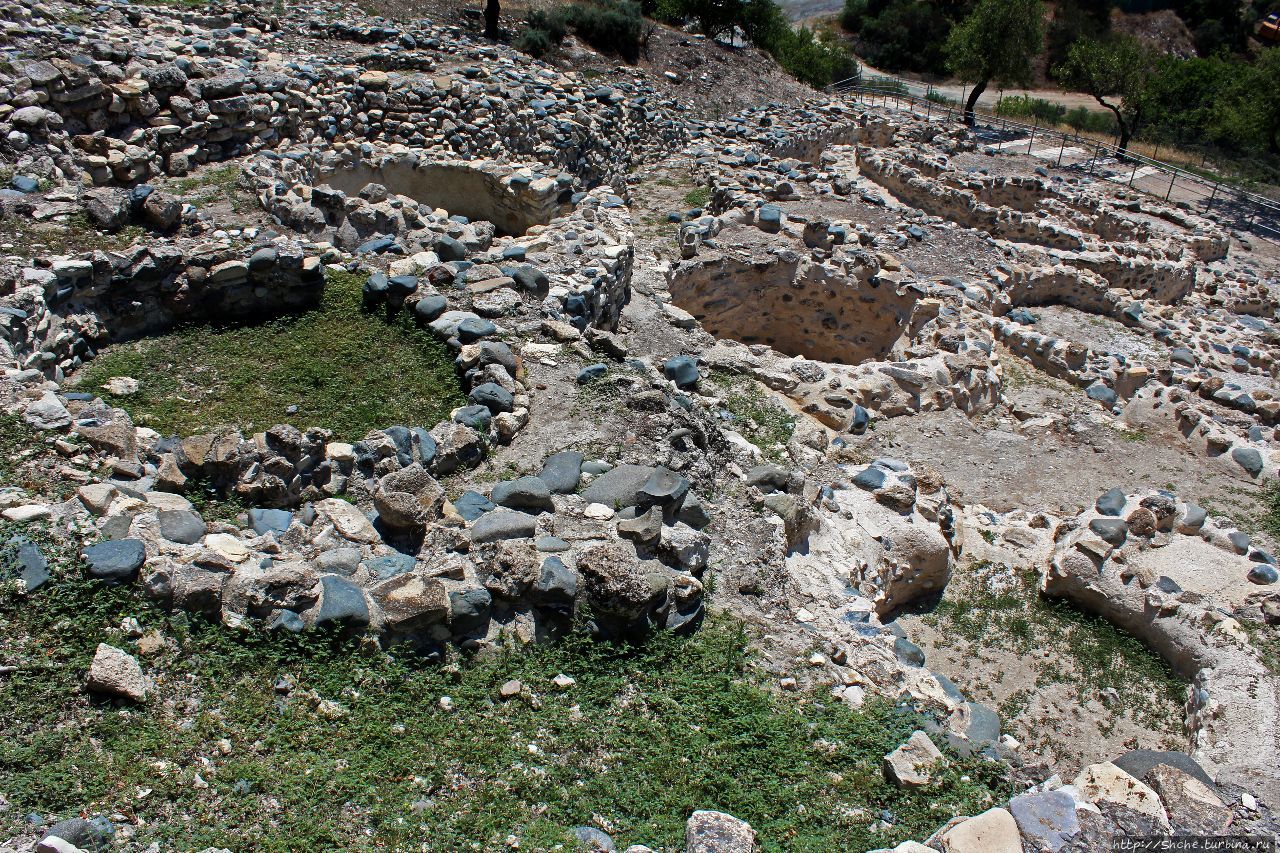
The settlement’s layout reflects emerging social organization, with houses clustered in a semi-circular pattern around a central open space, possibly for communal activities like food sharing or rituals. Defensive walls made from massive stones encircled the village, suggesting concerns for security in a world still populated by wild animals and potential rival groups. Artifacts from the site, including ground stone tools, bone needles, and shell beads, indicate a society focused on self-sufficiency, with evidence of weaving, grinding grains, and crafting personal adornments. This period, termed the Aceramic Neolithic due to the absence of pottery, highlights human adaptability on an isolated island, where resources like flint for tools were locally sourced, and obsidian blades imported from Anatolia point to early maritime trade networks spanning hundreds of kilometers.
Choirokoitia’s significance extends beyond Cyprus, providing parallels to contemporary sites like Jericho in the Levant or Göbekli Tepe in Turkey, but its island context makes it unique – settlers had to transport livestock by boat, a feat demonstrating advanced seafaring skills for the time. The site’s abandonment around 5800 BC, possibly due to climate drying or overpopulation straining resources, left it remarkably intact under layers of sediment, preserving organic remains like seeds and bones that offer dietary insights through modern lab analysis.
From Nomads to Builders
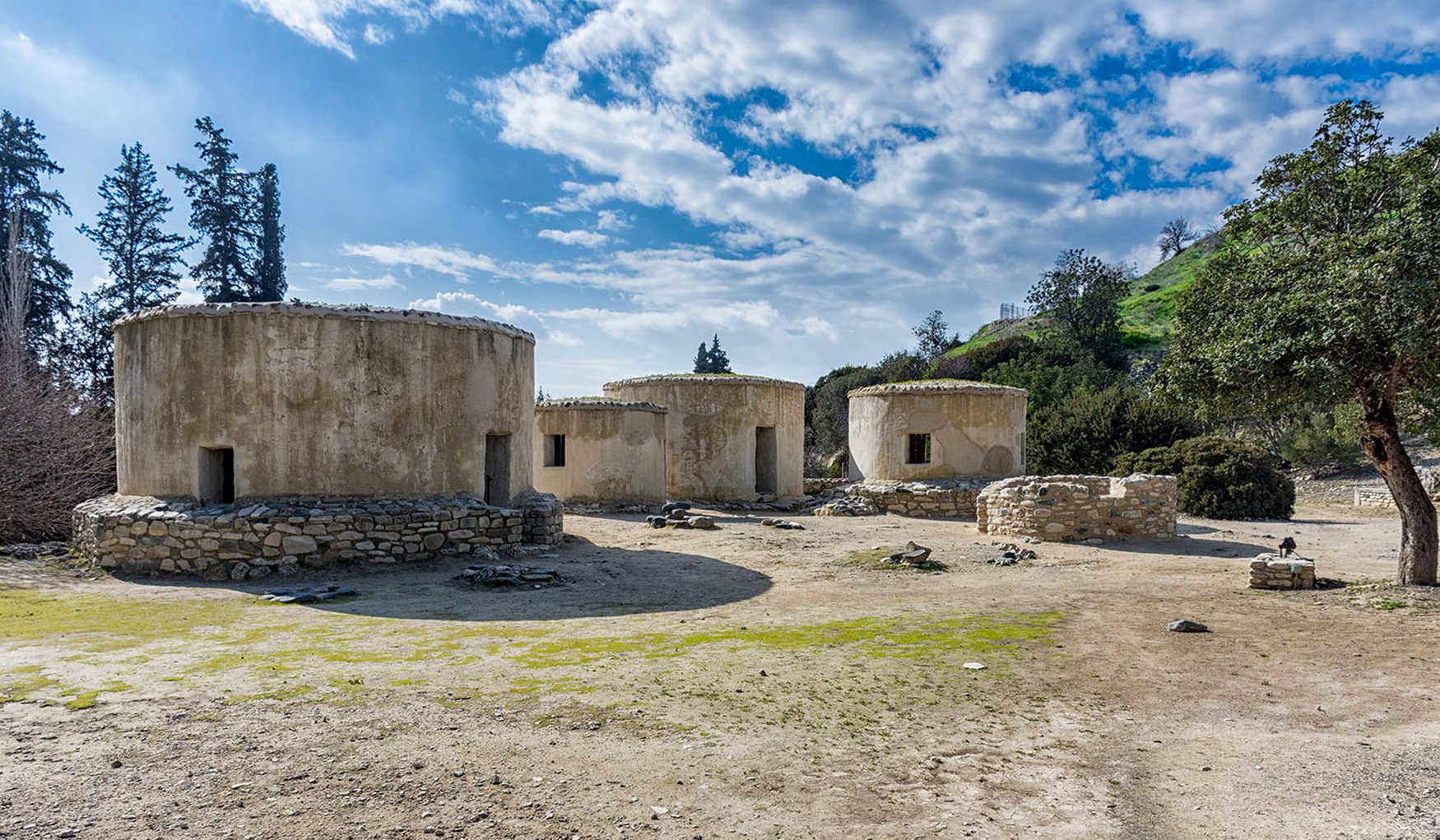
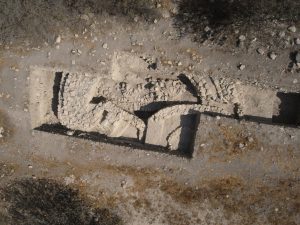
The settlement’s history aligns with the broader Neolithic Revolution, when humans in the Fertile Crescent began experimenting with agriculture around 10,000 BC, spreading to Cyprus via migration waves. Archaeological evidence suggests the first inhabitants arrived around 8500 BC, bringing pre-domesticated plants and animals, as confirmed by radiocarbon dating of charred seeds and faunal remains. By 7000 BC, Choirokoitia had developed into a structured village, with phases of occupation showing gradual improvements in building techniques – early houses were semi-subterranean pits, evolving into above-ground tholoi (round structures) with stone foundations and mudbrick upper walls, some up to 9 meters in diameter.
Excavations began in 1934 under Porphyrios Dikaios of the Cyprus Department of Antiquities, who uncovered over 50 houses and a defensive wall 2.5 meters thick, revealing a population density unusual for the era. French teams in the 1970s and 1980s, led by Alain Le Brun, expanded the work, using geophysical surveys to map unexcavated areas and analyze pollen samples showing a diet heavy in legumes and cereals, supplemented by hunted deer and gathered fruits. Isotope studies on bones indicate a protein-rich intake from domesticated animals, challenging earlier views of purely plant-based early farming.
flickr-com
The site’s UNESCO listing in 1998 recognized its universal value in illustrating the Pre-Pottery Neolithic B phase, where tools like sickles for harvesting and querns for grinding highlight technological leaps. Comparisons to mainland sites show Choirokoitia’s innovations, such as collective burials under house floors with grave goods like necklaces, suggesting beliefs in ancestral spirits watching over the living. This phase ended abruptly, with fire traces hinting at conflict or accident, but the site’s legacy influenced later Cypriot villages, where round houses persisted into the Chalcolithic era.
A Village Carved from Stone
Choirokoitia’s structures consist of over 100 circular dwellings, rebuilt multiple times over 1,000 years of occupation, with foundations of river stones and upper walls of pisé (rammed earth) or mudbricks. Houses included central hearths for cooking, storage pits for grains, and benches for sleeping, indicating family units of 4-6 people. The defensive wall, 185 meters long and up to 3 meters high in places, enclosed the village on three sides, with the river cliff providing natural protection on the fourth – a design that foreshadowed later fortified settlements.
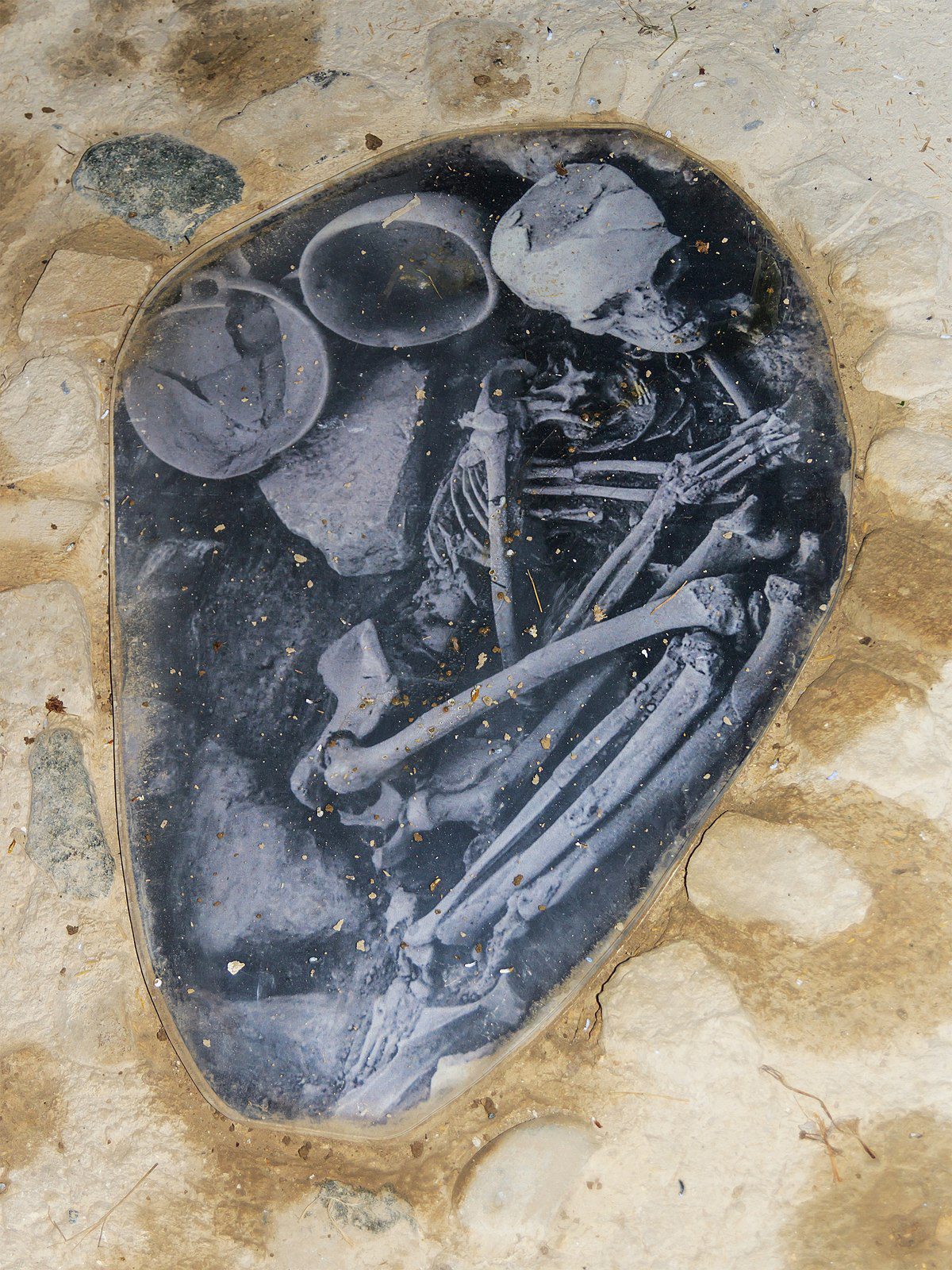
Artifacts abound: polished stone axes for clearing forests, bone hooks for fishing in nearby streams, and shell pendants from Mediterranean mollusks for personal ornamentation or trade. No pottery exists, but baskets imprinted in clay floors show woven containers for storage. Burials, numbering over 200, were placed under floors in flexed positions, often with red ochre pigment symbolizing life blood, and goods like stone vessels or jewelry, pointing to egalitarian society without marked hierarchies, as grave wealth remains uniform.
The valley’s microclimate, with annual rainfall supporting wild olives and pistachios, allowed experimentation with cultivation, as pollen analysis from cores shows increased cereal pollen over time. This environmental adaptation highlights human ingenuity, turning a hilly terrain into a sustainable habitat that influenced subsequent Cypriot farming practices.
Little-Known Tales That Add Magic
Excavations have uncovered intriguing details: a large communal structure, possibly for gatherings or rituals, with a diameter of 10 meters and a central post, suggesting early social hubs. One burial included a rare idol with a phallic neck, interpreted as a fertility symbol, hinting at shamanistic practices. Shells from distant Red Sea species indicate trade routes extending to Sinai, far beyond expected for the time. And carbonized figs show early fruit cultivation, with DNA analysis linking them to modern Cypriot varieties, tying ancient diets to today’s orchards.
Folklore adds charm: locals once believed the site’s stones held “giant bones,” mistaking prehistoric tools for mythical relics, a tale that persisted until scientific digs. A 1930s find of a child’s burial with a toy-like stone animal suggests play in Neolithic life, humanizing the distant past.
Diving Deeper Into Symbolism and Connections
Choirokoitia’s artifacts reveal symbolic thinking: incised patterns on tools like crosses or spirals may represent early cosmologies, linking to solar cycles for planting. Burials with heads oriented east suggest beliefs in rebirth with the rising sun, a motif seen in later Mediterranean cultures. Comparisons to Jerf el Ahmar in Syria show shared architectural traits, but Choirokoitia’s insularity led to unique innovations, like using deer antlers for tools since large mammals were absent.
wikipedia-org
The site’s role in the Neolithic package – farming, animal husbandry, polished stone – influenced Cyprus’s later Bronze Age societies, where settled life enabled metalwork and trade. Socially, the lack of weapons or status differences points to peaceful cooperation, contrasting with mainland hierarchies. Environmental studies show sustainable practices, like rotating crops to avoid soil depletion, lessons relevant today. This depth positions Choirokoitia as a key to understanding global shifts to sedentism, where Cyprus’s version highlights adaptation in isolation.
How It Fits Into Cyprus Today
Choirokoitia remains a cornerstone of Cypriot heritage, symbolizing the island’s ancient roots in a nation blending past and present. As a UNESCO site, it inspires eco-tourism and education on sustainable living, drawing parallels to modern farming amid climate challenges like droughts. In divided times, it stands as shared history, with joint conservation fostering dialogue. Contemporary artists use its circular motifs in designs celebrating community, while festivals highlight Neolithic foods and crafts, linking old innovations to today’s identity as a resilient Mediterranean hub.
Opportunities for Exploration
The site near Larnaca opens daily from 8:30 AM to 5 PM in winter and until 7:30 PM in summer, with entry at €2.50 for adults. Paths lead through reconstructed houses, with informational panels and an on-site museum displaying artifacts. Guided tours, available through the Department of Antiquities for €10-15, provide details on excavations and daily life. Spring or fall avoids heat, pairing well with nearby beaches or the Larnaca Museum for related finds. Accessibility includes ramps in main areas, with rest areas available.
A Settlement That Echoes Human Beginnings
Choirokoitia Settlement holds value as a key window into humanity’s shift to settled life, capturing Cyprus’s place in the story of civilization’s dawn. Its stone homes and simple tools reveal innovation amid isolation, a legacy that underscores the island’s enduring spirit of adaptation and community. This site reminds of shared origins, where early steps toward villages shaped the world. In Cyprus’s tapestry, it stands as a foundation, linking ancient survival to modern resilience.