Explore Cyprus with Our Interactive Map

Explore our top stories and discover ideas worth your time.

Akamas Peninsula National Park

Akamas Peninsula National Park

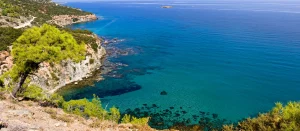
Akamas Peninsula National Park occupies the northwestern tip of Cyprus, beginning just north of Paphos and extending to Cape Arnaoutis. The landscape ranges from golden beaches and dramatic coastal cliffs to arid plains covered in Mediterranean scrub and mountain forests of pine and juniper. Deep gorges carved by seasonal rivers cut through the limestone terrain. No paved roads cross most of the interior, and large parts of the peninsula remain uninhabited. The area takes its name from Akamas, a son of the mythological hero Theseus, who is said to have founded the ancient city of Soli after fighting in the Trojan War. Shutterstock-com Historical Background Until the year 2000, the British military used Akamas for training exercises and as a firing range. Under the 1960 Treaty of Establishment, the British Army was permitted to use the peninsula for up to 70 days each year. This military presence indirectly helped preserve the region by preventing major development. After the British withdrawal, conservation groups and the Cyprus government began working toward formal protected status. visitcyprus-com In preparation for Cyprus joining the European Union, most of Akamas was included in the Natura 2000 network between 2003 and 2009. Two turtle nesting beaches were designated as Sites of Community Importance. The Polis–Gialia area received Special Area of Conservation status, and the entire peninsula became…

Read more
Tombs of the Kings, Paphos – History & Facts

Tombs of the Kings, Paphos – History & Facts

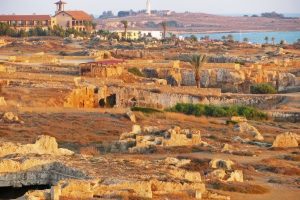
The Tombs of the Kings is a large necropolis that served the ancient city of Nea Paphos from the 3rd century BCE to the 3rd century CE. The site covers approximately 1.2 square kilometers in the northwestern part of the city, just outside the ancient fortifications. Eight major tomb complexes have been excavated, along with numerous smaller burial chambers. wikipedia-org These monuments were built for Ptolemaic officials and aristocratic families who governed Cyprus during the Hellenistic period. The royal institution had been abolished in 312 BCE, so no actual kings were buried here. The name comes purely from the impressive scale and elaborate architecture of the tombs themselves. When early visitors saw these underground structures with their Doric columns and painted frescoes, they assumed only royalty could command such magnificent burial monuments. shutterstock-com The tombs were carved from the natural limestone bedrock using tools and techniques developed in Alexandria, Egypt. The architecture imitates the houses of the living, following an Egyptian tradition that believed the dead should reside in spaces resembling their earthly homes. This created underground courtyards, burial chambers, and ritual spaces that remain remarkably preserved today. Historical Background Nea Paphos, meaning "New Paphos," was founded in the late 4th century BCE as the administrative capital of Cyprus under Ptolemaic rule. After Alexander the Great's death in 323 BCE,…

Read more

Stone Columns Above Cyprus Blue Waters

Stone Columns Above Cyprus Blue Waters

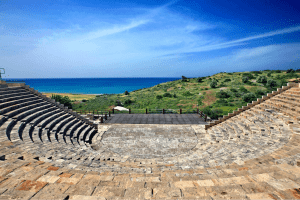
Cyprus coastal monuments showcase classical architecture where ancient stone columns rise against Mediterranean horizons, creating dramatic vistas that combine archaeological significance with natural beauty. The most impressive examples include the Greco-Roman theatre at Kourion perched on coastal cliffs 70 meters above sea level, the Sanctuary of Apollo Hylates with its partially restored temple columns, and the Tombs of the Kings in Paphos featuring underground burial chambers decorated with Doric pillars. Shutterstock-com These structures date primarily from Hellenistic and Roman periods between the 4th century BC and 4th century AD, when Cyprus prospered under successive empires. The architectural elements follow classical Greek orders with refinements from Roman building techniques, creating monuments that have withstood earthquakes, invasions, and two millennia of Mediterranean weather. The coastal positioning of these sites provided strategic advantages for ancient communities while offering modern visitors spectacular combinations of archaeological ruins and sweeping sea views that define Cyprus as a destination where history meets landscape. Kourion's Clifftop Theatre and Coastal Views The ancient theatre at Kourion was built in the 2nd century BC and extended during the 2nd century AD to accommodate 3,500 spectators. The structure occupies the most southern part of the city, positioned on dramatic coastal cliffs that provided both practical acoustics and majestic views toward the Mediterranean. The semicircular seating arrangement carved from limestone faces the…

Read more