In the heart of Paphos stands a remarkable archaeological site where more than 1,600 years of Christian history remain visible. The Basilica of Chrysopolitissa, once the largest church in Cyprus, now reveals its ancient mosaics, towering columns, and a legendary pillar that connects this place to one of Christianity’s most influential figures.
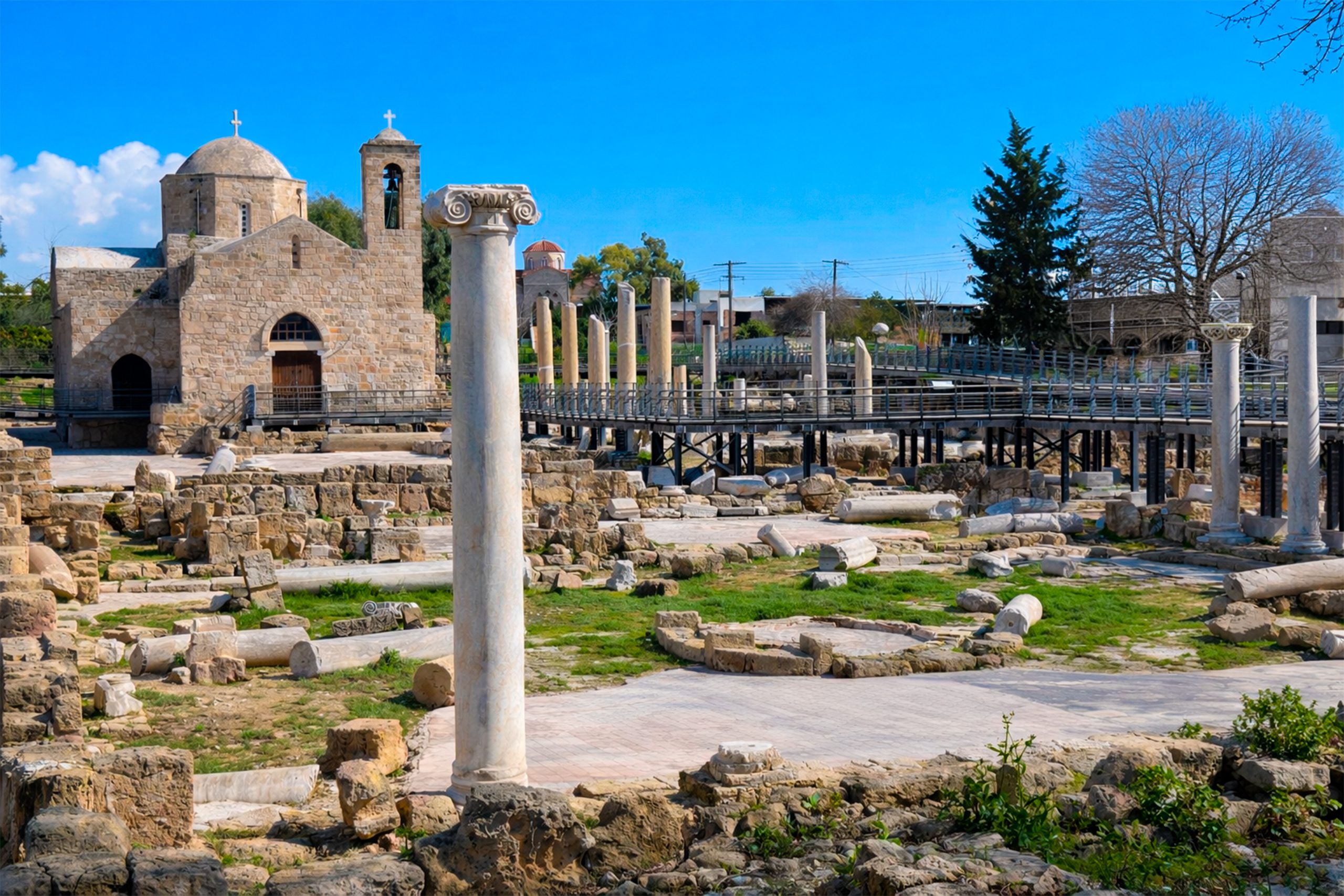
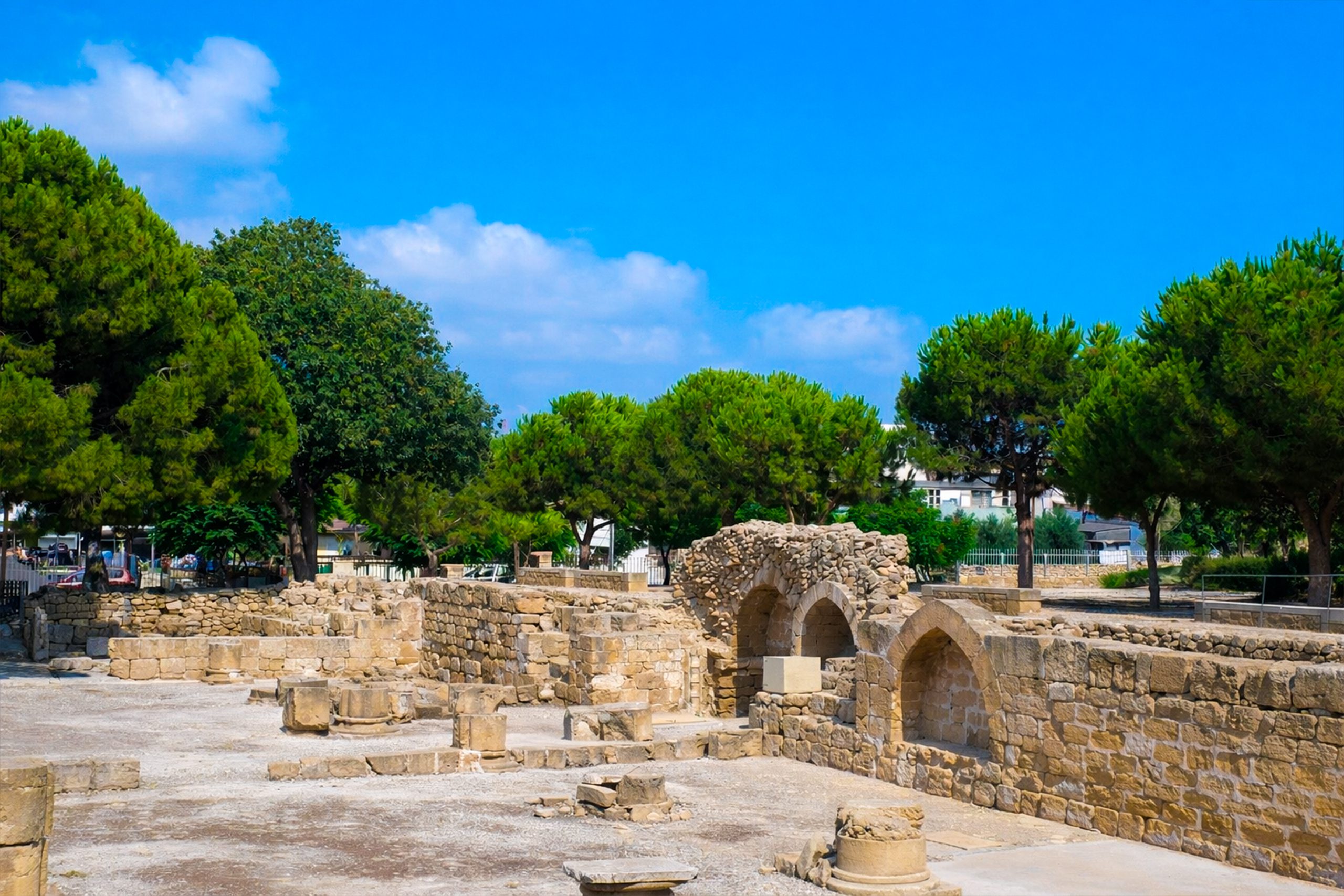
The Basilica of Chrysopolitissa, also known as Panagia Chrysopolitissa, is an archaeological complex in Kato Paphos that contains the ruins of what was once the largest early Christian basilica on the island of Cyprus. Built in the late 4th century AD, this massive church served as the cathedral of Paphos and the seat of its bishop. Today, the site includes not only the basilica ruins but also a working church called Agia Kyriaki, a medieval Franciscan church, and the famous St. Paul’s Pillar.
Historical Background
The basilica was constructed in the second half of the 4th century AD, at a time when Christianity was becoming the official religion of the Roman Empire. Cyprus had already embraced Christianity thanks to the visit of Apostles Paul and Barnabas in 45 AD, when they converted the Roman proconsul Sergius Paulus, making Cyprus one of the first regions to have a Christian leader.
The basilica was built on the site of an earlier Roman structure, possibly near where a synagogue once stood. Its original design featured seven aisles separated by rows of columns, making it an extraordinary architectural achievement. The church measured approximately 1,600 square meters and included an attached two-story building that is believed to have been the bishop’s residence.
In the 6th century, the basilica underwent major renovations. The original seven aisles were reduced to five, and new mosaic floors were installed throughout the building. However, the structure’s glory was short-lived. The Arab raids of the 7th century, combined with devastating earthquakes, destroyed the basilica. The site was abandoned for centuries, with only its fallen columns and mosaic fragments remaining as evidence of its former grandeur.
What Makes the Basilica Unique
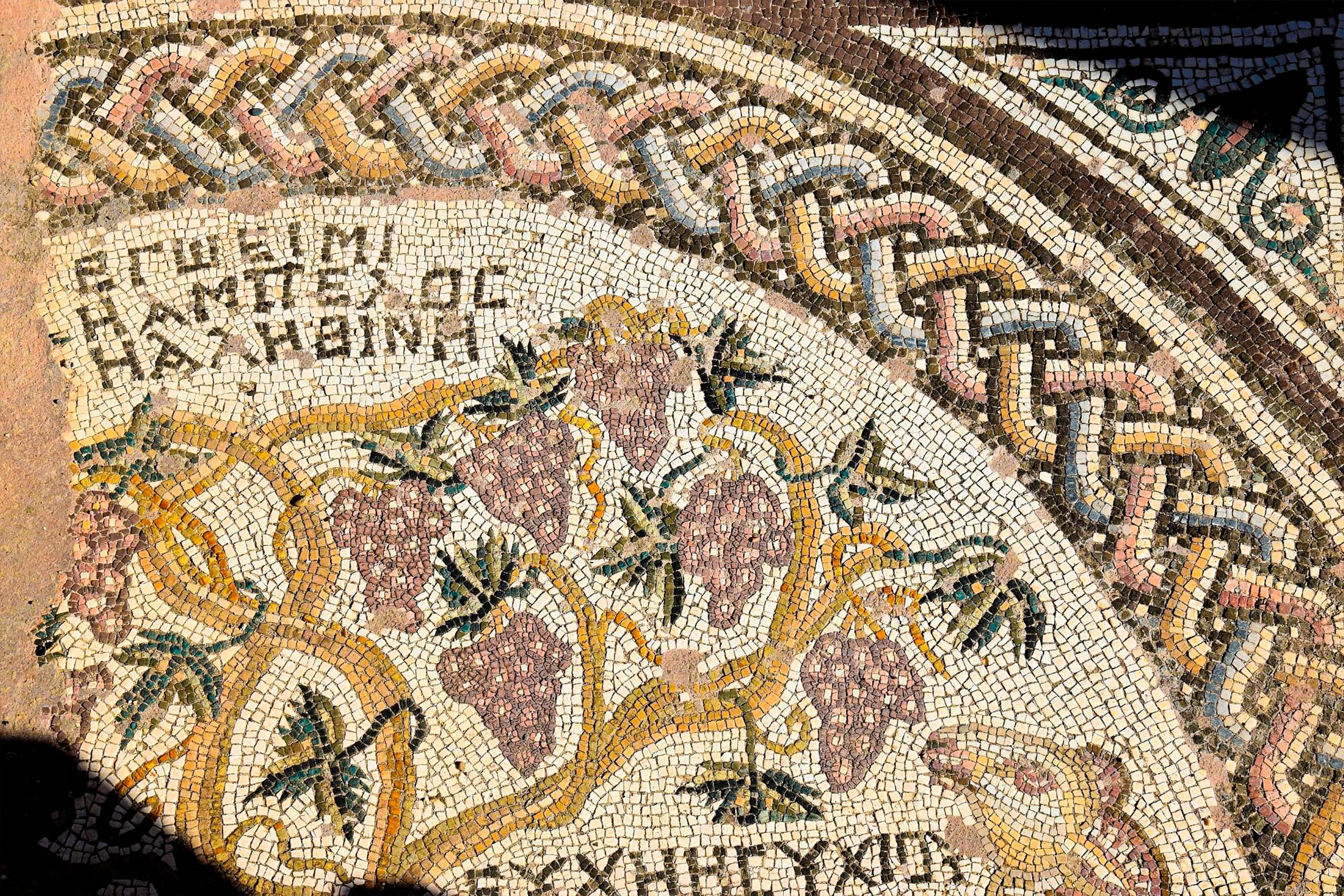
The most striking feature of the site today is the beautifully preserved mosaic floors. These mosaics display intricate geometric patterns, including interlocking circles, vine leaves, crosses, and beetles. In the central aisle, three unique figural scenes represent Christian allegories, offering a rare glimpse into early Christian art on the island. The craftsmanship shows a blend of local Cypriot techniques and imported artistic influences from across the Byzantine Empire.
The remaining columns are equally impressive. Made from granite and marble, they stand with beautifully carved Corinthian capitals. Some of these columns reach over seven meters in height and nearly one meter in diameter. Elevated wooden walkways now allow visitors to view these architectural remains up close without damaging the delicate mosaics below.
The Legend of St. Paul’s Pillar
At the edge of the archaeological site stands a marble column stump known as St. Paul’s Pillar. According to tradition, this is the pillar to which St. Paul was tied and flogged when he arrived in Paphos to preach Christianity. The punishment was reportedly ordered as a means to prevent him from meeting with the Roman proconsul.
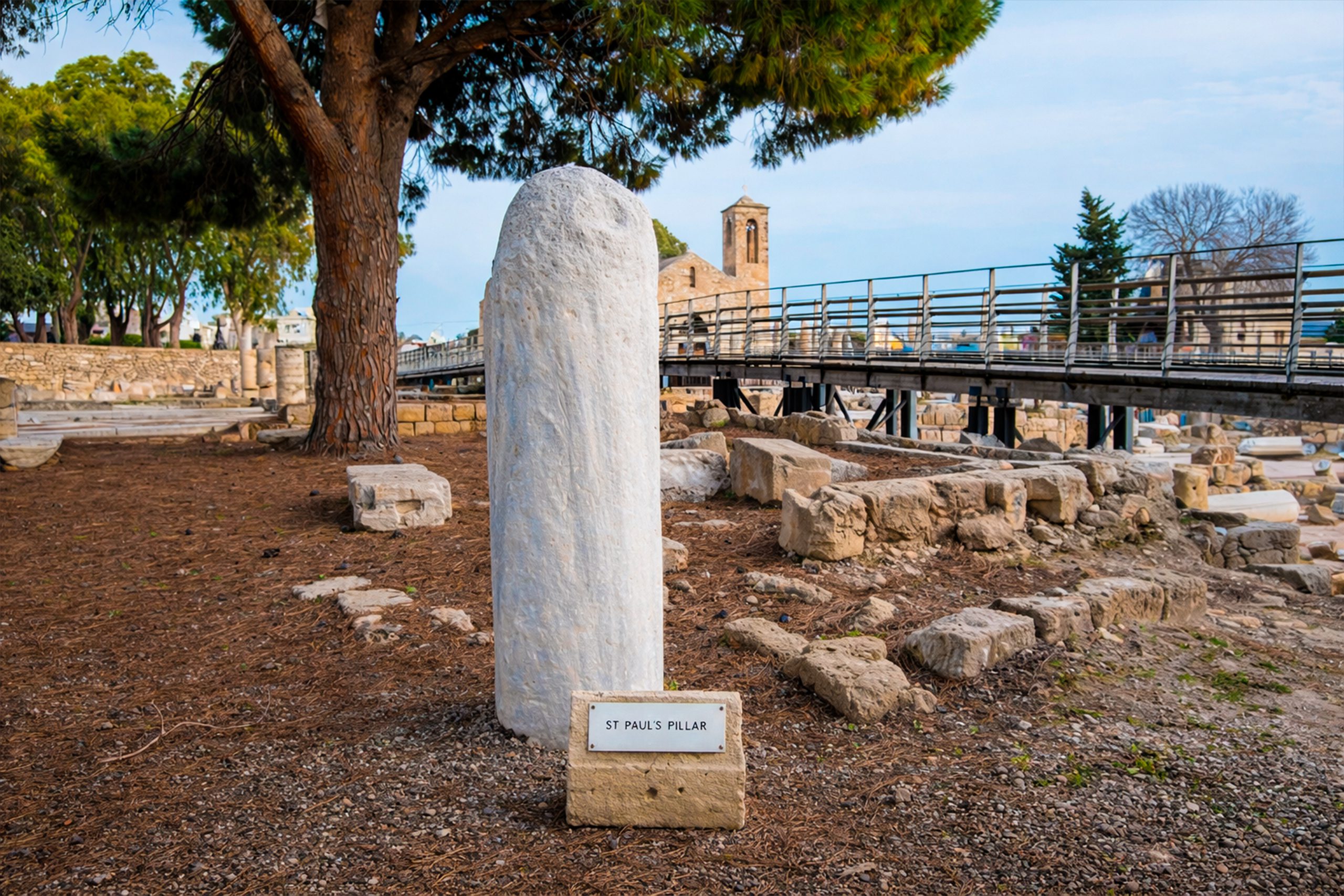
Local tradition holds that Paul received 39 lashes, known as “forty but one,” a Jewish punishment for serious offenses. The whip used had 13 heads, so three strikes equaled 39 individual lashes.
While the Book of Acts does not mention this specific punishment in Paphos, St. Paul himself wrote in 2 Corinthians 11:24 that he received “forty lashes minus one” five times from the Jews while spreading the Gospel, lending credibility to the story.
Whether or not this exact pillar was used remains uncertain. However, the column has become one of the most important pilgrimage sites in Cyprus, symbolizing the suffering and dedication of early Christians who risked everything to spread their faith.
Interesting Facts About the Site
Near the entrance to the complex, a memorial plaque marks the burial site of Eric I Ejegod, King of Denmark, who died in Paphos in 1103 while traveling to the Holy Land on a pilgrimage. He was buried at the basilica, making him the only Danish monarch to be buried outside Denmark. Although the exact location of his grave has been lost over time, the plaque reminds visitors of this historic connection between Cyprus and medieval Scandinavia.
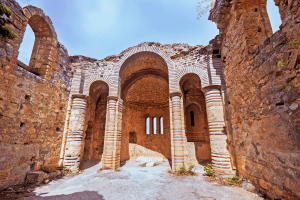
The site also contains the remains of a Gothic Franciscan church built around 1300 AD. This medieval structure was renovated in the mid-16th century during the Venetian period but fell into ruin during the Ottoman period. Its remains lie to the north of the main basilica ruins.
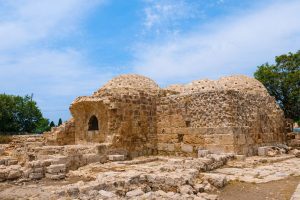
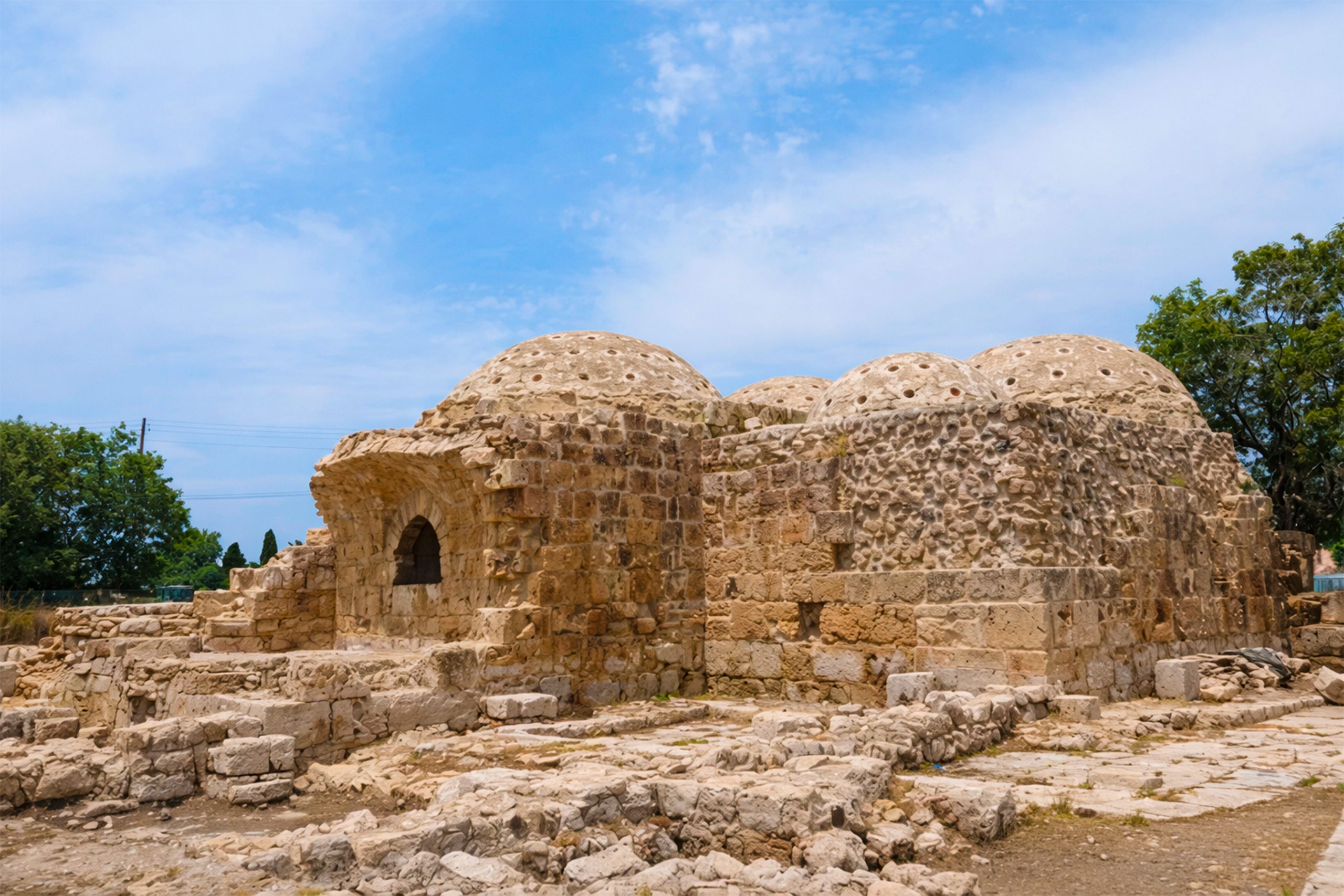
In addition to religious structures, the complex includes medieval-Ottoman baths that combine Roman, Byzantine, and Turkish bathing traditions. These baths feature a series of cold, warm, and hot rooms, following the design principles of ancient Roman thermae.
Churches Built Over the Centuries
After the basilica was destroyed, a small Byzantine church was constructed on the site sometime around the 11th century. This church served the local Christian community during the medieval period but was damaged by earthquakes and invasions over the following centuries.
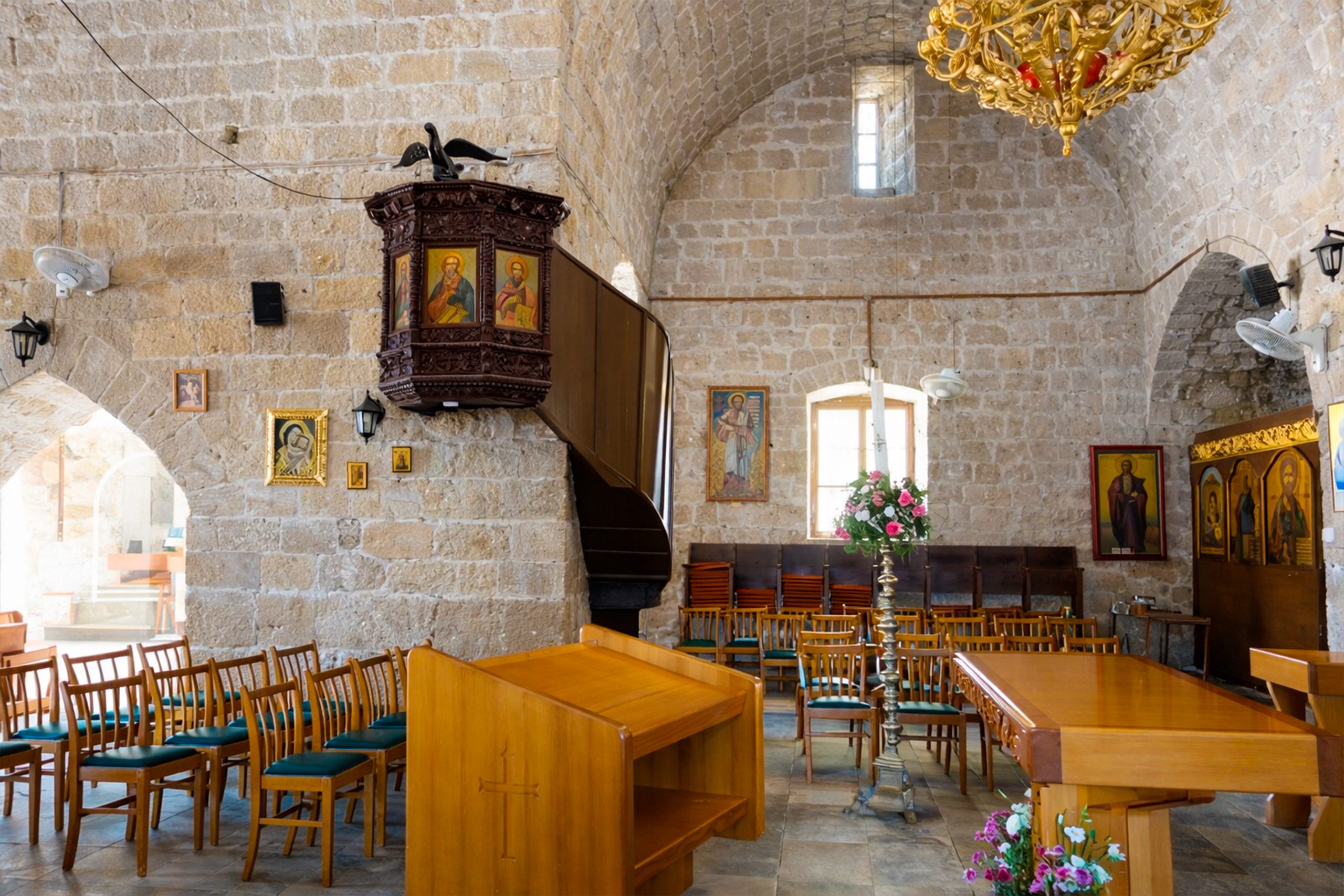
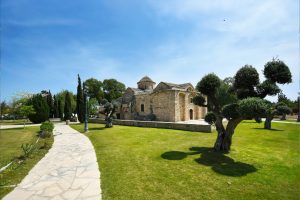
Around 1500 AD, during the Venetian occupation of Cyprus, the current church of Agia Kyriaki was built on the foundations of the earlier Byzantine structure. Unlike many other churches in Cyprus, Agia Kyriaki survived the Ottoman conquest in 1570. The Ottomans converted many Latin churches into mosques, but this church was spared and continued to serve the Christian community.
Today, Agia Kyriaki functions as a multi-denominational church. It hosts services for both the Roman Catholic and Anglican communities in Paphos, as well as occasional Orthodox ceremonies. This shared use reflects the inclusive spirit of the site and its long history of bringing together Christians from different traditions.
Why the Basilica Still Matters Today
The Basilica of Chrysopolitissa remains an important symbol of Christian heritage in Cyprus. For pilgrims and religious tourists, St. Paul’s Pillar serves as a tangible link to the earliest days of Christianity and the suffering endured by those who spread the faith. For historians and archaeologists, the site offers valuable insights into early Byzantine architecture, Roman building techniques, and the evolution of religious practices on the island.
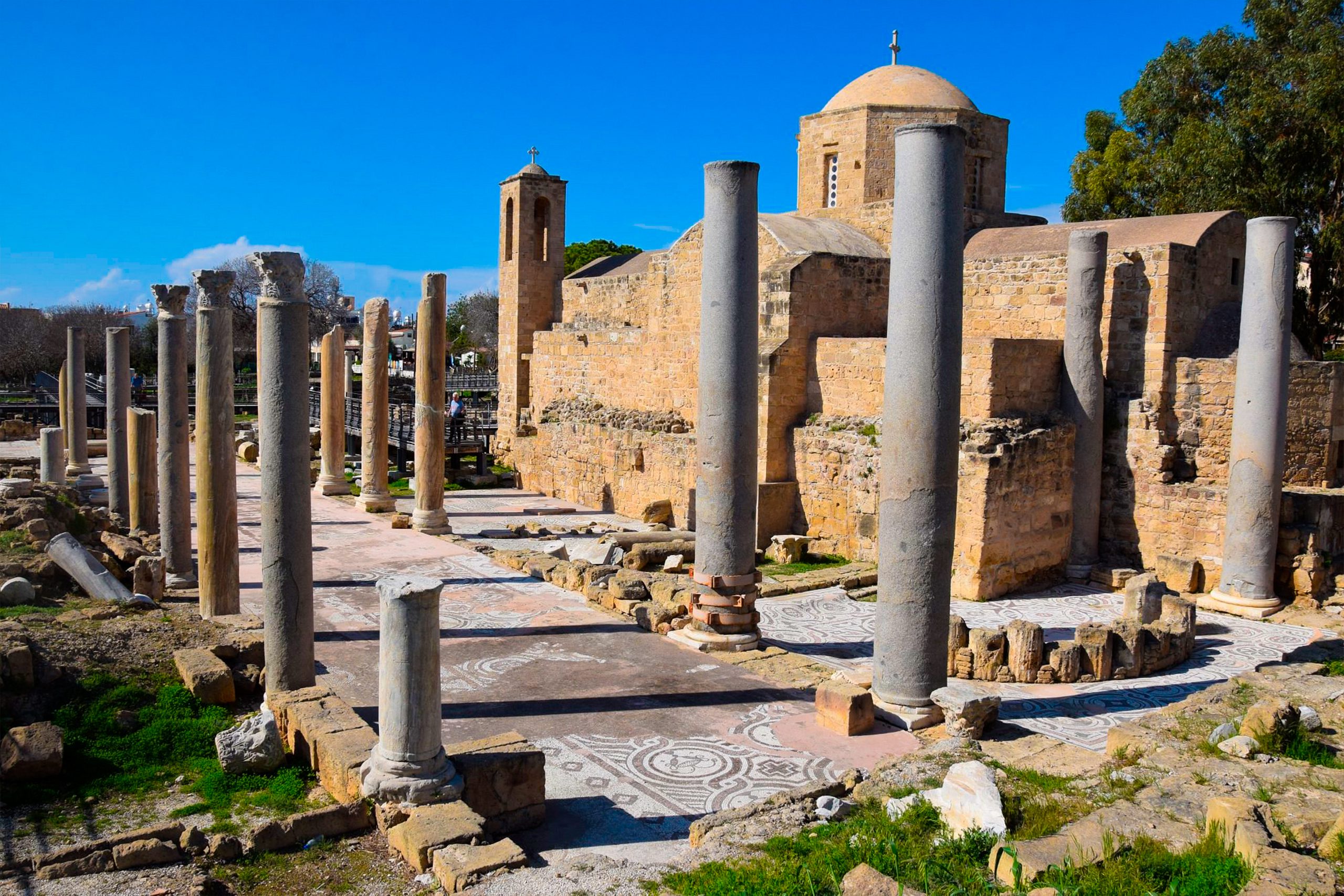
The site is part of the UNESCO World Heritage listing for Paphos, recognizing its universal cultural value. Modern conservation efforts ensure that the mosaics and architectural remains are protected for future generations. The elevated walkways installed in recent decades allow thousands of visitors each year to experience the site without causing further damage to the fragile ancient floors.
Visiting the Basilica of Chrysopolitissa
The archaeological site is open daily throughout the year. During winter months (November to March), the site is accessible from 8:00 AM to 4:00 PM, while summer hours (April to October) extend to 5:00 PM. Entry is free, making it one of the most accessible historical sites in Paphos.
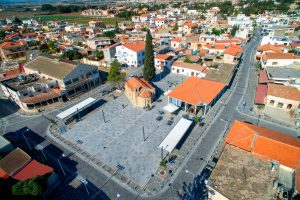
The complex is located in Kato Paphos, about 500 meters from the harbor, or roughly a 10-minute walk. From the waterfront, visitors can follow Apostolou Pavlou Avenue toward Paphos Mall and turn right onto the small road that leads to the entrance. The site can easily be combined with visits to other nearby attractions, including the Paphos Archaeological Park, the ancient theater, and the Agia Solomoni catacombs.
Walking through the ruins provides a peaceful and reflective experience. The remains of granite columns, fragments of mosaic floors, and the quiet presence of Agia Kyriaki Church create an atmosphere that blends history, art, and faith. Informational plaques throughout the site help visitors understand the significance of what they are seeing.
A Testament to Faith and History
The Basilica of Chrysopolitissa stands as a powerful reminder of Cyprus’s role in the early spread of Christianity and the island’s enduring connection to the faith. From the moment St. Paul set foot in Paphos, this land became intertwined with Christian history. The layers of churches built over centuries, the royal burial, and the continuing use of the site for worship all demonstrate how deeply this place has shaped the religious and cultural identity of Cyprus. For anyone interested in history, architecture, or the roots of Christianity, Chrysopolitissa offers a profound and memorable experience.