Symbolism and artistic techniques

Articles: Symbolism and artistic techniques

Stories in this category and its subcategories.

Sacred Landscape Representation

Sacred Landscape Representation

Sacred Landscape Representation in Cypriot art involved the use of motifs such as mountains, seas, fertility symbols, and celestial elements to express the island's profound spiritual connection to nature. These designs went beyond mere decoration, reflecting a worldview where the environment was infused with divine energy, from turbulent waves to bountiful fields. This artistic approach evokes the island's mystical essence, highlighting ancient perceptions of the natural world as a realm of sacred significance. reddit-com A World Expressed Through Art Cypriot art portrayed the landscape as a narrative medium, where natural features conveyed deeper spiritual layers. Mountains symbolized strength and divine oversight, seas evoked origins and transformation, fertility motifs celebrated renewal, and celestial patterns linked earthly existence to cosmic forces. This…

Read more
Sacred Geometry and Proportion Cyprus

Sacred Geometry and Proportion Cyprus

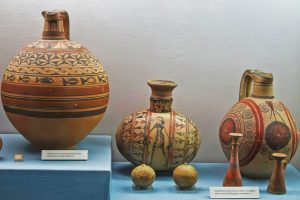
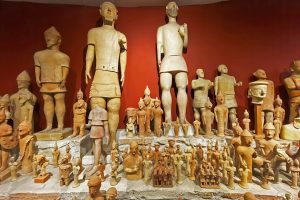
Symbolic Use of Geometry and Proportion in Cypriot Art refers to the ancient practice on the island where repeating shapes and balanced designs conveyed concepts of order, harmony, and cosmic balance. These patterns extended beyond decoration, embedding profound meanings in pottery, sculptures, and other artifacts, fostering a sense of connection to an structured universe. This method transformed basic lines into representations of life's fundamental principles, highlighting the thoughtful intent behind each composition. ancientcyprus-com A World Expressed Through Structured Forms Ancient Cypriot art frequently employed basic geometric elements, such as circles, triangles, and zigzags in repetitive arrangements, rather than detailed depictions of figures or scenes. These patterns appeared across various media, from clay vessels to stone engravings, serving purposes that transcended…

Read more
Emphasis on Frontalism and Hieratic Scale

Emphasis on Frontalism and Hieratic Scale

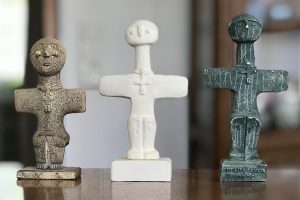
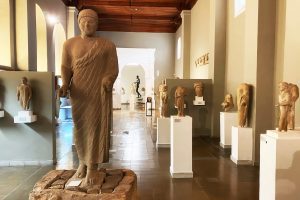
Emphasis on Frontalism and Hieratic Scale in ancient Cypriot art involved depicting figures in direct frontal views, with sizes scaled to reflect spiritual or social significance rather than physical accuracy. This method imbued artworks with a sense of authority and depth, incorporating influences from neighboring cultures to emphasize deities, rulers, or sacred concepts over naturalistic portrayals. The approach created compositions that convey power and divinity through straightforward, impactful forms. A Style Prioritizing Significance Cypriot art from antiquity often avoided precise replication of reality, opting instead for frontalism where subjects face outward directly. Hieratic scale further adjusted proportions, enlarging key elements to denote importance - a deity might dominate over attendants, defying natural dimensions. This was not a limitation but a…

Read more
Ritual Function Over Aesthetic Realism

Ritual Function Over Aesthetic Realism

Ritual function over aesthetic realism in ancient Cypriot art meant creators focused more on making pieces that worked for spiritual purposes and clear symbols, rather than looking exactly like real life. This approach turned sculptures, pots, and carvings into tools for rituals, devotion, and symbolic clarity, putting heart and belief ahead of perfect looks. It's a style that makes art a bridge to the divine, sparking curiosity about what really mattered to island people long ago. A Style Built for Meaning, Not Mirrors Ancient Cypriot art placed practical use in rituals above lifelike details, creating items that served spiritual needs with bold, straightforward designs. Figures often appeared with exaggerated features or stiff poses, not from lack of ability, but to…

Read more
Adaptation of Imported Artistic Techniques

Adaptation of Imported Artistic Techniques

Adaptation of Imported Artistic Techniques in ancient Cyprus involved incorporating styles from regions such as Greece, Egypt, and the Near East, then modifying them to align with local beliefs and values. Rather than exact replication, Cypriot artists infused these elements with distinctive island characteristics, resulting in art that felt authentically Cypriot - unique and rich in significance. This process of selective adaptation transformed external influences into innovative expressions, illustrating how an island on the periphery of empires developed a vibrant creative identity. metmuseum-org A Creative Synthesis at a Mediterranean Crossroads Cypriot art emerged from the island's position as a nexus of cultural exchange, where imported techniques underwent transformation to reflect indigenous perspectives. External styles arrived through trade, migration, and conquest,…

Read more
Narrative Storytelling Through Sequential Imagery

Narrative Storytelling Through Sequential Imagery

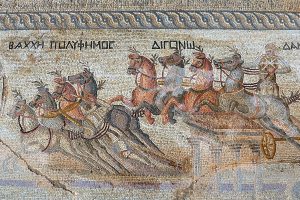
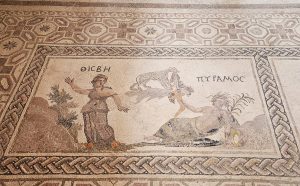
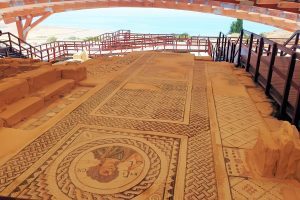
Narrative Storytelling Through Sequential Imagery in Cypriot Art involved the use of connected visual elements to convey myths, rituals, or sacred events within limited spaces such as walls or floors. This technique transformed individual scenes into cohesive narratives, engaging viewers with tales of deities, heroes, and everyday experiences without relying on text. Comparable to early forms of sequential illustration, it encouraged exploration of deeper layers through progressive imagery. Adobe-Stock-com A Method for Conveying Complex Narratives in Compact Forms Cypriot art employed sequential imagery to construct dynamic stories despite spatial constraints. Rather than isolated depictions, series of linked scenes unfolded myths, such as divine births from the sea, or rituals celebrating fertility and harvests. This approach allowed intricate concepts to fit…

Read more
Material Symbolism (Stone, Bronze, Gold, Glass)

Material Symbolism (Stone, Bronze, Gold, Glass)

Material Symbolism (Stone, Bronze, Gold, Glass) in ancient Cypriot art reflected deliberate choices where each substance carried layers of spiritual, social, and economic significance. Stone embodied enduring strength drawn from the island's landscape, bronze represented transformation and resilience, gold signified divine favor and elite status, and glass evoked wonder through its luminous qualities. This intentional selection transformed artifacts into carriers of meaning, highlighting how materials conveyed broader cultural values in a society shaped by trade, ritual, and belief. estateofcyprus-com Materials as Carriers of Cultural Meaning Ancient Cypriot art utilized materials not merely for their practical properties but as elements infused with symbolism. Stone, bronze, gold, and glass each evoked specific associations, drawn from the island's natural resources and imported influences.…

Read more
Colour as Theological and Social Language

Colour as Theological and Social Language

Color as Theological and Social Language in ancient Cypriot art involved the deliberate use of hues to convey concepts of divinity, societal roles, and human experience. Red often symbolized fertility and vital energy, black represented mourning or the mysteries of the afterlife, and gold evoked divine authority. Artists selected these colors with intent, transforming ordinary objects into carriers of profound messages that continue to reveal insights into the island's cultural and spiritual world. dom-com-cy A Palette Rich in Symbolism Ancient Cypriot art employed colors as a form of communication, where each shade carried layers of theological and social significance. Far from mere embellishment, these choices reflected a sophisticated system in which hues expressed ideas of sanctity, power, grief, or renewal.…

Read more
Adaptation of Imported Artistic Techniques

Adaptation of Imported Artistic Techniques

Adaptation of Imported Artistic Techniques in ancient Cyprus involved incorporating styles from regions such as Greece, Egypt, and the Near East, then modifying them to align with local beliefs and values. Rather than exact replication, Cypriot artists infused these elements with distinctive island characteristics, resulting in art that felt authentically Cypriot - unique and rich in significance. This process of selective adaptation transformed external influences into innovative expressions, illustrating how an island on the periphery of empires developed a vibrant creative identity. Metmuseum-org A Creative Synthesis at a Mediterranean Crossroads Cypriot art emerged from the island's position as a nexus of cultural exchange, where imported techniques underwent transformation to reflect indigenous perspectives. External styles arrived through trade, migration, and conquest,…

Read more