There is a fish in the warm blue waters surrounding Cyprus that wears a golden crown – quite literally. It is one of the most prized fish of the Mediterranean world, celebrated at Roman banquets, immortalised in ancient mosaics, and farmed today in the crystal-clear seas off the Cypriot coast. Meet the Gilthead Sea Bream – beautiful, clever, and surprisingly full of surprises.
- Of Porgies and Sparidae – A Royal Family
- From Ancient Lagoons to Roman Dining Tables
- A Portrait in Silver and Gold
- Fun Facts Worth Sharing
- The Biology of a Shape-Shifter
- Cyprus and the Challenge of Clear Waters
- Tsipoura on the Cypriot Table – Yesterday and Today
- Where to Encounter It in Cyprus
- A Crown Well Earned
Of Porgies and Sparidae – A Royal Family
The Gilthead Sea Bream, known in Cyprus as tsipoura (τσιπούρα), belongs to the family Sparidae – the sea breams and porgies – one of the most ecologically and commercially important fish families in the Mediterranean. The Sparidae are a diverse and ancient family within the order Spariformes, comprising over 130 species spread across tropical and temperate seas worldwide. They include familiar Mediterranean fish such as the common pandora, the two-banded bream, the dentex, and the red porgy – all sharing a deep, compressed body and strong crushing teeth suited for hard-shelled prey.
But among them all, the Gilthead Sea Bream holds a singular distinction: it is the only species in the genus Sparus – a genus so important that it gave the entire family its name. Sparus comes from the Latin (originally from ancient Greek) for the fish itself, and aurata means “golden” – a reference to that unmistakable gold bar that shines between its eyes. This fish did not merely earn a name; it lent its name to an entire dynasty.
From Ancient Lagoons to Roman Dining Tables
The gilt-head bream was first formally described in 1758 by Carl Linnaeus in the 10th edition of Systema Naturae. But humanity’s relationship with this fish stretches back far deeper into history. Traditionally, gilt-head sea bream were cultured extensively in coastal lagoons and saltwater ponds long before the age of modern fish farming. The Egyptians, Greeks, and Romans all prized this fish, developing early forms of aquaculture by trapping juvenile fish as they migrated naturally from the sea into nutrient-rich coastal lagoons.
In ancient Rome, the sea bream was a centrepiece of elite dining – and nowhere is this better illustrated than in one of antiquity’s most remarkable works of art. The Asàrotos Òikos – or “unswept floor” mosaic – is a masterpiece of Roman craftsmanship that once decorated the dining room floor of a villa on the Aventine Hill in Rome during the reign of Emperor Hadrian. Created by the artist Heraclitus, who proudly signed his name, the mosaic depicts a floor seemingly covered with the debris of a lavish banquet – fruit, lobster claws, chicken bones, shellfish, and even a tiny mouse gnawing a walnut shell. Scattered among the realistic remnants of the feast, identifiable fish remains – including what scholars interpret as sea bream – lie rendered in minute, multi-coloured tesserae with astonishing precision. The asàrotos òikos mosaics have been found exclusively in the domestic spaces of the Roman elite, functioning as both artistic trickery and a sophisticated status symbol. To have a floor that looked dirty was, paradoxically, the ultimate display of refinement.
A Portrait in Silver and Gold
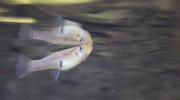
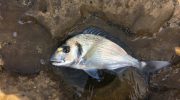
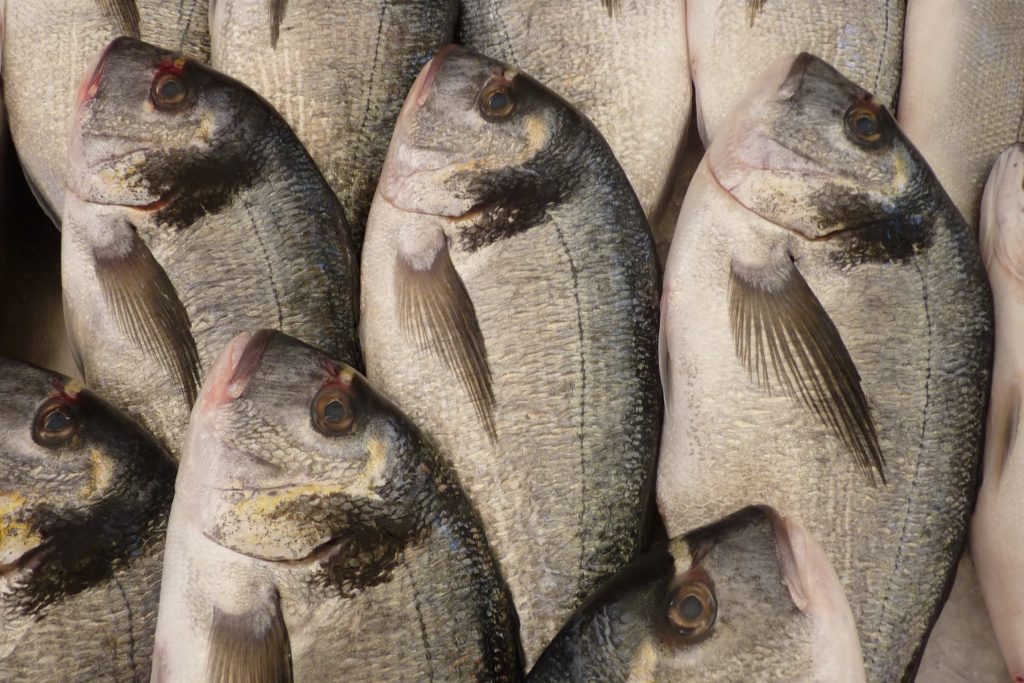
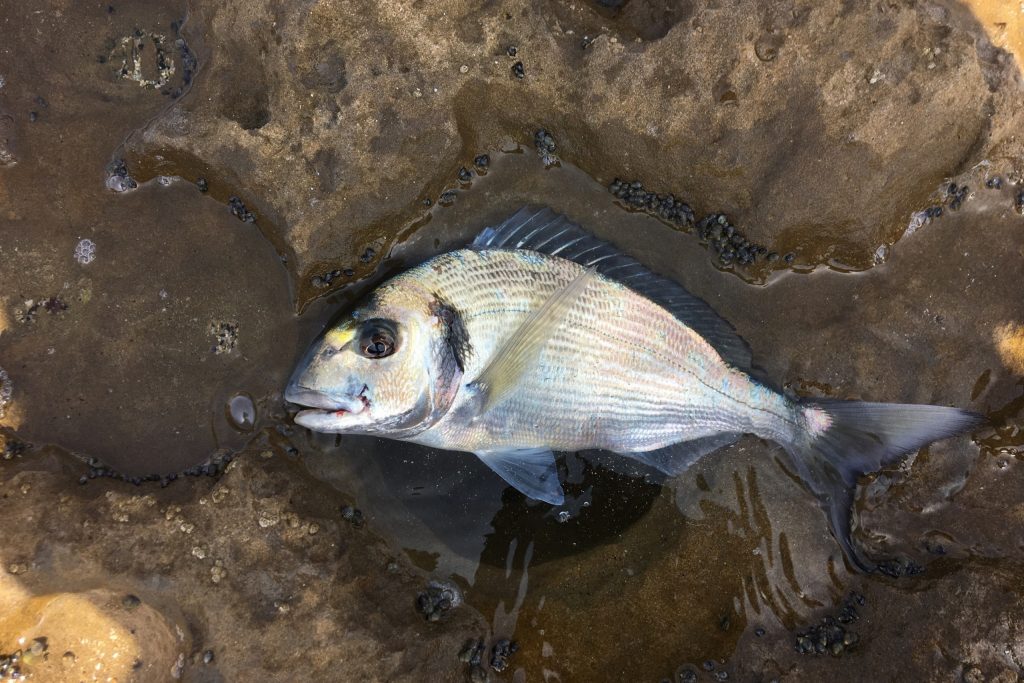
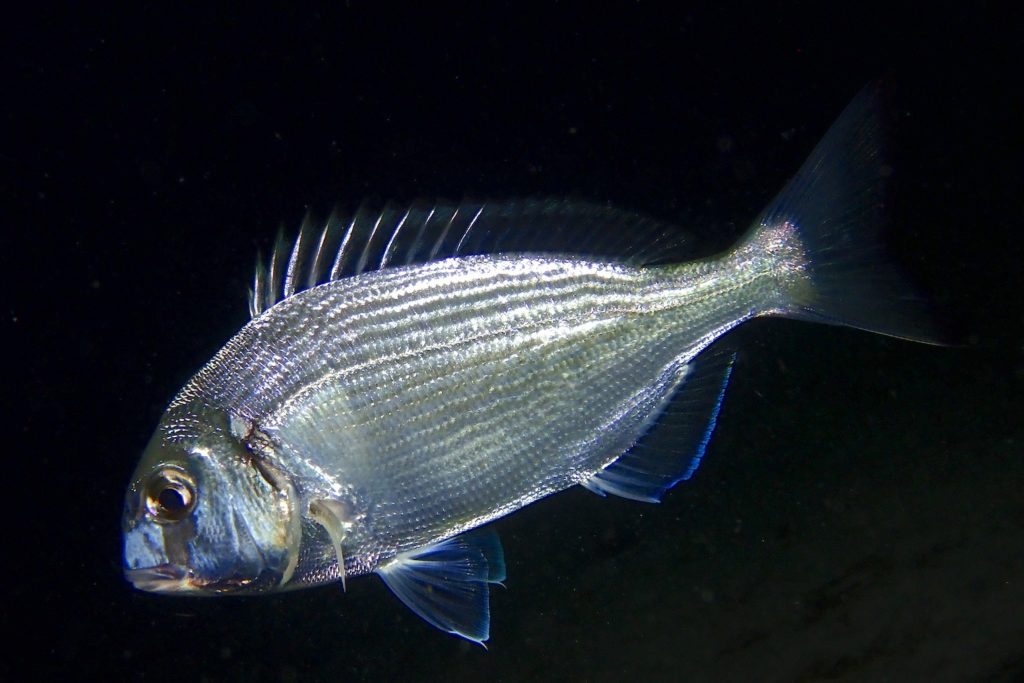
The gilthead seabream is characterised by a silvery grey compressed body, a prominent black region marks the lateral line’s origin, extending on the upper margin of the gill cover, and a golden frontal band separates the two small eyes, from which the species name auratus – signifying golden – is derived.
Typically found at depths of 1 to 30 metres over seagrass beds and sandy bottoms, it can also occur to 150 metres in deeper adult habitats. It is mainly carnivorous, feeding on shellfish including mussels and oysters, but also occasionally on plant material. The fish commonly reaches 35 centimetres in length, though exceptional individuals can grow to 70 centimetres and exceed 15 kilograms – a genuine heavyweight of the Mediterranean reef.
Fun Facts Worth Sharing
- The gold band is real. The metallic stripe between the sea bream’s eyes is not a trick of the light – it is a genuine structural feature of the fish’s forehead, and it is the origin of both its common and scientific names.
- It starts life as a male. The gilthead sea bream is a protandric hermaphrodite – it matures first as a male during its first or second year of life, and then transitions to become female after the second or third year of age. In nature, this means that larger, older fish in any population are almost always female.
- Cold is deadly. The species is highly sensitive to temperature – anything below 4°C is lethal to them. This partly explains why they thrive so magnificently in the warm Levantine waters around Cyprus.
- A fish that named a family. It is the sole representative of its genus – a single species that gave the entire Sparidae family its Latin root. There is no other Sparus in the sea.
- Immortalised in Roman art. In the ancient Tethys mosaic from Antioch, sea bream are identified among the marine creatures depicted around the sea goddess, rendered in both stone and glass tesserae.
The Biology of a Shape-Shifter
The reproductive strategy of the sea bream is a fascinating example of nature’s flexibility. Spawning happens generally from October to December, with sequential spawning throughout the whole period. In spring, juveniles migrate from the open sea into shallow, warm coastal lagoons – a journey that has been exploited by Mediterranean cultures for millennia. These lagoons act as natural nurseries, rich in invertebrate food, allowing the young fish to grow rapidly before returning to deeper water in autumn as maturing adults.
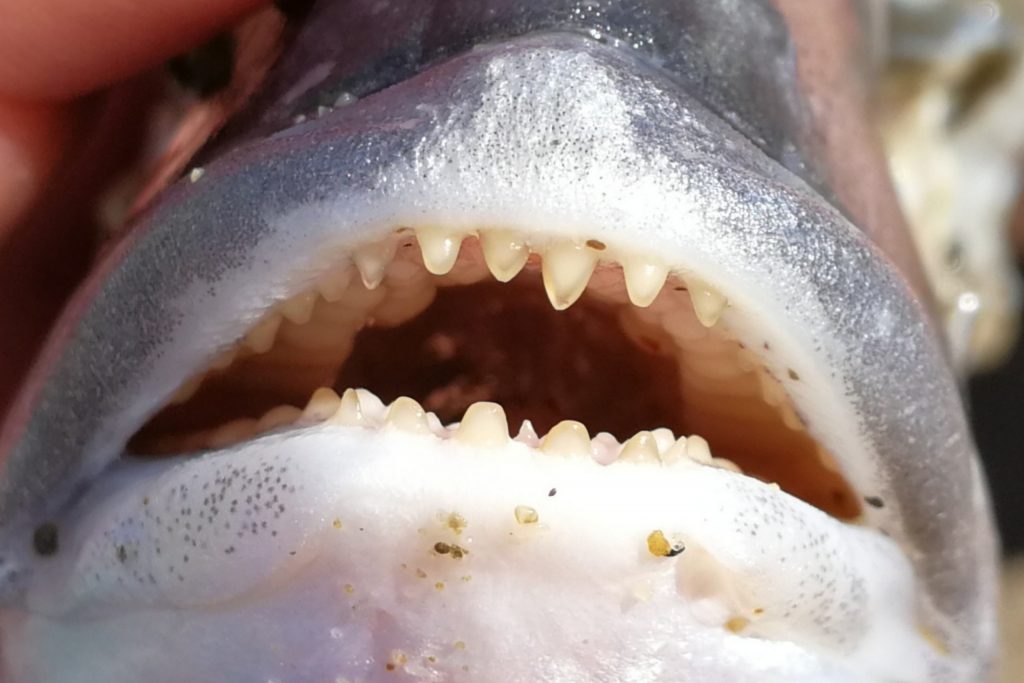
Its dentition is equally impressive: four to six powerful canine-like teeth at the front of each jaw give way to progressively molar-like crushing teeth arranged in two to four rows – perfectly designed to crack open mussels, sea urchins, and oysters. This is not a delicate fish; it is an armoured predator of the seabed.
Cyprus and the Challenge of Clear Waters
Here is where Cyprus finds itself in a paradoxical position. Cyprus is located in the Levantine Basin of the Eastern Mediterranean, characterised by increased salinity and temperature compared to other Mediterranean basins. Its waters are oligotrophic – poor in nutrient concentrations and low in primary productivity. In ecological terms, this means the sea around Cyprus is exceptionally clear and clean, but relatively sparse in the microscopic food chains that support marine life.
This might sound like a disadvantage for fish farming – but it is precisely the opposite. These environmental parameters make the waters of Cyprus an ideal medium to cultivate marine species. Increased water temperature benefits the rapid development of fish, and the low abundance of pathogens minimises losses to disease, enabling antibiotic-free seafood production. Some farms manage to reach commercial weight of sea bream at 300 grams in just 12 months.
The main species farmed commercially in Cyprus are Gilthead Sea Bream (Sparus aurata), European Sea Bass (Dicentrarchus labrax), and recently Atlantic Bluefin Tuna (Thunnus thynnus). Aquaculture now accounts for approximately 70% of Cyprus’s total national fisheries production by volume, an extraordinary figure that reflects decades of investment in marine cage farming.
According to FAO data, gilthead sea bream and sea bass have been the most intensively farmed species in the Mediterranean since the early 1980s, seeing exponential growth in Greece, Turkey, France, Italy, Spain, Malta, Croatia, Cyprus, North Africa, Egypt and Israel. Regionally, artificial breeding of sea bream was first successfully achieved in Italy in 1981–82, and large-scale hatchery production was definitively established in 1988–89 in Spain, Italy and Greece. Cyprus was an early participant in this revolution.
Tsipoura on the Cypriot Table – Yesterday and Today
On the island today, tsipoura occupies a special place in Cypriot food culture – equal parts everyday meal and festive centrepiece. It is grilled whole over charcoal at seaside tavernas from Paphos to Protaras, baked in the oven with lemon, olive oil and herbs, and served whole – head, tail, and all – as is the tradition throughout the Eastern Mediterranean. Cypriots tend to regard the farmed version with a pragmatic appreciation, though the wild-caught fish, when available, still commands the highest respect and the highest price at the market.
Wild sea bream are most commonly caught by small-scale inshore fishermen using longlines and trammel nets – the traditional small boat fishing that remains part of Cypriot coastal identity. The fish is also a favourite target of recreational anglers, who pursue it along rocky reefs and seagrass meadows around the island’s coastline.
At a regional level, the aquaculture industry has transformed the availability and affordability of this once exclusive fish. Reported aquaculture production was negligible until the late 1980s, but reached 140,000 tonnes by 2010, dwarfing wild capture fisheries production. According to the most recent FAO State of Mediterranean Fisheries report, gilthead sea bream remains the single largest aquaculture species in the Mediterranean and Black Sea region, with total farmed production exceeding 323,000 tonnes in 2023.
Where to Encounter It in Cyprus
Divers and snorkellers have the best chance of encountering sea bream along the rocky reefs and Posidonia oceanica seagrass meadows found at sites such as the waters around Cape Greco, the Akamas Peninsula, and the Zenobia wreck area near Larnaca. Here, in the clear oligotrophic water for which Cyprus is renowned, the fish can sometimes be seen in small, unhurried groups – their silver flanks catching the light as they move between rocks, curious but cautious.
Anglers will find them active along the rocky coastlines, particularly in autumn and winter as spawning season approaches and the fish move into shallower inshore waters.
For the table, fresh whole sea bream are available at fish markets in Limassol, Larnaca, Paphos and Nicosia, where the farmed product is available year-round and the wild-caught fish appears more seasonally. At a good taverna by the sea, ordering tsipoura grilled whole with a glass of local white wine is one of the simplest and most satisfying pleasures the island can offer.
For underwater encounters and sighting records, the community science platform iNaturalist.org holds verified observations of Sparus aurata throughout Cypriot coastal waters, providing a living map of where the species has been recently documented by divers and snorkellers.
A Crown Well Earned
The Gilthead Sea Bream is more than a fish on a plate. It is a thread that runs through the entire fabric of Mediterranean civilisation – from ancient lagoon traps in Egypt and Magna Graecia to the trompe-l’oeil floors of Roman villas, from the early cage experiments off Paphos harbour in the 1970s to the gleaming aquaculture operations that today produce thousands of tonnes in the warm waters of the Levantine Basin. For Cyprus, a small island with a vast maritime identity, the tsipoura is a fitting emblem: adapted to clear, warm, demanding waters; resilient; prized; and wearing its gold proudly.
It is a fish that has survived empires, fed civilisations, and still finds its way – golden and gleaming – onto the tables of the island it has always called home.