In the rugged heights of Cyprus’ Troodos Mountains, a nimble creature darts across sun-warmed rocks, its scales glinting like hidden emeralds. This is the Troodos lizard, Phoenicolacerta troodica, an endemic jewel of the island’s wildlife. Let’s explore this shy resident, a survivor of ancient landscapes, and discover why it captivates those who seek it out. A name Phoenicolacerta prefixes the Latin word, Phoenice, meaning “Phoenicia”, the coast of the Levant, where most of the species of these lizards are found, with lacerta, “a lizard”. The specific name refers to the type locality being in the Troodos Mountains of Cyprus.
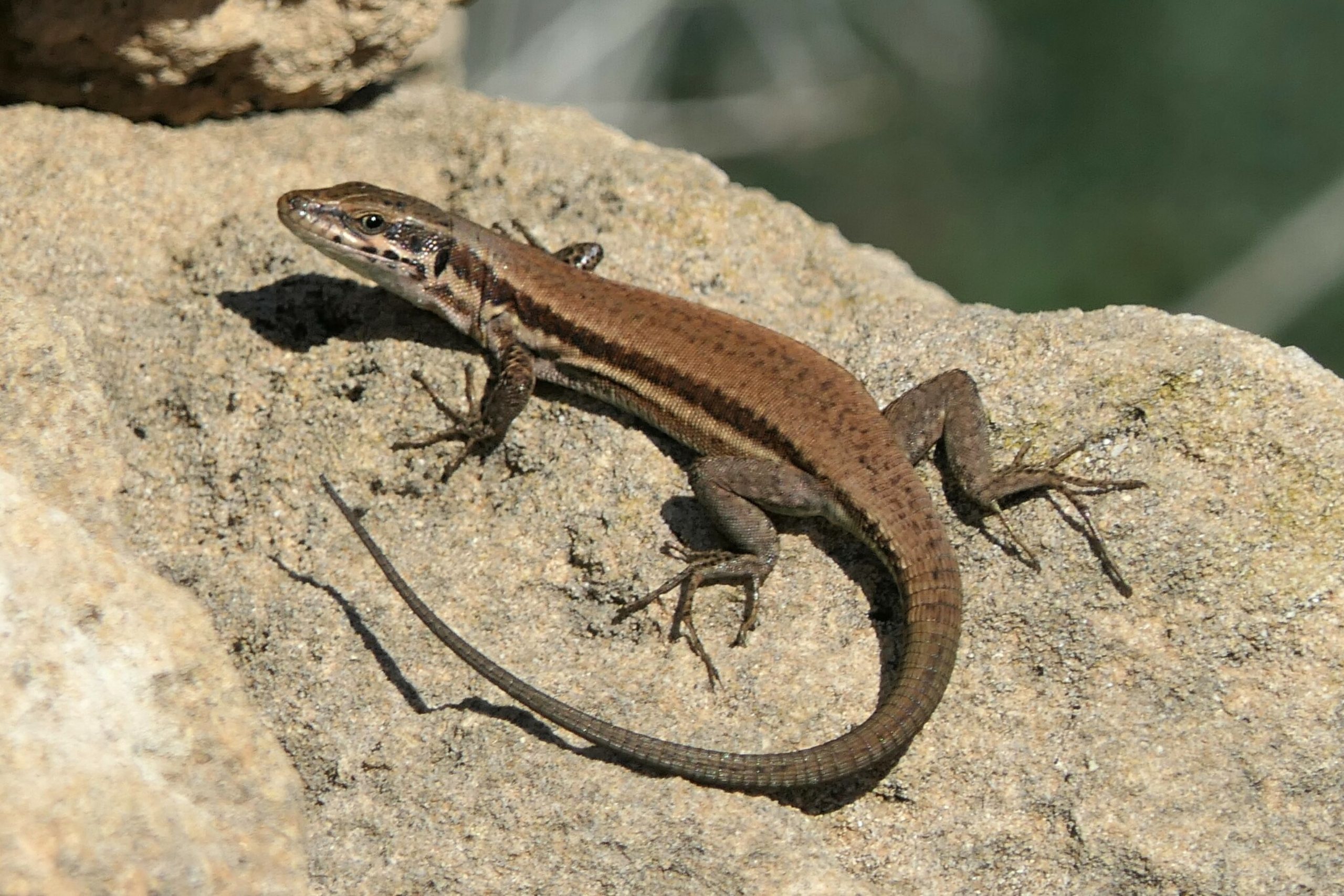
A Mountain Marvel Emerges
The Troodos lizard is a small reptile native only to Cyprus, thriving in the cool, forested slopes of the Troodos range. It’s a member of the Lacertidae family, or true lizards, known for agile ground-dwellers, and represents one of the island’s unique evolutionary tales. Imagine a lizard perfectly attuned to misty peaks and rocky crevices – that’s our subject, a quiet emblem of Cyprus’ isolated biodiversity. In Greek it is called Σαύρα του Τροόδους (Saura tou Troodus) which simply means The Troodos lizard.
From Ancient Seas to Island Peaks
The story of the Troodos lizard begins millions of years ago, when Cyprus emerged from the Mediterranean’s turbulent geological past. As the island formed through tectonic uplifts around 10-15 million years ago, ancestors of this lizard likely rafted from nearby mainland regions like Anatolia or the Levant. Over eons, isolated from continental cousins, it evolved into a distinct species. Fossil records hint at similar lacertids in the Pleistocene, but the Troodos lizard’s lineage may trace back to the Miocene, adapting as Cyprus’ mountains rose and forests thickened. In Cypriot folklore, lizards like this one appear in tales of resilience, symbolizing the island’s enduring spirit against invaders and time itself.
Scales of Survival and Grace
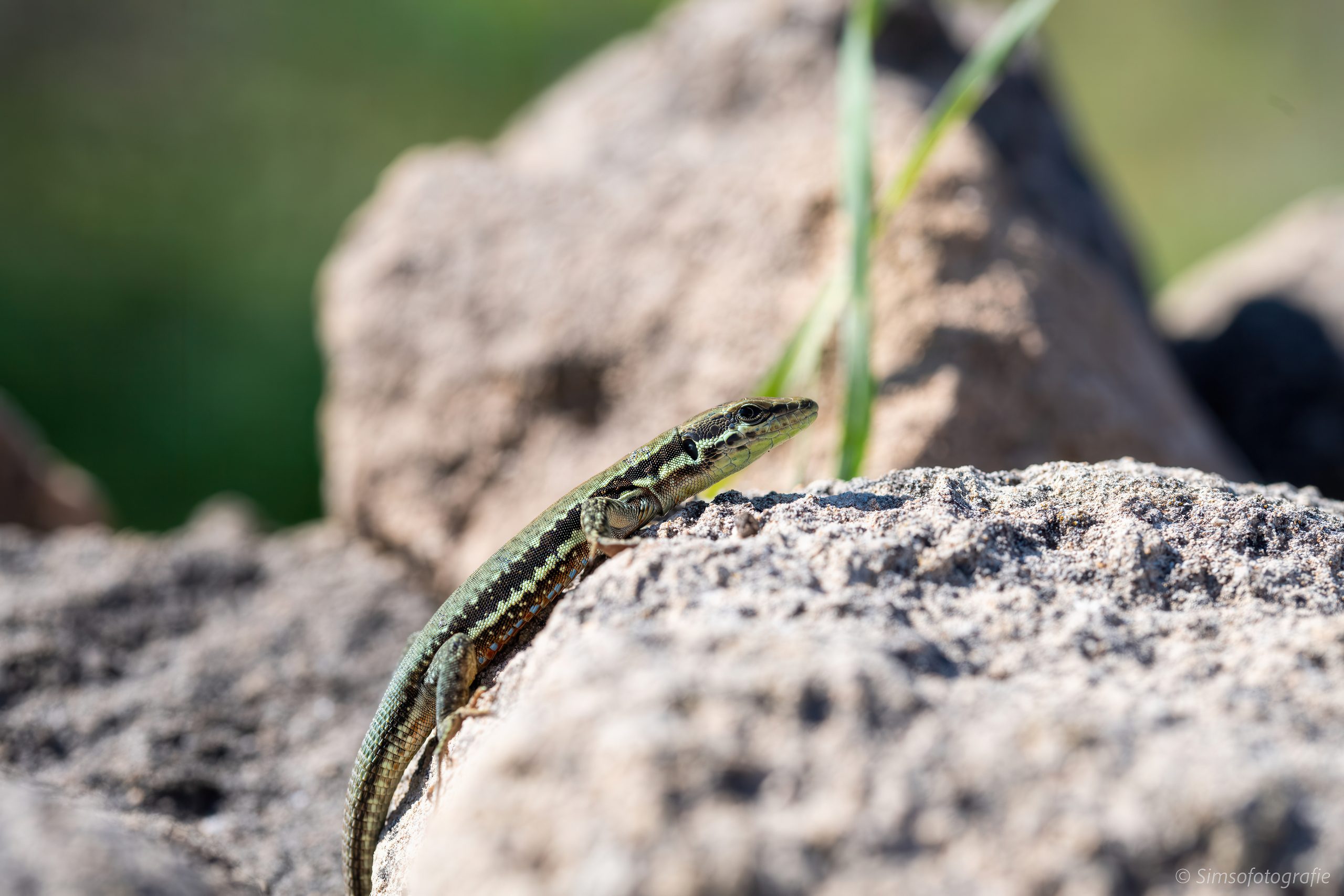
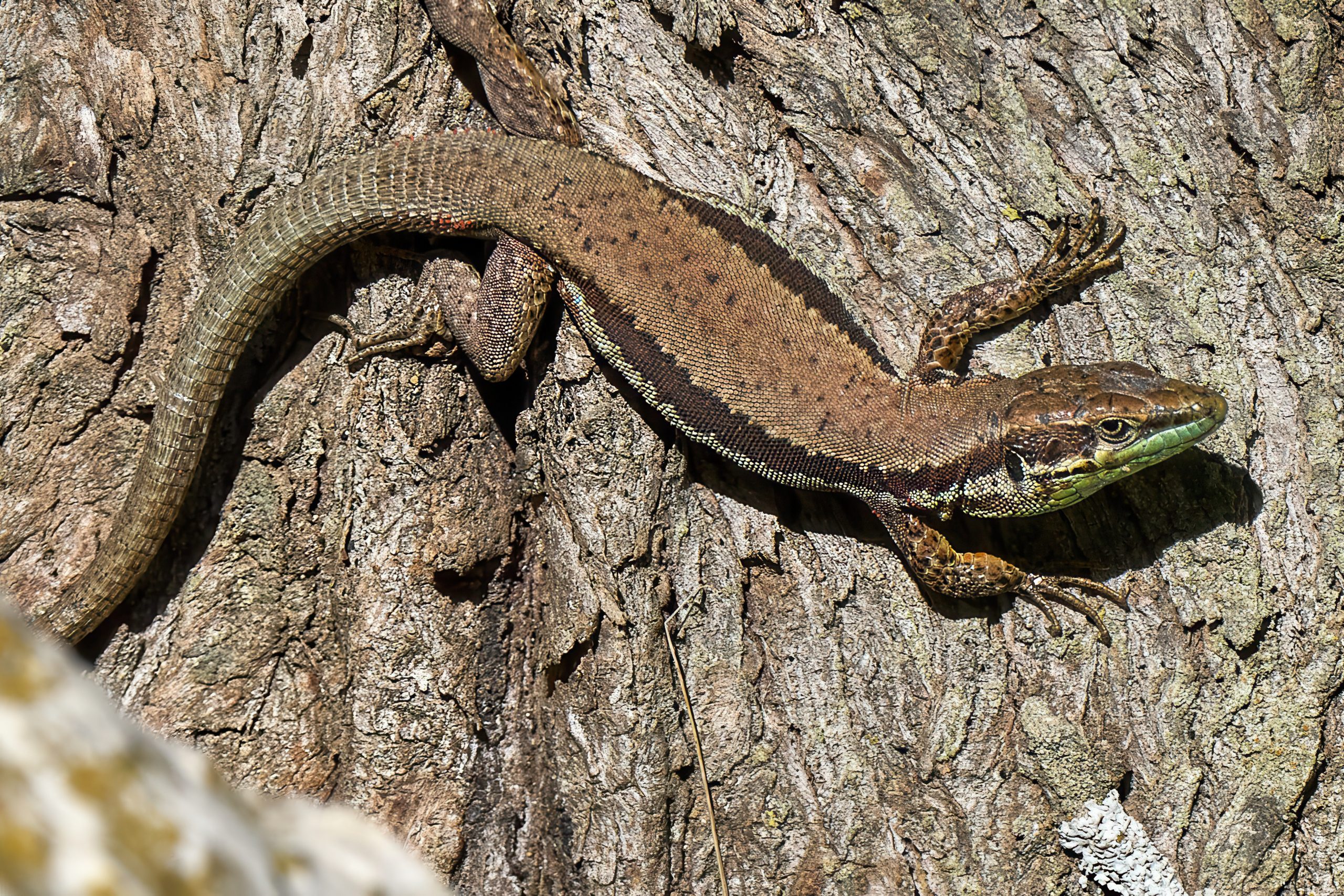
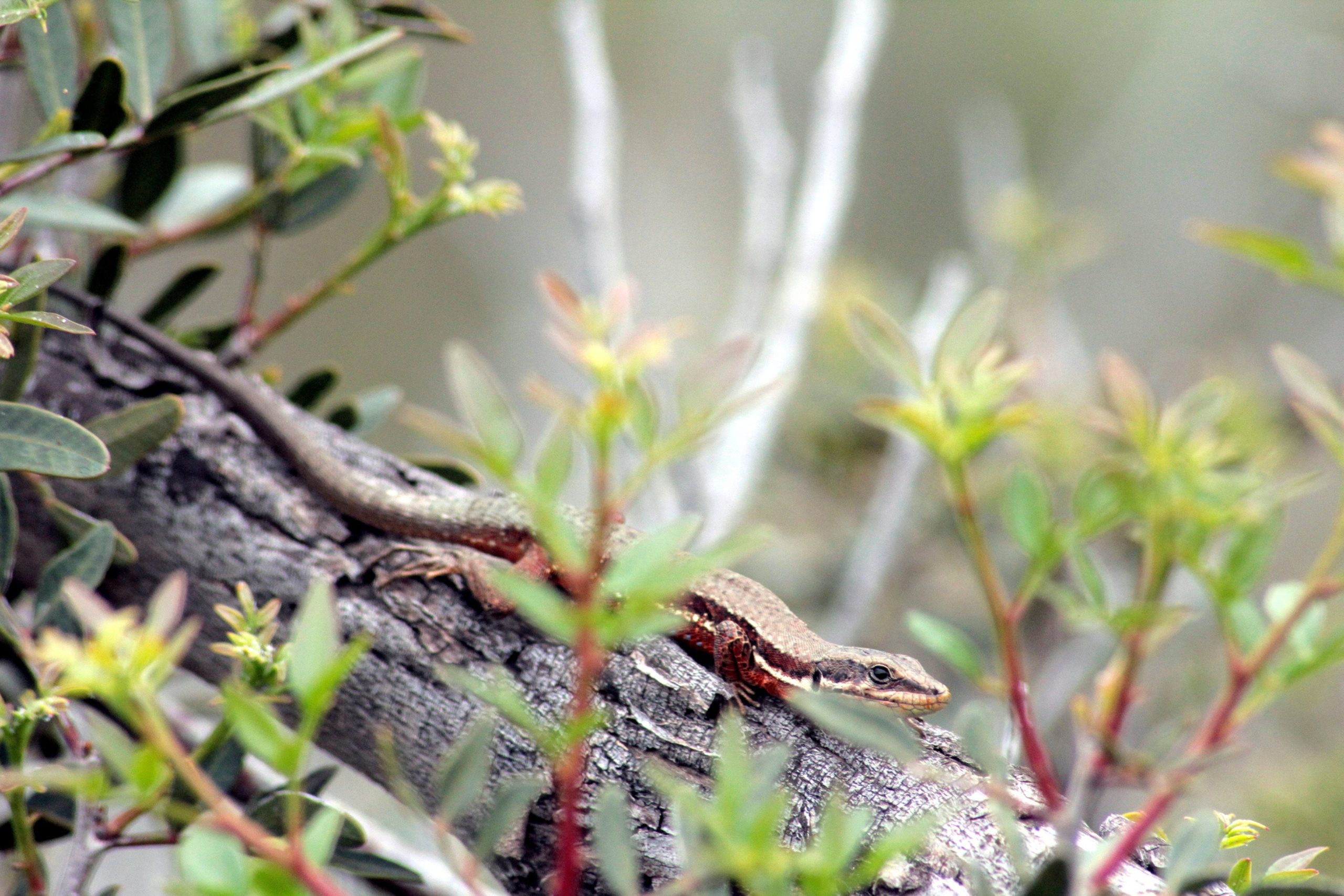
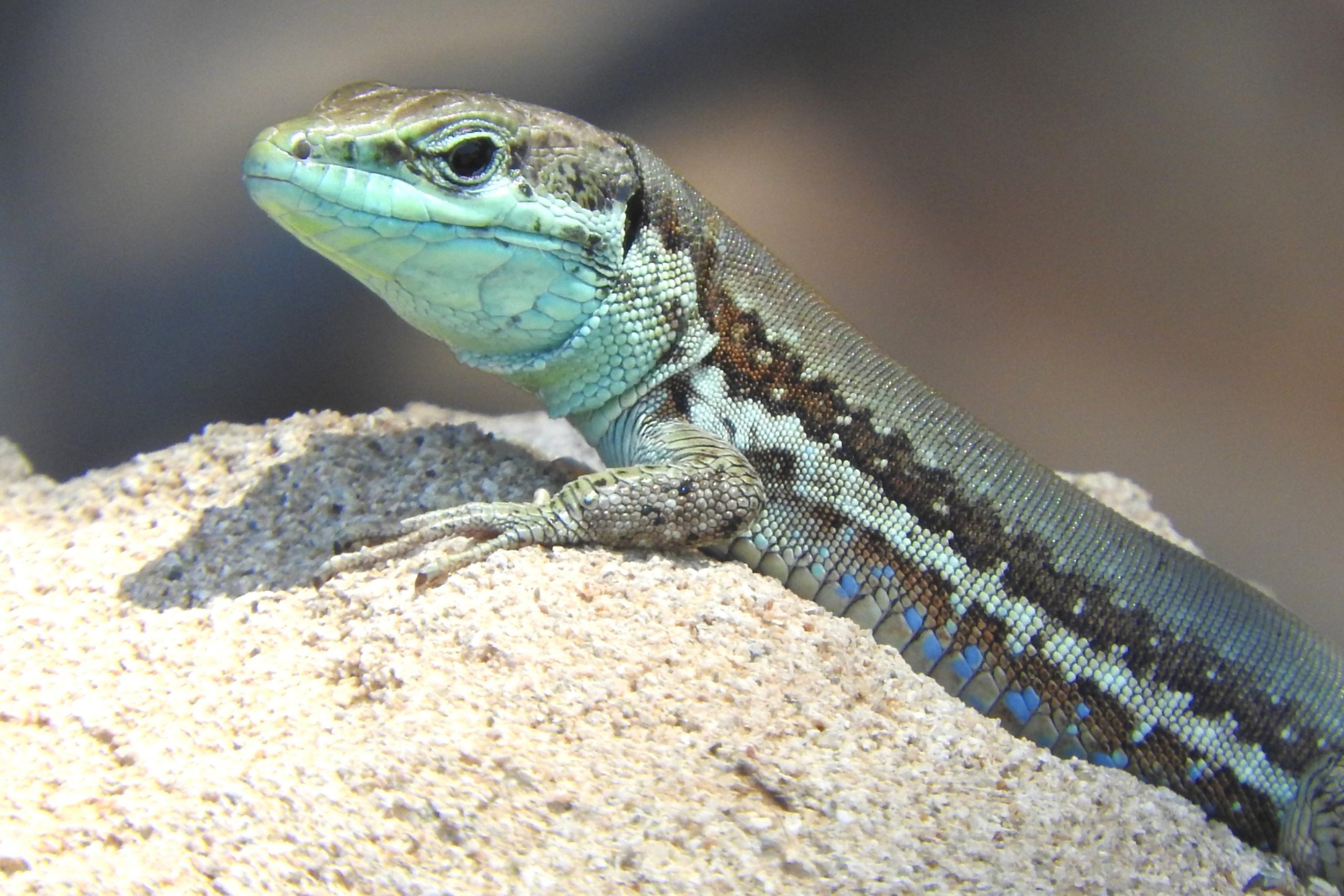
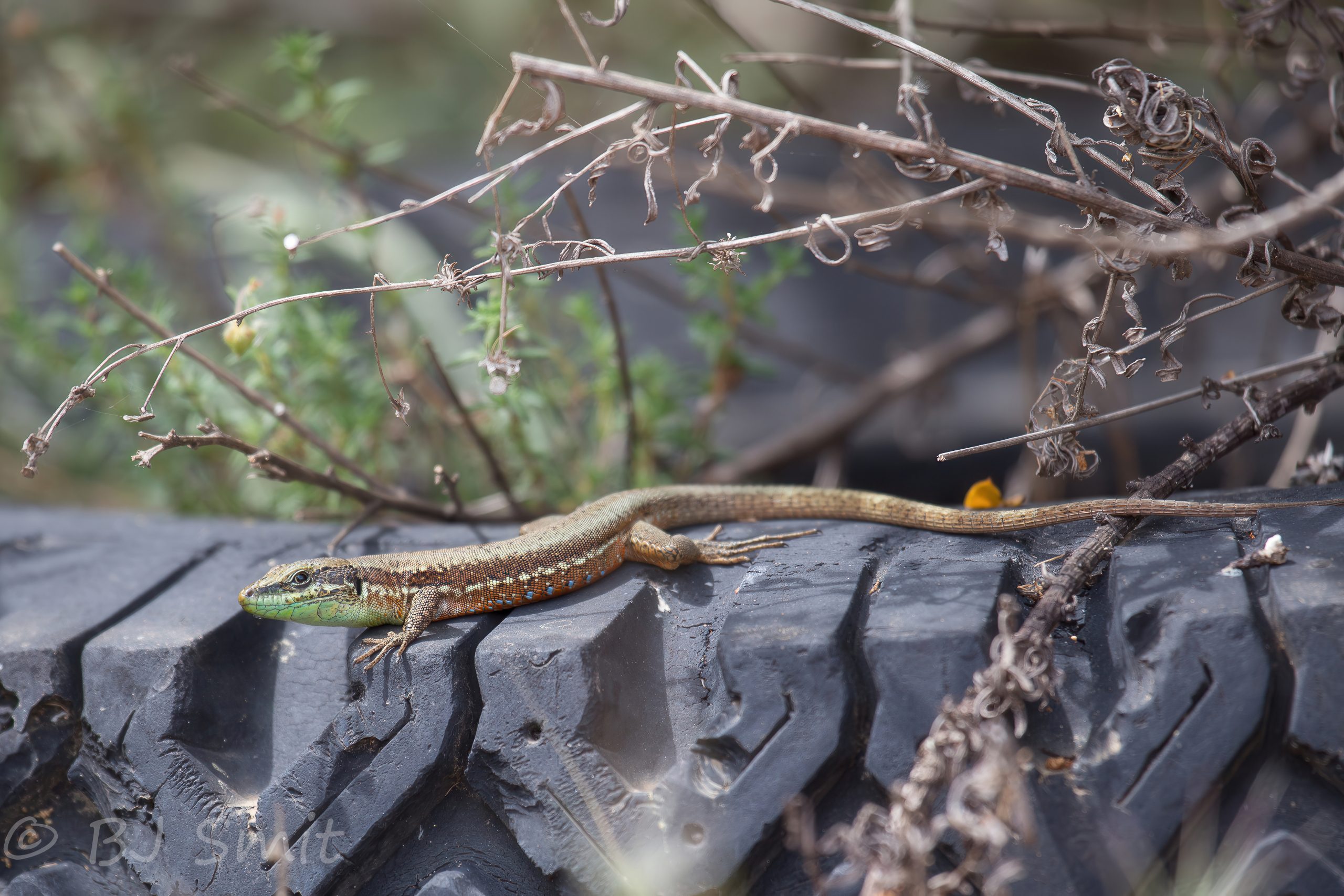
What sets the Troodos lizard apart is its sleek, streamlined form, measuring roughly 15 centimeters from nose to tail tip. Males boast vibrant green hues with black stripes along their sides, while females are more subdued in browns and grays, blending seamlessly with pine needles and stones. In the breeding season the males develop orange blotches on the sides of the head and their underside also changes to orange with blue and red spots along the flanks.Their long tails aid in balance during swift escapes, and sharp claws grip rocky surfaces like nature’s own Velcro. Behaviorally, they’re diurnal hunters, basking in morning sun before pursuing insects with lightning dashes. Unlike bolder relatives, this lizard is wary, vanishing into undergrowth at the slightest disturbance – a trait honed by predators like snakes and birds of prey.
Quirky Traits to Share Around the Campfire
• Did you know the Troodos lizard can drop its tail to evade capture, only to regrow it later? This autotomy is a clever defense, but here’s a fun twist: the regrown tail is often shorter and stubbier, like a badge of survival.
• Another gem – males perform elaborate push-up displays during mating season, flexing to impress females in a reptilian tango.
• And in a nod to Cyprus’ floral wonders, these lizards occasionally nibble on berries, adding a fruity twist to their insect-heavy diet. Spot one sunning itself, and you’ve witnessed a living fossil from an era when dinosaurs’ kin ruled the earth!
Delving into the Lizard’s World
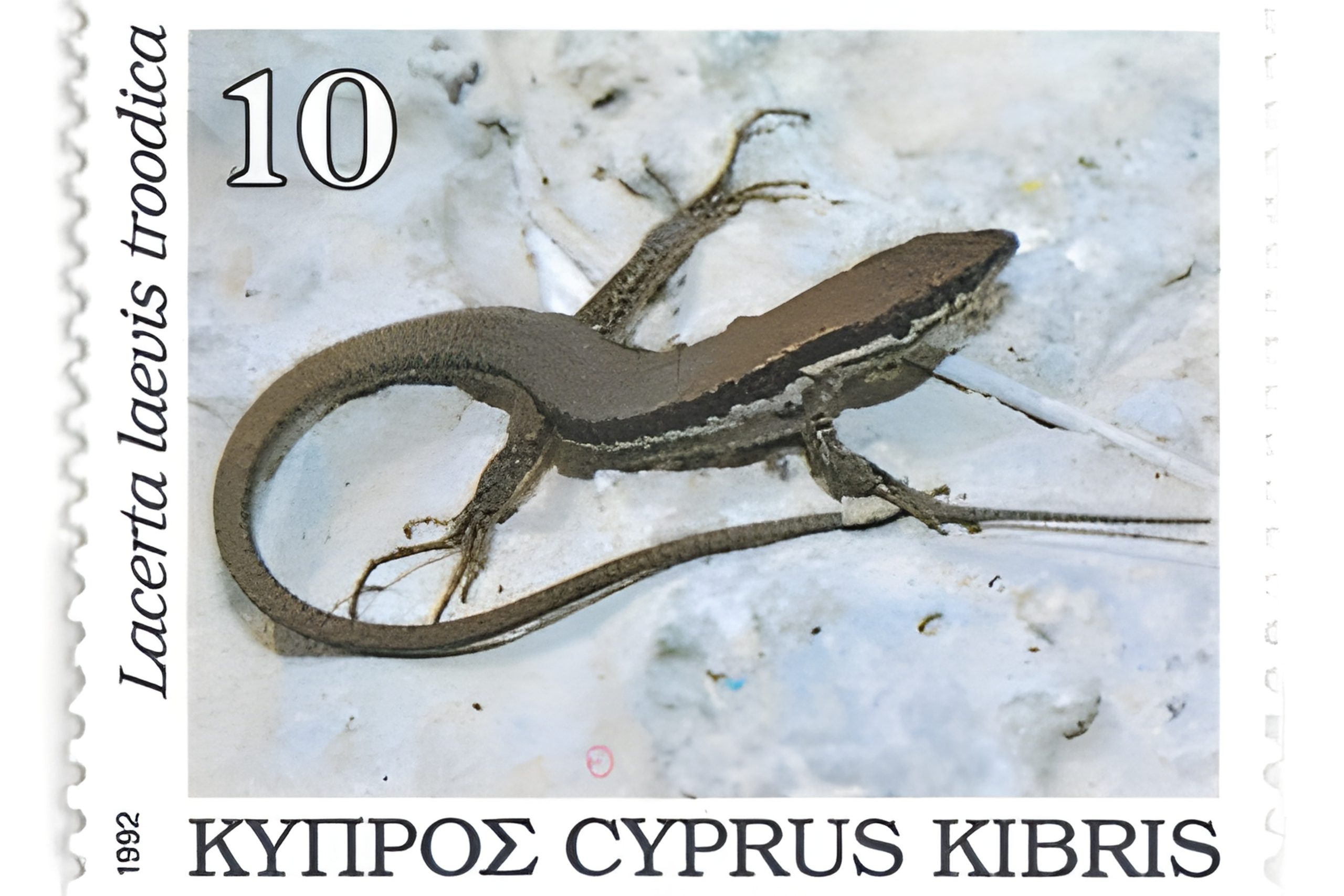
Zoologically, Phoenicolacerta troodica belongs to the Lacertini tribe, as detailed in studies on Palaearctic lizards. Its taxonomy shifted in 2010 from Lacerta laevis troodica to its current name, reflecting genetic distinctions from mainland forms. Distribution maps from iNaturalist show it scattered across elevations from 600 to 1,952 meters in the Troodos, favoring coniferous forests of Turkish pine and Cedar. Ecologically, it’s a key predator of ants, beetles, and spiders, helping control insect populations. Genetic studies suggest low diversity, making it vulnerable to habitat fragmentation – a reminder of how isolation breeds uniqueness but also fragility.
A Modern Sentinel in a Changing Landscape
Today, the Troodos lizard stands as a barometer for Cyprus’ environmental health. Amid rising tourism and climate shifts, its preference for undisturbed forests highlights the need for protected areas like Troodos National Forest Park. In Cypriot culture, it embodies the island’s wild heritage, inspiring conservation efforts by groups like the Cyprus Wildlife Society. As wildfires and development encroach, this lizard reminds us of the delicate balance in Mediterranean ecosystems, where ancient species persist against modern odds.
Seeking the Scaled Spectacle
To glimpse the Troodos lizard, hike the trails of Mount Olympus or the Caledonia Falls path in spring or summer, when they’re most active. Dawn or dusk offers the best chances, as they bask on rocks or forage in clearings. The experience is serene – a quiet communion with nature, feeling the cool mountain air and hearing distant bird calls. Respect their space; avoid handling to prevent stress. Guided eco-tours from Platres village can enhance your odds, blending adventure with education.
Why This Lizard Lights Up Cyprus’ Legacy
The Troodos lizard isn’t just a reptile; it’s a testament to Cyprus’ role as a biodiversity hotspot, where isolation forged extraordinary life. Knowing it deepens our appreciation for the island’s mountains, urging us to safeguard these peaks for future generations. In a world of vanishing wonders, this elusive guardian inspires hope – proof that even small creatures can endure, weaving Cyprus’ past into its vibrant present.