The Museums of the Pancyprian Gymnasium occupy a series of restored houses just north of the school itself. These buildings house multiple collections under one roof, including a school history museum, archaeological and numismatic collections, an art gallery, natural history exhibits, antique maps, old weaponry, and a remarkable collection of Gothic sculptures. Each section contributes to a broader understanding of Cypriot education, culture, and history from different angles.
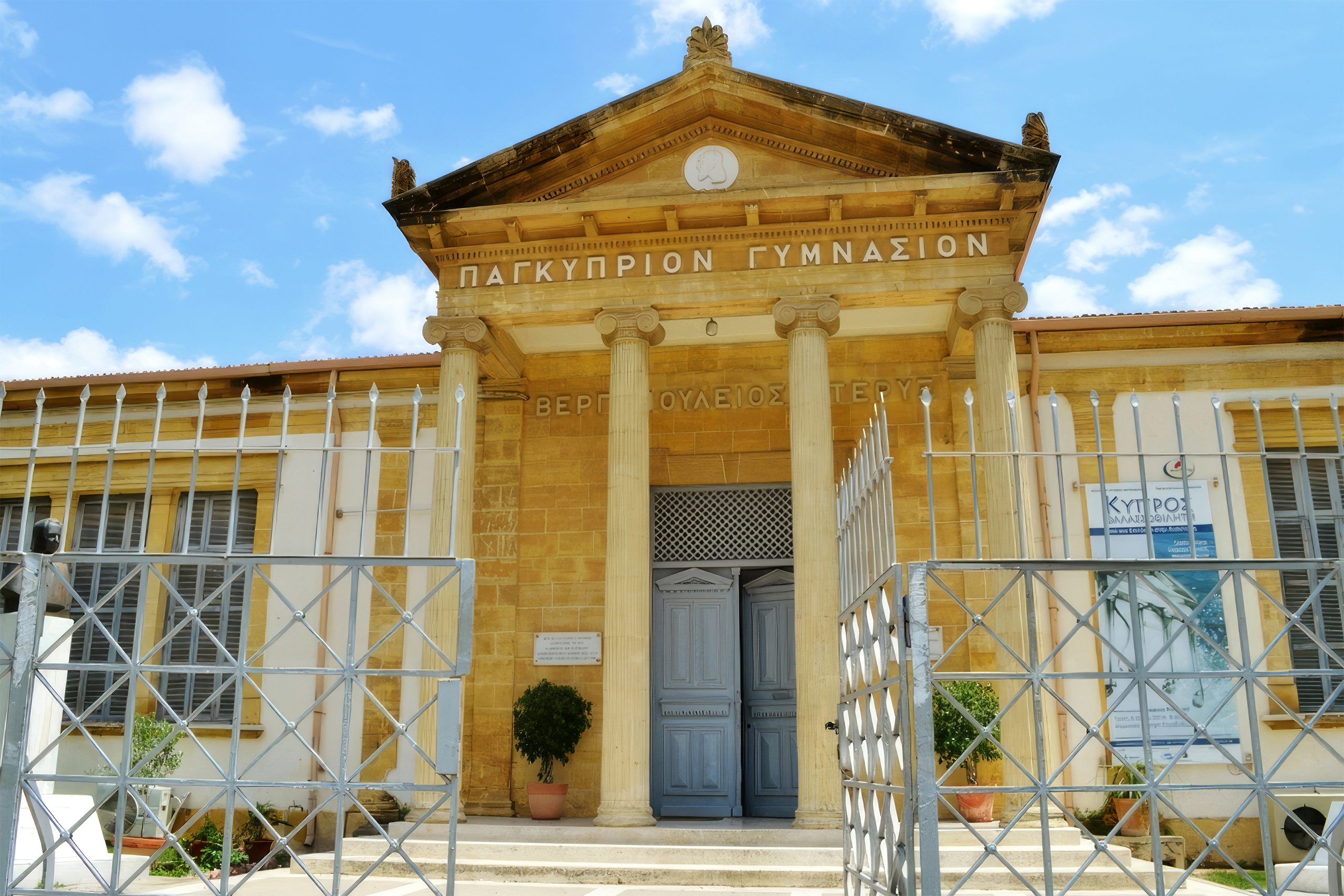
The museum operates separately from the school but maintains a close connection to the institution that gave it life. Visitors enter from Thisseos Street rather than through the school grounds. The space has been carefully organized to guide guests through different aspects of the school’s influence on Cyprus over more than two centuries.
Historical Background
Archbishop Kyprianos founded the Pancyprian Gymnasium in 1812 during Ottoman rule. The school was originally called the Hellenic School of Nicosia and stands today as the oldest continuously operating high school on the island. Before this institution, a school called Ellinomouseion had existed at the same location since 1753.
The founding of the school represented a bold step in preserving Greek education and culture during a period of Ottoman control. Archbishop Kyprianos, who served as the head of the Cypriot Orthodox Church, saw education as essential to maintaining the cultural identity of the island’s Greek population. He founded the school as the first secondary school on the island, originally naming it the Hellenic School.
The school’s basement holds historical significance beyond its educational purpose. Archbishop Kyprianos held secret meetings with representatives of the Philiki Etairia in the school’s crypt in the early 19th century. The Philiki Etairia was a secret organization preparing for Greek independence from the Ottoman Empire. These clandestine meetings took place in 1818, three years before the Greek War of Independence erupted.
The story of Archbishop Kyprianos ended tragically. When the Greek War of Independence began in 1821, the local pasha executed 470 prominent Cypriots, including Archbishop Kyprianos, who was publicly hanged. Despite the founder’s death, the school survived and continued its mission. It was closed briefly after the 1821 persecutions but reopened around 1830 under Archbishop Panaretos.
Evolution Through Different Eras
The school underwent significant expansion in 1893 when Archbishop Sophronius III established a lyceum, bringing the institution up to the educational standards of Greek high schools. This upgrade meant that students completing their studies at the Pancyprian Gymnasium could attend the University of Athens. The school adopted its current name, Pancyprian Gymnasium, in 1896.
In 1894, the school established the Didaskaleio, a training institution for primary school teachers. This addition expanded the school’s influence beyond secondary education and helped shape the broader educational system across Cyprus.
The school suffered a major setback in 1920 when a fire destroyed the building. However, within months, reconstruction began thanks to a donation from Ioannis Vergopoulos. The school’s ability to recover from this disaster demonstrated the strong support it enjoyed from the community.
Collections That Tell Multiple Stories
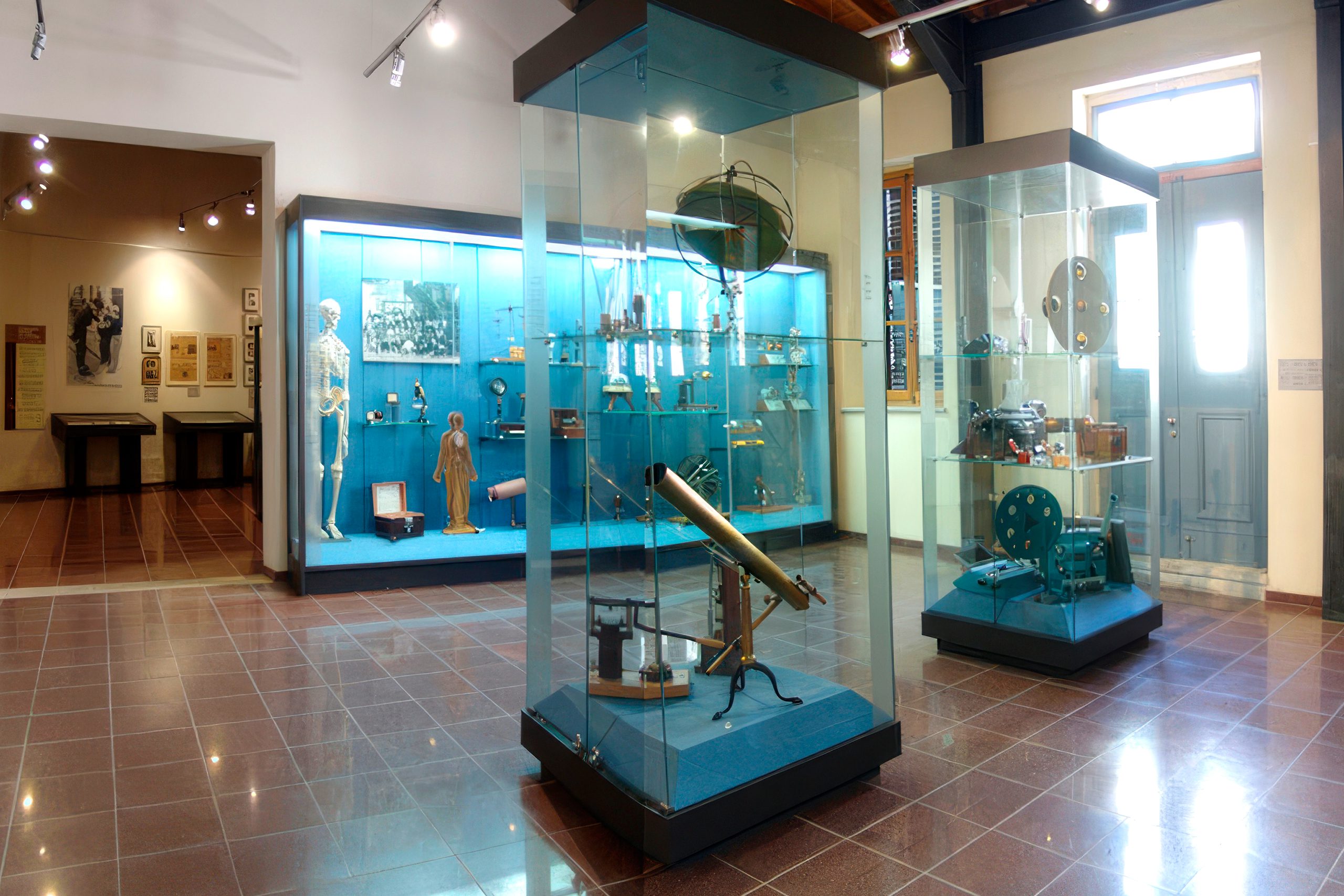
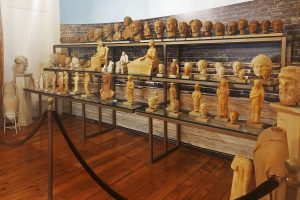
The museum’s archaeological section houses pottery, coins, and various artifacts that trace Cyprus’s ancient past. The numismatic collection provides a tangible connection to the different civilizations and powers that have controlled the island over millennia. These objects serve both as historical evidence and as teaching tools that continue the school’s educational mission.
The art gallery features works by painters who served as teachers or studied at the school. This collection demonstrates how the institution nurtured artistic talent alongside academic achievement. The paintings offer insights into different periods of Cypriot artistic development and the styles that influenced local artists.
One of the museum’s most distinctive holdings is its collection of Gothic sculptures. These pieces represent a unique aspect of Cyprus’s medieval heritage, connecting to the island’s period under Frankish and Venetian rule. The sculptures are notable for their size and artistic technique, representing a style that blended European Gothic traditions with local influences.
The natural history section includes specimens and exhibits that explain Cyprus’s geological formation and ecological diversity. This scientific collection complements the historical and artistic materials, offering a more complete picture of the island’s development.
The Kitchener Map and Other Cartographic Treasures
Among the museum’s most significant historical documents is the 1885 land-survey map made by Lord Horatio Kitchener. This map resulted from the first scientific survey of Cyprus after Britain acquired control of the island in 1878. Kitchener completed all necessary measuring work by March 1883, and the map was published in 1885. This cartographic achievement became the standard reference for Cyprus until the mid-20th century.
The map represents more than just geographical information. It documented land ownership, topography, and settlements at a crucial moment in Cyprus’s history when the island transitioned from Ottoman to British administration. The map’s precision and detail made it valuable for administrative, military, and commercial purposes for decades.
The collection of antique maps displayed in the museum shows how different powers and cultures represented Cyprus over time. These maps reveal changing political boundaries, place names, and geographical understanding across different historical periods.
Students Who Shaped Cyprus
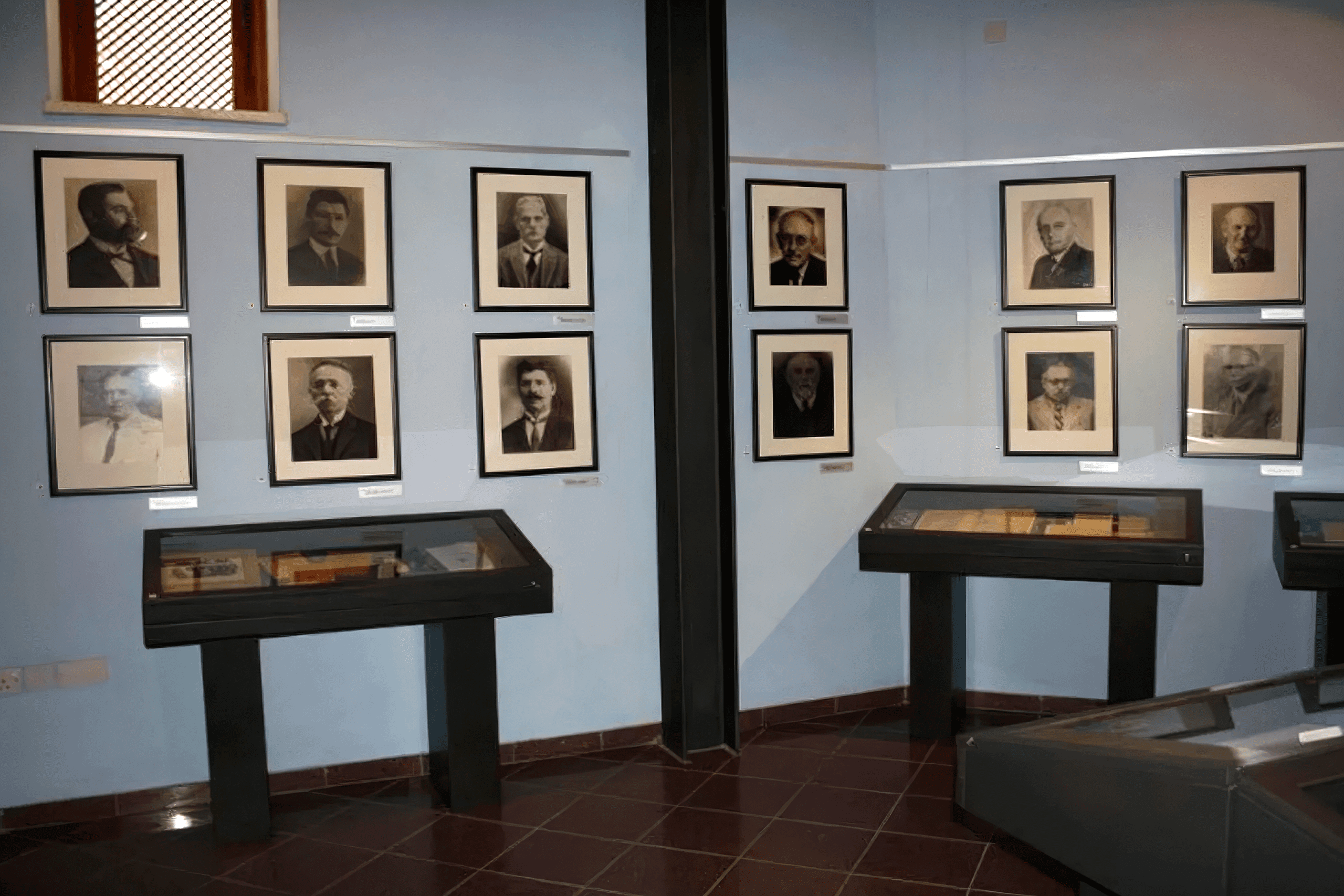
The school has educated many individuals who went on to play significant roles in Cypriot society. Three presidents of the Republic of Cyprus studied at the Pancyprian Gymnasium: Archbishop Makarios III, Tassos Papadopoulos, and Glafkos Clerides. Their education at this institution helped prepare them for leadership during Cyprus’s transition to independence and the challenges that followed.
Beyond political leaders, the school produced artists, writers, scholars, and professionals who contributed to various fields. Nobel Prize-winning economist Christopher Pissarides, who received the award in 2010, graduated from the Pancyprian Gymnasium. This achievement highlighted the school’s success in nurturing academic excellence across generations.
The school’s history also includes darker chapters. Students from the Pancyprian Gymnasium participated in the EOKA struggle from 1955 to 1959, fighting for Cyprus’s union with Greece and against British colonial rule. This involvement reflected the school’s long tradition of connecting education with national consciousness and political action.
The Severios Library
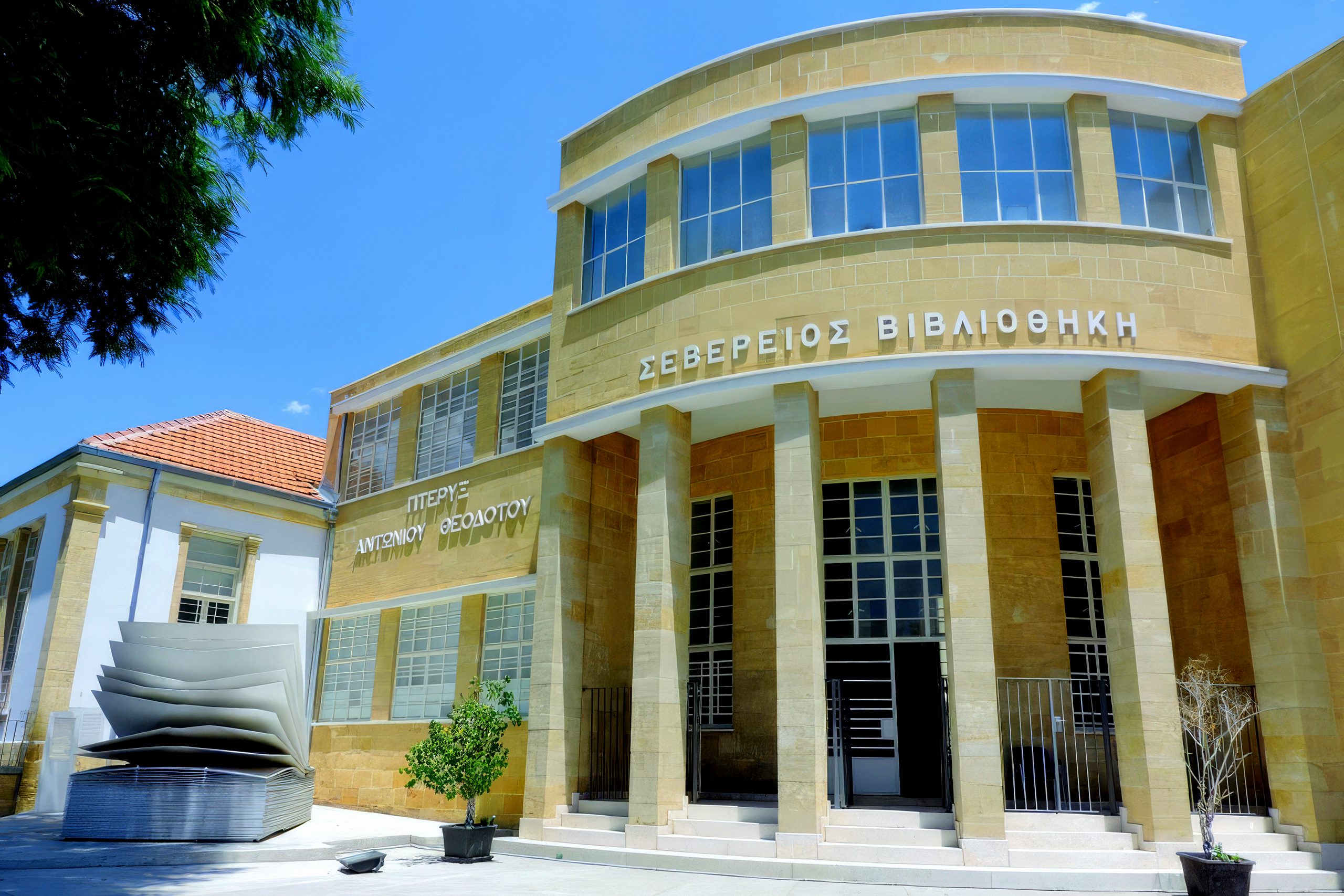
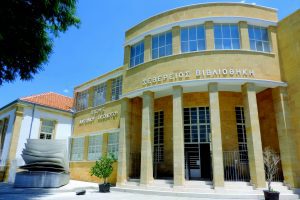
The school maintains a substantial library that opened in 1949, named after Demosthenis Severis, one of the institution’s early graduates. The Severios Library holds over 60,000 manuscripts. The library grew through donations from private collections and benevolent contributions over the decades.
The library contains primarily philological and historical materials, along with an extensive collection of magazines, including many publications that are no longer in print. This collection serves researchers, students, and scholars interested in Greek literature, Cypriot history, and Mediterranean studies. The library expanded to its current form in 1989, increasing its capacity and improving access to its holdings.
Visiting Pancyprian Gymnasium Museum
The museum operates Monday through Friday from 9:00 AM to 3:30 PM, with extended hours on Wednesday until 5:00 PM. Saturday hours run from 9:00 AM to 1:00 PM. Admission is free, making it accessible to all visitors interested in Cypriot history and education.
The entrance to the museum is located on Thisseos Street, on the northern side of the school compound, rather than through the main school entrance. First-time visitors sometimes confuse the school and museum entrances, but staff at the school are accustomed to directing people to the correct location.
Why This Museum Matters Today
The Pancyprian Gymnasium Museums represent more than just a school’s memorabilia collection. It preserves evidence of how education functioned as a vehicle for cultural survival and national identity formation under foreign rule. The school operated continuously through Ottoman, British, and independent Cypriot periods, adapting to each era while maintaining its core mission.
The museum’s diverse collections allow visitors to trace connections between education, politics, art, science, and society in Cyprus. The archaeological artifacts show the island’s ancient roots. The school materials document how knowledge was transmitted across generations. The art gallery demonstrates how the institution nurtured creative expression. The natural history section reveals the physical environment that shaped Cypriot life.